Wednesday The struggle for a decent internet connection continues. Drafts get lost and formatting is difficult, so I apologize for the tardiness of my posting.
Colombia is one of eight or nine “mega diverse” countries in the world, meaning that the state contains severally vastly different ecosystems. Cartagena is the largest city along the Carribean coast of Colombia and most appropriately embodies the climate of the region: cool in the early morning, scorching until early afternoon, heat broken up by a mid-day shower, and then an evening that descends into comfortable humidity. The climate of Cartagena has helped contribute to a stereotype that we learned about today: people here go at their own pace. Benjamin Franklin famously is attributed with saying “Don’t put off until tomorrow what can be done today.” The local stereotype of Cartagena is “Don’t do today what can be handled tomorrow.”
The hot climate makes Cartagena a huge tourist destination, and the locals seem to love it; meeting the demands of tourists is an economic function that Cartagena has seemingly perfected, as the slew of hotels and hostels attests to. I hesitate to support this stereotype much further because of the history of the city that we have learned about during a very informative walking tour of the town’s street art. As a historically massive shipping and manufacturing center, Cartagena has an insidious reputation of being the “black Capitol” of Colombia. Slaves at one point outnumbered freedmen and the perception of Cartagena’s racial makeup is insidiously commented on by many non-black Colombians in a fashion that reminds me of the way many in the South might have remarked about Atlanta in the 60’s. The stereotype of Cartagena is further pushed into a darker corner when examined in full; as the hot, tourist center of Colombia, many non-Black people in Cartagena regard the placement of Afro-Carribeans in the city’s booming tourism and hospitality industries as “appropriate.”
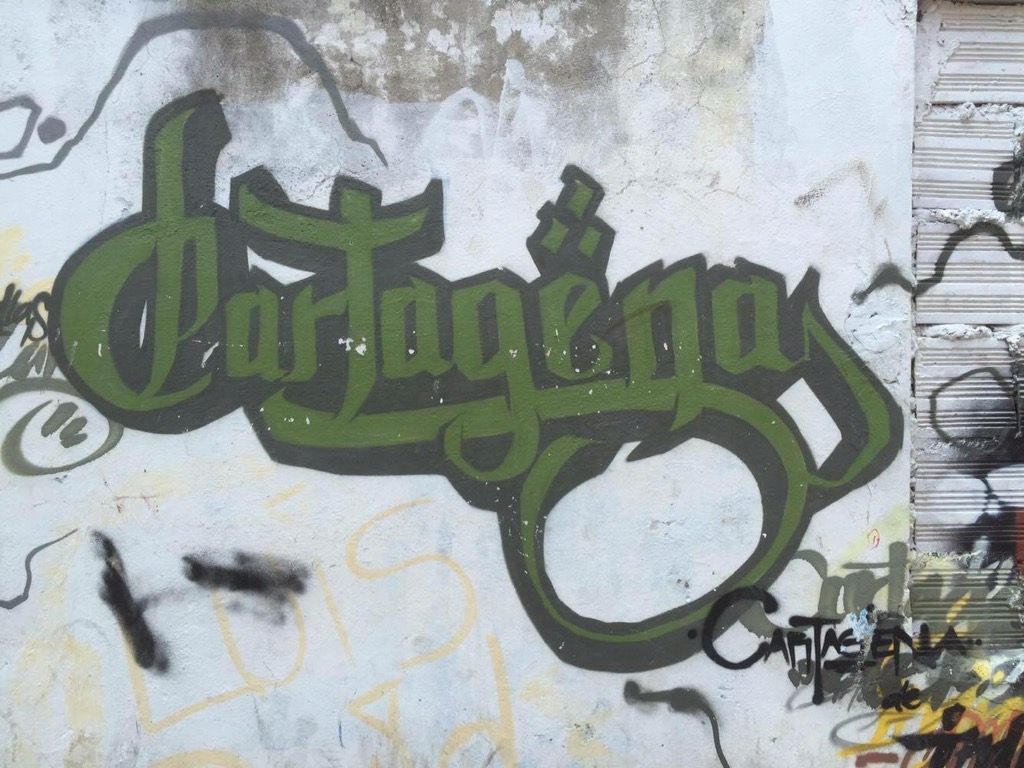
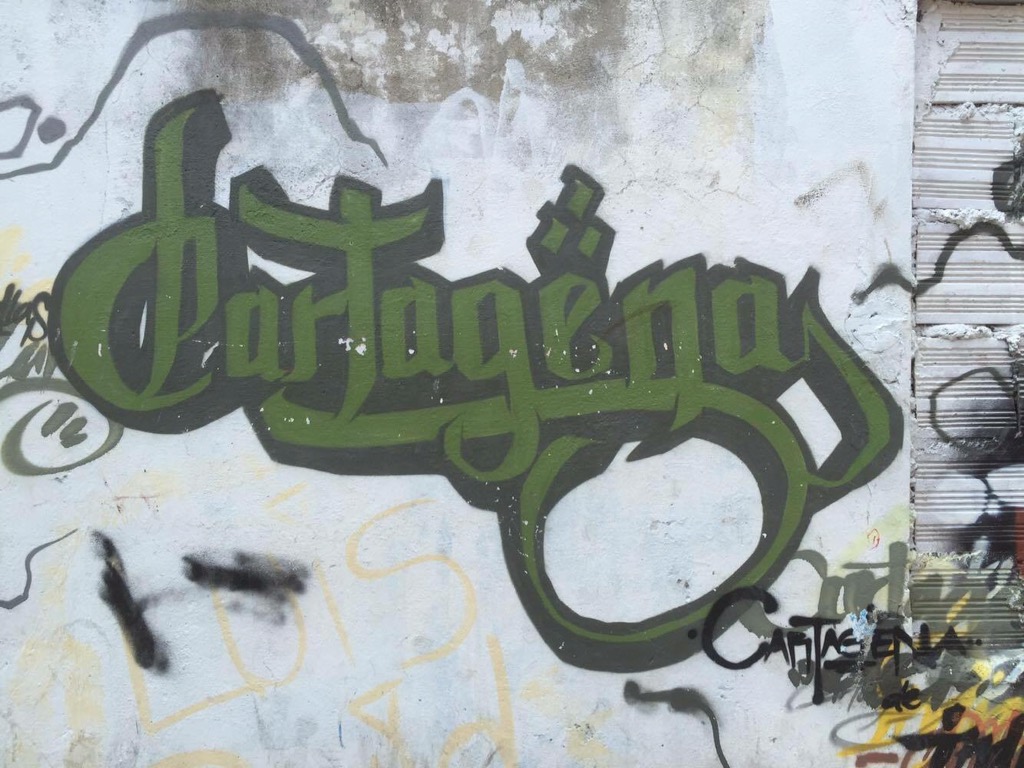
We learned about the Afro-Carribean ancestry of Cartagena in a walking tour of the Getsemani barrio’s street art. Christoph, a Belgian expat who travels searching for legendary works of urban art, led a group of twenty-some gringos on the most thorough exploration of Cartagenians history that this heart could handle. I remarked about the legendary slave revolt in 1811, which liberated the largest port in South America from the strongest empire in the world, in my last blog post. Christoph expounded upon the story; the city was besieged by the rest of Colombia relentlessly following this liberation, leading to an even greater harming of the post-racist society that Pero Romerez and his followers envisioned. The city survived due to it’s accessibility to the ocean (allowing the town to circumnavigate attempts to starve out the resistors) and the slave built walls, whose construction was infamous enough that Christoph had to assure us that slave blood wasn’t actually a construction material (!) as the legend goes. But, all in all, the history of struggle that the Cartagenians have undergone seems necessary for the resilient, proud, and hard-working city that we have been experiencing.
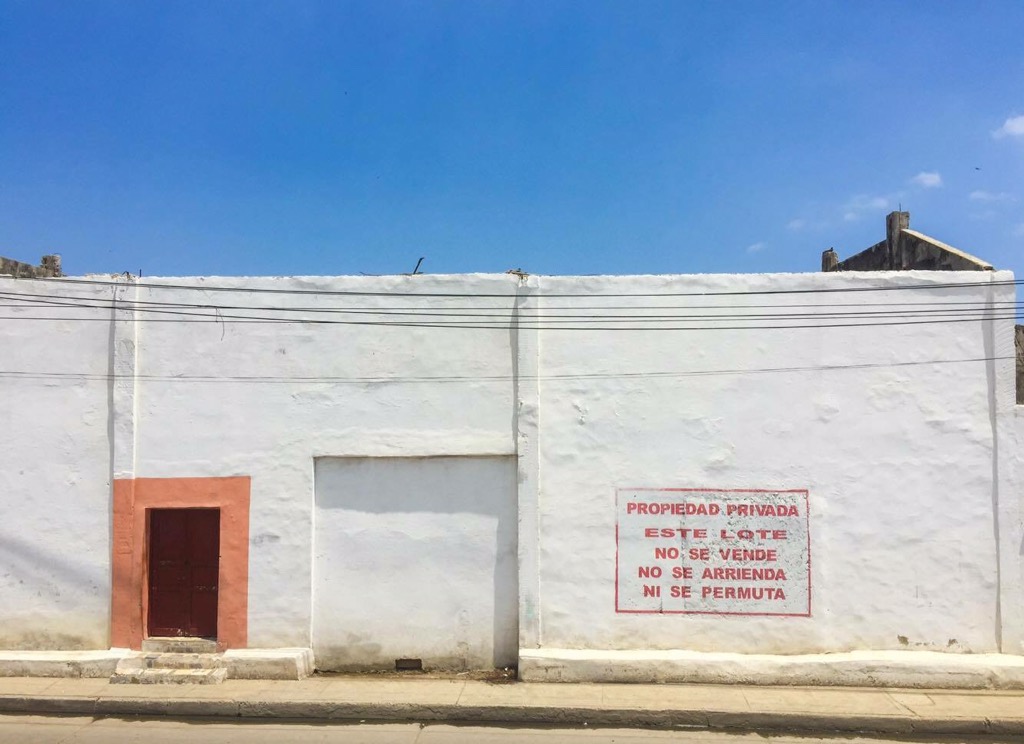
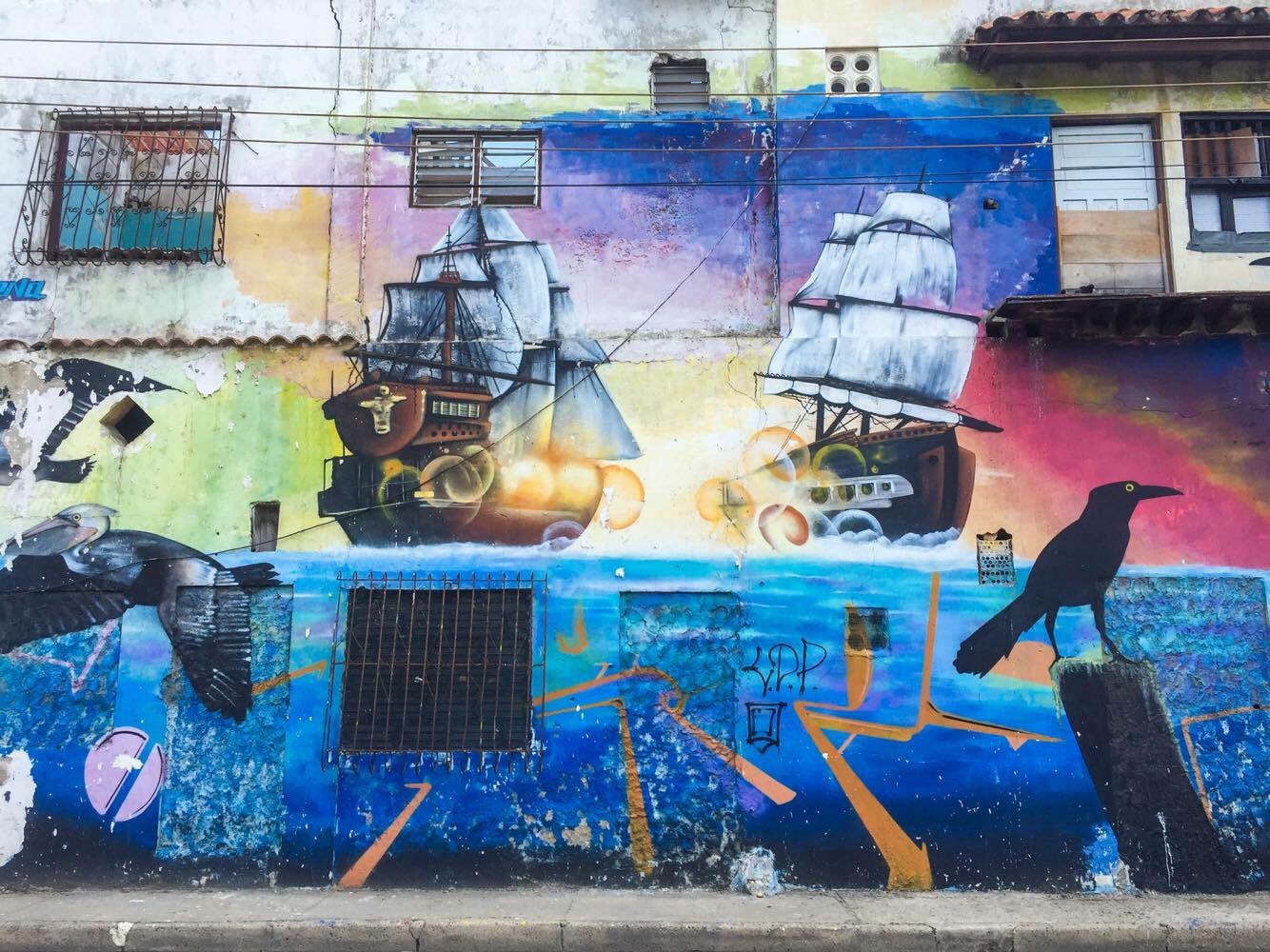
Contemporarily, street art has been used to protest massive degrees of gentrification in the city. Above is a picture of a particularly witty creation; littered throughout the city are “se vende” signs, marking property that has been placed on the market within recent years. Incredible quantities of wealth from outside the city have been spent on buying real estate within Cartagena, pushing up the price of basic necessities and hurting long time residents as their communities are bought up and dismantled for foreign commercial enterprises. Following a crackdown on money laundering by the cartels in the late 90’s, thousands of drug-funded apartments began construction and the city’s lack of a response signaled that crime organized gentrification was allowed.
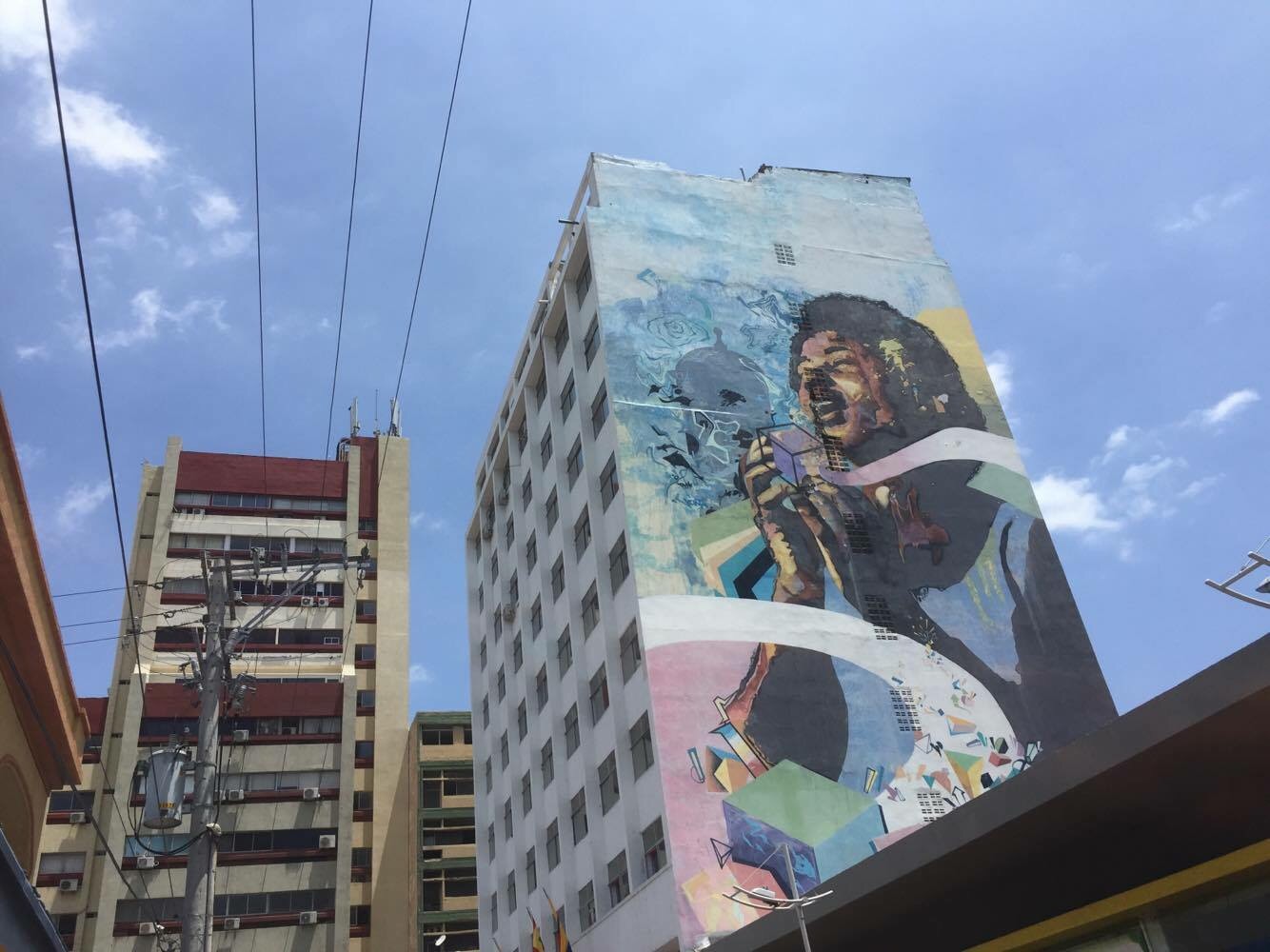
Criminal housing inequities pale in comparison to corporate ventures, who see the stabilizing economy of Colombia as a new place to do business. The resulting business kills local economies in a way that can be understood by anyone whose small town, historical shopping centers were eaten away by the introduction of a WalMart; Exxon gas stations have been heavily vandalized after the company refused to hire local managers and instead imported American workers, effectively creating a glass ceiling for Colombians as they watch their local streets torn apart by car-centered construction fueled by a surge of cheap gas. In 2013, when Cartagena invited street artists from across the world to beautify Getsemani, a local petition forced non-Colombian businesses to only donate money without requiring publicity in return. Looking at the color today, the effect of of that local focus is staggering.
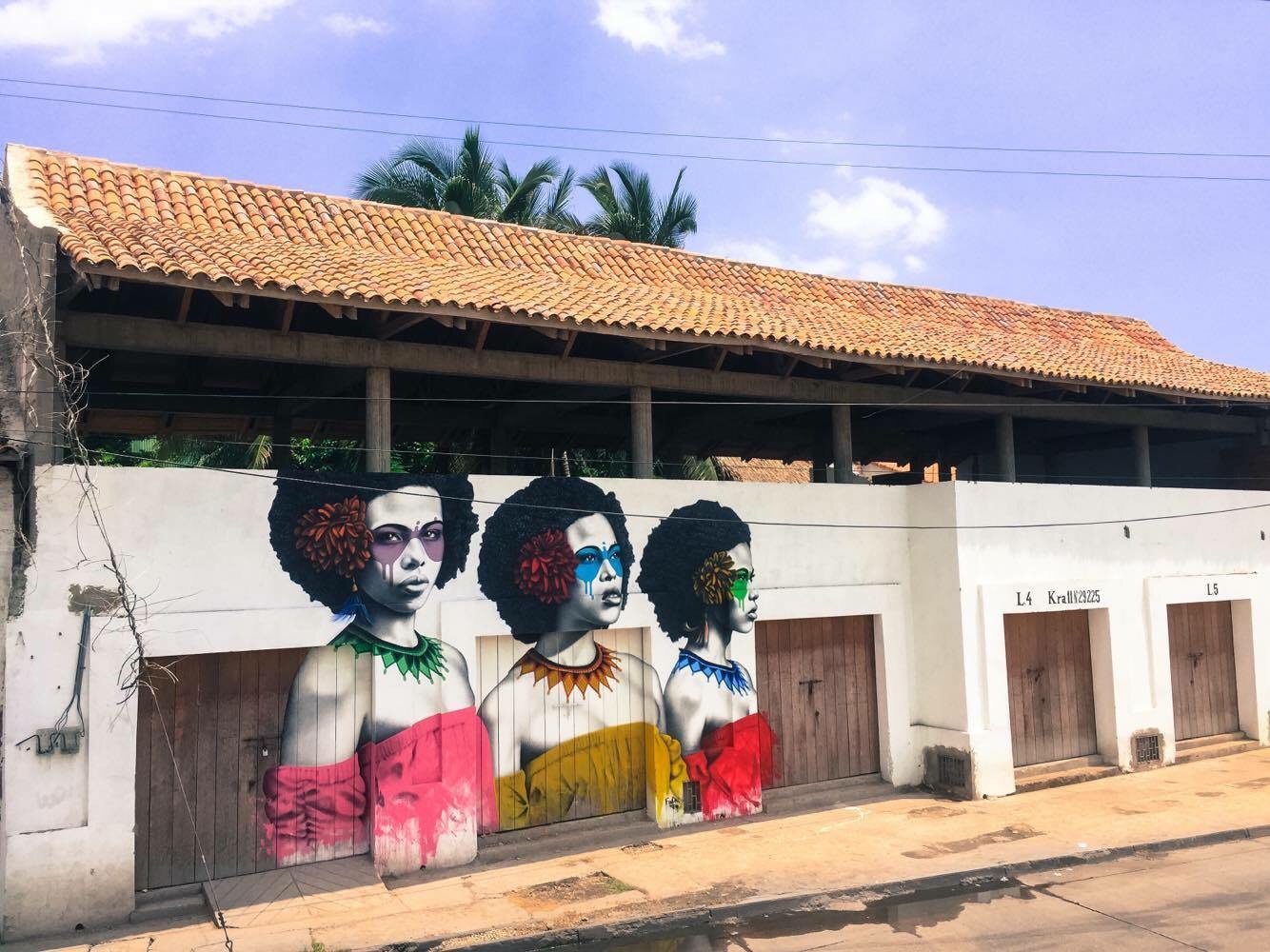
Molly and I had the pleasure of recording an interview with Christoph later in the evening, and our conversation merits a stand-alone post which I’ll be transcribing upon my return to the States this August. But listening to his incredible story is worth the time; he became interested in street art as a way to connect to the people he helped find rehabilitation as a social worker in Belgium before traveling to Colombia. His story is unique, but it adds to the flavoring and substance of Cartagena as a whole. If you’re traveling to Colombia in the near future, his tour is a must.
The lack of stories that I share about the night life in Cartagena should be an indication of high quality. Molly and I believe in earnest field research however, so that’s all for now.
 certification
Leave a comment