Cartagena has given us many good memories and several late nights. We boarded a flight from Cartagena’s international airport (situated in a poor suburb outside the city, and characteristically surrounded by graffiti lamenting the destruction of local life due to the crushed property values in the neighborhood) around 3 in the afternoon and flew in to Medellin.
To be honest, I’m excited to write this, because what happens next is beautiful.
Molly and I were struck by the handsome airport in Medellin, and the cool air that greeted us was a much needed change after three weeks of hot weather. Several gentlemen helped us find the bus we needed to get to the bus terminal, displaying a forthcoming hospitality that stood in stark contrast to the polite but distant kindness of Cartagenians. We could feel that Medellin was about to offer something special.
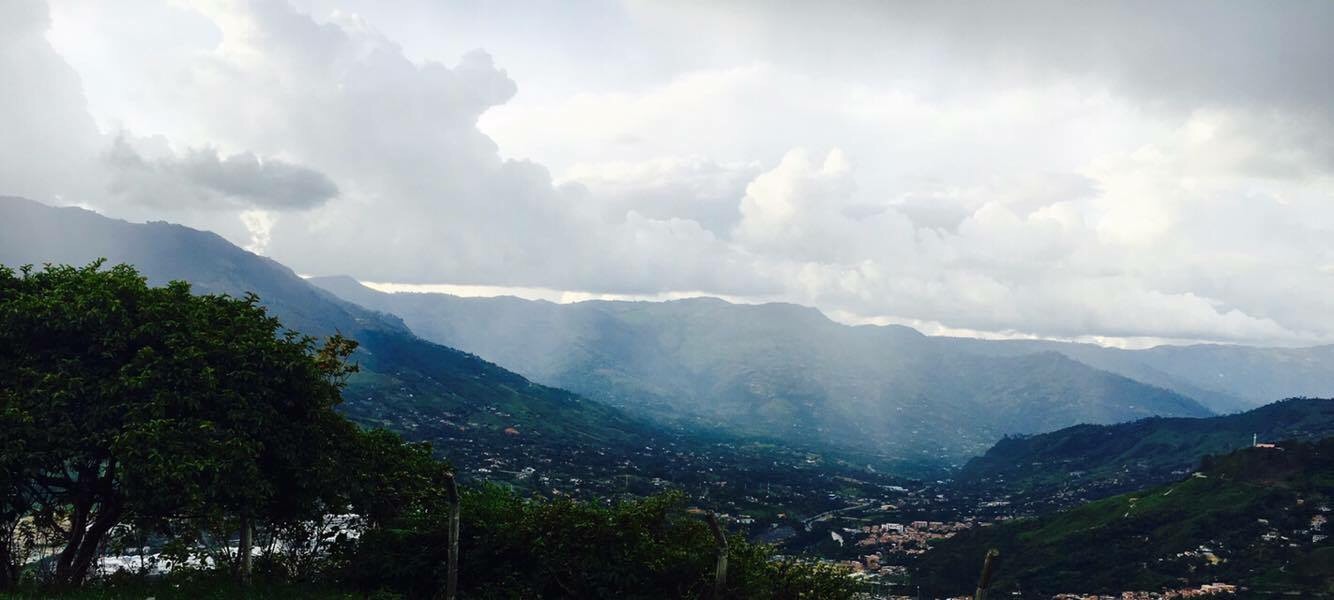
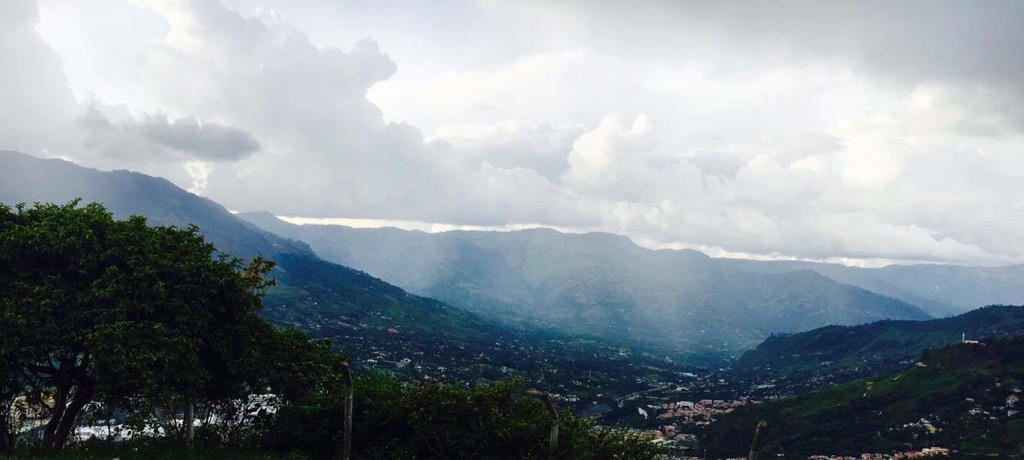
Taking the bus into the city is a breathtaking ride. Medellin’s airport is placed just outside of the valley city’s territory, and the road in to town introduces travelers to the city with an unmatched grandeur. Medellin is built into the base of a valley and covers pretty much everything that the eye can see. In our afternoon bus ride, the sea of red brick and twenty floor buildings ending half a mile below the mountain road we descended upon was awash in a silver early evening light. White flowers flavor the view like snowflakes, contrasting with a verdant green and the flocks of black birds moving along the low-hanging rain clouds draping the expansive city.
Medellin is beautiful. I will never forget that first impression.
Getting to the bus station was easier than it should have been. Medellin’s rate of car and motorcycle ownership has skyrocketed in the twenty years since it was labeled the most dangerous city on earth, and the freedom of mobility resulting from vehicle ownership helped earn Medellin the label of “The World’s Most Innovative City” in 2013, beating out New York and Tel Aviv. Cars, taxis, and motorcycles moved through the main avenues like blood through a main artery, but the public buses have acces to special lanes which dramatically reduce the congestion of traffic.
Molly and I chose Medellin as our first AirBNB stop, but the host hadn’t given us exact directions to her home. Which is difficult in a city of over thirty distinct neighborhoods and numbering upwards of three million people, only being topped by the capitol city Bogota. Our taxi driver didn’t mind, however; Cesar has been driving taxis for over fourty years, and spent four years in the states as a factory worker. He kindly helped us with our terrible Spanish as he told us his complete life story; he fled Medellin due to horrible violence in the early 80s, worked to send his children to America to pursue a higher education, and proudly watched as each of his children became a doctor, engineer, and lawyer. He retired to his home town, struck by the progress it has made in two decades, and drives taxis “for the fun of it.”
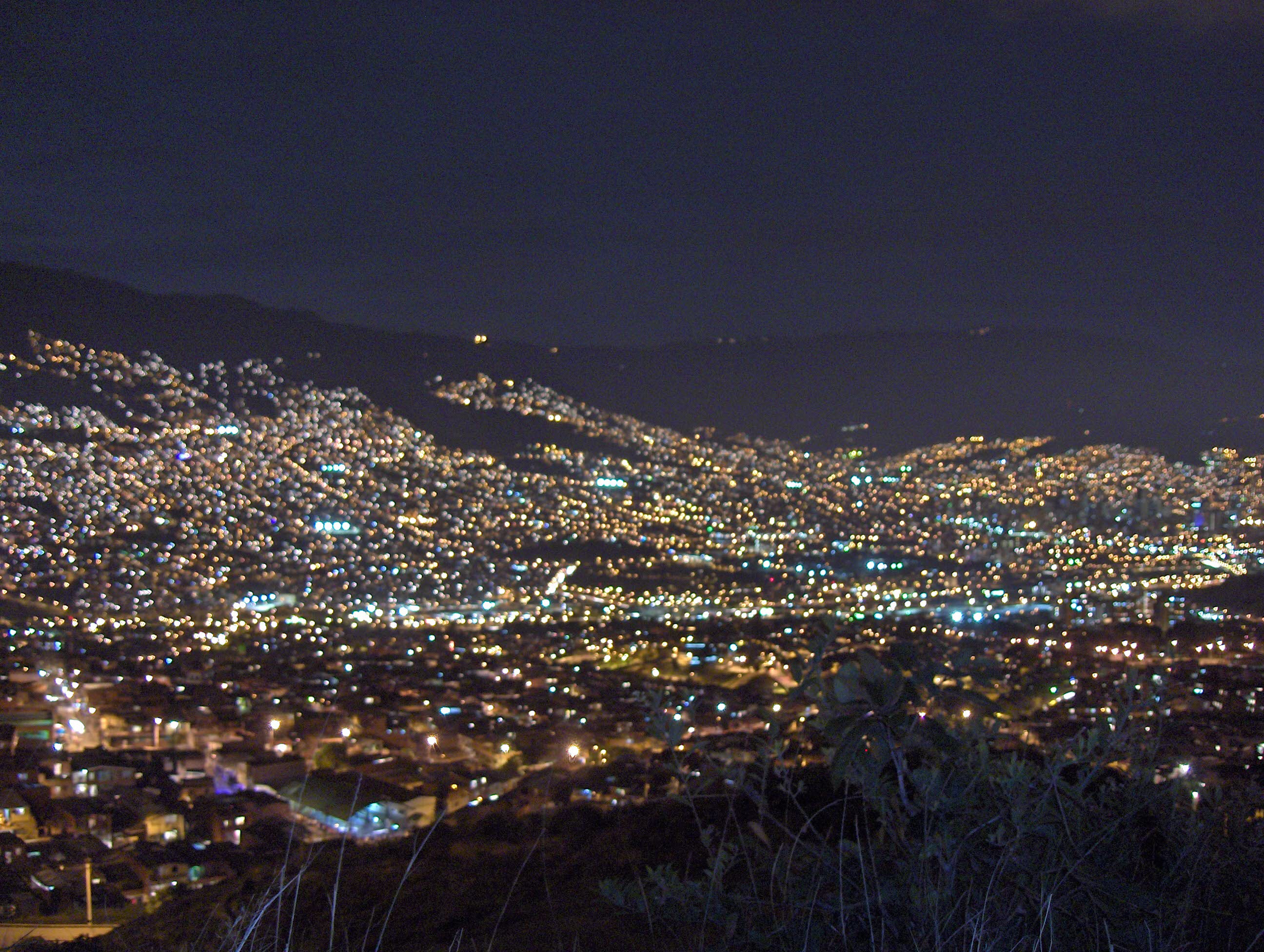
It was difficult to pay attention the entire time because of, well, Medellin. At night the city lights up like none that I have seen. The basin and oldest part of the city was constructed in the lowest apart of the valley, and subsequent centuries saw the growth of small towns along the cliffs and foothills surrounding the city’s heart. In the past two decades, mayors have revitalized the city by connecting these suburbs to the main city, resulting in a blanket of single family homes occasionally broken by larger structures all lit by warm electric light. I really can’t describe the effect, and none of the pictures that we’ve taken or have found online do it justice. You need to see it.
As we were marveling at he city, Cesar was getting lost. The first hour took us to La Pola, one of many steep barrios, and Cesar stopped to ask an elderly woman to decipher to few corrections we had. She had almost ten people come outside to help us make sense of where we were going before a rough consensus was reached that we were on the wrong side of town. So we drove to Belin, an urban and artsy district, before getting lost again. The entire time, Cesar was shouting over to other taxis asking to clarify a turn or guide us a short distance, and not a single one responded with disrespect. Eventually, we thought that we had arrived at the right street, but a local family of four had no idea what we were looking for and spent thirty minutes of their evening calling friends asking for help.
There’s a saying in Medellin that seemed wholly appropriate: “If la Paises knows where you are going, he will give you directions. If he does not, then he will show you the way.” La Paises, and the history of Antiquoa, merits an individual post and I’ll get around to it eventually. But in the mean time, try to imagine living in a city the size of Boston and having literally every person you ask for help genuinely a attempt to assist.
After two hours of exploration and conversation, we found Salsipuedues, the art museum-turned-estate nestled into a jungle-like, gated garden. Cesar was pretty spooked, as the AirBNB turned out to be in La Pola again, and Salsipuedes directly translates to “never leave,” and to be fair the rusty gate didn’t help with departing from a Most Dangerous Game aesthetic. But we met Jorge, our host’s husband, and learned about the family and history of our home and host. Both are remarkably representative of Colombia and Medellin, I feel, and will also be the subject of a later post.
Breakfast is calling and I must go.
Yesterday we:
– Flew from Cartagena to Medellin
– took the bus in to town, amazing view
– taxi cab adventure to AirBNB place
– met with Jorge
 certification
Leave a comment