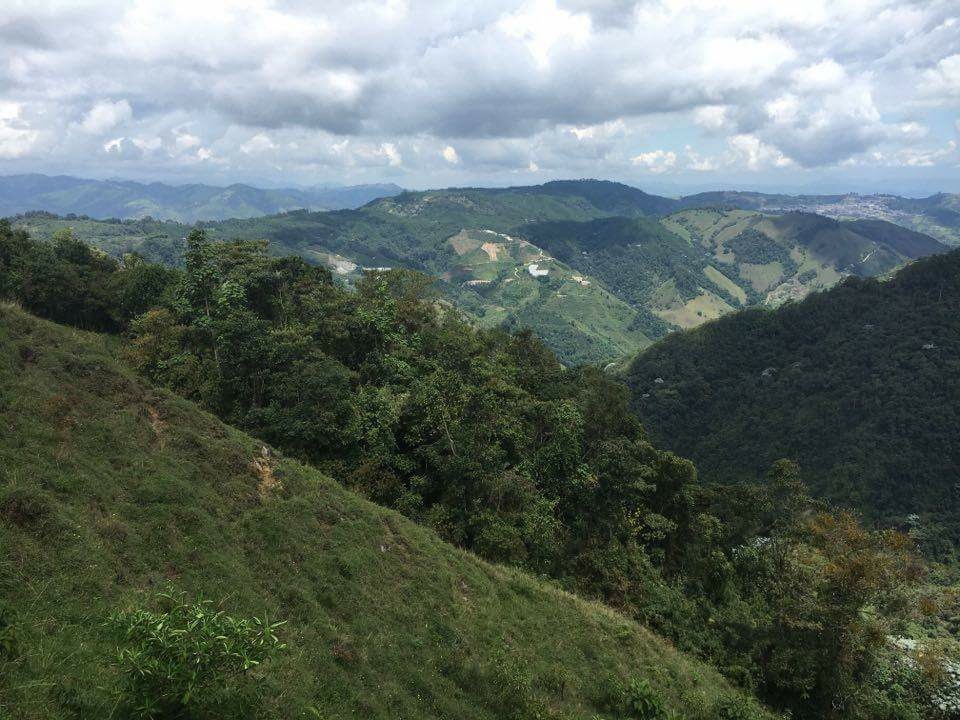
Wednesday 22.6.2016 – Wednesday 29.6.2016
Writing about Manizales is going to be hard. Guerillmo, our host, challenged us to embrace the environment of remote Colombia fully and using an iPad to publish my thoughts seems sacrilegious after meeting people who don’t know how to read. So I apologize in advance for the difficulty that I may have articulating these ideas.
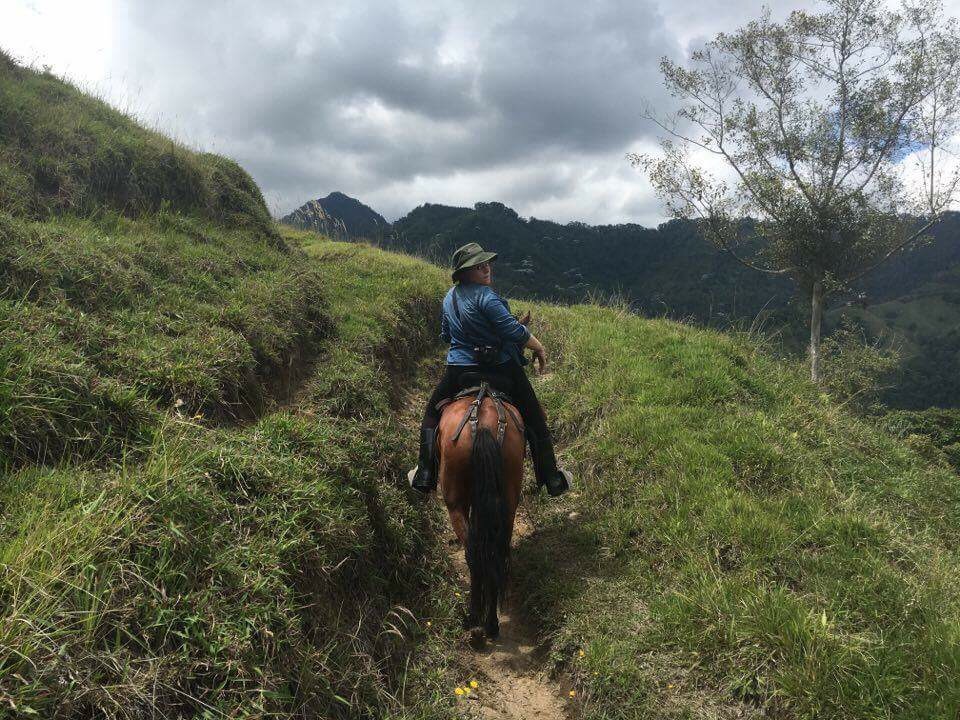
The farm, or more correctly, the ranch, has been in Guerillmo’s family for 70 years. His father cleared all 23 cattle plots, totaling over 300 acres of uneven, muddy, steep and hot grassy steppes, by machete. The family amassed over 350 cows and the main task of the ranch is to rotate hundreds of cows between two dozen plots while keeping them healthy, developing sustainable forms of pest and weed control, planting hundreds of trees to wean off a dependency on electric fences, grow enough food to eliminate the need to traverse in to town, and manage the three families that live on the ranch while working from sunrise to sunset.
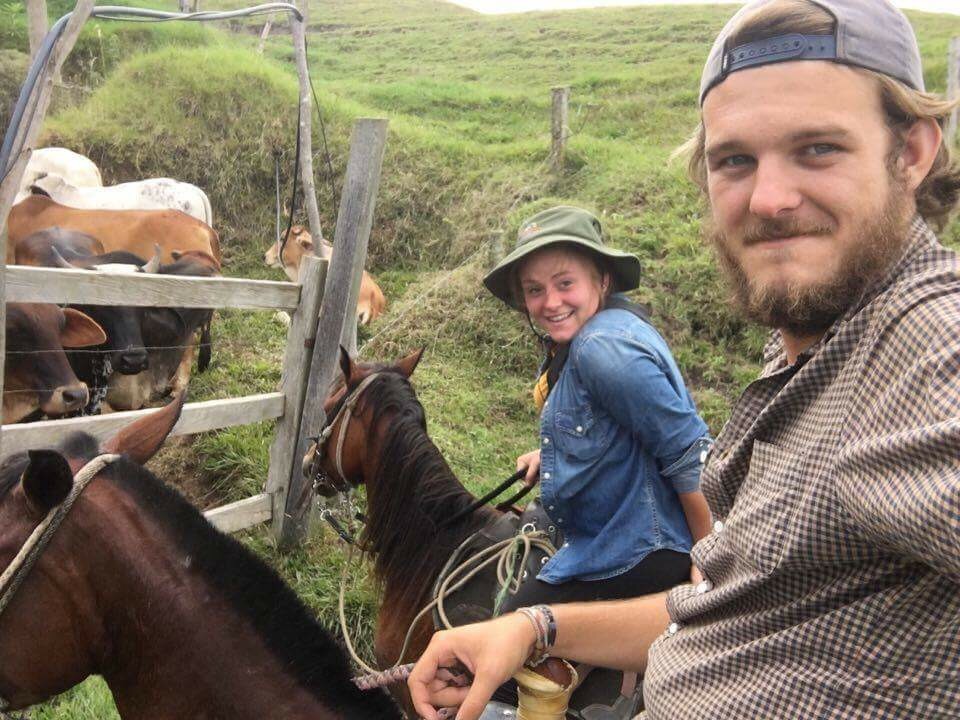
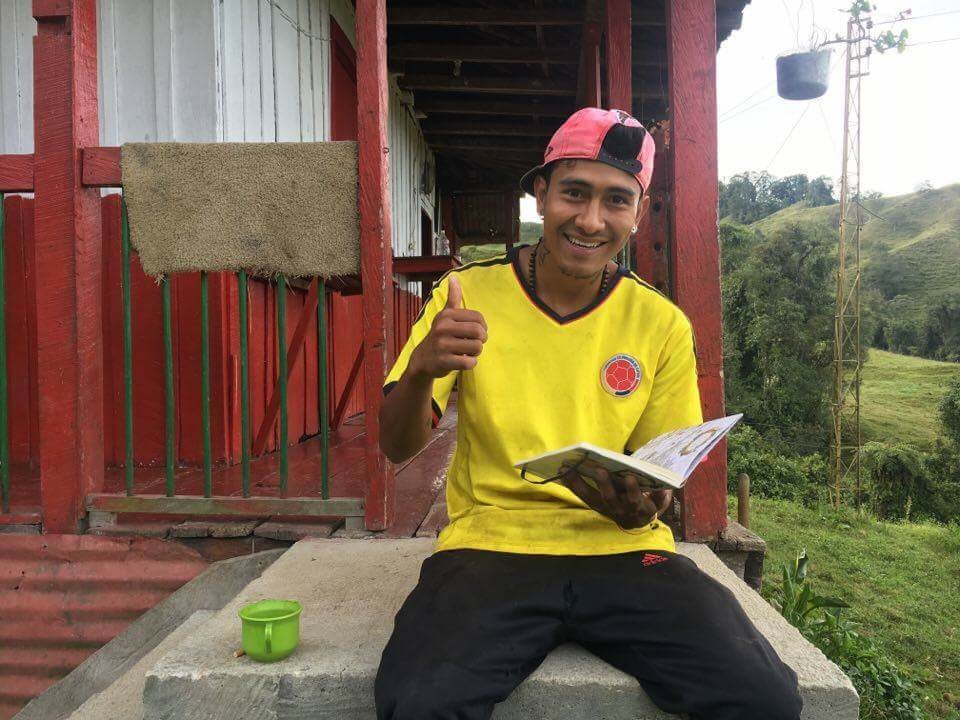
Guerillmo runs this Kingdom, the Don of his household and the patron to the several dozen people that depend upon his employment for existence. Two families live in the main house, accompanied by a family of seven in a distance ranch home and assisted by several seasonal ranch hands. None of the workers have completed high school. Many cannot read, and several do not know how much they are paid. Their work is hard: tending to cattle in the morning, afternoons spent clearing pastures of weeds or removing branches for energy, and making ends meet before beloved sleep in the evening. One family consists of a former prostitute pregnant by her husband, a recovering heroin addict. Another saw brutal violence when he was conscripted in the Colombian army and fought both the left-wing FARC and paramilitaries that commit the kind of atrocities Hollywood directors haven’t imagined yet. A family of five children – none of whom can read or write – is supported by a husband, who works unconscionable 12 hour days and yet can’t be promoted to manage cattle because he never learned to count.
Don Guillermo understands all of this with a wisdom exceeding his 34 years. Each family is given a place to live, for free. They are walked through the Social Security process to receive government aid. One family is gifted several cows for milk, the lifeblood of this land and the key ingredient of almost every meal. Another is taught to grown food, because their salary – paid to all workers, above the minimum wage of Colombia – cannot feed their children. More importantly, they are given a purpose in life. In a world that would sooner mechanize their labor, erase their history, and take whatever possessions they have left, Don Guerillmo gives them a community.
Community is a strange word to write, because it has little meaning in my homeland. Communities are recognized, but they do not contain the same purpose or poignancy as they do here. I am convinced that those who travel to the United States from Latin America can better articulate the essence of the word in their native tongues because it simply doesn’t sound right in English. In English, community is an enemy; it is an important word on cardboard advertisements inside banks. It is the word used to isolate people who look “different” from those who look “similar.” Community is the secret ingredient to “communist” China or ISIS-inspired psychopaths, and as such, different communities pose varying degrees of threat to “our” identity as Americans. We are a nation of individuals, and for all the horror that such an edification imposes upon communities that don’t look like me or speak the way I do, our nation also robs itself of a community by choosing to separate the individual from his herd and then sanctifying that separation.
That was the most important lesson I learned in the Kingdom. But I learned several others, and each of them are worth sharing.
Turning to politics, I believe that I now have a better understanding of the conflict between the government, the FARC, paramilitary groups, and the peace agreement which was signed in Havanna during our stay with Guerillmo. Crucially, different viewpoints on the peace agreement (known as La Paz in Colombia) show competing understandings of freedom and safety in Latin America.
In the next several months, the Colombian government will hold a plebiscite asking citizens to support including the FARC as a legitimate political party. The FARC agreed to La Paz on the condition that they would be accepted, but as of now polling shows that only half the country supports inclusion while the other half does not.
Frederico is a former Colombian soldier and the administrator of several workers on the Kingdom. He does not support inclusion because he believes that it will change nothing. First off, including the FARC will only legitimize the left-wing critiques of the guerilla organization’s hard liners as well as fermenting resentment among the other existing guerilla groups like the ELN. The other groups have not just promised to ramp up their attacks on government interests – they have promised to target FARC members for what they see as selling out. Additionally, La Paz does nothing to counter the violence of paramilitary groups, who enjoy more support among rural populations because they are locally organized and protect (however violently they may do so) against left-wing guerillas, drug cartels, and occasionally what they see as military oppression. La Paz will not end paramilitary organization and may increase their support amongst people who feel that the punishment for the former guerillas – six months of parole – does not punish the organization enough for their terror.
Ladi is Frederico’s wife and a victim of the paramilitary groups from a young age. When she was a girl, her uncle was kidnapped by four female paramilitary members and dismembered until he bled to death. To her, ending violence is more important than justice for past actions. She supports inclusion because legitimizing the FARC may lead to progressive policy making, which could satiate the demands of other left wing guerillas, and may even lead to Colombia’s first left-wing president ever. Think about that: imagine if the United States had only elected conservatives since 1948. Liberalizing the government could lead to real changes in dealing with drug cartels, who ultimately fund both spectrums of political violence, and may even lead to the Colombian challenging the United States on our War on Drugs, which is widely seen as the cause of massive drug production in Columbia. La Paz in an opportunity for short term peace and long term reform.
Both sides agree that drug money fuels political violence and that drug money is supported by corruption in the government, which is supported by the drug policies of the United States. Both sides see the poorest in their country – the rural poor, who live where paramilitary groups and guerilla organizations exert the most influence – as the greatest victims of violence and the greatest beneficiaries of La Paz. While inclusion is not guaranteed by a long shot, both sides see the government’s corruption as he single greatest threat to the future of their country. Listening to them speak was kind of like listening to a Bernie Sanders and a Donald Trump supporter agree on the root issue of their political activism.
Coming to an agreement on systemic, structural problems of a political system is more important than an agreement on the policies of that system. Fredrico and Ladi both agreed on that. It’s amazing that a family of cattle ranchers in remote Colmbiancan disagree on something as divisive as La Paz and yet agree on the root causes of their country’s problems. Where is that agreement in the States?
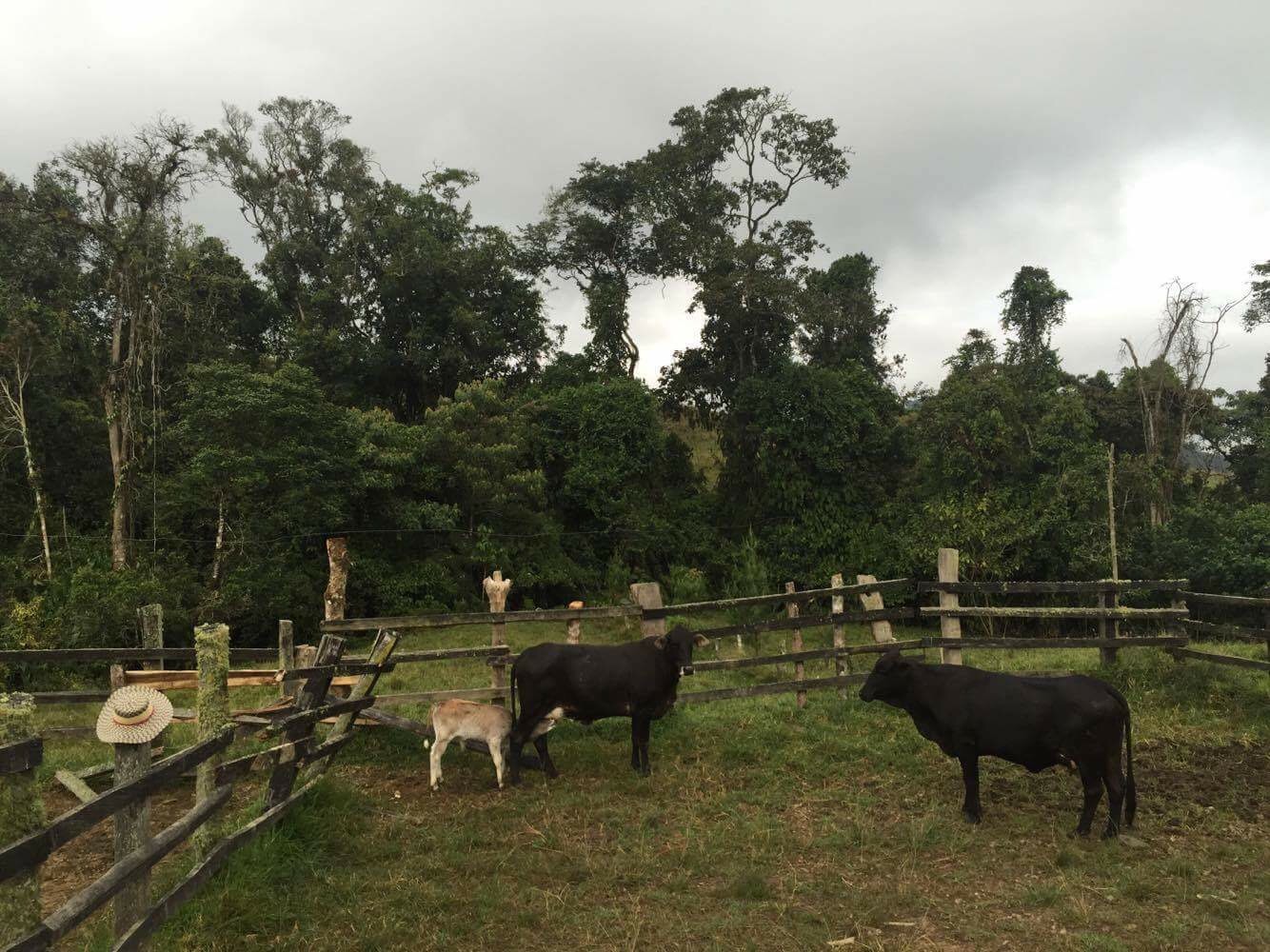
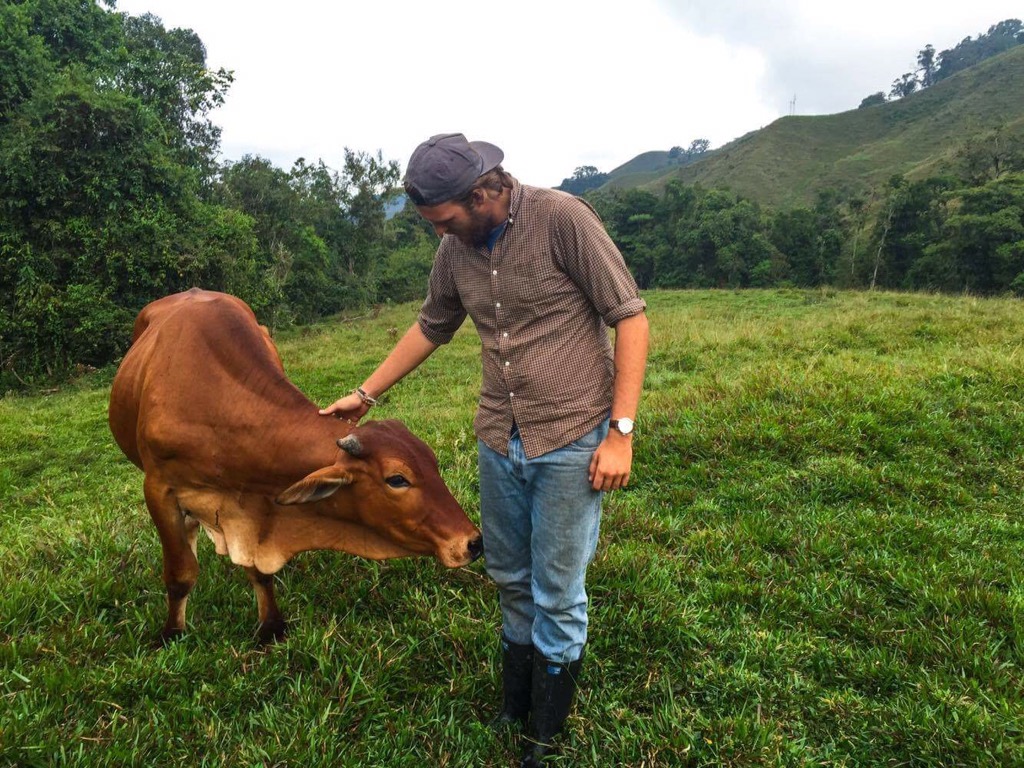
Sustainable development is a necessity. To practice a sustainable lifestyle means to organize your material resources in a way that guarantees their existence in the future. The grown trees will reduce work for everyone, granting the freedom to focus on other and newer projects. If Guerillmo didn’t plant the trees, he’d be resigning himself to needless, hard work.
Organic development is a luxury. Pine trees are not native to the region and their presence alters the biosphere of the ranch. Commercial fertilizer are too strong and often kill more than was intended by polluting rainwater. Progressing to the point where organic development is also sustainable is Guerillmo’s goal; in the meantime, allowing spiders to live plentifuly acts as a natural pesticide, using fertilizer only before rainfalls limits their pollutive effects, and eliminating herbicides by picking weeds from the earth greatly helps the local environment.
In the United States, we often confuse the two forms of development. Commercially farming oranges in Florida (using machines, chemicals, and genetically modified crops) is neither sustainable nor organic. Commercially farming “organic” oranges – using the same mechanistic methods but with non-genetically modified oranges, if such a thing exists in the States anymore – is organic but not sustainable, because it is a form of agriculture dependent on herbicides and pesticides which damage the local environment and will eventually render the practice unfeasible. Similarly, companies which practice environmentally sustainable farming practices with organic food are not truly sustainable. To be sustainable doesn’t mean that the planet feels good or something – it means that the practices of agriculture, and by extension, the economic viability of those practices on an industrial scale, can exist indefinitely. Sustainable, organic produce in the US is not sustainable because the products are sold at a price which would not be profitable if not for the consumer demand for higher-quality products, a demand which can only be articulated by customers with a higher-quality budget.
The bottom line? Real sustainable agricultural development is foreign to the United States. On the Kingdom, those farming and up keeping practices are sustainable because they don’t destroy the local environment, don’t kill or injure the workers (another factor completely untouched here), and can function in the Colombian economy, whose agricultural industry is structured around millions of farmers practicing the same kind of methods that Guillermo uses.
There is nothing sustainable or organic about the cup of coffee we buy from Starbucks. Feeling good about our transaction doesn’t fix the planet, it doesn’t mitigate the incredible dependency we have on other hands to sate our thirsts, and it certainly doesn’t reform a global industry that profits off of a lack of sustainable development. Agricultural reform, in the purest, most revolutionary sense of the expression, is needed to make this planet habitable in our future.
Just a thought.
I want to share a final lesson I learned from working on the Kingdom. When we arrived, Don Guillermo challenged us to count ten different types of birds, bugs and plants. We had to pay attention to the world around us in a way we never had before.
We couldn’t do it. Every time we stepped, ten different types of plants were under our boots. Ten different types of birds flew together, in rainbow-colored flocks, returning with breakfast for their chicks each morning. Ten different types of spiders creeped in my bucket of fertilizer as we spread the grey grain across the hills. There is more diversity in life than quantifiable, and I think that was the point of Guillermo’s challenge: this world contains more variety than we can possibly put into words. It is a sin to posses the hubris capable of ignoring this fact, but it is a greater sin to treat such hubris as moral. We’re just one species swimming in the same fishbowl as an unquantifiable number of other species, bigger and smaller and more colorful than we can imagine.
A story from Guillermo: “When I was younger, I felt the need to change the world. Everyone told me that I could do it, but I wasn’t having much luck. So I told a professor about my problem, and he laughed. ‘Guillermo’, he said, ‘Go lie down in a field one night. The closest star you see is over 10,000 light years away. Imagine yourself looking at Earth from that star. The entire written history of our species wouldn’t even be observable.’ I felt much better after that.”
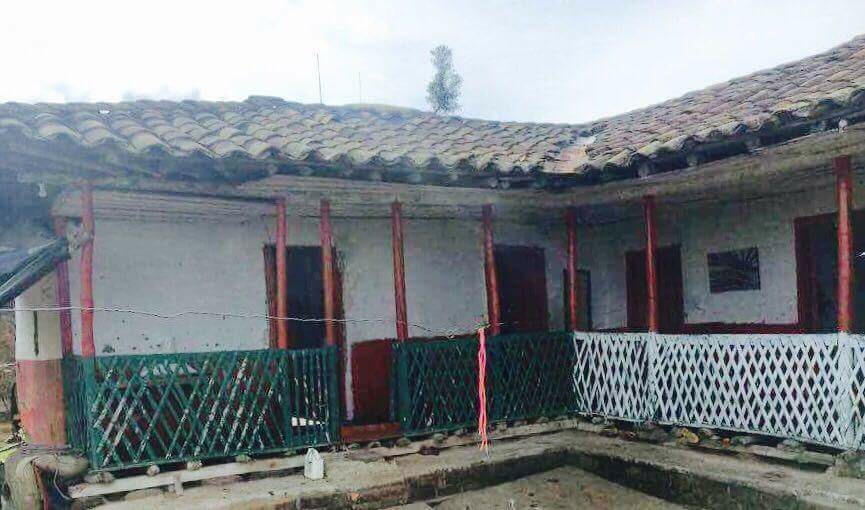
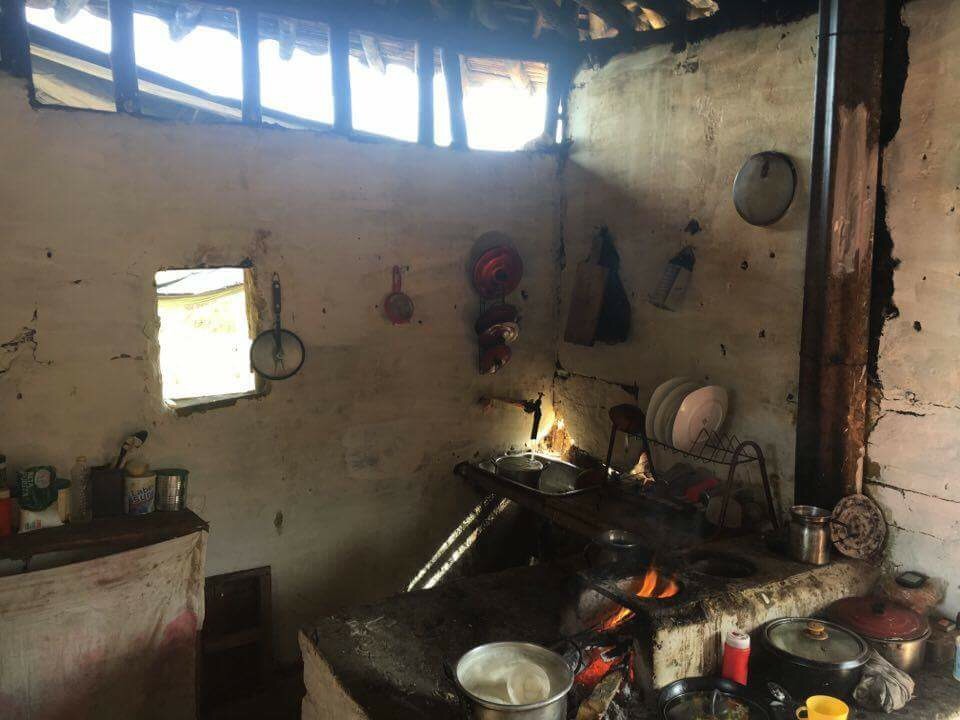 We spent a day painting the home of a worker, the one who wasn’t able to count. Guillermo told us afterwards that he would go into the town, give the clerk at the supermarket counter all of his money for the groceries he needed for his family, and receive substantially less change than he was owed. I started crying when I heard that. What kind of person would take advantage of someone who can’t count? How unfair is it that I can type these thoughts on an iPad in an air conditioned AirBNB bedroom and he has to work 12 hours a day chopping down trees with machetes only to have his money stolen from him?
I hope that this writing will one day allow someone clarity, resolution, or purpose. But right now, seeing poverty and inequity leaves me feeling empty inside, which I suppose is the proper reaction. I just hope that the worker knows about the stars above him, and even if he can’t count, is able to find solace in the vastness of our world. I thank Marjorie, Andres, Ladi, Frederico, and above all Guillermo for sharing such a solace with me this past week in their beautiful Kingdom.
(Bad connection = bad formatting. Fix later.)
 certification
Leave a comment