Tuesday 5.7.2016
Our final full day in Quito was packed. Ingrid and Peter joined us from the outset, and we agreed to go on a lengthy three hour walking tour of Quito’s Old Town to start the day. The couple, whom we had dinner with the night before after a trip to the Guayasamin museum and the statue of the Virgin Mary, were simply a joy to be around. Peter is a former EMT from Minneapolis whose family regularly leads attic dog sledding expeditions, but because his life wasn’t exciting enough at that point he decided to pack up and teach English in Quito. Ingrid is from Norway, is somewhat of a prodigy in biomedical research, and met Peter when he participated in a student exchange program in her home town before they decided to explore Austraulia and South East Asia together. Spending time with another couple, especially one that gelled as well as Peter and Ingrid, was a great break from roughing it alone.
The walking tour was remarkably informative. Three major takeaways from the experience:
- Ecuador is not economically independent from the US. Ecuador adopted the dollar at the turn of the millennia to stabilize wild inflation, and the vast majority of the country lost the vast majority of their savings overnight. Dollars are flown in from the US weekly, and Ecuador ultimately has to run any change in monetary policy, trade agreements, and government-funded economic stimulation by the Federal Reserve.
- Ecuadorians do not generally feel politically represented. Ecuador has a long history of elevating the status of indigenous peoples to regular civil society, but the contemporary approach (involving extensive tribal governance and limited control over agricultural rights for ancient tribes) has only recently begun to make up for a US-backed policy, held throughout the 20th century, of economic and educational segregation. Long standing mistrust of the government, fueled by popular sympathy for indigenous peoples, has led Ecuadorians to vote at lower rates than other Latin American states.
- Ecuador is not prepared to deal with the future. As the 7th largest country in South America by size but listing towards the bottom in terms of population, Ecuador is both blessed and cursed with massive proven oil reserves. The economy is centrally dependent on oil exports to support their social net, but a massive generation gap exists, with older Ecuadorians supporting increased drilling and younger Ecuadorians wanting to protect the envithe on mentally fragile jungles (beneath which lay oil) and shift the economy to one focused on tourism. Which is nominally commendable, except for the habitual earthquakes that tear up infrastructure and prevent the country’s young tourism industry from getting off the ground.
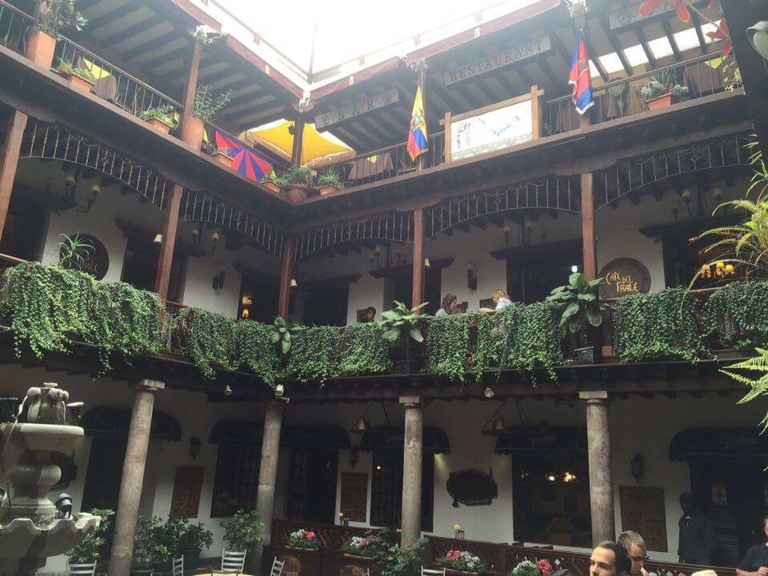
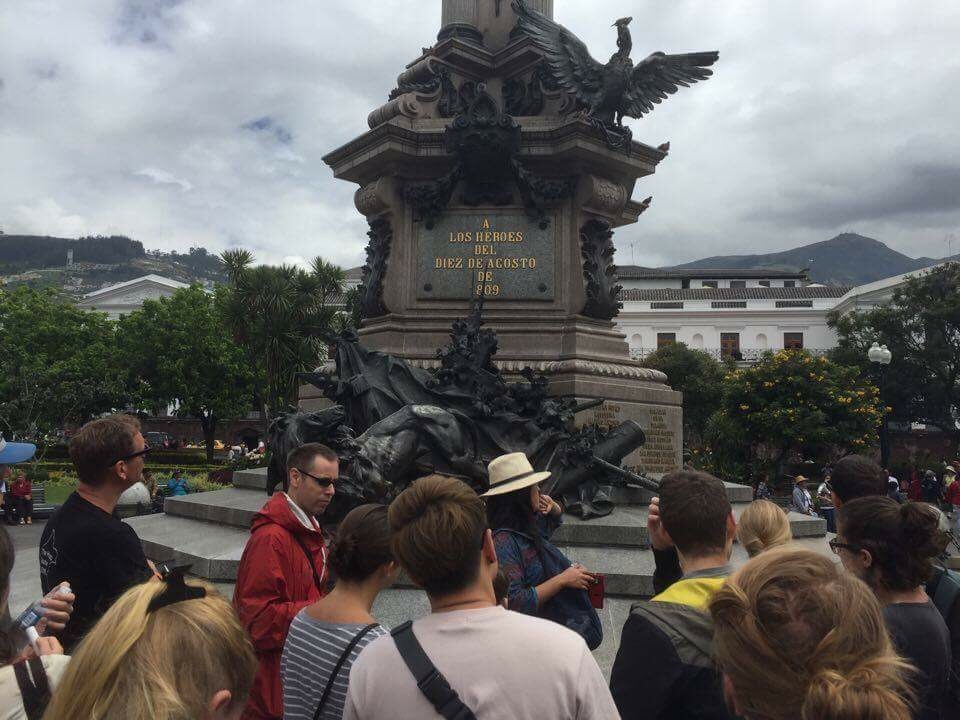
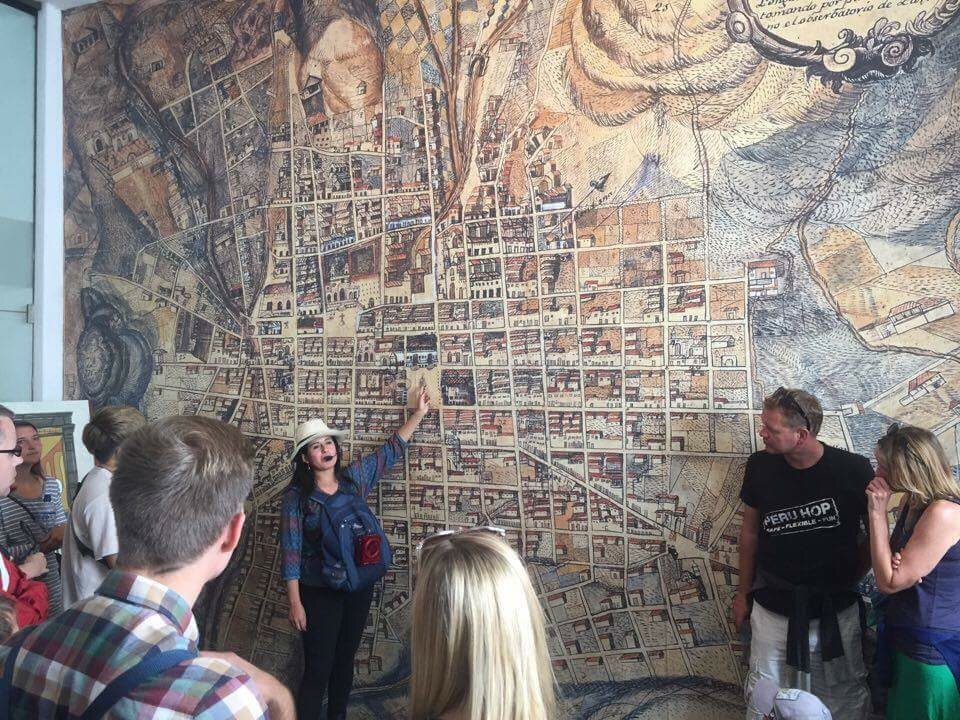 We learned all of these things during a beautiful, slow walk through Quito’s Old Town, which is a UNESCO world heritage site due to a very well preserved colonial cityscape. Fun fact: two presidents were assassinated in the main square of Quito in the late 1800s. One was hacked to death by a machete in broad daylight. There’s something about being an American and hearing about other country’s sick political violence hat brings me a bit of sardonic joy.
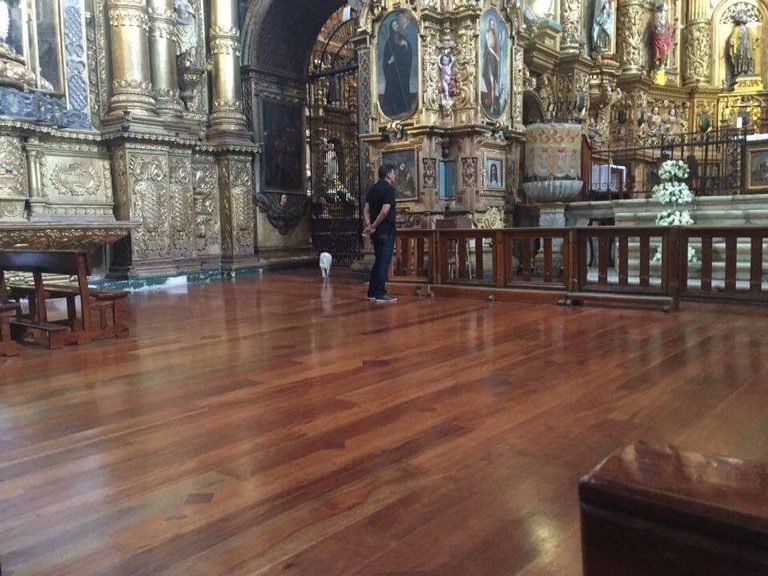
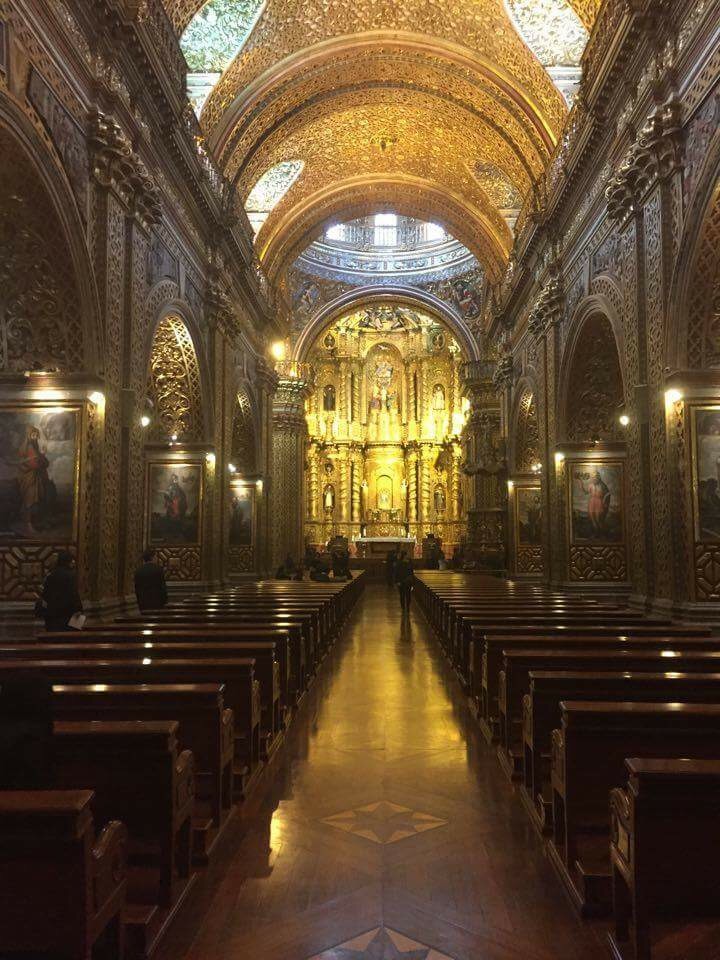
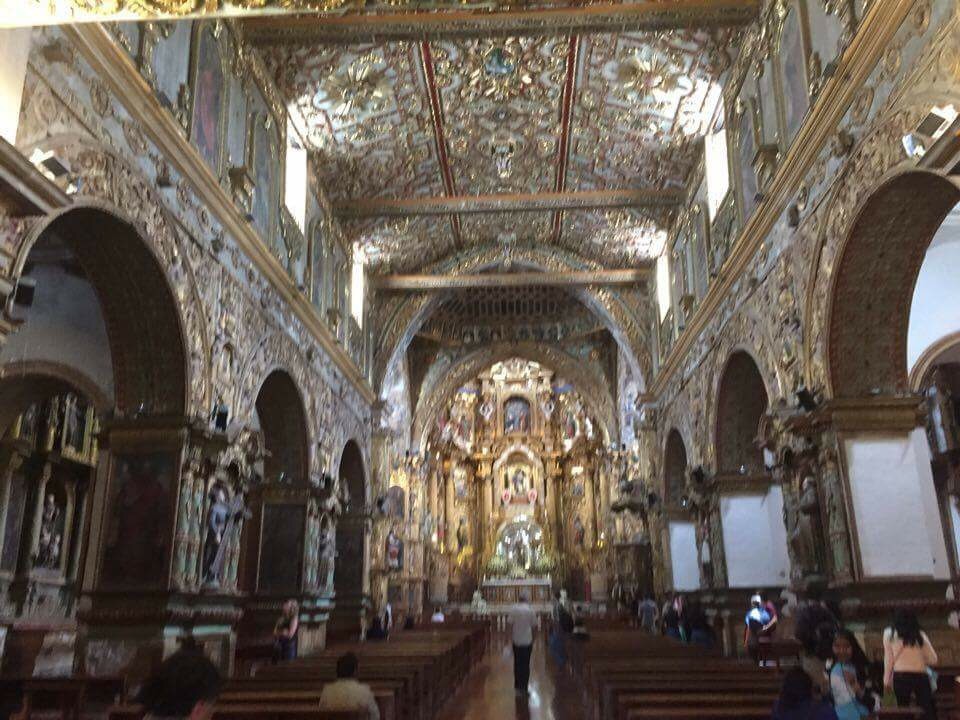 After the tour, we ventured into La Igelsia de Compania del Jesus Cristo, openly advertised as the most popular destination for tourists in the city and not without good reason. The church is layered in gold, more gold than I have ever seen in a single building. Of course, the church was built by indigenous workers (politely, the enslavement and maltreatment of construction workers is labeled in the church’s bulletin as the “tireless work of hundreds of Ecuadorian hands) and, due to laws preventing indigenous languages from being inside Catholic Churches, the sculptors of the church “signed” their names by leaving hundreds of images reminding converted Christians of their homeland – maize, Incan faces, and local fruits are snuck into the gold leaves with remarkable consistency.
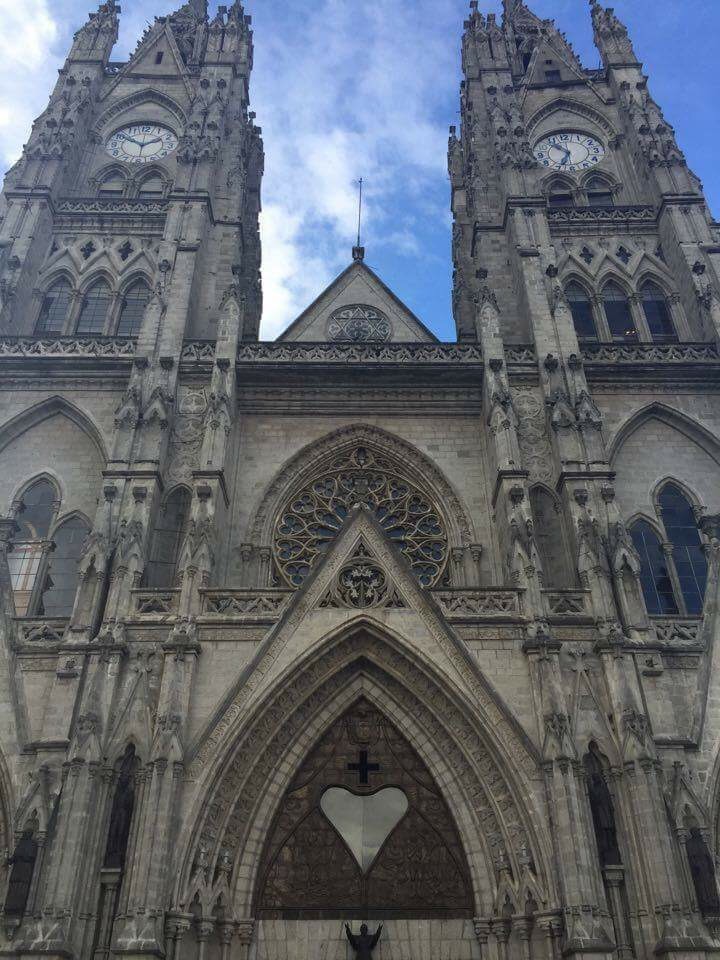
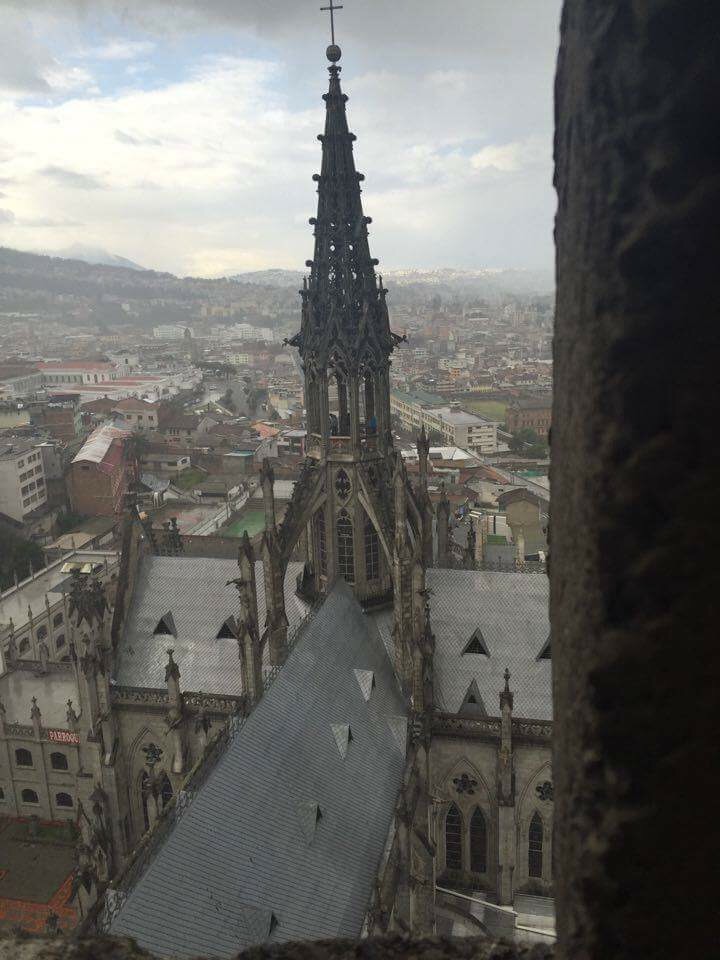
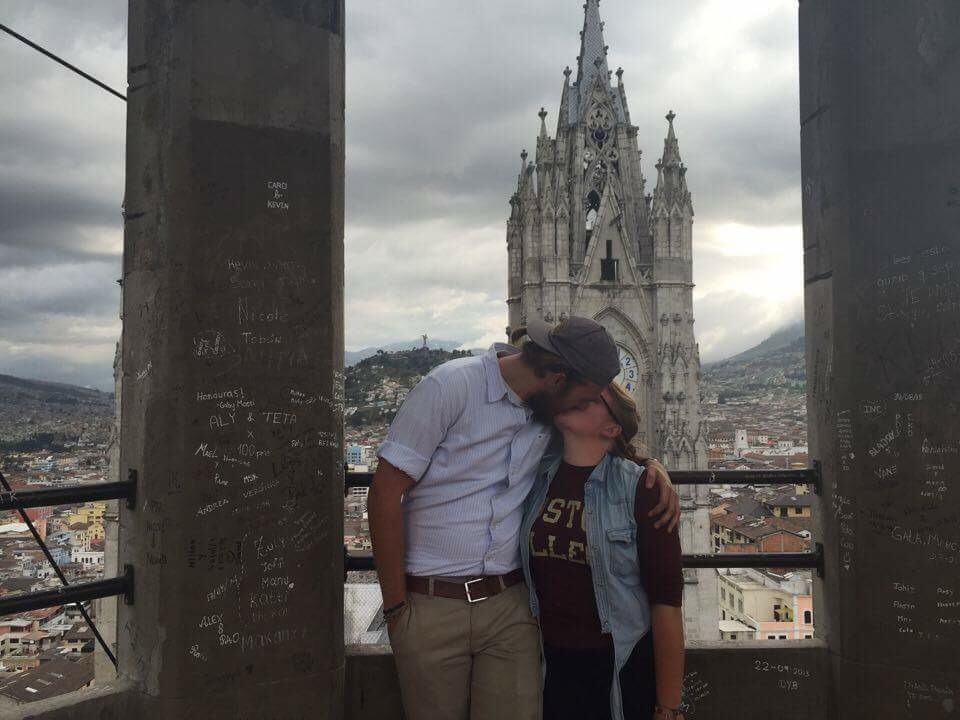 While La Compania (“The Company”, as it is called; a name that makes me giggle for an entirely different set of ideological reasons) is the most glamorous church in Quito, La Basillica is a church for the people. The Notre Dame of Paris-inspired megalithic building towers over nearby barrios, her twin spires and rear-mounted tower possessing the otherworldly charm that excellent Gothic architecture seems to exclusively own. For next to nothing, tourists can walk up the many flights of stairs to the top of the twin spires and tower, passing along the way thousands of cute love notes and ardent political message scribbled on the walls in sharpie. The view from the highest point is indescribable, and the resolutely gray Basillica enjoyed an afternoon shower as we climbed it, drenching the surrounding homes with run off from her supporting exterior buttresses.
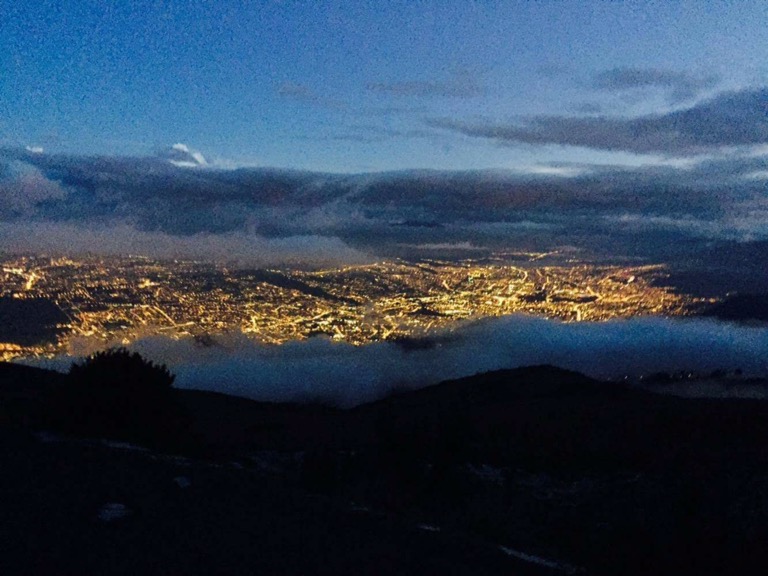
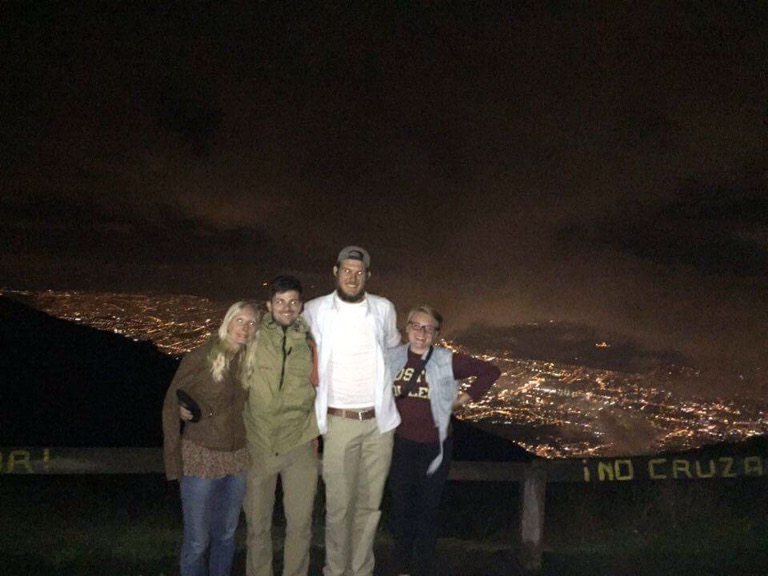
The last major tourist trap we decided to endure was the TelefriQo line, a cable car (like Medellin’s) which slides down one of the hillsides of the sprawling city and pulls passengers through clouds and snow fall. The humidity from the clouds fogged up the glass, but the four of us were ecstatic with the news that Peter had landed his job as an English teacher and we laughed the entire way up. At the top, we could see Quito’s 2.5 million people stretched across an impossibly huge swatch of city with the falling sun in the distance. If you ever go to a city with a cable car, you haven’t seen the city until you take it.
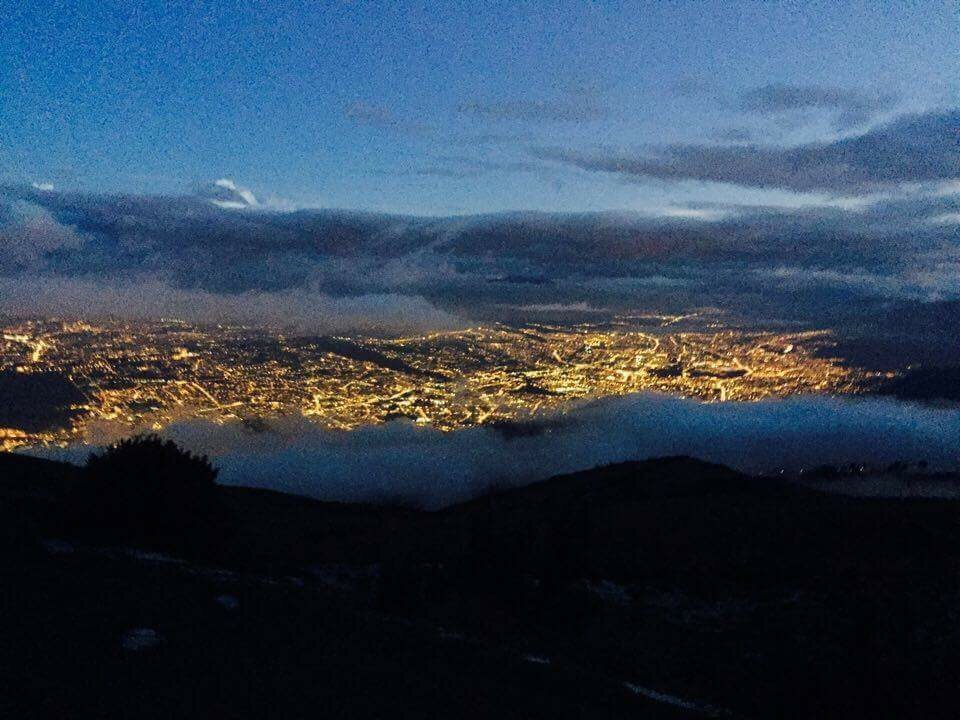 A small bar at the top of the mountain served us beers and hot chocolate, helping to stem the freezing weather and snowfall on the windows. We managed to make one of the last cable cars back down and enjoyed a dinner at the AirBnB Molly and I stayed at, which was followed by an interview with Peter and Ingrid on the nature of being an expat in the new millennia. After an emotional walk to the cab, we wished our new friends good luck and checked out for the night.
 certification
Leave a comment