Friday 15.7.2016
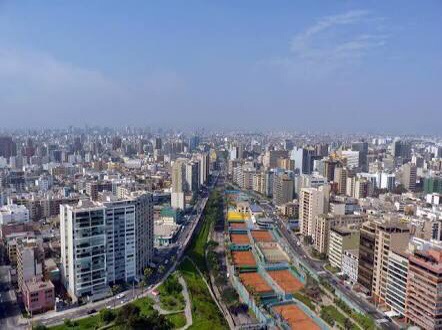
Our time in Lima is coming to an end and my impression of the city is worse off than when we arrived. It’s difficult to describe this city in such a context that would make sense for Americans; it is large and sprawling, like many of our cities back home, but lacks a sense of direction or planning. At any given moment a view of the city takes on a stratified affect: the lower, immediate level is charming enough but more often gray and dirty; the more intermediate level contains a painfully never ending swath of shack homes (there’s always one within sight), mixed in with the paint of graffiti and the sound of traffic unlike any I have ever heard; the distant level bends around the view, with far-off shack housing staining any familiar color with the greys and browns of a city that cannot afford new paint.
Large skyscrapers litter the view seemingly at random, performing impossible twists that seem alien in this environment yet speak to the continuous modernization of the city. Freeways ten lanes wide (broken in half by a metro-like bus system) crisscross every direction, forsaking the natural estuaries that historically populated the metropolitan areas with lanes of motion as gray and dirty as the few remaining instances of water that hide behind ripped chain fences.
Color in Lima comes in three forms:
– on the dress of her citizens, who gather en masse at shopping malls, toting hundreds of dollars of merchandise in dozens of bags improbably all placed on a single arms. Peruvians in Lima dress to the nines, as they say, and the lack of environmental stimuli is partially made up for the always-chilly fashion senses of the city’s younger inhabitants.
– on her roads, where car makers assert their might over the city’s environmental and traffic-based concerns with a never ending flow of brightly colored automobiles. There is a taxi for every privately owned car and the constant go-stop nature of taxi riders produces an accompanying, constant horn sound which simply cannot be compared to an American city. The color of cars may be difficult to identify with great detail due to the inability of bystanders to appreciate such scenes with relative peace.
– on her advertisements, which reminds Peruvians of the dismal state of domestic industries. Coca-Cola in particular has colonized every open advertisement space along the city’s major thoroughfares, resulting in dozens of blonde-haired, blue-eyed models looking down unto the brown/brown inhabitants of sidewalks and taxi cabs with an effect that can only be described as Orwellian. High-quality Chinese phone advertisements promise connectivity, Chevrolet cars promise affordable mobility, McDonalds has never looked more appetizing – and even the country’s national drink, Inca Cola, sports the Coke symbol like a brand.
I sympathize with Peruvians who live in Lima. The city wasn’t built for them, the government doesn’t seem to care about them, and there are so many opportunities to give away their money. The entire city almost has a theme-park feel, as a place of structure but little substance. I hope to return one day to find my impressions challenged and overthrown.
For now, I’m just happy to move on to Cusco.
 certification
Leave a comment