Sunday 17.7.2016
From the rooftop terrace of our inner-city hostel, we could see all of Cusco. Like so many other Latin American cities, the town is built into a valley and at night one has e feeling of swimming in a fishbowl of bioluminescent creatures. Fireworks sounding an awful lot like gunshots went off every thirty minutes, drawing the attention of what little police presence existed for the non-tourist part of town (where we ended up staying). The complete effect was one of confusion and aimlessness; but we had been confused and aimless all evening, simply looking for a place to sleep, and the result wasn’t horrifying.
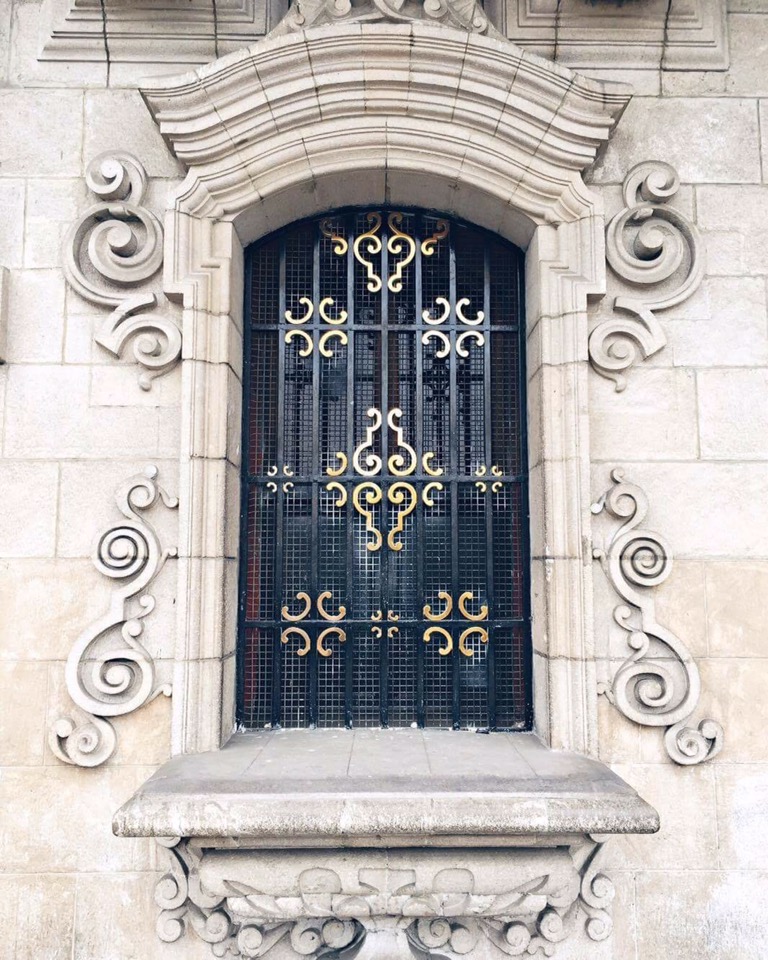
In the day, Cusco betrays her post-imperial history. An airport is placed in the literal middle of town (contrasting sharply with that oh-so-romantic Colombian gem, Medellin) and the only cars bothering to traverse the winding near-vertical cityscape are taxis. Plaza del Armas sits in the “historic” center of Cusco, hiding none of the turista-only souvenir shops and overpriced pizza joints with a freshly applied coat of white paint and long lines for another cathedral laced with indigenous gold.
Unlike Lima, Cusco has a character. Large romanticized statues of Incan leaders dot the urban center and children play football in the streets. Food can be smelled here, as here is no haze looming just above rooftops, and the air is clear. The high altitude has blessed the old and young with a vitality our sick and nicotine-enriched bodies simply do not have – going up and down streets is avoided at all cost lest we stop every block as young boys job by without breaking a sweat.
Like Lima, Cusco is not really Cusco. Qosqo, the ancestral homeland of the Incans, was burned many centuries ago by the Spanish. Cusco was rebuilt later and served as little more than a train stop heading south. At the turn of the 20th century, legendary Machu Picchu was identified nearby and the town exploded with speculators hoping to capitalize on the tourist magnet. Shops advertising “authentic Incan food” use microwaves and their pizza has ketchup. Every street has an “authentic” llama-wool clothing store. You get the jist of it.
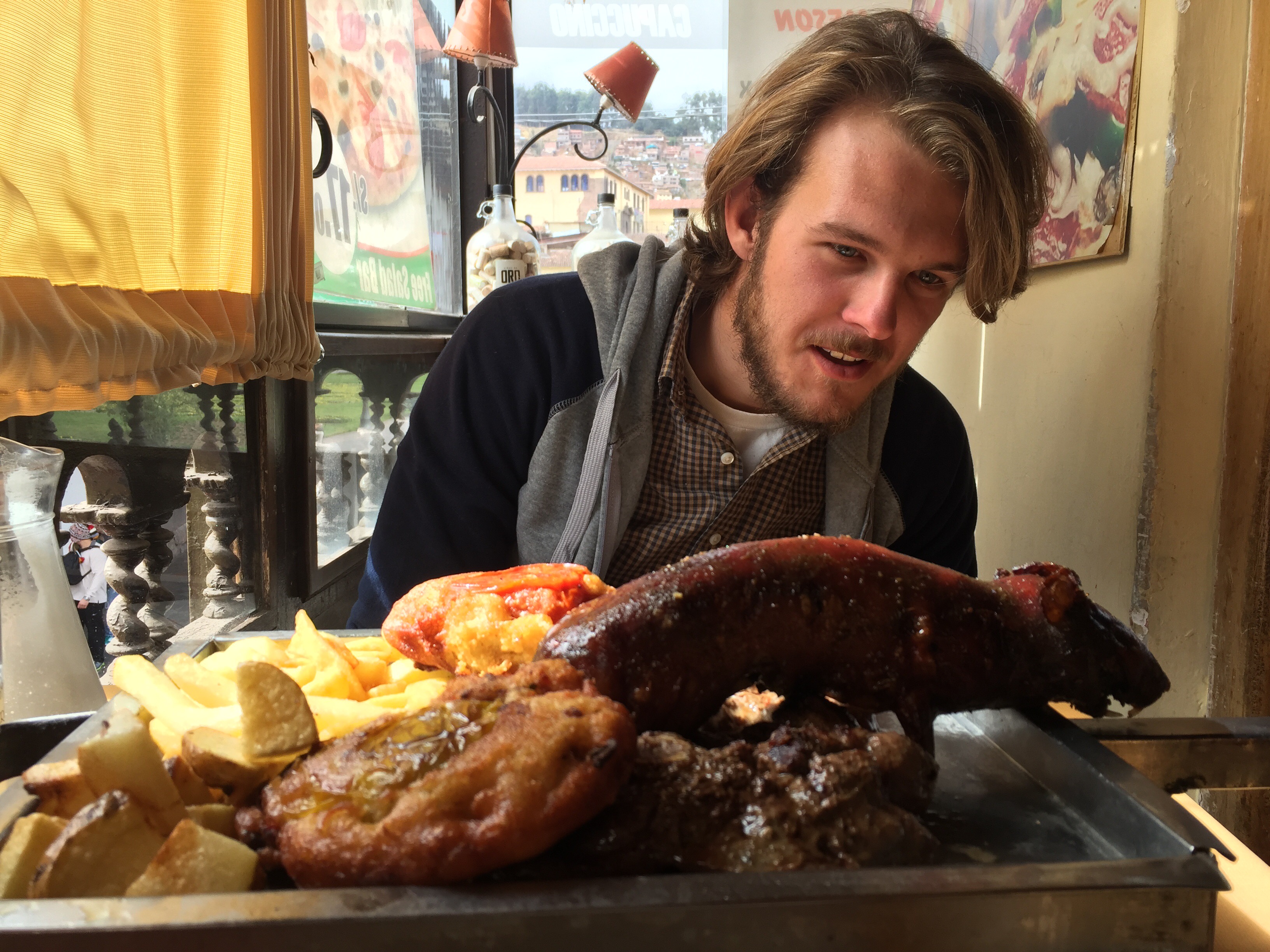
Molly and I bit the bullet and tried cuy (guinea pig, but I feel bad writing it out) alongside alpaca at lunch, two meats which I can now satisfactorily dismiss from my future appetite. Cuy is particularly gruesome; the rodent is served naked and charred but whole, on a hot platter similar to beef at a high end steak house, before the waiter desecrates the mammal with a butcher knife. The quarters of cuy are then dissected with fork and knife and finger under the advisory that “real Incans eat everything, even the bones” of the beast. The meat was wrapped around joints and limbs and was tasty enough if not oily. But the skin had the texture of rubbery chicken and was difficult to chew, especially once the constant reminder of our meal was brought to us by the poor soul’s beady eyes. We managed to take a swing at the body before going for the head (“eating the brain is good luck” – right) and exploring what we realized was the cranial cavity. On this day and this day alone, I ate the gray matter of a bona fide guinea pig. The alpaca was dessert by comparison.
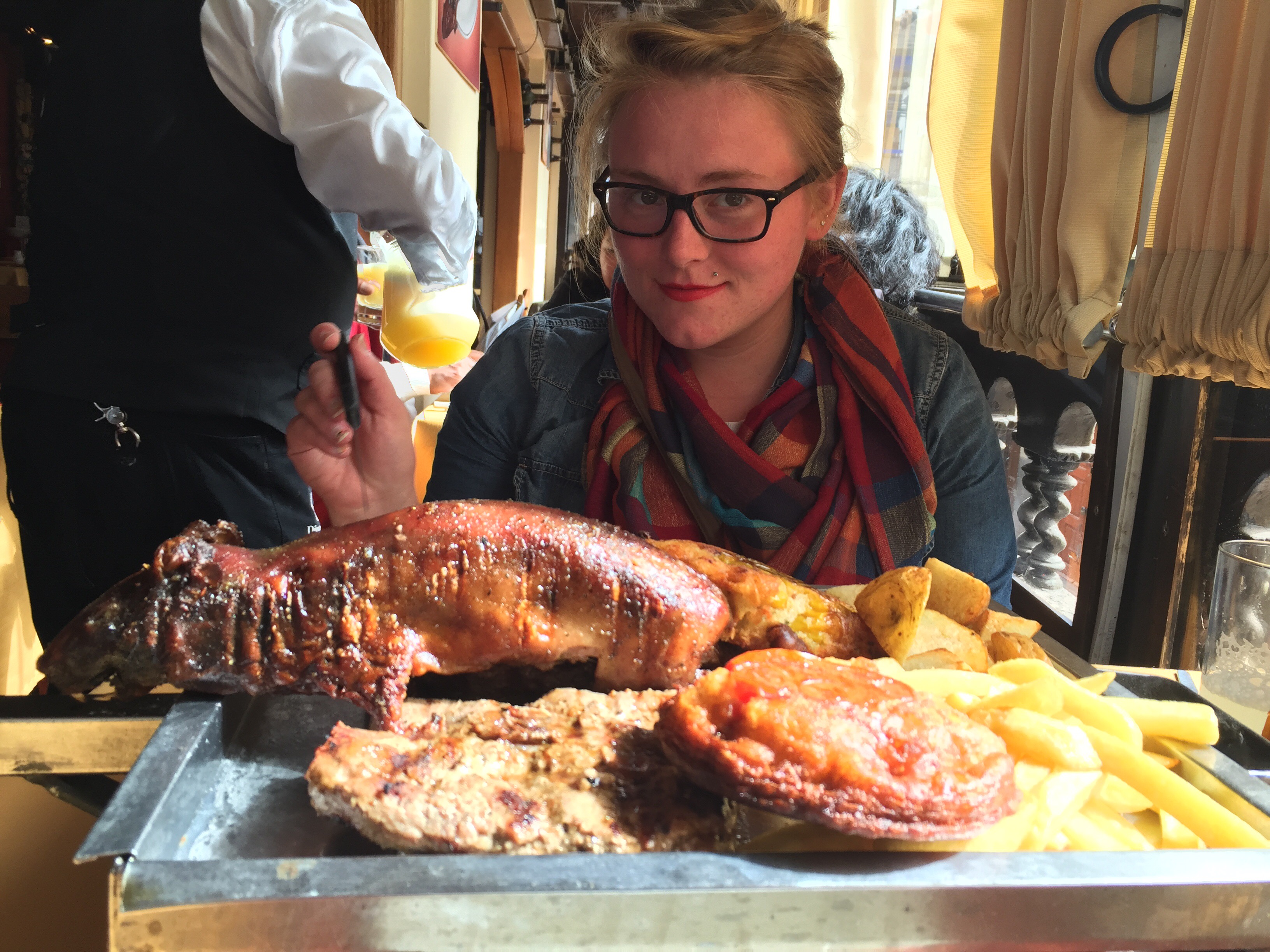
Eating cuy became an analogy for how we approached the cultural experiences of Peru. Peru is a beautiful country and the people are hardworking, genuine human beings. But the economy is structured to rope in tourists and serve them a half-hearted version of Peru, and from start to finish we couldn’t escape this fact. What tour guides called “local customs” were part of a sales pitch, constantly. “Incan”, as an adjective, is a mix between pejorative backwardness and cultural heritage, but through excessive demonstration the former always seems to be referenced more than the latter.
Like cuy, Peru has a strange taste. It is not what the casual diner may expect, and to be sure it is possible to enjoy the experience. But like cuy (which traditionally is a celebratory dish eaten only thrice a year), the Peru turistas experience is nothing less than a bastardization of what Peru was and is. We are given the superficial, spiced with topographical pleasantries guaranteed to entice, and protected from the truly widespread economics of disparity of exploitation that have arisen as a result of that serving. We are given flavor but no substance.
Eaters beware.
 certification
Leave a comment