Tuesday 19.7.2016
At 5 in the morning, Molly and I were packed and ready to go. Our hostel had called a cab to take us to the nearby train station in time for our early morning trip to Aguas Calientes, the closest village to Machu Picchu and a Disney World-esque town made for foreign tourists.
The lines leading up to the train reminded us of a Peruvian traffic jam, with no real order and a variety of options on where to go. We were hustled on to the train by attendants who realized that single file lines were not in this crowd’s character, and had the pleasure of sitting across from Abril and Alejandra. The young Mexican travelers were taking a break from being human rights lawyers in Mexico City, which I could only imagine is a hellish profession.
We spoke at great length about the election in November, the Mexican people’s feelings towards the policies and rhetoric of Donald Trump, and the nature of their careers. Both work extensively with young women and have received death threats from judges who were targeted for explicitly sexist behavior towards female employees (like making his employees crawl in to his office). The young women were remarkably well versed in the nature of law practice and talking to young lawyers is just about the coolest thing ever so the ride to Aguas Calientes was an amazing one.
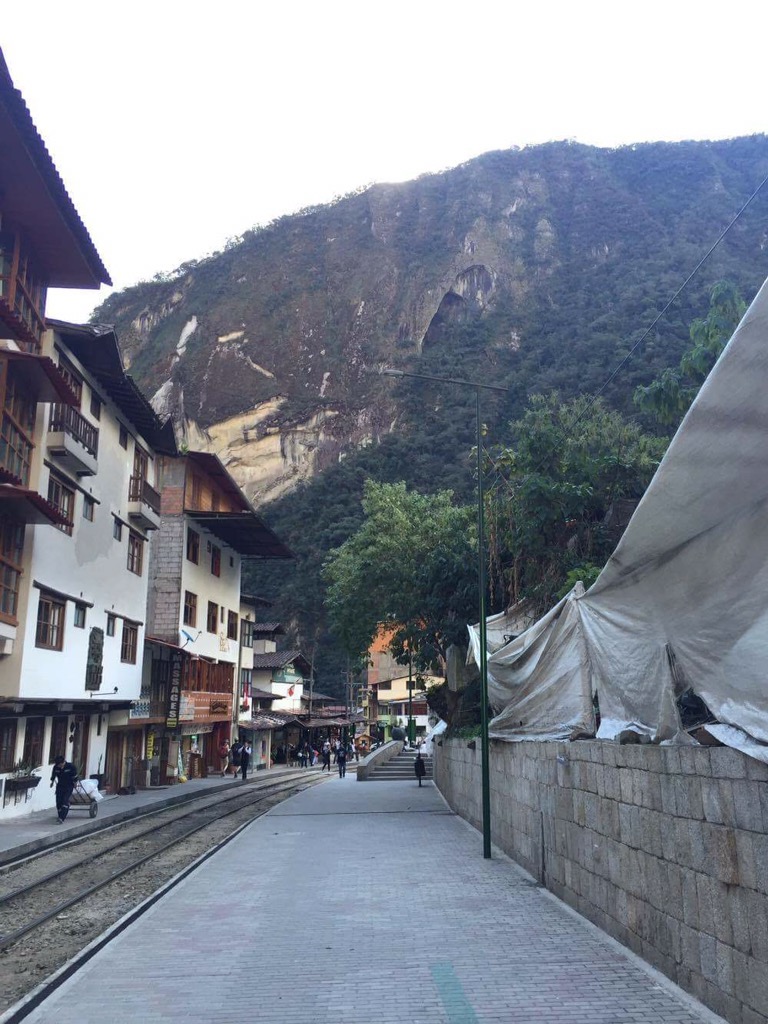
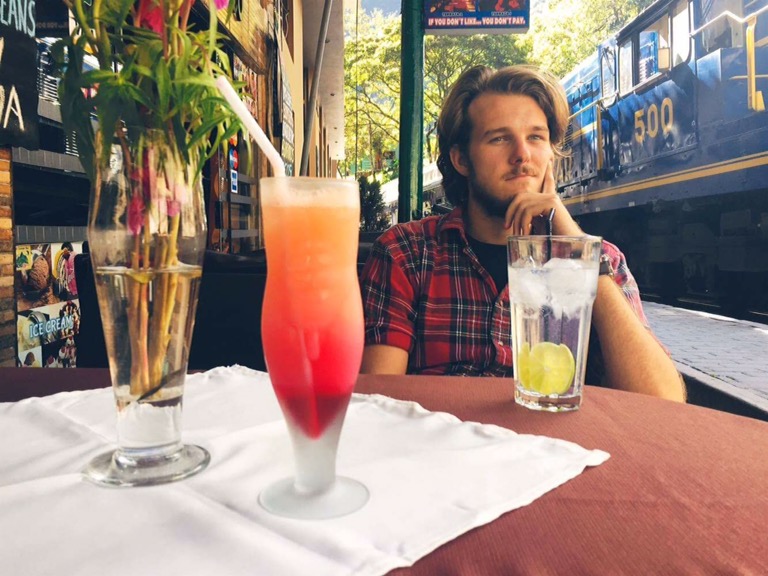
Finding a hostel was easy enough. The walls were, not figuratively, made of cardboard; Molly and I acidentally kicked one of the paper-thin walls loose when closing the door. Lunch, as every meal we had over the next two days, miserably argued against Peruvian cuisine’s recent ascension to the French-occupied World Heritage status. We had a mojito, but the bottom third of the class was unstirred sugar. We were not amused.
 In the midst of all of our not-sterling first impression of Agias Calientes, I was reading a portion of Mann’s 1491 which detailed the rise and fall of the Incan Empire. The Incans were prolific statecrafters, constructing an irrigation system that brought Ecuadorian water to southern Chile at a time when most of Spain didn’t have irrigated agriculture. They managed to complete massive public works projects in remarkably inhospitable environments, lining their kingdom with a road network rivaling Rome’s.
Walking through Aguas Calientes was strange because it was like staring into the future: are all great empires marked by the tourist traps that rise in their place? And then I thought of Orlando, and then I wanted to go to sleep.
 certification
Leave a comment