The green, purple and red scarf in my backpack would make an excellent pillow right now. Somehow I end up sitting next to very talkative fat men with excellent English on bus rides home after a long weekend and on this blistering, still afternoon a nap would be great. Unfortunately, I used my backpack to prop up the broken isle seat for a mother and her child to sit on next to me, meaning that the warm, soft scarf is stuck under the butt of a loud child.
Instead I lean back against the pleather head rest and try to relax. The headrest is about three inches too short for my neck and the sheer girth of my fellow passenger prevents me from sliding down in the seat for a more optimal angle. After a minute of craning, my neck starts to hurt. Even worse, my jaw refuses to stay shut as I slip in to hazy dreams in the sun, and I drool down the side of my mouth. Large bumps knock me awake and I try leaning on to the seat in front of me, strategically placing one arm on the thin plastic hand bar caked in an untold quantity of grime and sweat and the other arm on my thigh, forming a precarious scaffold for my head to rest. Which works, for a moment or an hour I’m not entirely sure, but at least my attempts at resting have convinced the large man to stop asking me about politics in America.
The mother gets up to leave and the large man leaves with her on the same stop. He shoots me a dirty glance for both rejecting his polite attempts at conversation and for skipping the line of passengers shoving their tickets in to the hand of a single orange-clad Horizon Bus Company ticket representative; I shimmied between the two parked buses and strategically lifted my bag through the window of an enviable seat so that I wouldn’t be stuck in the horribly cramped middle isle. The scarf is now incredibly warm and soft and I first try to place it behind my head before going full bore and leaning against the window, where a surprisingly cool stream of air plays with the untamable curls snaking down my neck, and I’m able to colonize this row seat with dangled legs and tactical shifting so that I must look like a recently knocked out burglary victim, drool pooling on cheek and everything. I’m in heaven.
It is not uncommon for Rwandans to feel particularly inclined to brush my skin, I guess to see if I am real or not. I’ve had shop keepers lift my arms and inspect my biceps like chunks at a butchery. While I lean over in class to help a group with an assignment, I’ve felt tiny hands fleetingly touch my hair and twist it in their fingers. Sometimes students full on grab my butt, which I have yet to discover an effective response to. Occasionally mothers will give me their babies which I cradle with care, and then they wrap their baby hands in my messy, wiry beard. If they have a good grasp, I let them dangle from it, with hilarious results. The most common form of this most intrusive of interruptions – the unsolicited, curious touch – happens on bus rides. Kids will poke at my sweaty lower back if I sit in the middle isle, where the seats angle in such a way to leave that most embarrassing stretch of skin painfully exposed. Boys will run their fingers along my tattoos and trace the lines, feeling the slightly raised ridges of ink. It’s a humbling and magical experience, to feel a stranger like this, because it reveals a childish, insatiable curiosity, and for some reason I can’t help but grin every time it happens.
Today a young woman (mid twenties, I’d guess) full on grabbed my hair while I was sleeping. At first I thought the wind was just playing tricks with my sleep-deprived, incredibly dehydrated nerves, until I felt the palm of a hand touch my scalp. My eyes darted open. Her fingers touched my eyebrows, played with the light unkempt curls near my ear, and flipped my hair my back forth to see the blonde flash in the sunlight. When I opened my eyes a little more, three other women were all grasping the back of the head rests, eyes visible only, and giggled with unbridled self-consciousness while trying to hide behind the seat. I could only see the culprits hand, which was waving. I waved back. And fell asleep.
The next intrusions were less invasive. My hand was draped over the backpack and I could feel the gentle kisses of fingertips brushing against the hair on the back of my palm. It tickled, so I laughed, and then all of the spectators laughed too. I pulled back the thick sleeve of my wool sweater and showed them my arm hair. All four women reached out and ran their hands up and down my forearm. They were holding their breath. As we came up to their stop, they all waved and thanked me – “Murakoze cyane!” – and giggled getting off the bus, staring at me as we drove away.
In the past year, I’ve learned a lot. Personal space, as a concept, has moved from the ritualized, unspoken and physical area in to memory. Personal space is not really a thing. Maybe we can call it a luxury, and with that the height of luxury – to expect others not to be “too” close to you, to not stamp on your toes while you’re trying to buy a bus ticket, to not press their thigh against yours so that another person can squeeze in to the seat, to not drape their limbs behind your back because that’s the only place a free arm can comfortably rest. I didn’t expect my personal bubble to shrink this quickly and so dramatically in a year. It is strange, now, to think about the pained expressions of passengers who must squeeze together on a subway car or who whine about having to smell someone so close, as if everyone else crammed in to a tiny space wants to smell your armpits, wants to smell your breakfast bowl from Denny’s, and thoroughly enjoys the runny, nasally assault of your breathing.
Personal space exists because we pay for it; we pay to live far away from other people, to see them once a week at church or to say hello and goodbye to them at work before going to our own cars that only carry one person to go to a house in a subdivision or a “studio” apartment than holds one but could hold twenty. We enjoy this space and call it “privacy” and treat it like a right, as if humans are born alone and have the full rational expectation of existing without the awareness of others or without their awkward smells.
In Rwanda, privacy exists. Only a few people really have it; the ultra-rich, those who live in houses or “studios” in Kigali that would appear to be middle-class homes in America but are really the stuff of legend where I live. Those nice house owners have cars that they pay people to drive them around in, bodyguards to protect them from criminals in a country with the world’s lowest assault or burglary rates, and clothing – fresh, clean, pressed Western clothing – that is washed and prepared by someone who wears the same thing every day. Ask anyone why they like President Paul Kagame, and a likely answer is that he drives himself around Kigali on his free afternoons, breaking the unspoken rule that the wealthy should use their riches to separate themselves from “the rest”. I’m talking about a real thing.
Because us Americans are so inundated with luxury that we have a hard time recognizing where it begins, we frequently overlook privacy and personal space as articulations of this privilege. I use “us” carelessly; many Americans share their homes with extended family, or they live in apartments with other humble apartment-dwellers, or they live in retirement communities with paper thin walls designed to be easily smashed through in case of an accidentally locked door. Many Americans live in hospital beds where they hear the wails of a stranger fluctuate and pitch at late hours. They live in their cars, and they roll up the windows at night to at least mute some of the noise.
But because we – the privileged, middle class, 2.5-child owning American family, whose children had a chance to go to college, whose parents have enough savings to get through the next month – are so inundated with luxury that we have a hard time recognizing where it begins, we frequently overlook privacy and personal space as articulations of this privilege. Or at least, I certainly did. I would get anxious in class if our desks had to bump up against each other. When I was a kid, my brother and I put tape down the middle of the room, which was a valuable lesson in the impracticality of “personal space” because while I had the closet Zach had the doorway and I would have to wait for him to leave before entering or leaving my bed.
Rwanda has taught me that personal space is 1) socially constructed, 2) contingent on the norms of the society it is constructed in, and 3) practically nonexistent in places where people make around $300 a year. Most people cannot afford to buy two grass mats, so their four children share one, their gross, sweaty thighs pressing up against each other every night until they get married and move in to a new home. Most people cannot afford to “eat out” and if they do, they go to a place where a hundred other people have chosen that day to not cook for themselves, pulled their week’s savings out from under their child’s grass mat, and are happily sitting cheek-to-cheek munching on ubugali with meat sauce. And only the extravagantly rich take a car from Kigali to another town – everyone else piles in to a bus or the even smaller twege, limbs overlapping, the sweet nectar of sweat on leather wafting in to everyone’s nostrils, literally lying on top of each other to conduct a transaction with the young man selling juices outside the window.
Rwanda has also taught me that this lack of personal space is unbelievably, inarguably better than whatever notion of “privacy” we have in America. Rwandans respect each other. They pour out love when prompted because everyone has had to hold a child while her mother is re-arranging her igitenge. Even as babies, Rwandans spend the first year of their lives wrapped on their mother’s backs, legs and arms snugly spread around the ribcage, hearing her mother’s heart every single moment of the day; the proximity is natural, comfortable, and beautiful.
I’m not able to make wide claims about Rwandan culture but if I had to guess, I would think that this proximity to one another is what makes Rwanda work. Every inch of farmable land grows something and any excess is shared with another, no matter how small the excess or how ostracized the other. Even us mzungu are occasionally gifted with the curious, hesitant brush of fingers on arm hair while trying to recover from a weekend with a nap in the sun. Back in America, that kind of thing would have freaked me out. In Rwanda, I’ve learned to love it.
***
September 2007. Dad wasn’t home for the first day of seventh grade and mom drove us to school. Dad hadn’t been home in a while. Zach wanted to audition for the school talent show and I told him he would be a faggot if he sang the Plain White T’s “Hey There Delilah.” Mom slammed on the breaks in the middle of the suburban street, screeching rubber on asphalt, twisted around in the plastic back brace that embarrassed us so much, and smacked me hard across the face. I started crying. Zach killed at the contest a week later.
***
Hurricane Florence, at the time of this writing, is a Category Four hurricane menacingly floating off the coast of the Eastern Seaboard. By the time you read this, it will have made landfall in South Carolina and Virginia as what meteorologists are predicting will be the strongest hurricane to hit the region since we started keeping records.
Hurricanes are horrible, humbling monsters. Growing up in Florida it was kind of a source of pride to not evacuate for anything less than a Category Three; schools might get shut down, and students would rush to have “hurricane parties” with gas-powered generators and all the liquor in their parent’s locked cabinets. Surfers would race to the beaches and ride waves four times higher than the average despite mandates to avoid the area. Evacuations were painful – Jacksonville Beach, where I grew up, is an island separated from the rest of Jacksonville by three long bridges, and during evacuations, the bridges would open both lanes for evacuating vehicles. The bridges and interstates they fed in to would invariably become choked with cars as families frantically cut each other off, ignored fender benders and tried without success to call the emergency management services which were supposedly directing people on how to prepare for the storm.
If a family didn’t evacuate, they would bunker down. There would be a rush on grocery stores and Walmarts as every case of bottled water, every can of food, and every spare battery was gobbled up. Invariably the socioeconomic conditions of Jax Beach were shown loud and clear during these frenetic, chaotic raids of the supermarkets: rich families would buy more water than anyone could drink, taking the batteries and the cans and the plywood from Home Depot to board up their homes, which were built on the irreplaceable dunes that protect my community from 10-foot high storm surges. Poor families had to use the scraps available; they would cut down tree limbs and nail them to their window frames for lack of industrial, strong plywood, looting sand from industrial lots to fill up trash bags for use as makeshift sandbags.
Last September, I spent the final weeks before my move to Rwanda doing odd jobs helping people prepare their homes for Hurricane Irma, which struck Jacksonville dead-on and flooded our downtown so high that adrenaline junkies could paddle their canoes down the main roads near Everbank Stadium. My boss, an old family friend who supported his family doing everything from roofing to tiling to electrical work, had asked for my help with the flurry of pre-storm work requests he was getting. The big homes on the beach with two-story windows offering a gorgeous view of the sunrise would become shrapnel-spewing death traps without plywood and reinforced insulation, so we went to work lugging two-hundred pound panels up ladders and bolting them in place. It was hard and hurried work, and everyone wanted to make sure their homes were safe before they took their thirty cases of water and five hundred pounds of dried food in the back of their Ford Explorers and dashed out of the beaches. The day before the storm hit, my boss (a seasoned veteran of dozens of hurricanes) decided that Irma was going to be a doozy and did the same. My family decided to stay.
My cousin Meghan has a long history volunteering with the Red Cross and eagerly passed my information along to a shelter that was being set up in a local middle school. I had been there once before, for what I can’t remember, although when I walked in to the main auditorium I was shook by nostalgia for a memory I couldn’t quite place. Earnestly drawn crayon portraits and pictures of the school’s star track team hung on the walls above camping cots set up on the sticky, over-waxed tile floors. Already, two days before Irma would hit Jacksonville, local drug rehab clinics had sent their less mobile patients to the shelter and the most critical patients were in the front of the center where everyone could see. It was not a welcoming sight.
I remember wearing my red Peace Corps shirt that the college recruiter had given me a few months ago. I still love that shirt. I put on the Red Cross vest and walked through the hallways, slowly taking it all in: the floors outside classrooms lined with simple mattresses and families huddling under the halogen, painful lights; the open air space between the front and rear building where dozens of sleep-deprived parents hurried to hide their cigarettes as I walked by; the gymnasium, which was only partially full when we arrived but by our departure would have over five hundred people in varying degrees of comfort on little islands of bedding, children snuggling each other under the blankets and overweight neighborhood overlords sitting on inflatable mattresses like captains on a sinking ship. The shelter was both overwhelming in its haphazard origins and almost amusing in its re-purposing, and despite frantic wails from addicts going through withdrawals and children losing their cool, the little crayon murals never fell off the walls.
Down one wing was the kennel, where dog and cat owners were required to place their pets for the duration of their stays at the shelter. Across the hallway from the kennel room was a room full of National Guard soldiers, wearing their camouflage uniforms, holding rifles with their fingers professionally straight near the trigger guards. We rarely saw them, which was for the better – Jacksonville is a conservative city and more than one scared shelter resident grumbled about having “marshal law” imposed on them. I tried to empathize from their perspective. The lights in the school stayed on 24/7 and each individual only had one bottle of water a day. The Red Cross volunteers gave each resident two MREs a day and once the rain and flooding made it impossible to go outside, the smell of mold was inescapable. Several homeless residents arrived early and stayed late and when something went missing they were invariably, loudly accused of theft. We weren’t supposed to intervene in situations like that, but we reminded the residents that if they couldn’t sort out the problem among themselves then the National Guard soldiers would swing by and handle the situation. They only did that once, and people were much less accusatory afterwards.
Hurricane Irma hit Jacksonville full-force on the second day of our stay at the shelter. We literally couldn’t go outside; the flooding was awful, even this far away from the shore, and several cars floated in to the street. Branches crashed through the roof of the school and caused leaks, which meant that an entire corridor of beds had to be moved in the middle of the night. The dogs went wild and their barking was like the soundtrack to madness, their whelps trading places with the crash of thunder and the wall of sound that is hurricane-force winds. It was scary. At the height of the storm, the power for the school went out and we were able to switch on a gas-powered generator in the covered space between two buildings. Chain link fence lined with sailing plastic tarp shielded both sides of the space, practically floating on the sideways, razor-sharp rain. An hour after the generators went on, they went down again. A long branch had flown sideways through the fence and lodged itself in the generator, almost 10 meters away. By this point, the clandestine smokers had been ordered inside, so no one was hurt.
The worst moments at the shelter happened when the ambulance services were called. I’ll never forget them. The woman in the central atrium going through painful withdrawals lost consciousness at one point and within fifteen minutes a battered team of paramedics were on the scene. As they strapped her to the stretcher she regained consciousness and started swearing loudly. The paramedics calmly restrained her and whisked her away. There were no cars on the road, so the vehicle’s flashing red lights never came on, and the rain was impenetrably thick so by the time they had left the roundabout in front of the school the ambulance was invisible. Later in the day, an older woman had a heart attack. That was bad. We stayed with her until the ambulance arrived and the paramedics very professionally handled the situation. It was awe inspiring; these young men and women didn’t seem to think twice about staying behind for the worst storm to hit the city in the past century, and their efficient, coordinated movements reminded me of a team of surgeons. The woman passed away in transit to the hospital.
The storm lasted almost a week, slicing through Northern Florida and up in to Georgia where it fizzled and died. We stayed at the shelter for a full week and then went home, picking up the glass from our broken windows and pulling the shattered limbs off our roofs. The avenues running parallel to the beaches were strewn with clothing, garbage and fish, a few of them still flopping on the thinning cement inlet. The expensive sailboats at the marina were torn apart. The fishing pier, constantly in need of repairs, was twisted and warped like the spinal cord of an Inquisition victim. It was horrible to see. Everyone in town was quiet, eyes unblinking as they passed each other in grocery stores and Home Depots, looking for anything familiar.
Hurricane Irma was the last memory of my home before I left, and I am satisfied that it remains my departing impression. I was able to see Jacksonville for what it was: an irresponsibly placed series of low-lying neighborhoods built on top of marsh lands all begging for the next major storm to water their roots and wipe away the impostors who haughtily built lives on top of the muck. In the midst of the storm we drove through town on an errand for a resident and eventually saw a Waffle House, still open despite the hail cracking their windows. They didn’t have power but they were able to serve pot-boiled coffee and sausage patties grilled on the gas stoves. The workers were all smiling, confident that this storm wouldn’t be the one to tear away everything that we had carved out of this forgotten city. They were right, of course, but that didn’t make the power lines whipping over flooded streets any less menacing, or the mobile homes resting on sidewalks any less waterlogged, or the downed palm trees splintering like matchsticks resemble fallen idols any less.
The sun rose with a fiery red luster the morning I left Jacksonville for Philadelphia and then to Rwanda, and some part of me felt as if the universe was saying that the place I was leaving would never be the same as the place I would one day see again.
***
September 2004. I was invited to a pool birthday party at a nice suburban recreation center. Everything was sunny and the cake was made from a boutique baker and all of the moms wore designer swimwear. The presents on the table were stacked in a pyramid, the bright wrapping paper glistening. Zach came too, because he came with me everything. Our present was in a small paper bag off to the side, behind the stack.
Mitchell called me fat, which I was, but I didn’t want to hear that. With a running start, Zach body slammed Mitchell in to the pool. Both boys were still fully clothed. A bunch of the kids laughed but Mitchell’s mom started shouting at my mom and the three of us decided it was time to leave. That night, we had extra ice cream after our hamburger helper dinner.
***
In September of 2013, I was starting classes at the University of South Florida. I moved in to Juniper Hall on campus and lived with about thirty other anxious first years. The dorm was stunning: the rooms were larger than anything I had ever lived in, like manicured royal chambers. My roommate and I had a corner room so we had our own private bathroom, which was divine. The dining hall, on the first floor of our seven-floor high rise, was constantly stocked with four different food lines. I could eat pizza, pad thai and ice cream every day, and drink coffee to my heart’s content. The dining hall let people take plastic “to go” boxes up to their rooms and after a week we found them scattered everywhere, like little emergency caches strategically placed for study breaks. The different “pods” – collections of dorm rooms organized around a central living space – pulled pranks on each other. Ours was the worst. We stole other pod’s TV remotes and tee-peed their couches. I don’t remember why, other than to annoy our overly energetic RA who bravely tried organizing us with weekly activities. I think each pod had a theme, but I don’t remember what ours was. Nobody really cared that much.
I shouldn’t say that nobody really cared. I was intent on being the most visible resident in our 1400-person dormitory. I ran for the “Governor” of the hall and won by walking around in a suit and giving everyone cookies. I don’t even think that anyone else ran. We had weekly meetings where we organized hall-wide events, and which our Resident Life Coordinator, a wise woman named Alyssa, tried to calmly temper our ambitious ideas. I eventually talked her in to letting us have a “Fall Festival” complete with egg tosses across the field near the dorm, where the winner got to throw a whip cream pie in Alyssa’s face. It was petty, but I was determined to win, just to show her that my ambition had no bounds.
I rushed a fraternity, Pi Kappa Alpha. My RA was in a rival fraternity, Alpha Sigma Phi, and convinced all of the “worthy” guys in the pod to join. My roommate joined and for a few weeks things were awkward. At the time I was ecstatic about being allowed to join a secret society that had national notoriety and a reputation on campus of being full of “scholars, leaders, athletes and gentlemen.” I bought in to all of it: the ritual, the workout culture, the arrogance that seemed to be a requirement to join. I harassed the guys who didn’t do as well as I did in class and started going to the parties at the apartment complex Pike basically owned off campus, which started happening three times a week. I didn’t have the cash to buy the new wardrobe of preppy polos and Topsiders that seemed to be required for full membership, but I had a Big Brother that was as anal with “quality membership” as I was and only spent time with people who never challenged what I wanted to do.
Outside of Pike, as could have been guessed, I had a hard time making friends. In high school I ostracized myself from most everyone else, arguing that no one had a childhood as rough as mine and basically thinking that no one was worthy of spending time with me. By the time I graduated I had a steady girlfriend who stayed in Jacksonville for her freshman year and thought that all of the gorgeous women I was meeting at USF weren’t “worthy” of my attention. It was pretty sick, I know. But there it is. Aside from a few close friends in Pike and a couple of classmates, I didn’t have many close friends, although it felt like I knew who everyone was.
I was tormented by the unsustainable desire to be the best person I could be without ever questioning what it meant to be a good person or ever wondering if such a goal could even be obtained. When I look back at that first semester now, I laugh and wonder how different things could have been if I had listened to my dad’s advice to not be in a relationship when I started college or to avoid the magnetism of fraternity life altogether. Thankfully, I have a wealth of mistakes that I can draw on for personal growth.
By the end of my freshman year, I thought that I was pretty much hated by everyone I talked to. I had run for the Student Government Senate and with no experience to speak of became the chairman of a committee responsible for appropriating funds to student organizations. I was responsible for a $1.7 million budget, developing new guidelines for auditing student organizations, holding regular committee meetings, and giving reports at the student Senate every two weeks. I also had a job in Jacksonville working at a bookstore for 40 hours a week and an internship with a law firm an hour away from my dad’s house in Jax Beach. And a girlfriend, who had decided to transfer down to Tampa to go to school with me. I would drive down to Tampa on Monday mornings, leaving at 4:00 AM, downing 5 Hour Energies the entire way, show up to work by 9:00 AM, work two ten hour days, make it back to Jacksonville by 1:00 AM on Wednesday morning, work four ten hour shifts during the rest of the week and squeeze in an 8 hour internship on Fridays, my light days. My girlfriend and I saw each other maybe once a month. I did that the entire summer – I thought that I could do it all.
By the end of the summer, everything fell apart. I totaled my car driving to work one day in Jacksonville, and that Monday I had to get to Tampa, so I borrowed my girlfriend’s car. She had moved in to an apartment near campus and had the worst pink eye I had ever seen in my life, so I decided to take her to the emergency room instead of going to the Senate meeting. A rival of mine – it feels so weird to even type that, a rival in Student Government – wanted my seat and motioned to impeach me. My friend texted me and I rushed in to the business-formal meeting rain drenched in shorts and flip flops and pleaded my case, winning a unanimous vote in my favor. The next time I drove back to Jacksonville, in her car, a BMW tagged my bumper in the pouring rain and sent me spinning on the interstate, smashing in to a concrete divider and stumbling out of the obliterated SUV with blood pouring out of my forehead. My dad picked me up from the hospital in the dead of night and drove me home in silence.
For a few days, I was running only on adrenaline. As my girlfriend started to recover, I broke down. I told her that I couldn’t be with her anymore “because I relied on her too much for emotional support” and that she “held me back from being who I needed to be.” I lost my temper in Student Government and yelled at the friend who had warned me about the impeachment, and then she motioned for one against me as well. I lost, by a lot. I didn’t have a job and was slouching in classes and stopped showing up to the Pike parties. I retreated in to myself. When I broke up with my girlfriend, I imagined it unlocking my true self, as if I was held back by heavy chains and my release from her would let me break in to a full sprint towards wherever I was going. In reality I crushed myself under the weight of my ambition.
I’m currently sitting in the library of my school, listening to the Black Keys from the tinny speakers of my computer while Rwandan gospel music is blaring. The bookshelves are full of old editions of textbooks that have molded under the weight of their stack and the dripping from our rusted metal roof. The tables are warped, not a single one even, and the hard wood of the chairs forces me to readjust myself every five minutes as my legs go numb. The leaves of the banana trees outside flutter like the ears of a family dog, swaying in the wind preceding an inevitable heavy gray rain. Our faded floral curtains dance on the breeze filling up the library like light itself, sharing a warm, loved smell that pairs perfectly with the warped pine furniture and the musty books surrounding us. Everyone is smiling.
When I look back on that first September of college, five years ago, I can’t remember who I was or why I acted the way I did. I can only remember the hunger constantly bubbling inside of me, demanding to be sated at anyone’s expense. I remember crying on the way to class one day as I walked between rows of perfectly straight palm trees and feeling overwhelmed by their beauty, because the only thing that could leave an impression were examples of extremes; I was only having fun if I was beyond drunk at a Pike party, I was only doing well in school if I pulled several consecutive sleepless nights perfecting a paper, I was only satisfied in a relationship if everything was demanded in isolation from the real world around us. There were voices of reason constantly warning me against burning out and scorching the people around me who cared, but many of them backed away as things became even worse.
So much has happened since then. I went abroad for the first time after my Sophomore year and came back having learned what the world actually tastes like, shattering my familiar ethical and political bedrocks. I moved away from Pike and towards radical political groups, experiencing the savagery of people who have actually tasted oppression and forcing a reconciliation with my own warped view of my childhood. I added an English major to the mix and started taking classes which forced me to think. I had enough relationships, official and otherwise, to last a lifetime, and by the time I graduated couldn’t say that a single one had ended in two people happier because of them. When I learned that I was accepted to the Peace Corps, I was in an even more desperate place than I was at the end of my sophomore year, as if I had learned absolutely nothing from four years of self-immolation.
And yet, after all of it, here I am. “Making a difference.” I am left with the painfully persistent question, following me to sleep at the end of each day, demanding an answer I don’t know that I can ever find: Why?
This isn’t meant to be overtly dark or somber. I can never replace the friends from college that managed to hang in there, the lessons I learned from the countless self-inflicted skinned knees, or the moments of pure bliss that quantifiably pale next to the long nights of torment but overpower those grays with sharp hues of hyper-realistic color.
This whole writing project is somewhat ambiguous in its aims, but it serves in part as a marker of where I’ve been, like bright spray paint on the trunks of oak trees marking a twisting journey in to a deep forest. Maybe next year, I’ll have an answer to the question I’ve been searching for.
***
September 2014. “This train is for fools and gamblers, this train is for saints and sinners…” Bruce Springsteen blasted over the stereo-cassette auxiliary connection to overpower the strength of the rain outside. I was coasting at 40 on the interstate on a darkening evening. I couldn’t see ten feet in front of me, couldn’t see the lines in the road over the jumping mirror that the ground had become. The world always seems to be ending during a thunderstorm, and the stylized headlights of a Mercedes were gaining ground behind me. When I was driving while sleep deprived, headlights always looked demonic.
The driver must be from out of state. He’s accelerating behind me, dangerously close. My hazards are on and I’m trying to move over to the side because this lunatic looks like he wants to pass. “Climb aboard! This train…” In a car accident, every single detail of your world becomes hyper-focused.
I feel a small tap and then lose control of my back two wheels. I’m hydroplaning, badly. My body jerks forward and the seat belt snaps me back. My foot eases off the gas but it’s too late, now the red tail lights of the Mercedes are glimpsed in my rear view mirror and I’m completely spun around, now the forest on my flank is directly ahead of me, now the rain has changed directions and thunder falls nearby and the hood of the car is stabbing through the front window and glass is puncturing the air bag like a pin cushion and my hands feel like they’re on fire. Bruce is still screaming over the stereo. The door is clapped shut and my legs seem to be on cement and all of the sudden I’m sitting on the concrete divider drinking the rain and tasting red iron. I try to call the police but touchscreens don’t work in a storm.
Five minutes or five hours later an ambulance approaches and they bear hug me on to a stretcher as the EMTs warn that my center of gravity is about to shift. Now I’m in the back of a moving vehicle and a nice man uses scissors to cut through my brand new T-shirt and at some point I must have taken the Bruce CD out of the car because I’m clutching it in my left hand and don’t want to let it go. I spend the night behind the curtains of an ER station and realize that the apocalypse is happening to someone every minute of the day.
***
This is going to be a strange sentence: I remember having memories from before 9/11, but I don’t remember what they were. I can recall disengaging the parking brake inside of a Jeep while my dad was head-first taking apart the engine, on a sandy hill, and we languidly rolled down the dune. We were in the Bahamas, I think. I was maybe four. I’m not entirely sure. What I can remember is that it was a warm day and the sky was cloudless, and for all intents and purposes the setting is the heaven our souls leave when it is time to inhabit a body for our short stints as living people.
My first actual memory – with form, chronology, sense and emotional weight – was on September 11, 2001. I was in Ms. O’Brien’s first grade class. Everyone was wearing red polo shirts with the golden sea shell over the left breast and blue shorts or skirts. The walls were lined with professionally printed teaching aides showing the alphabet. Abby, the prettiest girl in first grade, had just been elected “class president” and was preparing her practical jokes, because the “class president” was quite literally the child of the richest donors to the school, and that kid got to sit behind the principal’s desk and play music on the intercom. My friend Emily sat next to me and stared at me while I stared at Abby. RJ was playing with the warts on his hand. We had just come back from math class, and we were about to start our English class. Reading class, I think it was called.
Ms. O’Brien was nowhere to be seen. I was attending a private elementary school and everyone in class was exceptionally well-behaved, so we didn’t really need a chaperone. One girl needed to use the restroom and just got up and left, causing a scandal. We aren’t supposed to leave without a hall pass! She came back in five minutes, all of us still just sitting at our desks. She told us that none of the teachers were in their classrooms, and that the fifth graders were walking freely around the school. She sat back in her chair, calmly, and then the still-closing door softly creaking shut behind her sprang open and an exasperated Ms. O’Brien stepped in. I remember her makeup was running, her dark eye liner sprayed down her cheeks, her hair tussled with the look of being exceptionally well hugged. She seemed to stare at all of us and count, as if there was a chance one of us was missing, before tripping her foot over the closing door and awkwardly standing up in front of us. “Something very bad has happened this morning. Your parents have been called and they are coming to pick you up. Please stay here and do not leave class.” And then she left.
The memory is significant because it’s features tell me a lot about how memories come about. The entire event, the “memory space,” was short, no longer than fifteen minutes. The quality of detail was high. I can remember the feel of the expensive red polos and the hole in my left armpit that I would poke at in class. I can remember the smell of Emily’s breath, and the way Abby’s golden hair shone in the horizontal blinders of class, which let in enough warm beach side light that the class had that almost bronzed tone of flies trapped in amber. I can physically feel the memory crystallized in my recollection, sharp in contrast to the dulled moments that came before and after: the forgettable trip to school that morning, my mom picking up my brother and I without saying very much, the quiet house we returned to as our parents tried to keep us away from the TVs. Of course, that night, my brother and I snuck in to their bedroom, turned on the TV, and watched with silent fascination as the planes hit the Twin Towers over and over again.
I held on to that memory for a long time. It seemed so much more important than anything that came before or after it. Once I had a computer, I would re-watch the scenes of first responders trudging in to the wall of ash that billowed down the avenues and of people leaping to their deaths as the towers slowly melted in to rubble. I used to watch George W. Bush’s “bullhorn speech,” delivered on top of a pile of rubble to a crowd of firefighters and media, as he promised to make those that had done this heinous act regret the day they were born. I would tear up every time. I only watched United 93 one time, because it was so intense.
The memory of 9/11 was what I believe many psychologists would call a “formative experience.” My uncle had missed his flight to New York that morning but would have been on one of the four hijacked planes, and I took this as Al-Qaeda personally trying to ruin my family. My parents watered this resentment with repeated showings of Black Hawk Down and other contemporarily-made war movies (like Saving Private Ryan), all of which seemed to follow the same historical pattern of American boys going to do the right thing and being hated by the bad guys for trying to do the right thing. I nurtured an idea of America that excluded complexity, that demanded a simple and familiar mythology. Not that pre-adolescents are exposed to philosophically perplexing dilemmas, but when we all sat down to watch Bill O’Reilly and Shaun Hannity every night for dinner, I found myself getting just as angry as these smart men on the TV. How could other Americans question the actions of a government working to bring the perpetrators of 9/11 to justice? How could so many people resent “intrusions in to our liberty” if it meant stopping Al-Qaeda from committing the next atrocity?
It took some years before these ideas started to be challenged by other sources of information. At first, the resistance was minimal: I was just tired of hearing O’Reilly and Hannity shouting manic tirades during dinner time. It wasn’t until high school that my brother and I started having friends who weren’t white (our parents never told us not to, but it was a shock if we mentioned wanting to hang out with a friend who had a non-white sounding name and the idea was usually dismissed). Zach started hanging out with a cool guy named Malak, and I was spending time with two girls who went to my elementary school and happened to be in the same high school as me, and one day all of us went to the park together. After that, one of the girl’s mothers didn’t want her daughter coming to the park anymore, and my mom said it was because Malak was Arab and the girl’s family was Jewish. I had no idea why that was a problem but it left a bad taste in my mouth.
I didn’t really pay attention to politics until college, when a vast world of diverse backgrounds and opinions slammed me in the face from the first day. But we’ve already talked about that. What I didn’t say before is that I joined the College Republicans because of their 9/11 event at school, when they brought hundreds of those tiny cheap American flags that kids throw away on the Fourth of July to stick in the hill near our student union. Apparently, it was a tradition on campus: to plant nearly 3000 flags the night of 10 September, every year, so that anyone visiting our campus would remember the incident and have the opportunity to reflect on the horror cast upon us Americans. The idea is that 9/11 was as integral to our ever-evolving creation myth as a country, one which began with Washington crossing the Delaware River and continuing unbroken through the Civil War, Pearl Harbor and the assassination of JFK.
College was also the first time I challenged this creation myth. To Americans born and raised Stateside, the idea that 9/11 was a uniquely American tragedy is something we may not think too hard about. But several days after the flag demonstration, I met a young Pakistani girl whose father passed away in the attack. She showed me that between the 2,977 victims, a full 62 nations lost citizens. German air force reconnaissance planes flew over the country in the weeks following the attack to help monitor other potentially hijacked flights. Dozens of countries, many of whom lost citizens in the attack, erected memorials in their cities. To the other several billion people who watched those attacks painfully looped during their morning news cycles, 9/11 was an evil act precisely because it was an attack on a country that symbolized the “great mass of humanity” – a place where anyone, anywhere, could try their luck on a dream.
And if 9/11 was not an event that we Americans can call solely “ours,” the US response to the attack lost its hyper-national centricity as well. Locking down airports and pulling Middle Eastern-looking men from lines was not a necessary and pragmatic response to a hijacking; the screenings and heightened security found its way in to every major airport in the world, many of which were required to implement the new changes in order to continue sending flights to the US. Since our invasions of Iraq and Afghanistan in the aftermath of 9/11, nearly 8,000 US soldiers have been killed while the civilian death tolls for both countries recently hit 210,000. These death tolls do not count the lives lost in US military operations in Yemen, Syria, or North Africa, or the death tolls linked to the ensuing “War on Terror” that led to joint-US operations in countries as far apart as Niger, the Philippines and Colombia. In the 17 years since 9/11, the United States has been at war ceaselessly, across the world, with no apparent goal in mind and with little response from Americans living at home.
When I talk to my students about 9/11 – which I kind of fell in to as we did a lesson on the past perfect tense and talked about how it can be used to discuss historical events – I was unsuprised that they had no idea about the attack. Most of my students were born after 2001 and there is no reason to study the event as singular in American history, given that the overarching trends in our foreign policy didn’t really change because of the event. My coworkers similarly asked me many flustering questions which I wish I had the ability to respond to in greater detail: why didn’t Americans change the problems that led to 9/11 in the first place? Why would America follow an act of mass murder with two decades of killing civilians? Why would America not have the kind of self-reflective conversation that Rwandans endeavored to undertake in the wake of their genocide?
This last point was remarkably salient. Rwanda’s 1994 genocide ripped apart the country: a million people dead, two million people made refugees, a traumatized generation, the dissolution of the state. Anarchy. What followed has been a complex but nonetheless inspiring story of a nation addressing the problems that led to the genocide, and the result has been nothing less than astounding. Every level of society underwent a massive transformation after 1994 and a large part of that transformation was a direct result from local-level conversations that took place across the country.
By comparison, our response after 9/11 was rather lacking in self-reflection. Al-Qaeda claimed that the attack was in response to a variety of aggressions on our part: our support of Israel in the apartheid of Palestinians, our sanctions against Iraq during the 90’s which the UN has reported as leading to over a million children dead from starvation, and our support of separatist elements in a dozen Muslim countries. Terrorist attacks around the world – the Belgian subway system, the Japanese sarin gas attack, the recent spate of using cars as battering rams in crowded areas – typically resulted in a conversation that questioned how such murder could be rationalized by the perpetrator.
These conversations are necessary. Victim-blaming is abhorrent and no one can say that the innocent civilians murdered by terrorism are guilty because of their association with a state. But as citizens of the state, we have a responsibility to critically reflect on policies which harm innocents across the world and understand how hatred can brew against our neighbors. We are morally obligated to reflect on why people hate us, not as a method of justifying heinous actions, but as a check on our own moral culpability in the suffering of others. We can’t just sit in front of our phone screens and hope that liking enough pictures on Instagram is going to pacify the parents of starving children in Iran at the hands of US sanctions, or that buying straw-less cups of coffee at Starbucks will end child labor in sub-Saharan Africa. The world doesn’t work that way.
In the year that I’ve been away from the States, it seems like our reluctance to have these kind of conversations is waning. The #MeToo movement started a few weeks before I left, and has since brought down dozens of CEOs, supported a nation-wide strike of McDonald’s workers, radically altered the conversation about sexual assault in the media, and may soon be the tide that stops President Trump from stacking the Supreme Court with a conservative majority. In the wake of the Parkland shooting, mayors across the country have supported tough anti-gun laws, and even my politically wacky home state of Florida has sponsored tougher ownership regulations. So, someone is having the tough conversations, somebody is struggling to make sense of our collective responsibility in the wake of tragedies.
I debated whether or not to share these long, rambling thoughts on a difficult subject. The election of Donald Trump seemed to be a collective sigh, a resignation to the ignorance that prevails in American society. Thankfully, these grassroots movements have proven me wrong. But like 9/11, it is important to see his ascension as another step in the evolution of our national creation myth, because that’s how his base looks at the man: a savior, who will restore America to the days when difficult conversations didn’t need to be had because we knew all the answers, when the weak among us would know their place and stay down, and when our expressions of military might abroad were seen as signs of a healthy polity and not as embarrassing fiascos that ruin millions of lives every day.
(I really hate writing about Donald Trump and I’ll endeavor to avoid him as a subject in the future. He can go to hell.)
In the 17 years since my first memory, the world has gained a complexity that mirrors the complexity of our maturing selves. Our memories become sources of fluid color and lose their objectivity, allowing us to dwell in their familiar comforts or serve as focal points to challenge self-assumptions. And this is a beautiful, necessary thing, because life would be meaningless without the ability to reflect on our mistakes or to reimagine the sweetness of a treasured moment. But while this change has occurred at a psychological level, I have found that the pattern is reflected in the way I experience the world. Modern events serve as vindications of personal convictions in the same way old memories validate continued habits. Systems of organizing ourselves and competing histories reflect the workable schizophrenia which I am convinced color every one of our psyches. And just as personal tragedy serves as the precipice of something undiscovered, we can see acts of evil as the moments separating eras of civilizations, tainted by the suffering that preceded it and intrinsically hopeful because of the progress that follows.
All of this is to say that, for the first time since I can remember, I spent this 11 September away from my home soil, separated from the hyper-nationalistic displays of patriotism and the hyper-real fraternal bonds that unite Americans in the mundanity and struggle of daily life. It is the anniversary of a mistake, one that was born of and gave birth to so many more, and to see it from a distance is to begin to grasp with enormity itself.
***
September 2017. I say goodbye to my mother in the parking lot of a hotel in Philadelphia. There’s a TGI Friday’s behind us and a Panera Bread off to the corner and a monotonously gray sky above us with the lack of salt in the air painfully present. She’s crying and I’m crying and at the same time we’ve never been happier because This Is Happening, despite all the roadblocks and the lost forms and the false starts and the mistakes. Her white wool vest smells like coffee and blueberries.
Everyone has their America fat on them, all 39 of us assembled. Suitcases are stacked in the corner of the foyer and our name badges are clean and we’re all given green yarn to tie on to our luggage as a proof that Turi Kumwe, “we are together.” We draw “identity maps” inside a conference room and use that clean, academic language I thought I had left behind in Student Government and slowly by slowly it becomes apparent that I’m in the company of the greatest of my generation, the future hospital managers and astronauts and stock brokers and Senators.
Our last night is a blur. All 39 of us parade around downtown Philly with abandon. It’s tequila night, and we leave the hipster BBQ joint that only serves “craft beer” and saltless pork – Yankees can’t do BBQ – to find the tackiest Caribbean joint imaginable. At least the waiters have an accent. We tell them that we’re about to leave for Rwanda and the first 39 shots are on the bar. Everyone is sloppy, smokers are standing outside sharing their death sticks with the innocent, SnapChat stories are sufficiently wild and blurry.
No one sleeps late. I doubt anyone even slept. At 600 sharp we’re assembling our luggage in the designated luggage assembly room. At 800 we’re on the long bus, friends sleeping on shoulders, the bus driver telling us how immigrants ruined the grimy Purgatory between Philly and NYC. At 1000 we’re standing in JFK wondering what the hell we signed up for. On the plane flight we can watch Heaven collide with Earth like an alchemist’s dream and as we step out in to Amsterdam’s Schiphol we are immersed in the first smells of distant shores. We sit in a circle on the tile and talk to a Rwandan mother with her two babies and it all becomes so real, so quickly, that This Is Happening, and that in a year from now none of us will be the same.
***
This is a story about chickens.
Chickens, or inkoko (in-ho-ko), are a valuable commodity in Rwanda. Chickens are less valuable than goats and significantly less prized than cows, but in terms of status, to have a chicken is infinitely more desirable than to not have a chicken. Chickens are a worthwhile addition to the family; their poop fertilizes crops, their diets consist of anything the family cannot finish, and they are easy to corral and manage, requiring almost no resources to own.
And of course, chickens lay eggs. Eggs are an incredible resource. Eggs have provided at least half of my protein intake since living in Rwanda. Eggs are sunny, warm, fluffy and tasty. They are, in all earnestness, the best part of the Rwandan diet – without additives or bleaches eggshells, their warm, gooey innards never fail to make a meal that much more digestible.
The problem with eggs is that they cost an ijana (one hundred francs) a pop. While the equivalency of 76.5 cents may seem like a trivial amount to readers with the perseverance to venture this far in to the blog post, it is prohibitively expensive for most Rwandans, who as a result save their consumption of eggs for special occasions. To the Rwandans who own chickens and sell their delicious eggs, it’s a racket. Every Monday and Thursday, while the market emits a dull roar down the dirt street, scores of egg merchants line up outside the houses of the only two mzungus in the village, both of whom are large young men with a severe craving for protein. The egg merchants know this, and Eric and I know this, and the result is a buyer-seller relationship that would make the mouths of pharmaceutical executives water.
The workaround to this problem is straightforward. Buy chickens. Raise them and love them and they will express their love in return by providing eggs. Owning chickens is not easy, however. Chickens need a place to sleep, food to eat, and water to drink. They need to be vaccinated. And importantly, they need to be protected.
About three weeks ago I spoke to Theophace, a geography teacher at my school with a penchant for chickens. I visited his house a few months ago and was blown away. The man had over 500 chickens. When we walked around his modest home, only the faintest smell of poultry gave his passion away. Like most Rwandans, Theophace has a small four room house with a small enclosed compound behind the main building. Three small mud rooms lined the back wall and a faint, almost ghostly clucking noise floated in the afternoon air.
Theophace shot a sly smile. He opened up each of the three doors. From the darkness of the windowless room, a few chickens timidly stepped in to the yard. A few more followed. And then like a rush of blood to the head, dozens and dozens of birds pushed and waddled out of the rooms in to the tiny yard. Auburn chickens with tall royal folds of crimson skin over their beaks pushed and shoved dozens of smaller hens out of the way as they rushed for the grainy feed in Theophace’s hand. White and black speckled chickens flapped their surprisingly wide wings and let out their specie’s equivalent of a war cry as their eyes bulged and the reptilian nature of their sharp beaks came in to full focus. Hundreds – hundreds – of tawny chicks chirped under the canopy of their parent’s outstretched limbs, flowing like ants avoiding rain drops, meagerly bumping in to their tiny cousins with a dizzying force before realizing the perilous nature of their positions and scrambling to hug the mud brick walls.
In less than a minute, all 500 of Theophace’s chickens were in the yard. The sound was symphonic: roosters proudly howling, hens rhythmically clucking, chicks squeakily chirping, all without form or function. I couldn’t move. Theophace raised his arms in to a showman’s gesture, let the remaining feed fall from his hand like the flourish of an acrobat, and smiled. I was impressed.
We hung out with the chickens for a few minutes and then went inside. Theophace and I spent an hour talking about the logistics of owning chickens: the frequency of watering them, the necessity of finding dry grass to insulate their sleeping tail feathers, the exact weight of daily meals and the monthly costs of providing enough food to make sure the chickens are comfortable and sleep soundly. I was utterly fascinated. With two hens, I could start having fresh eggs in less than a month. I would never have to worry about the price scalping practices of our village egg barons again.
The next time I went in to Nyanza, I haggled with a hardware seller in the main market and had her sons cut a few meters of wire fence. I was so excited about my project that I put it together that evening; straddling a newly formed sinkhole in my backyard’s “tool room,” I bent and twisted the edges of the fencing to minimize the amount of tiny scars already forming on my hands and made a short wall. The second piece of the fencing became the roof, and had to be twisted in to form while I was sitting crouched underneath. The mud brick walls of my room are dry and cracking so trying to nail in the roof took over an hour. A third, older piece of fencing could be easily bent for the door and held down by small stones. As the sun was setting, I stepped out of the room and checked out my new creation. It wasn’t beautiful but it would do.
The next week, Theophace had his two sons wheel the chickens in a small rice sack the forty-five minutes to my house along with a bag of feed and strange conical contraption I would soon learn was for water. The two hens were golden-yellow, nearly identical and very shy. They mozied in to their new home easily enough and plopped their fluffy tails down on to the pulled weeds I laid down the day before. And just like that, they went to bed. The boys complimented my chicken house and left slightly amused that a mzungu wanted to try raising chickens on his own. I was pretty amused too. I cleaned off and took a nap, satisfied with the thought of my egg-filled future.
I overslept. The pleasant clucking that I fell asleep listening to had stopped. I made dinner and sat outside listening to the evening BBC broadcast. Munching on potatoes I day dreamed about a dozen little chicks skipping around the garden, munching on weeds under the watchful eyes of their parents. I decided to let the new hens out for a run about the yard – to materialize the dream, of course – and skipped a breath.
The chickens were gone. Less than 12 hours, and my chickens were missing. The door was secured, the food bowl was empty, and I couldn’t hear any clucking. Some chicken owner.
I went in to full search and rescue mode. Flashlight in hand, I started hoofing around the farm plots behind my house, making so much more noise than I was hoping for. By this time the sun was down and the regular blanket of darkness had descended over the village and I was sensitive about waking anyone up… but not sensitive enough to stop calling out for the hens, making soft clucking noises and cooing. A few kids crept up behind me and ran away giggling when I saw them sticking their heads around the corner, which was pretty humiliating. I must have been quite the sight.
I explained what was going on to the kids and before I knew it almost twenty kids were searching through the farm plots, and without flashlights, our combined coos sounded ridiculous. A few adults saw us searching and guessed that a thief had gone in to the house while I was sleeping and stole the chickens. After an hour of searching with no luck, I was convinced that I was the victim of my first burglary in Rwanda and the targets were my future roommates and egg-making factories. I was devastated.
Eventually I sighed in defeat and walked back to the house. We had combed the street and adjacent farm plots for an hour and the walk home was dark and heavy. All of the kids followed me, along with a few of their parents, but no one said anything. We felt like it was a loss for the community. They asked to see my chicken house and about thirty people piled in to my tiny home at 11:00 pm to see the now-pitiful looking empty chicken house. A few of the older men complimented me on the construction, which was nice.
It was well past everyone’s bed time at this point and it was time to call off the search. I pulled a tall stalk of cilantro out of the ground for the family helping me look for my hens and walked them to the door. Everyone stopped moving outside my doorway – we heard a soft “cluck” from my bedroom. I slowly pushed open the door and saw the two fugitives cooing on top of my pillows, nuzzled together and looking as surprised as chickens can. Everyone started laughing, and then we started hugging, and I was able to walk my guests out of the house feeling like it wasn’t such a bad day after all.
I’ve since found the chickens under the bed, on top of shelves, inside my latrine, and on the roof. I have a feeling that my friends are going to be called on to help find two lost chickens in the near future.
***
September 2021. I’ve been home for two months, hurrying the end of my COS trip from Cape Town to Cairo to make it home by Zach’s July wedding. Burgers just taste like burgers now, not the divine gift they were when I ate McDonald’s in the airport. Snowbirds still descend upon Florida like a swarm of hornets every year, but there are less beat up 90’s Buicks. The grotesque capitalism and image obsession I left is worse than before, but it feels less intimate, like I missed its adolescence and now only see it every other weekend.
Zach and I are sitting around the fire pit of mom’s house. He’s married now, and his beautiful wife Jackie is helping mom finish up dinner. He’s leaving for Afghanistan in a few weeks – at this point it might as well be an amusement park for touring US soldiers – and we’ve needed to split a case of Yuengling since I came home but haven’t found the time.
Since his wedding, he is older, less tense. Jackie isn’t with child yet but he’s sure it’ll happen soon. For the first time in my life, I can look across the dancing flames and see a man, a real Man, who has grown in to his own without his Big Brother pushing him along. We still talk about strategy games on the computer and the new Game of Thrones spin-off that just came out, because nerds never die young, and discuss the relevancy of Marcus Aurelius’ Meditations in the 21st century. He tells me that Dad is doing pretty well, that he and his new wife have moved in together and know what they’re doing, and that he’s finally thinking about retiring. I’m afraid for what could happen to Zach overseas and what old demons could flare up when he comes home, but I’ve learned to taste fear like a bad shot waragi – swill it around in the mouth, let the bitterness overwhelm you, and suppress the retch that wants to come before taking it down. Fear is real, but it can be mastered, and knowing the limits of fear is the first lesson in owning it.
The empty bottle is drained of that perfect, woody liquid and clinks in to the case. Another one comes out. Twist off bottle caps are incredible things. Mom calls us inside. She’s three years off painkillers and it’s like she’s grown younger, her hair shining under the low ceiling light and her cheeks flush and red. Her sweet tea still has the sugar content to power an ethanol vehicle and her Southern accent slips in to her conversation charmingly. Her house is clean and doesn’t have that stale cigarette taste in the air. She’s settled into a routine that would make her mother proud: teaching at the local community college and spending her weekends volunteering with the church, leading Bible studies. She always has time for fishing, and has a few fresh catches on the table for dinner. She’s beaming. Sampson wags his handsome goldenrod tail and puts his head in her lap and she says Grace for the Johnson family.
After dinner, we’re all sitting outside around the fire and before long the case is gone. There’s a moment where I think back to the past Septembers, where I can feel their presence like a deck of cards in my hand: I briefly thumb the edges of each moment, recalling less their content and more their utility as a whole, and then appreciate their wear and heft as one. The moment passes, and the fire is still burning brightly, and I could only think of the years to come.
***
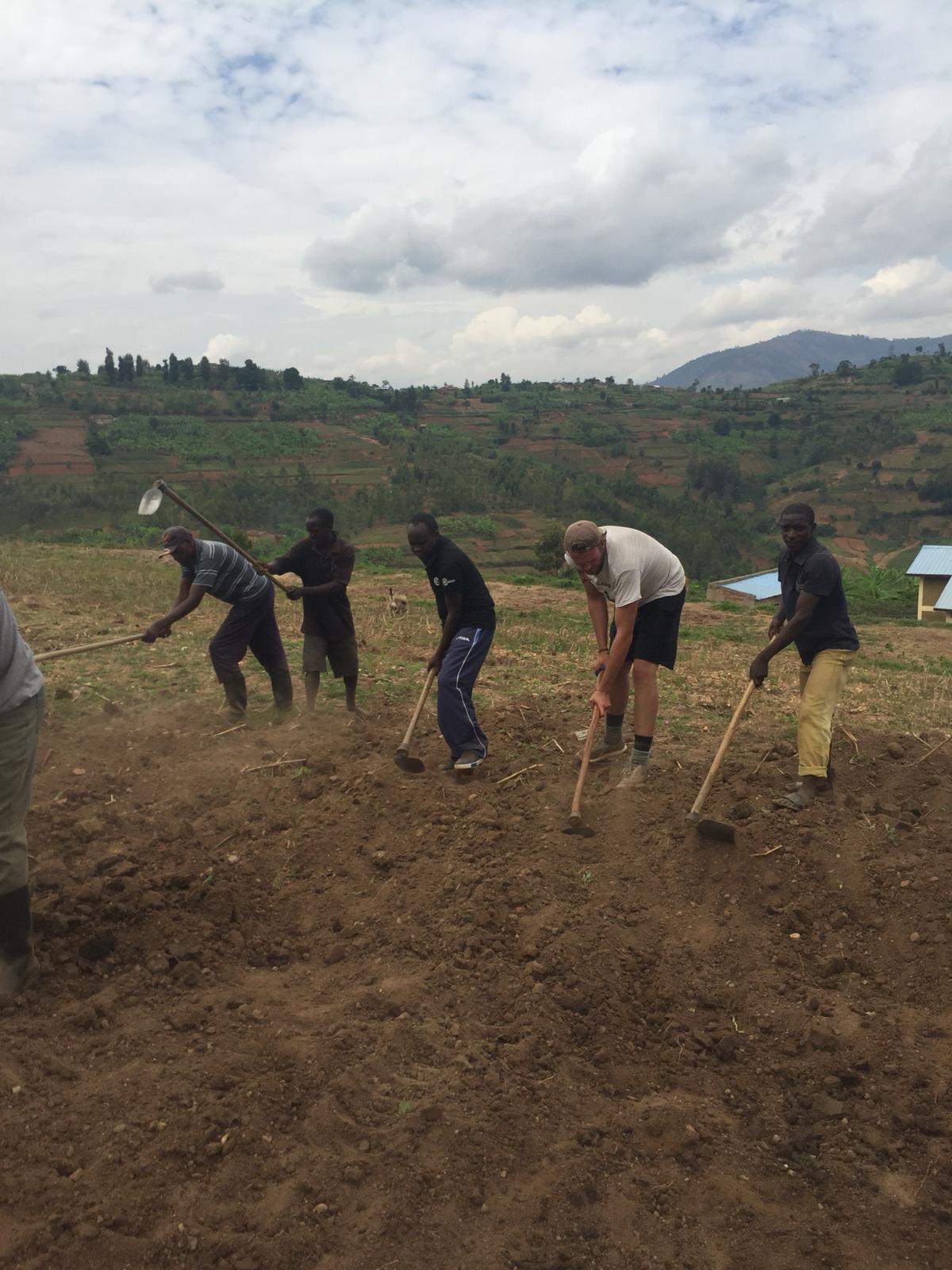
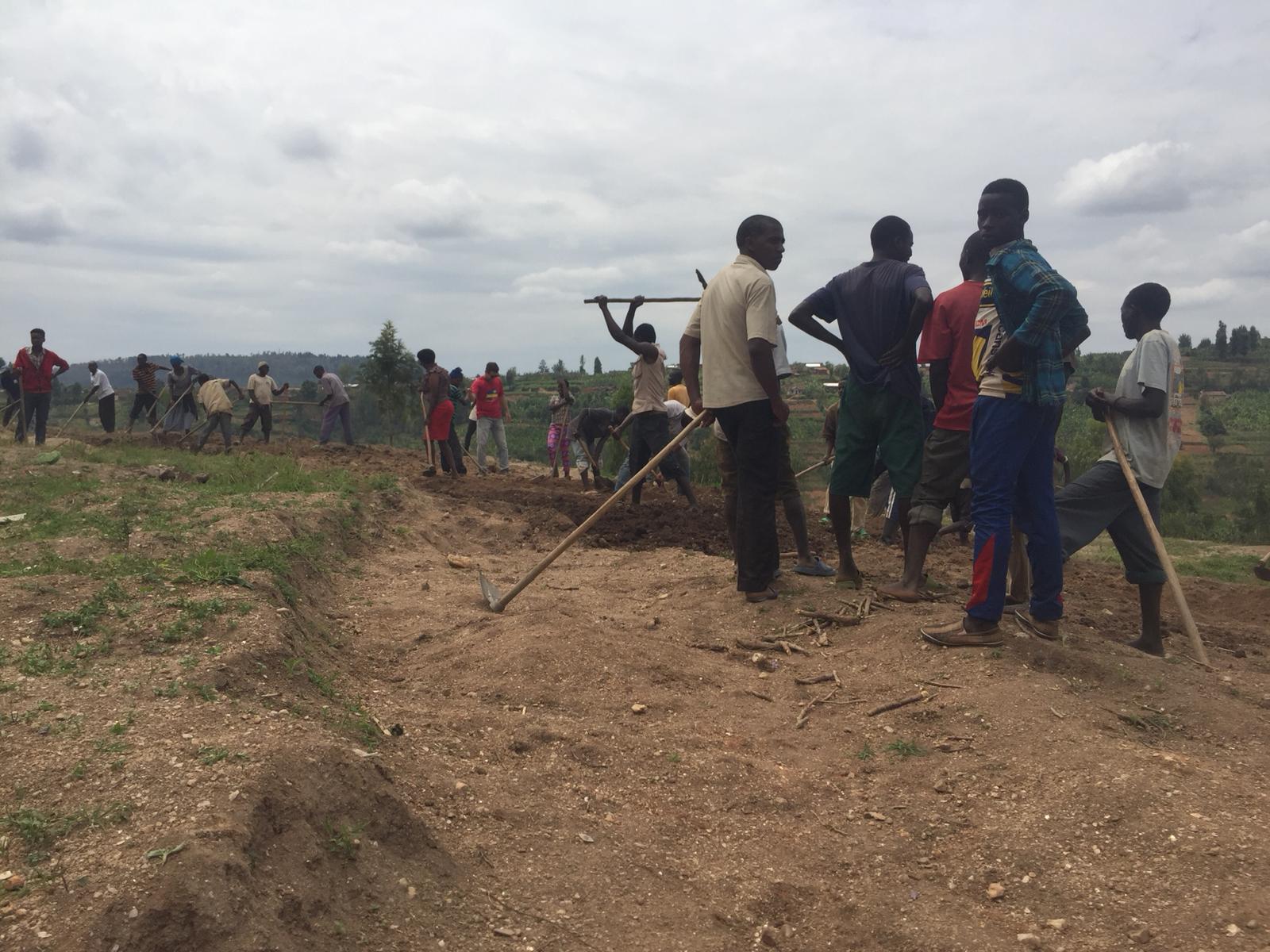
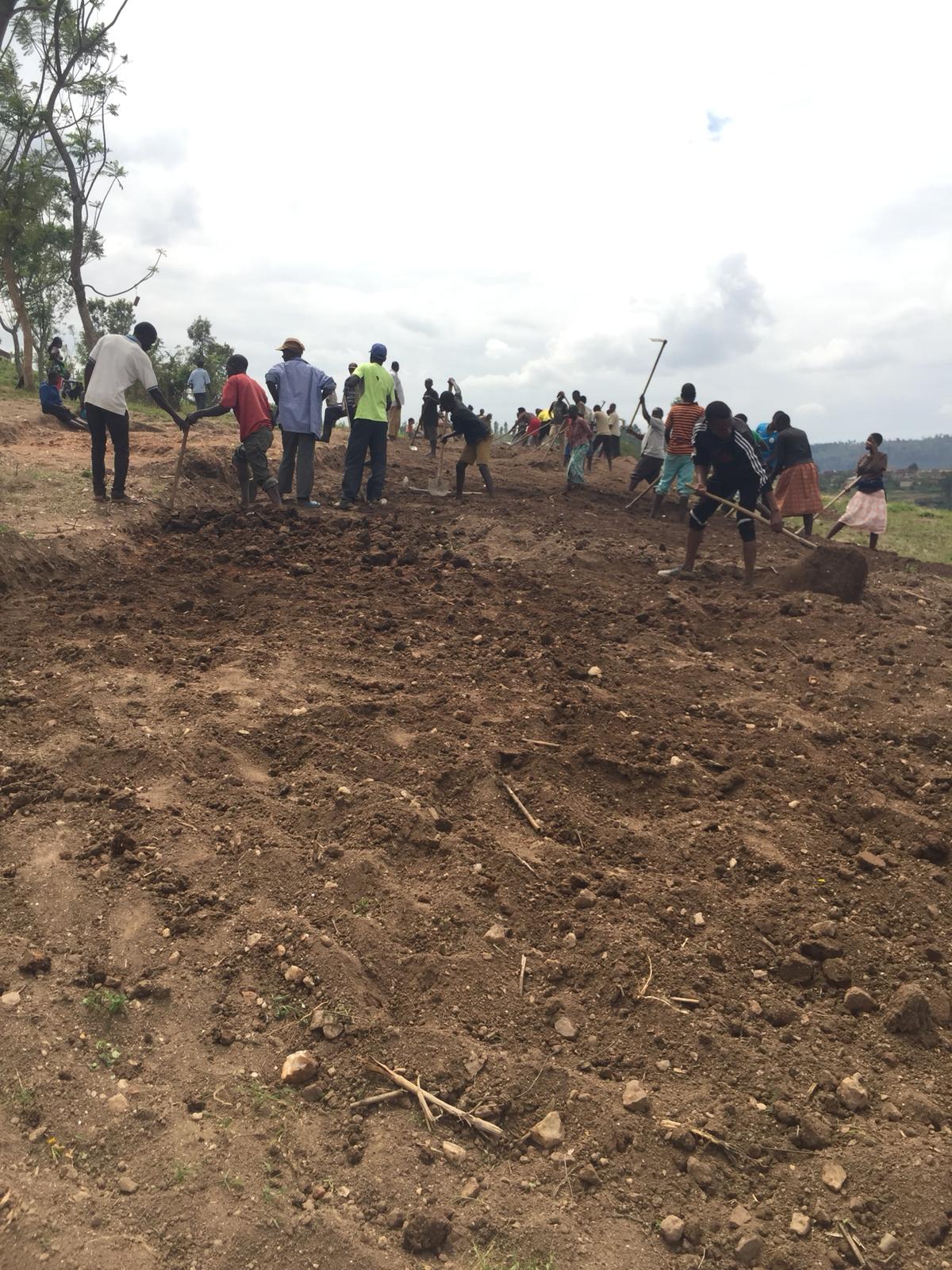
Haven’t shared many pictures in a while. Here’s a few of our most recent umuganda when the community came together to begin clearing a football field for our school.
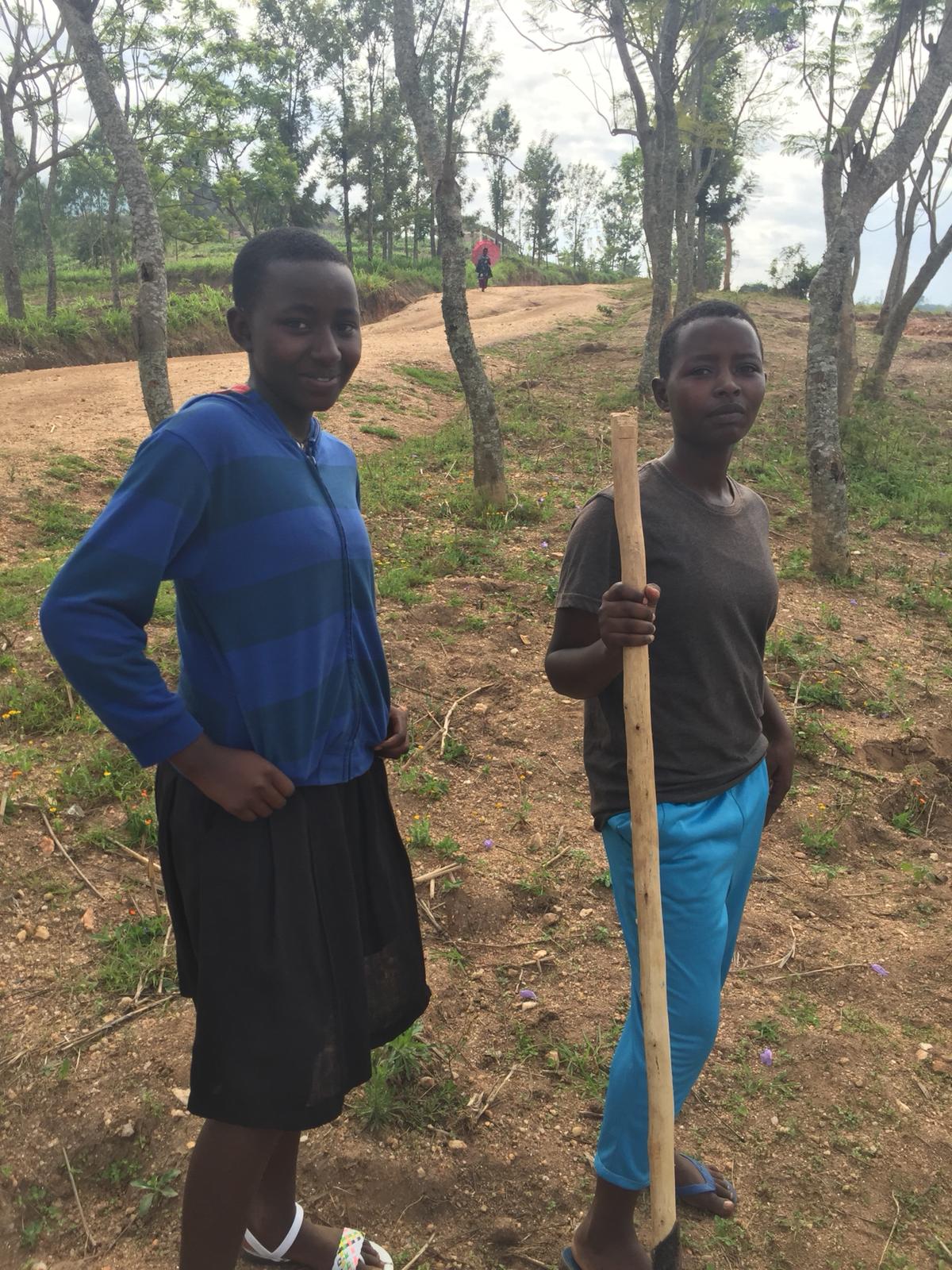
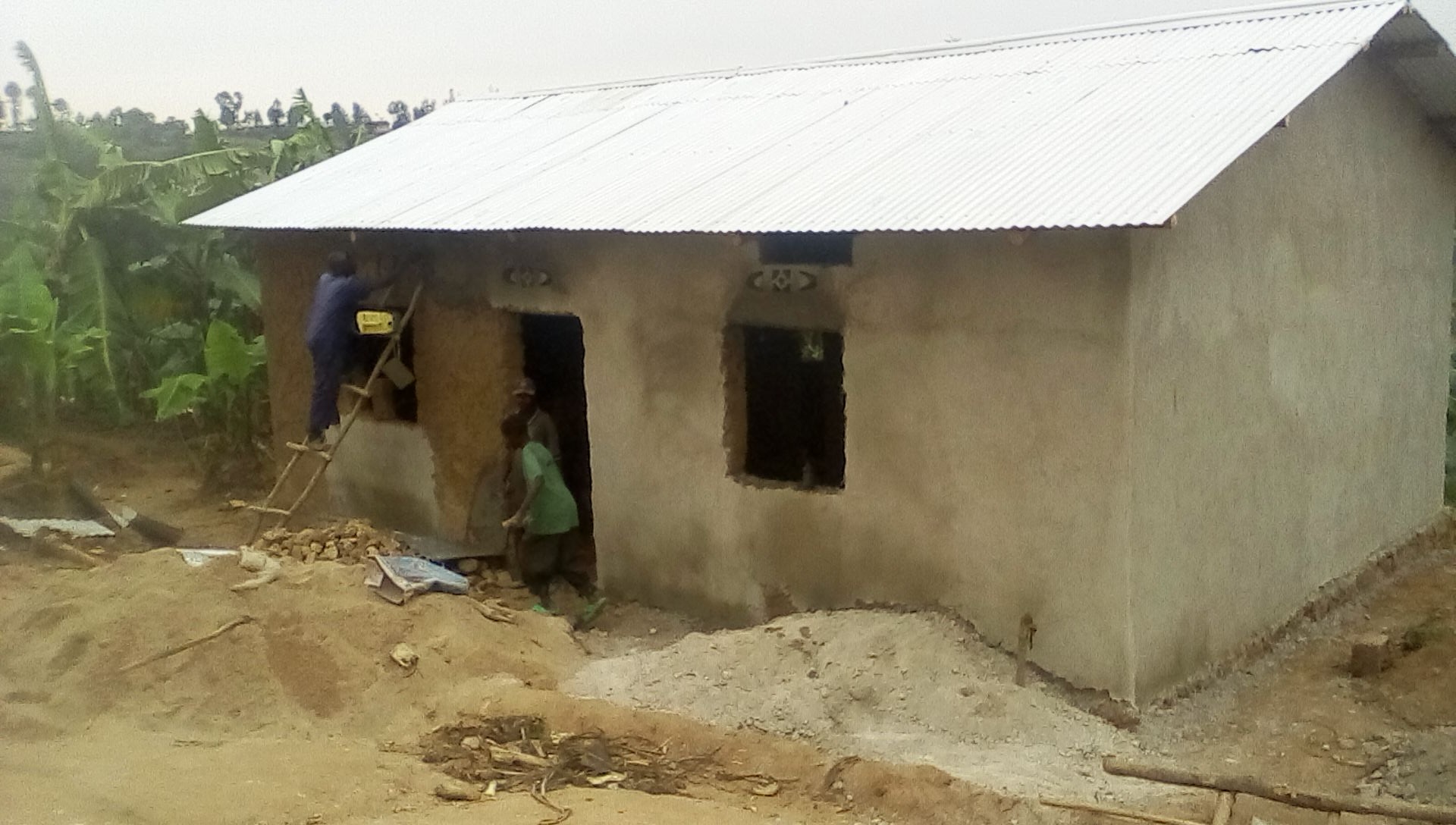
We’re almost done building the girl’s room at our school, for students suffering from menstrual pain. With the help of a few friends in the States, we’ve added a latrine, a general purpose clinic, and proper bedding. Hopefully finished by November!
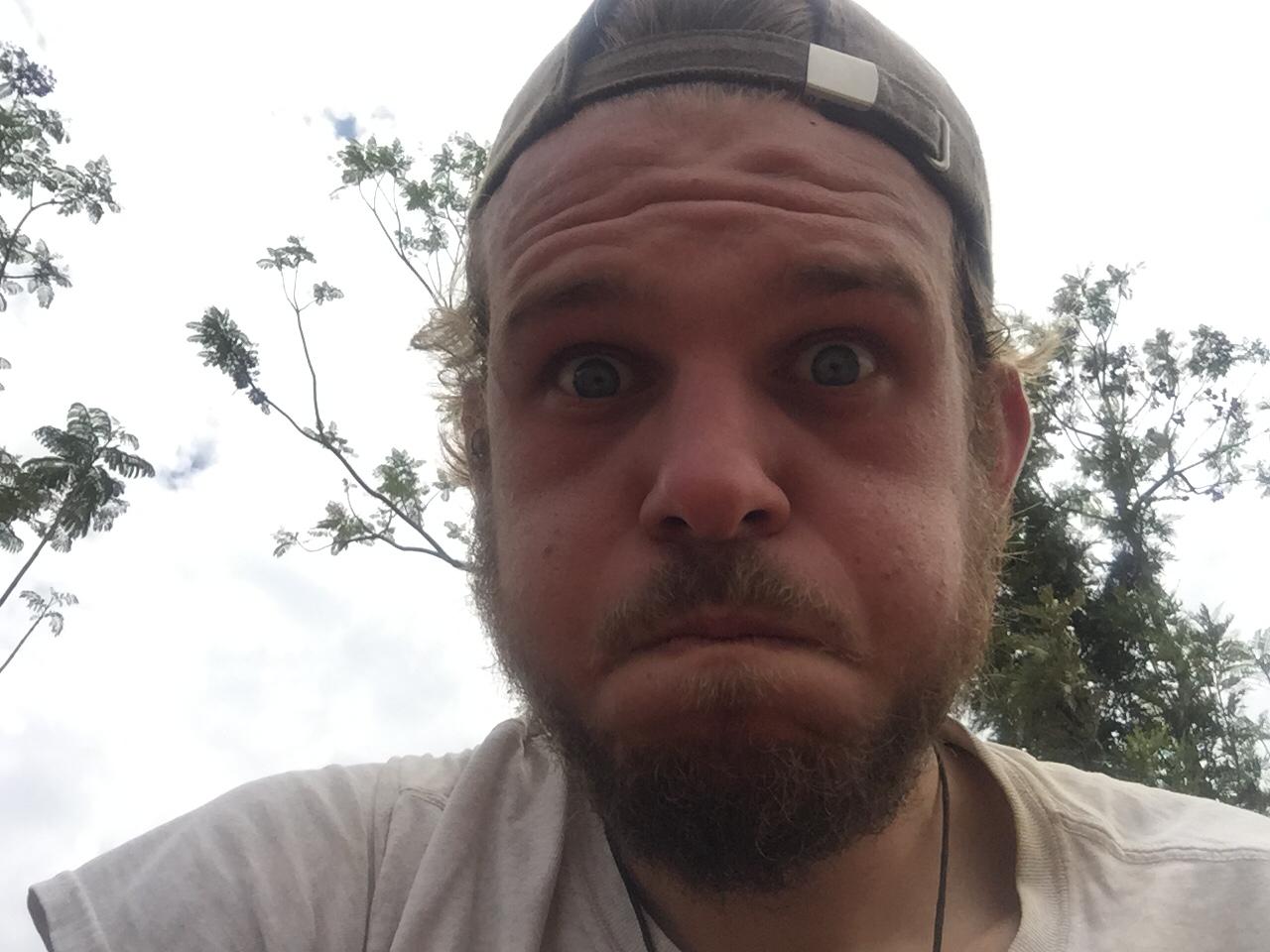
Sorry for missing a post in August. Don’t worry, I’m not going anywhere.

 certification
Leave a comment