December
I spent the first two weeks of December as an artist; Felix, so many months ago, had said that all of us paint the world as we walk. Three of my fellow volunteers and I walked the Congo-Nile Trail, a two-week, 160 mile endeavor that took us from the hot springs at the border of Nyungwe National Forest in the southwestern corner of Rwanda, along the shores of Lake Kivu, up and down countless hills and through villages whose names I couldn’t pronounce, all the way to the Congolese border in Gisenyi. Because I am an idiot, and did not write about my experience soon after it happened, I am left only with impressions of that experience. They’re littered throughout this blog post.
***
The first day was easy. We made a playlist of songs showing our personalities and listened to them as we took motorcycles down the mountain into a limitless valley. Everything was bright and warm, no clouds, only green fields before and after a small town by the creek.
At the end of the road was a steaming lake. The small creek breathed – the fog in the valley was thick and physical here, and everything smelled of sulfur. The spring was hot to the touch and old men offered to carry us in to the heat and rub down our bodies. Rule #1: if one of us does it, all of us do.
Their wives were experiencing rapture down the creek, where a small gully was cut in half by a two-story waterfall of hot water. They were praying and singing and moaning, oblivious to the four white kids nearby. They’re all naked, their chocolate skin rippling with the force of their bath. We sit in our synthetic swimsuits in the pool at the waterfall’s base and the women step over our spindly legs.
***
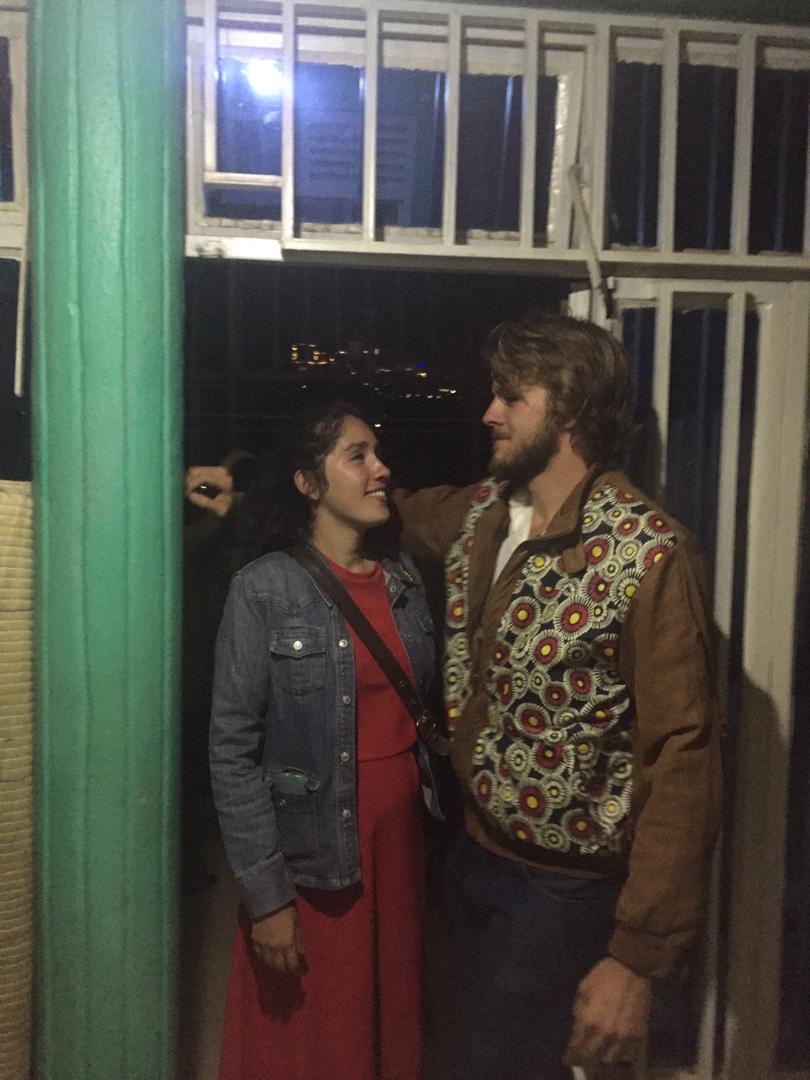
With a string replacing my lost belt, blood under my toenails, and an odor that wilted grass, I made my way to Mitsu’s house immediately after finishing the hike. We spent three days setting up what would become our first home together; I hung her Japanese drapes over her bedroom door, moved furniture, created a system for her spices, and told off all the kids giggling outside her window. It was prudent to tell everyone that we were married so as to avoid the stigma of an unmarried couple sharing a house, so we spent that week as if we were on our honeymoon.
For Christmas, we invited friends over to her new home and enjoyed life. We wanted meat for the occasion, and settled on pork; I went to work finding the local butcher and bargaining for a live sow, which I slaughtered and several of us skinned and gutted and cleaned and slow cooked over a bed of coals all night. I cannot tell you how human a pig sounds as it dies, and I still can’t eat pork the same way as I could before. We traded white elephant gifts and got drunk off horrible concoctions of bush gin and warm soda, everyone hoarse from laughing for three nonstop days.
I decided on that Christmas that I loved Mitsu and that I loved myself, and that since I was approved to stay for three full years in a village only a short hike away from her house, I would love the next chapter of my life. It was like I wrote a hundred love stories in my dreams those nights. Everything was warm sunlight.
***
It’s the end of our first day of hiking and we don’t really know what to do next. I’ve been carrying the tent all day and the pain in my shoulders has moved beyond anything I can understand. The torrential downpour we just sprinted through is finally letting up, but it’s dark and we have to find a place to set up camp. The small village off the highway turns in to a dead end of dirt paths, and we ask the oldest man if we can camp along the side. We’re basically in the middle of the road, with a steep ravine of bramble below us and hills holding homes up on our right.
Inside the two-person tent the four of us are very snug and ignoring the hard ground and just before we fall asleep we hear Shimmy. Shimmy stumbles up to the tent and pokes it a few times, walks away, comes back for a few more pokes, does this about eight times. One of the girls inside the tent tells him to go away and at the sound of a female mSungu he gets excited and starts slurring his sexually-charged shouting. The stage is set.
Trent – good cop – gets out of the tent first. He’s wearing a shirt and his jeans and uses excellent Kinyarwanda to dissuade the man. Shimmy doesn’t listen. He says he wants to touch the girls and then he’ll leave. At this suggestion, three boys watching the scene from the ridge above us start laughing and a small crowd gathers. The girls are getting anxious.
I step outside, wearing only boxers, and tell him to leave. He starts to walk away but then returns, louder than ever. Trent and I stand between him and the tent and finally I’ve had enough and take his phone out of his hand and start walking towards the village square with the intention of luring him away from the tent and getting him out of our business. Shimmy lunges at the phone and proceeds to hold my wrist, and now he’s dragging on the wet ground screaming bloody murder, and then he plants his feet and in a single moment stands, flips, and falls head-over-heels nearly forty feet down the ravine through the bramble.
All four of us are now outside the tent looking around in horror as the realization that we may have just committed manslaughter crosses our minds. “Shimmy, are you ok?”
“I am Shimmy!”
The assembled crowd of boys above us starts hollering with laughter. One of them vaults down the hillside and helps Shimmy up the slope to lead him to his house. The village chieftain stops by to apologize for the intrusion and gives us his phone number in case Shimmy comes back.
In the morning, he is sleeping on his stomach clutching a bottle. We made it through our first night.
[It is wise to preface a tale of immense sadness with heartfelt laughter.]
***
I’ve spent the past six months trying not to write this. To say why I left early is to make peace with what happened, to say goodbye to the faces and places that seem to be ever present when I close my eyes. I don’t know when I can return to Rwanda, and I don’t know how I’ll be able to say hello again to my family in Mucubira (the name of my village, which the Peace Corps didn’t allow me to publish while I was under contract). But I do know that before I move on, I need to articulate why I left Rwanda early.
After the head rush that was December, Mitsu and I joined our friends in Kigali to spend New Years Eve in the city. We booked an AirBnB and spent a few days recovering from Mitsu’s Christmas party, sleeping until the early afternoon and finding bars to sink into in the evenings. We were excited to see the end of a year with the Peace Corps and felt the symbolism of the New Year personally. Everything seemed possible.
On New Year’s Eve, Mitsu and I took two motorcycle taxis to meet up with another volunteer and his family at lunch. The Peace Corps has a rule about not riding motorcycles on pavement and never in Kigali, but I had broken the rule dozens of times and talked Mitsu into taking one. The Vietnamese restaurant we were heading to was a twenty-minute walk away.
My driver dropped me off at the place with no problem. Mitsu’s driver was lost, took a wrong turn, and ended up pulling a U-turn in front of the Peace Corps office. Several Peace Corps staffers saw her. She arrived at lunch barely keeping her wits about her, and halfway through a bowl of noodles got the call from the country director to come to the office immediately. We spent ten minutes behind the restaurant chain smoking, trying to figure out if we could lie our ways out of this, trying not to break down, enjoying our last few moments of dreamlike perfection.
She was dismissed that day, less than a month after swearing in as a volunteer, just as her parents and her distant relatives had done, just as she was nigh-destined to do. I walked into the office and resigned from my position moments later.
Everything that came next was a blur. We had three days to return to our sites, say goodbye to our communities, and make our way back to the capitol. Anarchism won a victory; we spent New Years Eve dancing until we were numb and watched the sunrise come up over the majestic city, trying to burn the impression of every face in to our minds, trying to soak in the beauty of a hard-learned language before it became imminently indecipherable. I arrived to my village on the evening of the second day feeling like someone sentenced to public hanging. My best friend Albert had passed my moto driver on the way in to the village and as I jumped on his bike and told him what was happening, he started to audibly sob. I entered my home late in the evening and thought it would be better to start destroying my home in the morning, letting people know when I was awake and had more energy. I crawled in to that bed for the last time.
What followed proved to be one of the hardest days of my life. I had thirteen hours to pack up all of my belongings, say goodbye to everyone I knew, make it to Kigali and board a plane home. I was unable to move more than ten steps without sobbing and forced out short, guttural goodbyes to people that deserved so much more than I had given them. It wasn’t enough that my time in Rwanda was coming to such an abrupt ending; for the first time since arriving, people lined up outside my house begging for my belongings. Several of my co-teachers came to beg, but Mateso (who I called first thing in the morning) shouted with fury at their claims. Who could blame them?
I sequestered things for the school – teaching materials that were hoarded and would never be used by me, my beds and blankets for the girls room still under construction, anything resembling a toy that I could muster – and locked them in my guest room. I gifted most of my kitchen supplies to Mateso and his new wife and gave the rest to my landlord’s family, along with all of the tools I had brought with me. Any clothing that I didn’t need for the flight was donated to the teachers at my school. Two of my chickens went to my landlord, and the other two went to Mateso. Children stood outside my house staring in complete silence, their faces showing the realization that I, like all the white people who lived here before me, was leaving with more promises unfulfilled than any decent accounting in Heaven would look mercifully upon. Their parents took turns weeping for my departure, begging for any pictures, cursing the Peace Corps for a circumstance that I ultimately bore the responsibility for, and staring in absolute disappointment.
I have failed before, and I will fail again, but my failures had never hurt so many people, brought so many grim injustices to light, or slammed so many doors of opportunity closed at once. I asked to be left alone for the last thirty minutes before the Peace Corps driver was to pick me up, and sat in my empty house, torn asunder by the flood of friends who ripped belongings off the walls, staring at the dozens of pockmarks left by nails I had used to hang bookshelves and old calendar pictures. Sitting on my luggage, smoking my last Rwandan cigarettes, the old homeless drunkards so often beaten out of bars late at night arrived at my window, banging on my door, demanding money. They reached through the bars of my front window and locked eyes with me, unblinking despite the dust and insects swirling in the dry afternoon air, and slowly moved their hands over the eyes, because I did not give them all that I could, because my three packed bags meant I was leaving with more than they would ever have to their name, because despite all of my warm intentions and self-punitive, reformative wisdom I was still blind to their misery. I did not break their vision, because an honest acceptance of their hatred was all I could give.
My belongings were packed in the car and I told all of the students assembled around me that I was sorry and that I would return soon. And then I left, and for the first time, I saw that the patchwork quilt of farmland in the countryside was not a sleeping woman’s braids or the mosaic steps to Heaven, but a graveyard. And I cried.
***
Last night we slept on the roof of a bar in a valley that never ended and saw orange and red and purple and finally black drop on distant mountainsides as the square of the village depopulated down to the last drunk. We cooked beans on a coal fire and slept on the cement part of the top of the bar that was close to a small ladder so we could stand on top of the structure and feel like we accomplished something, flicking butts into the pile of garbage around us and feeding ten people with our leftovers in exchange for free lodging. When the morning came the drunk was still stumbling but was joined by a hundred children loyally going to school and their parents balancing hoes on their shoulders and the colors came to us in reverse as we packed up and continued the march knowing nothing like that day would ever be seen again.
***
January
I cried a lot in the weeks that followed. I cried when my mom started jumping up and down in the airport and hugged me with one of those once-in-a-lifetime hugs that moms have perfected. I cried when I went to the grocery store and saw refrigerated dog food and thought of six siblings sharing two glucose-heavy biscuits for dinner in any village in Rwanda. I cried myself to sleep with Mitsu and buried my face in her dark brown hair, the sounds of rushing cars on the road outside my mom’s house never stopping, missing the sublime silence of Mucubira.
The tears stopped so much sooner than I wanted them to. Mom had to move, so Mitsu introduced herself to my family by packing up a lifetime of belongings and helping us lug them across town on comically overloaded trailers and truck beds. We printed off fifty resumes apiece and found part time work in the first week back in Jacksonville, because our readjustment allowances hadn’t hit our bank accounts yet and we laughed at just how far the $170 monthly allowance got us in the Peace Corps.
Back in January, the vivid dreams that stayed with me every night of my service stopped all at once. I woke up and couldn’t remember where I was, because I had just seen a student’s face but couldn’t remember her name and needed to find her and get her overdue homework, but instead I was inside of a new bedroom in a new house and had only that profound sense that a lifetime had passed since I fell asleep. Sleeping became impossible; before Rwanda I had a hard time going to sleep most nights and spent the past year enjoying enough sleep to make up for four years of restless nights. Now that I was back, I tossed and turned, the guilt of leaving so unbearable some nights that I just lay there wondering if I could go back to Mucubira that evening.
I found that moving mom, which took up all of my attention for two weeks, and doing little part time jobs was the only thing that could get me through the day. I had to stay focused on the here and now or else the weight of my departure would be too much to bear. I made the rounds, explaining my situation to friends and family, each time making the reality of what happened more cemented in my consciousness. Mitsu and I bought plane tickets to Washington to see her family and the anxiety of explaining her own situation became a personal hell for her too.
I don’t remember much about January. It all happened so fast. One day, I was marveling at the ability for dozens of motorcycle drivers to edge between parked traffic at a red light and accelerate forward, single-file, as the light turned green in Kigali. The next day, I was smelling the nostalgic scent of the cold salty air at the ocean and wondering if it was possible to just walk in and not stop. I remember that everything reminded me of Rwanda, broke my heart, and then demanded forward motion in honor of those who experienced so much greater hurt. I remember dismissing the Peace Corps with insolent anger and feeling sad that next to none of the other volunteers in my cohort reached out to me when I left, and then realizing that they were blameless, and just continuing to slide down the endless chute of self-imposed emotional imprisonment. January was a bad month. I was happy when the month ended and hoped everything was just a bad dream.
***
Six hours in to the hike today. The village we’re standing in is built along a series of hard-cut dirt paths that line steep hills. The main structures sit on a ridge where two mountains touch. A tree trunk rises from the center of the ridge and three dozen power lines run away from it like streamers at a circus tent, creating an electric web that snaps every few moments and strings together every home in the community. I imagine crawling in to bed at night and feeling the slow descent of an air-cushioned sheet coming to rest on tired limbs, and wonder how many people in the village own sheets.
***
February
Before we could catch our breath, Mitsu and I flew to Bellingham. Her father was suffering from a rare fungal infection picked up on her parent’s trip around Mexico in a VW bus, and was confined to a hospital for the duration of our ten days in Mitsu’s hometown. Every day we visited the hospital, snow covering the roads (that I was learning to drive a stick shift Subaru Outback on) and dropping gently down from above so that we had to snuggle snacks under three layers of coats to keep them warm. Her father recovered while we sat in his hospital room, looking out at the purple-white specks whirling around in the night.
I’m glad that I got to see this. I was nervous that Mitsu’s family – travelled, secure, complete – would shame me and my own, which is a stupid thing to say in hindsight but was important enough to dominate my anxieties before feeling the open-armed acceptance of her folks letting me in to their own issues. We drank a lot of hot chocolate in her vintage family home and joked about skiing to coffee shops to work on finding our next job. We set deadlines for ourselves – make a decision on the next job by March 1, plan to leave by July 1 – and we acted as a team, tackling dozens of job applications over that small window.
And on my birthday we took an impromptu trip to Vancouver and heard back from our first real job from a recruiter based out of Southern Africa and we could see that the sweat we were expending was paying off. We realized that if we put our noses down and spent the next few months working our asses raw we could recover from our breakup with the Peace Corps. We said goodbye to her family and returned to Florida for the slog.
***
This village is too large to be here. We’re walking along a low path through a marsh buzzing with insects skirting along water tops for several hours and the marsh becomes the Lake without warning and three hours in to figuring out how that happened we’re standing in a town built around a fish packing plant on the shore. The plant has been closed for a minute so most of the buildings are vacant and yet still standing because they’re made of honest cement and painted with cobalt accents that are licking up the pounding rain heralding our arrival. Near the empty market space is a bar and in that bar is a checker board whose pieces are beer bottle caps and we let the rain pass while we drink sweet warm beer and eat grilled fish served on skewers and play our American music from speakers caribeenered to our backpacks as loudly as the rain banging on our sheet metal roof will allow. Everyone still living in the village comes to watch us and wonders how we got here, sans road or car. We wonder something similar.
***
March
Within a week we each found two jobs; her at a boutique restaurant, me at a small factory assembling automatic door controls, and both of us working security a dive bar in Jacksonville Beach. We’d spend eight hours a day apart, another six hours tag-teaming drunk idiots until 3 in the morning, and then sleep side by side for six hours. And we did this all of March, daring the other to ruin what felt like a perfect partnership, laughing at the mundane problems our bosses seemed consumed by and slowly readjusting to American life.
I was startled by how comparatively vulgar the bar scene was in my hometown compared to the measured sincerity of Mucubira. How everyone drank to die, like each night was their last on earth, and how implicitly violent and dire every interaction seemed, men acting like hunters and women acting like hunted and no one caring about the purpose or logical conclusion of such a dynamic. The job at the bar was exactly what we needed: a sober assessment of actual American life, where anyone and everyone was welcome to engage in the hunt with all the coordination of a school of fish scattered by a predator, the energy never subsiding for even a moment in the heat of those March nights and yet the smoke hanging still for hours as the sun began to set. We’re glad that we didn’t get the cushy post-Peace Corps jobs most of our peers were getting, because one of the most powerful take-aways from Rwanda was the necessity of an honest assessment and we valued the purely anarchic democracy of our compatriots after several shots.
I was shocked that no one around me had to carry their own water in a jug or walk several hours to find internet or spoke in the sing song tunes of children calling for their playmates in the banana fields, and yet how severe the first-world struggles of everyone we knew felt. No one was dying of a treatable waterborne illness, but then again their water bill was higher than expected and it broke any semblance of continuity in a shoestring life budget – that kind of thing. More shocking still was how quickly we became readjusted to the American media frenzy and how quickly we forgot the much more severe problems of our former neighbours. Mitsu and I would share these looks after hearing the crassness of a drunkard trying once again to get in to the bar he was kicked out of several hours ago, looks that seemed to say, “did our time in Rwanda even happen? How can we square what we saw with what we now see?”
One day we woke up and we had been in the States for three months and Rubona never felt smaller.
***
Tonight we’re sitting in the village bar of a newly-initiated volunteer and he’s kind of glowing in our presence. We aren’t supposed to be doing this hike and we haven’t asked for permission and you can see that he’s fawning over us so he orders plates and plates of goat brochettes and looks out over his village with that first-month gleam of appreciation and all four of us don’t say a single thing because the meat is good and we don’t want to spoil the surprise.
***
April
The grind continued. In April, the Rwandan government celebrated their 25th kwibuka by “finding” the largest mass grave ever, exhuming thousands of bodies and “returning” the remains to villages all over the country. From a distance, the nuance of Rwanda shifted to macabre fascination balanced against a deep confusion. And in between sleep-deprived shifts, my mind turned to the Peace Corps.
I feel like I have three big takeaways from my relationship with the Peace Corps. These don’t touch on the feelings coming from living in Rwanda or working in education – these are simply the words I want to say when someone asks that impossible experience, “did you like the Peace Corps?” (side note – how anyone can condense such a chapter in to a few savvy lines is beyond me, but here goes).
I am resoundingly sure that the way Mitsu and I abruptly ended our relationship with the Peace Corps is one of the stupidest things either of us have ever done. We gambled away the most fulfilling experience of a lifetime to shave off fifteen minutes on the way to lunch and stranded ourselves as a result. If I could do it all over again, I wouldn’t change a thing, because these past six months have changed me at least as much as any six months in Rwanda, and the next chapter promises to be as exciting and full-bodied. We can only learn and move on, but our friends and students deserve more than a paragraph, and our mistake means that all of that experience is relegated to a blurb. Never again.
I am similarly sure that what I did in the Peace Corps made more of a difference than anything else I have ever done, and for that reason cannot recommend it strongly enough to anyone who has spent time following this story from it’s inception. Going from working with a community to address basic needs to mopping up vomit on a Tuesday night was about as stark of a change as I’ve ever felt and the power of what was lost still echoes. What every volunteer I met said is true – that we gain so much more than anyone we helped in our jobs – and I understand now that the Peace Corps was a beginning, not an end.
But despite the value of what was lost, and despite the impact that was made, I am finally confident that the Peace Corps was not the right fit for me. I’ve labored over the contradictions inherent in the Peace Corps approach to development at length in other posts, but ultimately it was the lack of freedom in addressing needs more basic than what we were assigned to address that led to a falling out of love with the organization. We all did the most that we could, but it never felt like our work was enough. Strengthening communities in need, addressing the development gap between rich and poor nations, and earnestly listening to those we serve required more of a personal commitment than I could muster and more of an organizational commitment than the Peace Corps was willing to allow.
April was the month that we finally felt like we could make sense of what Rwanda meant to us. I am still unsure how so many nights of conversation, recollection and heartfelt reflection can be shortened to so few words.
***
The best way to go up the next steep road is to slide our feet to the groove of Stolen Dance and sing in our raspiest voices and draw all eyes towards the four of us so that we’re able to focus on the progress and not on the lingering hurt-driven arguments or the impossibility of another 30 kilometer day.
***
May & June
And then, all at once, the pressure was lifted. Mitsu and I decided to move to Kalar, Iraq at the beginning of July. We would be teaching English with the English Access Institute, a small and progressive private school situated near the Iranian border. Our students would be the children of the wealthy improving their English during the summer break and young professionals who would be hoping to move out of Iraq. We’d be living in Kurdistan, an autonomous and politically fraught region which has earned a tough, independent reputation from thousands of years of resistance to foreign powers.
Once we committed to the job, life became so much easier. My brother graduated from FSU, commissioned as an officer in the army, and married the woman of his dreams in the span of ten days. Mitsu and I drove across the country again, seeing Chicago for the first time and sleeping between bears and bison in Yellowstone. For a month in Bellingham, we found odd jobs at bars and restaurants (and planting geoducks) and enjoyed summer in Washington, which is really when the state should be experienced. I made new friends when Mitsu’s best friends were married and cried as she officiated the wedding, making mention of the possibility of parallel universes and the chance that somewhere there was a world where we had never met, where I was still in Rwanda, where my world was so much smaller and my future was so much more straightforward.
The farther away from Rwanda I get, the more I feel like my path there was decided long before I knew about the Peace Corps or before I could order a sambusa in the market. Moving to Kurdistan feels like a step towards something undiscovered, towards a future that is bursting with possibility. Nothing is guaranteed accept that I’ll be living with the love of my life and we’ll be in it together.
***
The bottoms of my feet have become a single ghostly flab of dead skin, soaked with sweat and mud and bleeding at the edges. Each step uphill pulls my sole backwards, blistering my heels, which join the sole-wound, and slowly detach from my ankles. Downhill is worse, my toenails slowly rip from their designated spaces until the pasty skin underneath becomes indistinguishable from the sole-wound and now there’s a half-inch corpse wrapped around what used to be my feet. On the last day I take off my left boot and it all comes off at once.
“Sore feet.”
***
I started writing “The View from Rubona” to make sense of a radically new world, to stay on top of my writing ability and to share Rwandan culture with my family back home. What started as an exercise in discipline fell apart when I left Mucubira and gave up the Peace Corps to be with the love of my life – discipline didn’t mean much when I met Mitsu, who bent all that I was towards a future with her. Such is life.
To my friends and family in Rwanda, I am sorry that I left. I wish that I had the maturity and foresight to prevent taking that moto and getting caught. I won’t be able to return for some time, but I will return, and when I do, I will be different than you remembered. But so will you. Please keep me in your prayers, because I think that I will need them.
What began can never be finished. It can only be, and we will spend our lives wrestling with this reality.
***
We arrived in Gisenyi and sat on the side of the road, too tired to get up and get away from the children circling around us with rapt attention. Just down the road is a bar owned by a friend. We start drinking.
In a few hours all of the other patrons have left but our friend keeps the bar open. The sun set over the lake separating Gisenyi from the Congolese Goma a few hours ago – where there was once ribbons of color, now there is nothing, no light, no form to the mountain ranges towering and green in the sunlight, no evidence of human life at the end of the water gently lapping at our feet. The dark is thick, as it always is, and as the chemicals mix in our bloodstreams its as if our skin doesn’t really separate who we are from the sticky, rich air around as, as if we’re suspended in some sort of concoction not of our own making.
We go down to the beach and try to catch bats as they swarm in and around the trees littering the sand and forget that a little over a year ago none of us zknew that feelings like this could exist. Our clothes are dirty and our smell pungent but the joy we feel is pure, children of the forest dancing under starlight, our sweat is sweet, and somehow our thighs support us as we run up and down the shore. None of us have any idea where we are, when we will return, if return is possible, if anything is possible, and for the briefest of moments in life we experience such a sense of freedom that we are even free from remarking on the awesomeness of its presence.
The sun comes and form returns and I am on the earliest bus back to Nyanza to see Mitsu and, unwittingly, begin the rest of my life. Here it comes.


 certification
Leave a comment