Friday 19 July: Day 8
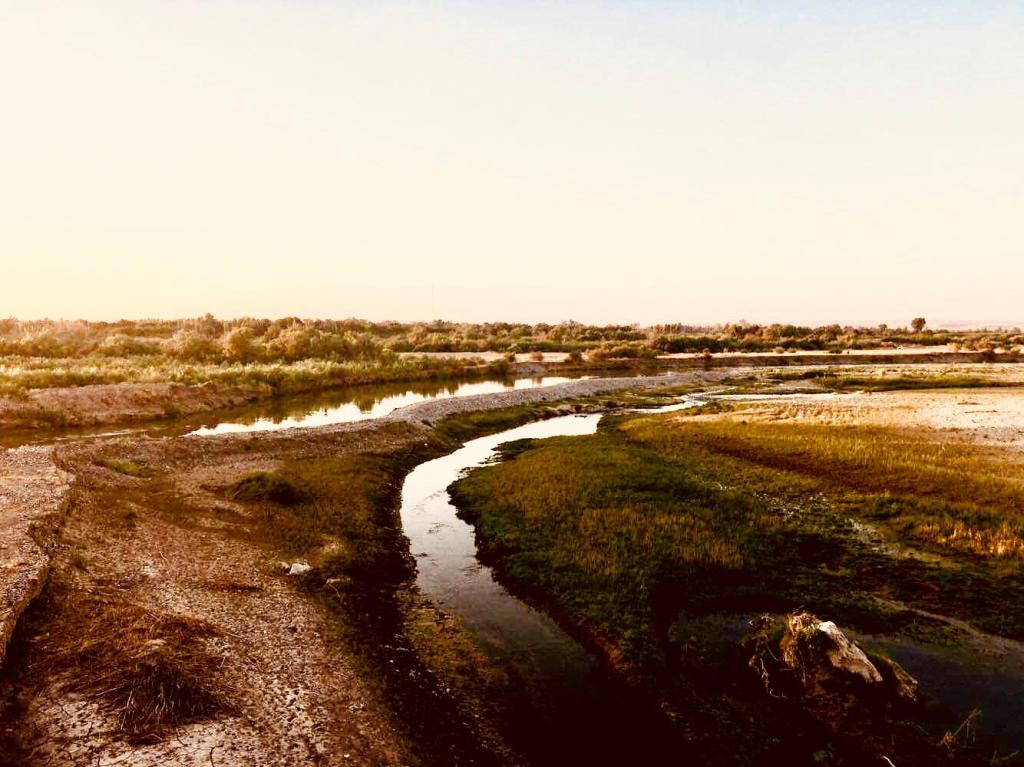
One week ago the intellectual and physical assault of our integration in to Kalar began. This time last week we were driving through the Book of Job, watching the sunrise over a span of land that escaped definition – where will we be in one week?
Our internet-proving pocket modem died early today and we spent our slow afternoon organizing our new home. Putting things in their proper place felt like piecing together an identity in the midst of so much sensory input; when we learned that our small, portable washing machine and dryer didn’t work, Mitsu and I started using the dry basin like one of those large plastic half-barrels we had in Rwanda without needing to say a word. We hung lines in our guest-room-to-be, left the sliding door to the hot outside world stay open and let the arid desert air do the rest.
“horsch” – delicious
Saturday 20 July: Day 9
Today is the day that we found our new home.
In the morning I got to speak with my mom and brother. She’s up for a job interview and is brimming with positivity, as always. Zach had eye surgery yesterday so he wore these dorky glasses on the call, but he still made time to talk for an hour. I showed him the section of the Iranian border that we can see from the rooftop of our apartment, which he liked.
Akam met up wit us and we knocked a few more items off of our to-do list, which always feels good. Our scheduled staff meeting turned in to an impromptu interview of new students, which helps remind Mitsu and I that these crasy few days are actually the first steps towards something big and real, something that can change lives.
At sunset – sunset, what an epoch change in a desert in the summer – Akam drives us to his family’s farm. Behind concrete walls and barbed wire are ten years of peace; ripening grape vines, low-hanging apple trees, pomegranates and lemons and dates and the absolute sweetest of figs. Saddam, a US invasion, an attempted genocide and the outbreak of ISIS didn’t destroy this farm. His brothers arrive with butterflied fish from the river and we cake them with salt, curry and onions, and they drip steaming fat down metal griddles balanced on breezeblocks next to a tall, roaring fire. Three carpets are laid down and we snack on fruits and salted cucumbers, ripping off chunks of sticky naan while the fish sears.
Using sticks and some of the flat bread for protection, Akam and his brother nail the landing and these massive, smoky fish are staring back at us as we all pick them apart with our hands.
And of course, we talk; how a people can survive so much struggle, how the Land of Opportunity can throw kids in concentration camps, how the universe conspired for us to sit on rugs in an oasis and dream of a better life for our students. Full of fish, no one flinches when we hear the crack of rifle fire in the distance, or when the insects chase our sticky fingers – only when, with a heavy sigh, the oldest brother announces that the fire is officially dead and it is time to go home.
Satisfaction.
“Mamosta” – teacher
Sunday 21 July: Day 10
[a completed thought]
From my limited exploration, the word “market” does not capture the full breadth of a bazaar. A market is a place where things are bought and sold; the bazaar is more of a mental state, where the common deference and politeness of “the street” gives way to a much older, almost primal energy.
Kalar’s bazaar – small in Iraq, although roughly the size of Kigali’s largest covered market – is about six by three square city blocks and at least three vertical levels in some places. There is an industrial factory space for furniture construction and car repairs, stalls for silks and scarves, countless rug merchants, tea shops and restaurants, all crammed together, shoulder to shoulder, so that leaving one “store” always means entering another. In this sense, a bazaar is less like a type of building and more like the merchant quarter of a town, as distinct from a residential neighborhood as a desert from a jungle.
The sound of the bazaar is gutturally human: shouts announcing goods and discounts, the clanging of heavy metal on heavy metal, the chorus of music and precorded prayers played on every quality of speaker, the pitter-patter of thousands of steps taken in unison – all of this at once, so constant that each winding path seems to echo the transactions of every customer who walked down the corridor that you’re standing in right now.
Can a more human place exist?
“siwa” – apple
Monday 22 July: Day 11
It’s fair for the passing stranger to mistake the near-constant whacking sounds coming from most tea shops in the afternoon as summary executions (or maybe just a good belting); this would be wrong, but only in precise terms. That sound is the boastful slamming of dominoes on wooden tables, and it has all the energy as a volley from a firing squad.
Men here love dominoes. It’s a surprisingly strategic game, mostly because a player must balance an accounting of played pieces with an understanding of performable moves while also suffering the arrogant displays of cunning and strategy [WHAP], all at a split second pace. A room full of men playing dominoes reminds me of the floor of a stock exchange, except every transaction is a short change, and the losers are watching from the arcade.
If you can’t tell, I lost my first few games.
Tuesday 23 July: Day 12
One of the joys of teaching is introducing new concepts to a student and then watching that wave of realization dawn on them. Some days, that joy becomes a burden that we are nevertheless obliged to see to a conclusion.
Today, I introduced the word “addiction” to my upper-level students. The lesson was about adjectives and the reading material was about a man with insomnia who was afraid of taking sleeping pills for fear of becoming addicted to them.
Mitsu and I have already tried to buy sleeping pills here, when we were fighting against those first few days of jet lag, and we learned that they’re prohibited in Iraq. Junkies can use the active ingredients to make some pretty nasty stuff. The doctor recommended that we eat raw onions and down a sour yogurt drink.
My students didn’t really know how to respond to the concept. Some viewed addicts with contempt – lost in sin, living an unproductive and self-destructive lifestyle incompatible with Islam. But for most of my students, learning about addiction was like learning a new way to be sad.
They asked so many questions: how to break the cycle, how to stop the influence of drugs and booze, why neighbors and communities let their people suffer in this way. I was very moved by their empathy and we all stayed silent for a few extra moments with the weight of the concept.
There’s a cultural-religious element to that reaction, I think. Islam elaborates on the concept of communal sin and implicitly spells out a doctrine of communal responsibility; for example, when I visited Istanbul for the first time, I had this cheesy idea to walk across the bridge connecting Asia to Europe, but I learned that the municipal government forbids pedestrian crossing and heavily polices the connection between the two continents to lower suicide rates. Suicide is not a personal sin but a communal sin, because the responsibility of helping the depressed and mentally ill lies with thy neighbor. Similarly, the presence of an illiterate man or woman is a reflection of the morality of the community – because Allah gave us all the ability to learn through reading and thus we have a communal obligation to ensure that everyone is educated, according to my understanding of the Qur’an – and so even small, poor towns like Kalar have massive funds to ensure free education for everyone.
Learning about addiction in this context must be like learning that some people don’t care about their neighbor as much as these students and their community seems to care about their own destitute. Maybe the revelation isn’t that intense, or maybe I’m misreading the entire situation. I don’t know.
It’s also interesting to think that from the American perspective, we see seemingly conservative prohibitions on substances in Muslim cultures as regressive or as some sort of assault on personal liberties, while these students see their community’s restrictions as a moratorium on substance abuse (and all of the personal/social problems that come from this).
Food for thought.
“afwan” – you’re welcome
Wednesday 24 July: Day 13
So much optimism and hope that I don’t know where to start.
In the morning, all of the young boys in my first class apologized to the girls for being rude and talking over them during a group reading activity. Afterwards another teacher explained that this isn’t normal, that boys and girls rarely even play together, and that he’s never heard of a little boy apologizing to a little girl.
In the afternoon, a young woman was so anxious during a group sharing activity that she started crying and sat down. Everyone in the class started encouraging her to continue, and she stood back up. For most of their primary and secondary education students are taught with wrote memorization and never get the chance to work together, let alone encourage each other if there is a problem.
And that evening, Akam talked to us about the future plans for the Institute. He’s so trusting of us, so receptive of our respect and interest in this place, and it really does feel like we’re part of something impactful and special. Once we get through these first two months of heavy instruction we can talk about what comes next.
Good day.
“hewa” – hope
Thursday 25 July: Day 14
A lesson for my Intermediate students today:
All language is learned metaphorically. Metaphors use the connotation of a familiar object to create significance with the unfamiliar.
When you teach me a new word, I hear a new sound for the first time – not an unfamiliar synonym of something I already know, but a concept that has only a rough approximation to a word in my own language. Eventually I’ll earn the context, the history and culture, behind this new sound – but for now, all I have is a sound that gives what I know another tone, that adds significance to the sounds I already use to make sense of the world around me.
I hope that I can do the same for you.
“abistm” – I hear
 certification
Leave a comment