Friday 2 August: Day 22
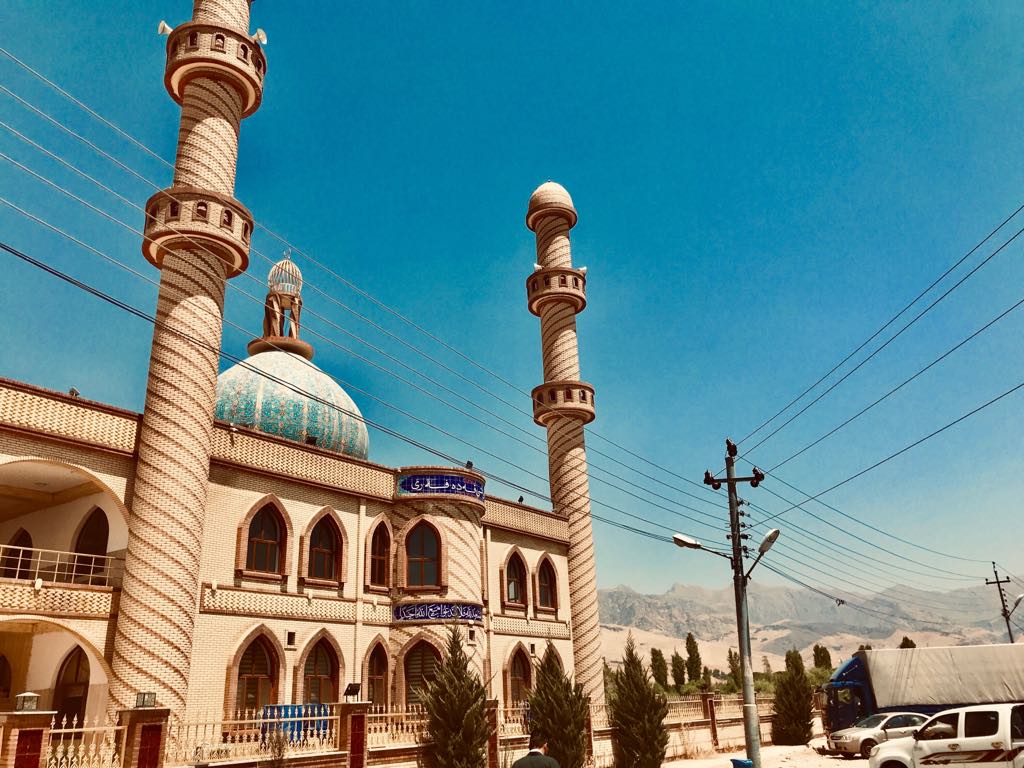
We’re cooling our feet in a pool full of catfish swimming infinite loops under the shade of olive trees. Muslims use the water for ablutions before entering the mosque next to us, which was built in the time of Omar, Mohammed’s second successor. This means that this catfish pool was cobbled sometime in the 8th century, and cool water has been flowing from a nearby stream and through the temple before reconnecting to the stream farther down the road. Old men lie on their backs and stare up at the leaves letting bright light flicker filtered through their branches and children try to catch the serene animals while families’ watermelon bob up and down in the pool, as they did a millennium ago, as they will do a millennium from now.
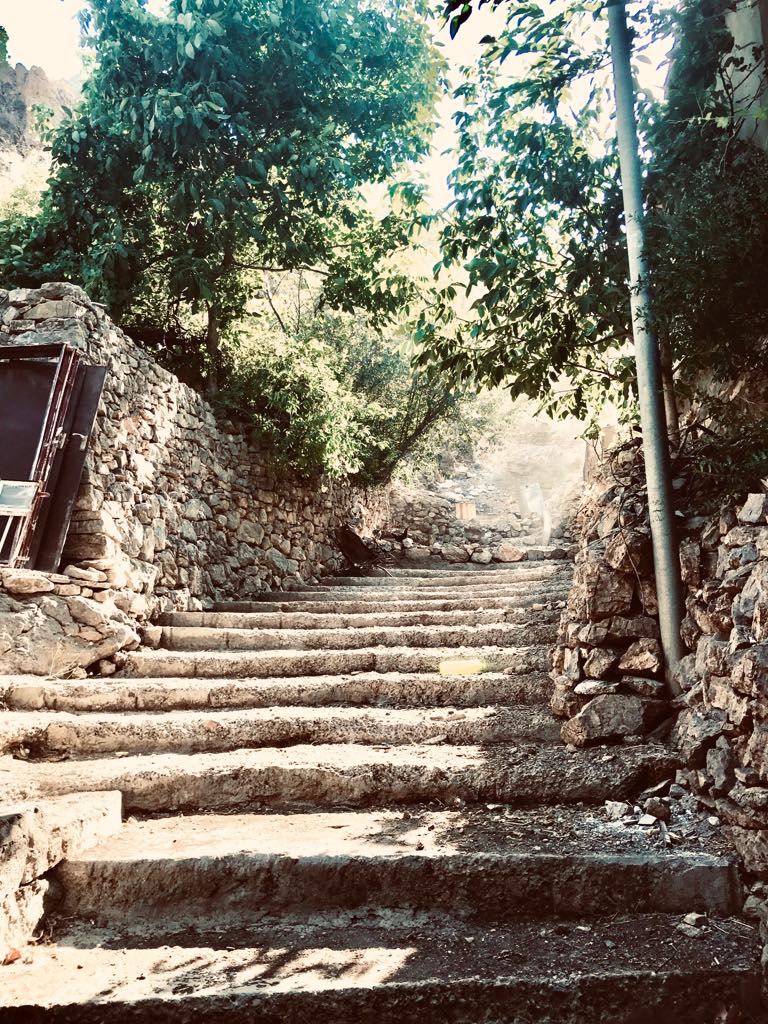
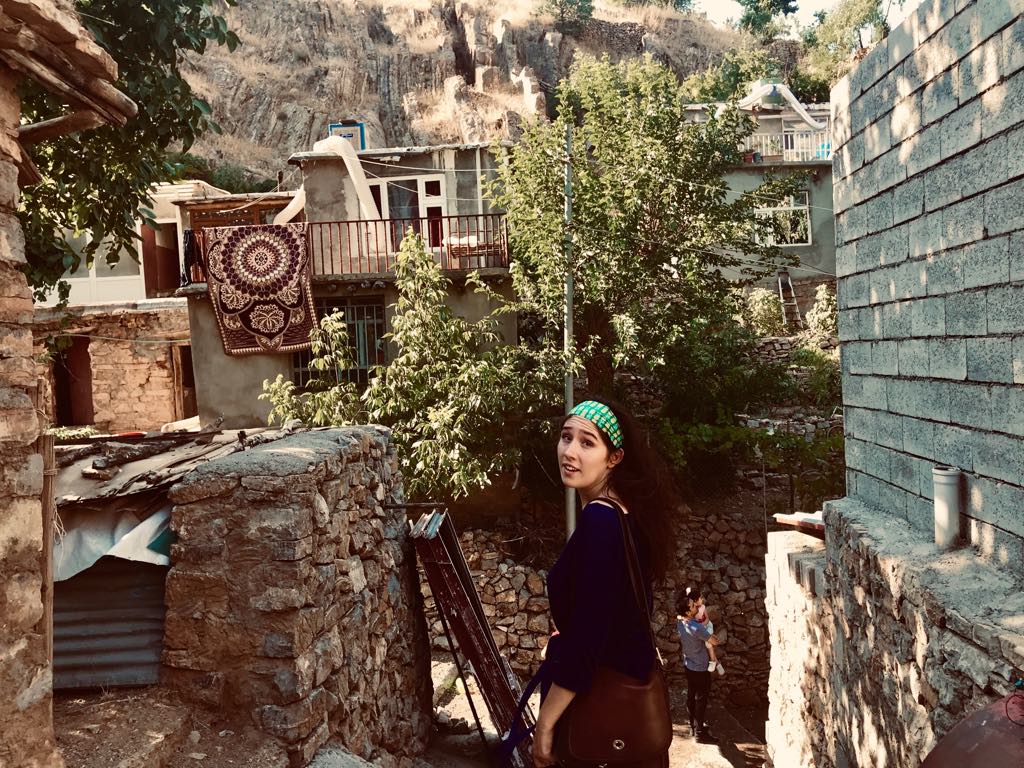
Today we jumped in the back of a pickup truck and were driven through golden wheat fields (like we have in the Midwest) in between small villages that used to hoist the flags of Al Qaeda. We are driving to Hewraman. Before Bergman and French gave birth to English, traders took a break in Hewraman, nestled in the Western Zagros mountain range separating modern day Iran and Iraq. There’s still thousands of travelers passing through here, marked tour buses full of families and unmarked motorcycles smuggling opiates, all pumping carbon monoxide in to the ancient fishbowl town. Homes here are stacked on top of each other, so that one family’s ceiling is another family’s floor, and there’s staircases hewn out of massive chunks of stone leading to endless honeycombed houses that seem to be suspended by nothing but sheer will. The haze makes the setting sun more of a presence than a spectacle, like the heavily guarded Iranian border wall on the next mountain range over, cannons pointed right at the thousands of families living right next to us.
As we leave Hewraman and weave between Persian oil tankers on the rail-less, one lane road, we stop in these cliff-side shops and look out the back, and we wonder how many chlorinated corpses lie in the troughs between mountain ranges. In the Iran-Iraq war of the 1980’s, Saddam Hussein used gas to drown sleeping regiments camped in these valleys during the savage trench warfare that marked the decade-long, fruitless conflict. We backed Saddam back in the 1980’s, in case your teacher didn’t get to that part of American history in your high school class. Mine never did.
Our imagination gave way to visceral reality when we visited Halabjah, the last stop of our day. It was here that Saddam ordered barrels of Geneva Convention-banned poison to be dropped from helicopters on to children’s playgrounds in 1988. It was here where the Bush administration found anecdotal evidence to break a country, and where apocalyptic bio-hazard signs have been graffitied with flowers on the way to a memorial constructed halfheartedly, a stark contrast to the internationally-acclaimed memorial to the Rwandan Genocide in Kigali. The guard waves us by half an hour after closing and soon a few dozen families are walking around the strange garden, where old Russian and Turkish-made combat vehicles are rusting on the grass. These weapons weren’t used against the civilians in Halabjah but they might have been used in any one of the dozens of campaigns carried out against the Kurds over the past hundred years. Today, the government lets kids climb around the old MiGs and rotting tanks. Akam’s daughter clung to the barrel of a piece of artillery like a Rwandan child climbing a tree to get a better view of the football match. We climbed in to the tank, too, and there were a few needles in the metal coffin.

It was also Halabjah where the friends we had picked up on our day trip out of Kalar joined us for dinner and engaged in the habitual cold war of arguing over who will pay for the group’s meal. While the men puffed out their chests, I walked outside and saw the Hospital for Victims of Chemical Warfare, because our animal nature necessitates that such places must exist, and after those friends said their earnest, tearful goodbyes, we drift off to sleep in the back of a car speeding down an unlit highway and wonder how anyone could ever sleep again.
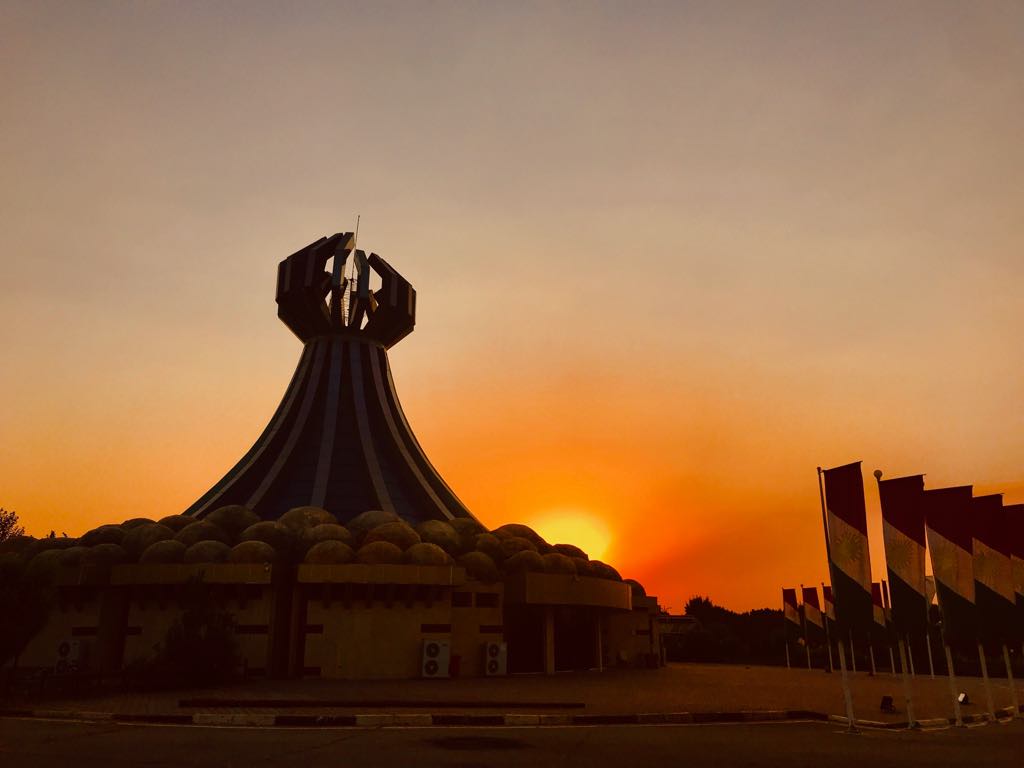
“Anfal” – to bury alive, a punishment reserved for those who resist occupation following surrender. The series of chemical, biological attacks on Kurdish civilian centers during the 1980’s was called the “Anfal Campaign” by Saddam’s campaign, thus invoking a religious mandate in his carnage.
Saturday 3 August: Day 23
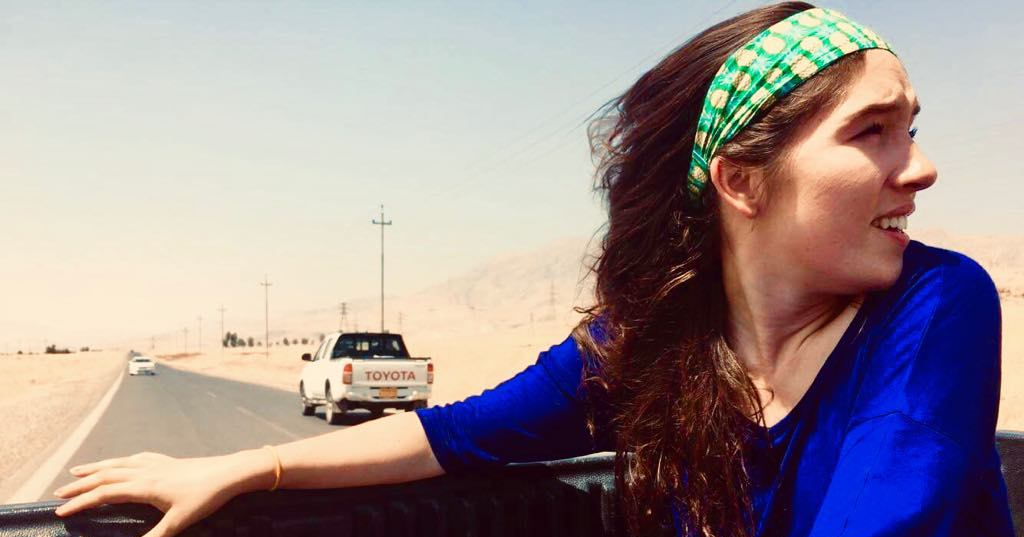
Still unsettled by Halabjag and Hawraman. Still in silence from the tranquility of the fish pond in that mosque. Still warm from watching Mitsu’s hair swim in the back of that pick up truck. Still unsure if that distant gush of gold we saw descending from the Iranian border was a lake or a cloud or a haze-distorted mirage.
We don’t get to make sense of it all or ignore the unease of our positions, of this history. It’s supposed to stay with us, right?
Yesterday a member of the Modern Islamist party
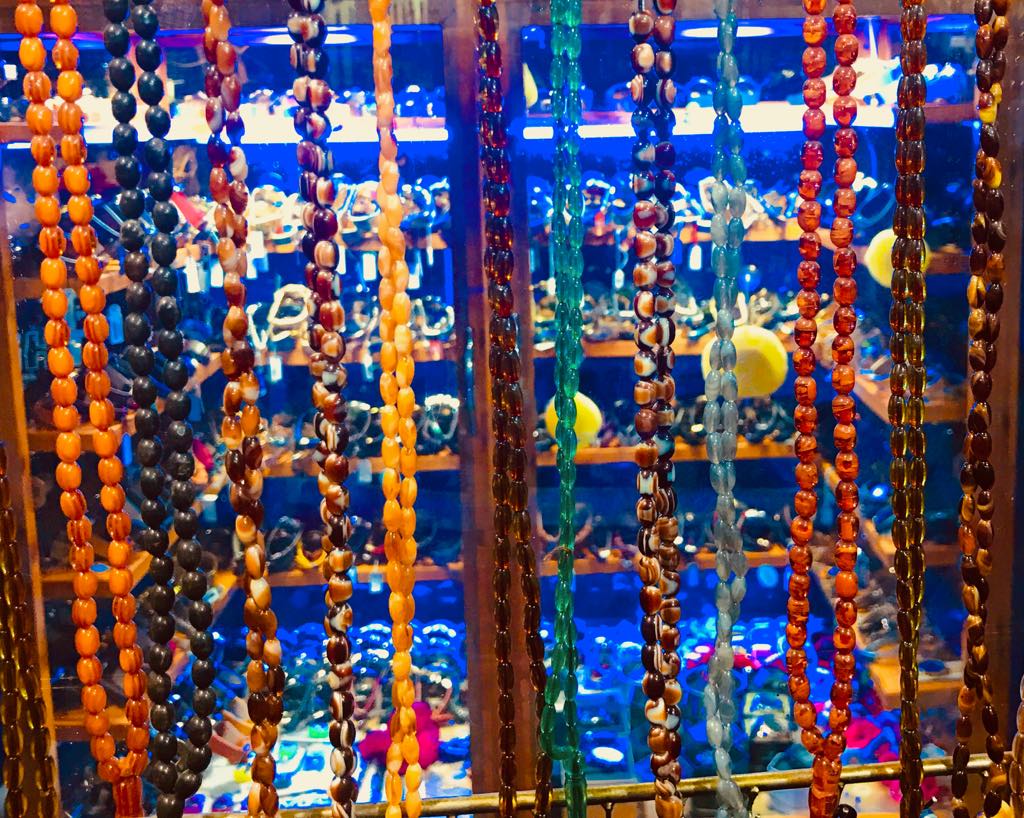
gave me the prayer beads his grandfather had given him.. The only memories here aren’t meant for us.
“tasbih” – prayer beads
Sunday 4 August: Day 24
Back at school. This week, we’re interviewing every student in the Starter and Elementary levels. About half of their final grade will be the interview, so everyone is incredibly nervous.
Everyone except us; we’re sitting in a smoky, prefabricated immigration office, trying to officially register as residents of Kalar. There’s these Russians ahead of us, all Gazprom managers, and the official’s disdain at their lack of preparedness has transferred to a disdain for our “lack of respect” – not paying a bribe, perhaps – is visible in his behavior. We sit here for five hours as a bureaucrat stares at our paperwork to make sure that the corners of our applications form perfect right angles.
The heat here has a smell – stale, heavy, like a wool blanket soaked in the juice from the bottom of a bar trashcan. 1:00 pm comes and we’re nowhere closer to residency than when we started.
There is nothing romantic about immigration bureaucracy.
“Kalari” – one from Kalar; the –i denotes being of a place
Monday 5 August: Day 25
We met a lot of new people this week.
First, there was Doha, a senior ranking officer of the Peshmerga in Kalar. He’s a squat man with a permanent smile and a body rippling with muscle under his olive green US Army shirt, which he curtly says was a “gift from a friend.” Doha was very excited to practice his English with us, and as he speaks several dozen small scars – shrapnel wounds – emerge from the laugh lines on the right side of his face. Doha is a good man.
We met Doha coming back from the closet-sized office of a man who maybe was a clone of the WWII-era British General Bernard Montgomery and had a chin large enough to spot before the lighthouse swings your way, and when we told Doha about the frustratingly slow progress of our residency application, he told us about his son’s pressing aspiration to perfect his English so that he can become a doctor. He told us that he’d look in to the matter and we agreed to do the same.
Later, I just walked right in to his office after a short knock and interrupted a briefing about ISIS activity in the region among the heads of security for the entire province, and Doha insisted that I take the seat of his senior officer while we chatted about American culture and his respect for the US Army, and once I told him that my brother was a Army Ranger all of the men in the room lit up and dropped whatever serious matter they were discussing to share their respect for my family.
That night, Doha’s boy signed up for our classes. I’m sure he’s going to do rather well.
Peshmerga – those who conquer death; the name of the Kurdish militia/police force/military units
Tuesday 6 August: Day 26
A very long day at work. All down time was spent interviewing students. At lunch, we rushed over to the medical clinic where doctors used rubber tubes to tie us off before sticking us with (thankfully clean) needles to take a blood test – still no HIV. A sweaty 20 minute nap was our break during the 13-hour day.
Seven hours later, Mitsu and I are walking home and the streets are alive with pop-up tea shops and massive soup carts and rotating ovens roasting sunflower seeds, and we literally run into Abdullah. He’s originally from Sulymania and has just moved back to the region from Italy, where he practiced medicine for 30 years. He speaks fluent Italian and wonderfully sing-song English, and over hot tea (it’s always hot tea) he told us his story:
In 1979, two strangers changed Abdullah’s life. They “saw something” in him, and although the good doctor still can’t quite explain what they meant or what he heard, he took their serendipitous presence as a sign from Allah and moved to Italy where he specialized in emergency medicine. His wife, a fair-skinned Italian nurse, introduced him to fresh cheese and red wine, seducing him to move to the Venetian Dolomites for half a lifetime. Their son is a salsa dancer – I wish you could have seen the glance that Mitsu and I shared when Abdullah told us that his son was a salsa dancer, that image will last forever. The best part? Those two strangers, the ones who sparked his life back in 1979, were from a small American city that no one he’s ever met could find on a map:
Jacksonville, Florida.
“shuti” – watermelon; “inshuti” – friend [Kinyarwanda]
Wednesday 7 August: Day 27
We’re back at the Peshmerga compound, and the Chin is finishing our residency application with a renewed vigor, when we take a break from explaining the absurdity of American middle names to notice a Japanese passport sitting on the Chin’s desk. Mitsu’s eyes widen and she excitedly asks to meet the passport’s owner.
In walks Rintaro, a lanky, 22-year-old college student travelling back to Japan after finishing a year studying politics in Belgium. Taro can’t speak Kurdish, so when he asked a random old man to take him to a hotel, he was brought to the security office, where he languished for a few hours in the purgatory of that hot, beer-trashcan administrator’s lobby before being wistfully summoned to the Chin’s closet office.
Taro speaks excellent English, French, Arabic, Turkish, and, of course, Japanese. It looks like he’s been teleported here without a map or a compass so we decide to take him in. For the rest of the day, Taro slips in to our classrooms and gives advice on learning English as a second language, travelling to the far corners of the globe, and the importance of perseverance in our studies. There’s some bad questions to – “why are Japanese people so young and small-looking,” for example – but the worst one was when he was asked if the nuclear manslaughter of Hiroshima and Nagasaki were justified. I had to step out of the room after that one.
Later that night, a mutual friend comes over and we talk about philosophy, romance and travel over chicken sandwiches and hookah on the cool living room floor. There’s no AC (the national power is off) but we still lose track of time, sharing music and stories of swindlers. Taro collapses exhausted on our couch at the end of the night, lemon and mint still staining the air, and Mitsu and I wonder when life went from being surreal to a full-on dream.
“Okaeri” – welcome home [Japanese]
Thursday 8 August: Day 28
Morning: wake up sleep-deprived, arrive at school already covered in sweat, first period students are fighting in class and I’m ready to go back to bed.
Afternoon: Akam picks up Taro on the side of the road walking the 4 miles to Sherwana Castle in 120 degree shade-less heat. Dropped off at school, selfies with students ensue. No rest from classes and interviewing students today except the pauses in conversation as someone mentally translates English to Kurdish to English.
Evening: Taro, Mitsu and I meet Abdullah for dinner. Four people, ten languages, six continents, a hundred lifetimes. Tea on the sidewalk at night; mute Baghdadi refugees come over and may be asking for money but (stupid Chris) are actually part of an all-mute comedy troupe and proceed showing us hilarious skits on Instagram. Lots of slapstick comedy, dancing, and jabs at Trump. There’s no formal sign language here but the arm waving is understood by Abdullah in Kurdish, who uses uses Italian to mentally process the translation, shares the boy’s messages in English for Mitsu and I, who then re-explain the message to Taro, who is processing the scene in Japanese.
We accept their blessing from God and sleepwalk back home.
“Mash’ allah” – blessing be upon you
 certification
Leave a comment