Friday 20 September: Day 71
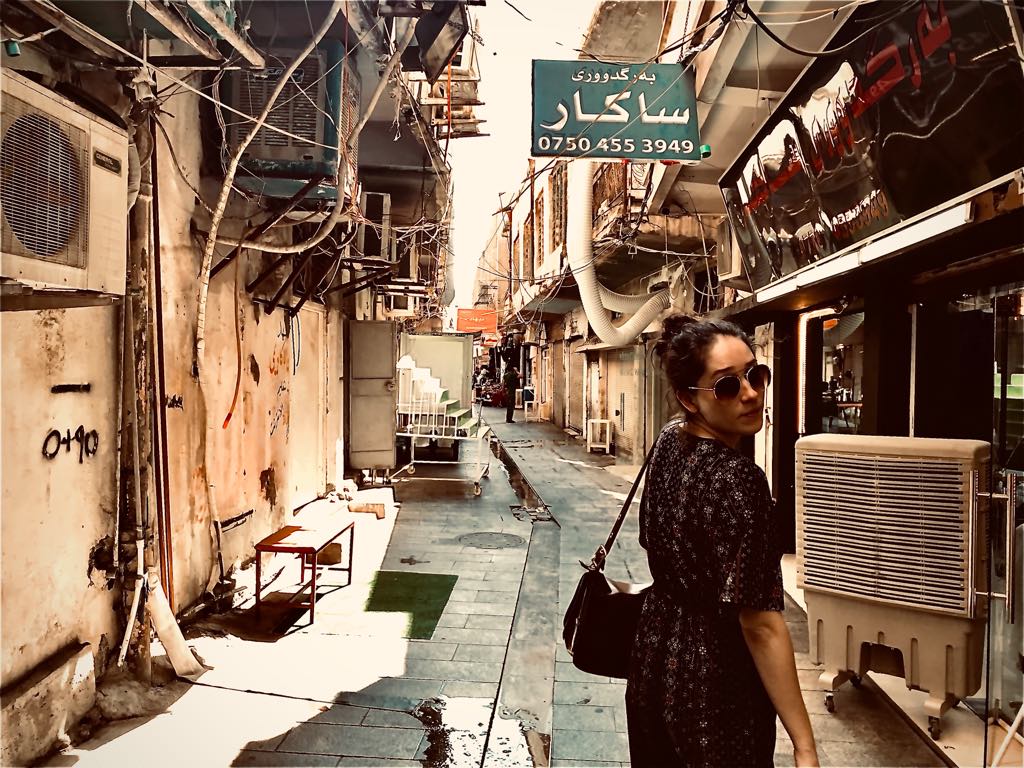
We have an appointment with the US consulate in Hawler on Monday so we’re taking a few days to experience both Suly and the capital city. Today, we took a bus to Suly, and the sheer volume of new experiences and sensory inputs has been manically beautiful. Days like this feel like they are experienced as an assortment of strong impressions, not as sequential events. Here are a few impressions:
The bus was wide and short. To my left was Mitsu, the morning light illuminating the bridge of her down turned nose as she read. To my right was a young girl, uncovered, her nose bandaged from a recently completed plastic surgery, wearing a t-shirt and jeans. Next to her was a heavier woman in a full black niqab, her brown eyes smiling at me and separated by a thin black piece of cloth that formed the full-body garment of the devout. Around us was a landscape going backwards in time, from the smog and the cement of the 21st century to the badlands of the 1st, with rivers and spines of sharp crags crowning mountain ridges and a hundred burly goats crowding under a bridge for shade. Behind us were taxis and pick up trucks and oil tankers all fighting to pass, slamming on brakes as another car came bleeding around the blind mountain road, occupying the middle of both lanes of traffic. In front of us is Suly: wider than conceivably possible, with a population comparable to Seattle and more skyscrapers than Jacksonville and a grinding reminder that a foreigner’s romanticization of the countryside has no place in a city older than his continent.
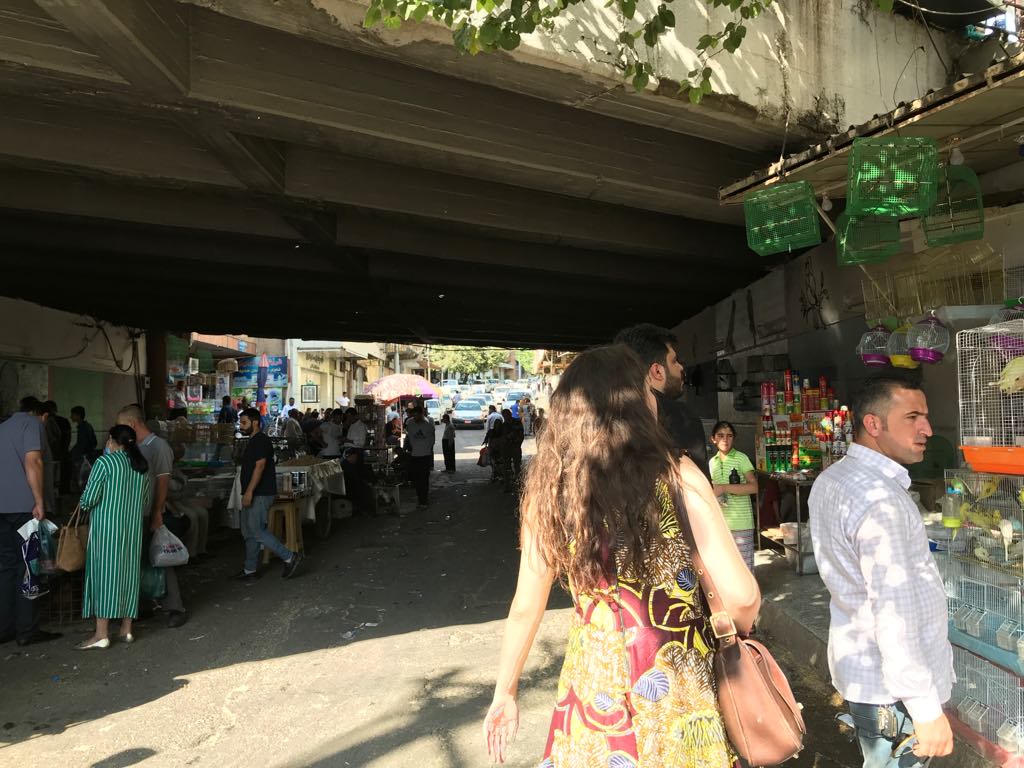
The street, loud and crowded and full of color, turns into an overpass. We hear an armory of birds firing off nearby. “What’s that?”, Mitsu asks, her eyes dilated from the fury of activity around us. Hama, tall and dark, grins us an evil grin and shows us the descending stairs.
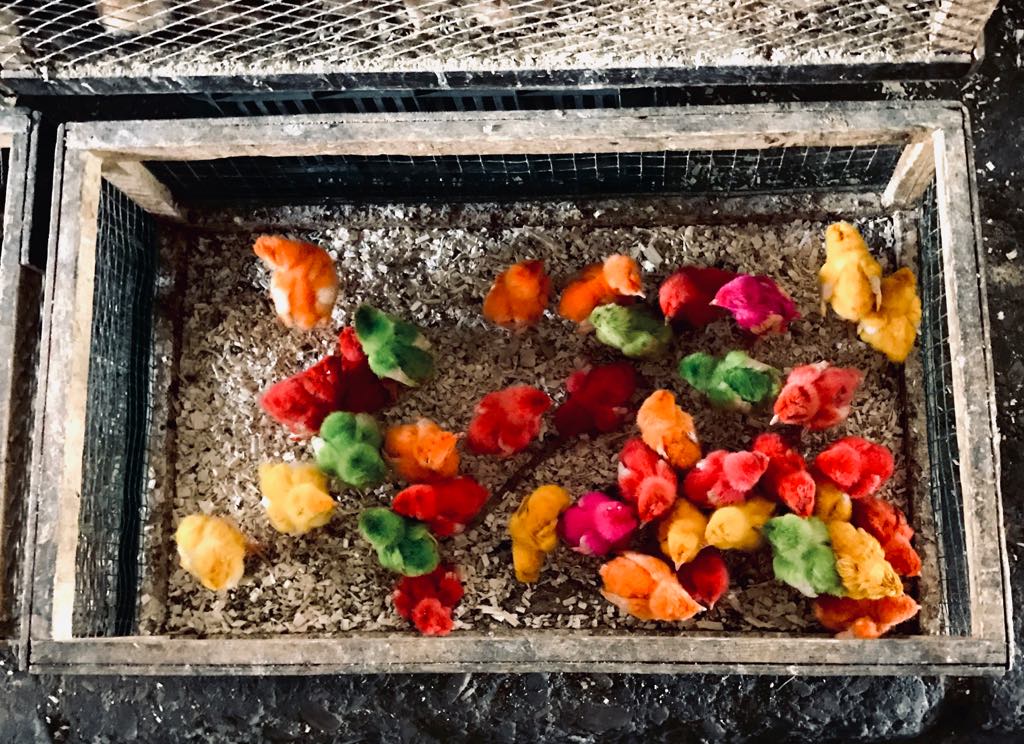
Under the street is the animal market. There are crates with hundreds of chicks bumping in to each other like lobotomized idiots next to crates of enlightened quail showing off their royal head plumes next to crates of hatchlings dipped in paint like some Burtonesque version of Peeps. Dogs in crates sleep through the madness of cats fighting in the crate apartment above them and a barrage of roosters screaming at the top of their lungs. Turtles crawl over each other with uncharacteristic abandon and a snake hisses from the hands of a spindly salesman. There’s hamsters and gerbils and hedgehogs all squirming in piles of organic, furry and spiky movement, and a complete baptism of animal smells and animal sounds that make the human masters packed between these cages seem less important than their prizes stuffed inside. Back on the main street all we can hear are the roosters, and all we can smell is fresh chicken being served in the nearby diner.
In the center of Sulymania is a palace constructed almost 300 years ago for a revolutionary, independence-minded sultan, and on the grounds of that palace is the Sara restaurant. The café looks like a tunnel of sandy brick made golden by the afternoon sun. Uncovered waitresses serve us slow-roasted rooster, a green “ancient grain” dish that tastes like a mix of rice and zucchini, and four thick, rich soups.
Hama smiles proudly with our absorption in the meal. Outside, we share a hookah in the small yard with a torrent of traffic encircling the former palace. He points out the politicians and poets taking a seat near our corner spot. Two waiters shove each other and a hundred patrons stop and stare, their senses primed for observing violence, as their coworkers pull them apart. “Kurdish men always fight over women,” Hama chuckles.
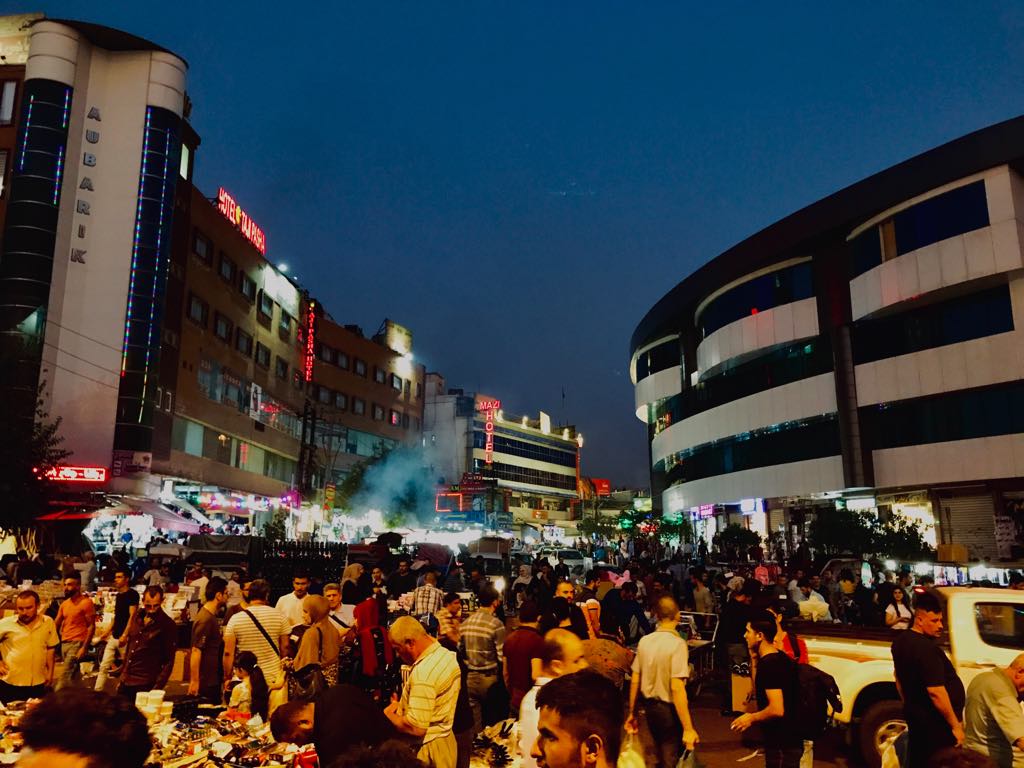
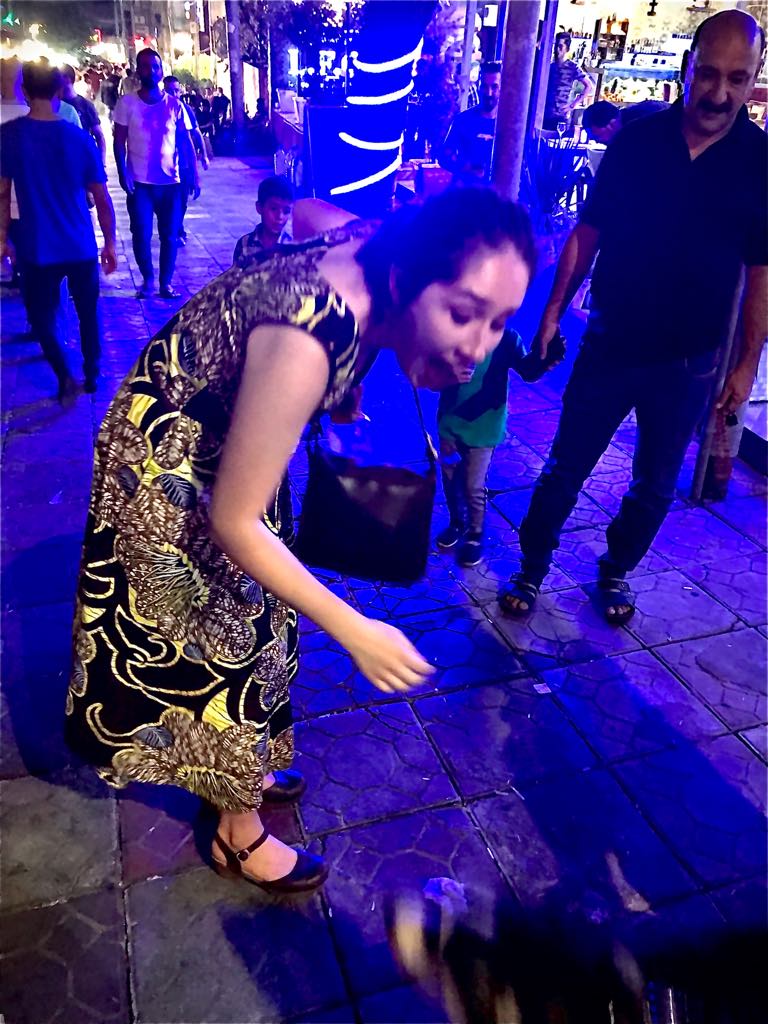
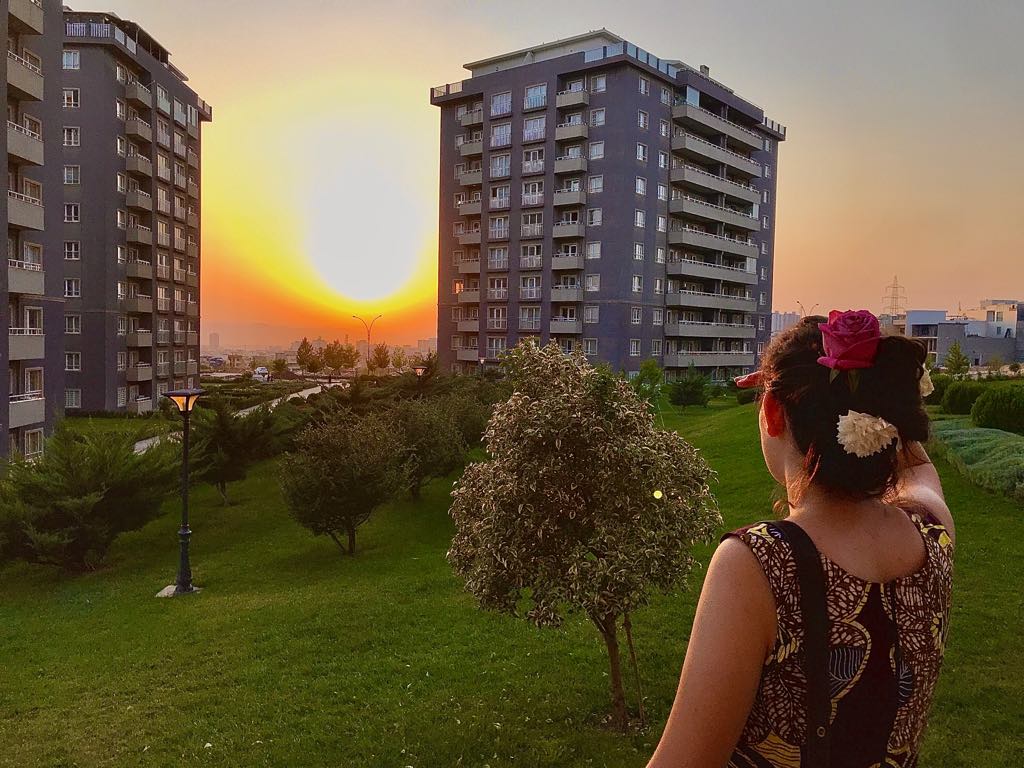
We’re sitting on three folding stools among hundreds flanking a busy sidewalk. Like Mitsu, there are dozens of women sitting near us – a barometer reading radical sexual equality in a night that drenches everyone with sweat. Between elaborate frozen drinks we see young couples holding hands and walking dogs on leashes, young men with tight cut-off jeans and hair frosted bleach blonde, college-aged women with fades cut in to their dark brown skin accenting elaborate jewelry. A rose seller walks by and I buy a flower for Mitsu and put it in her hair. The street feels free, in a relative sense that resonates so much more starkly than the freedom of an environment in which tolerance is expected. We finish our drinks and sit in silence with the spectacle around us, and with us becoming a part of it.
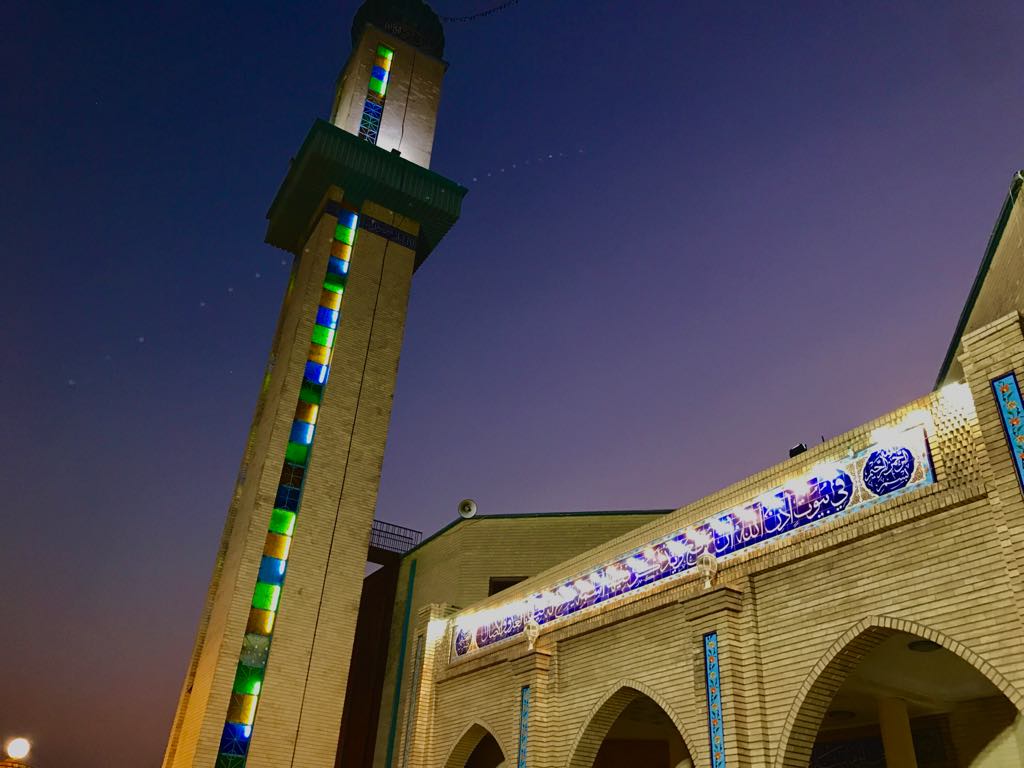
It’s the 7pm call to prayer and ten thousand people are walking on foot between cars and tea stands and carts dangling raw meat on hooks next to carts spritzing pedestrians with citrus perfume and they’re all going to the Grand Mosque of Sulymaniah, a tall compound whose skin is made up of hundreds of thousands of tiny mosaic tiles that must surely outnumber the mass of the pious who ascend to this house of worship five times a day, and what is first a spectacle soon becomes a participatory experience as we merge with the flood. This is the Submission they speak about, the acceptance of the impossible in the midst too-raw possibility, of the squarely human converging with a force beyond her construction. It’s starting to feel like our own designs are losing permanence in this place, like our own sense of direction doesn’t really disappear but becomes irrelevant in this crowd, and whereas we submit to as much as anyone else on any given day the act of Submission has never felt so physical as it does in this exact moment, whenever that is.
” Khobadastawadan” – submission
Saturday 21 September: Day 72
And then we were in Erbil, known to the Kurds as Hawler, known to the Arabs as Irbil, known to the ancient Medes and Sumerians who fought Alexander the Great as Arbil. We crossed through the same checkpoint getting here where two days before, a leading PUK technocrat was stopped by PDK guards and for a brief moment the re-ignition of a simmering Civil War seemed likely. But that was two days ago, and today our eyes are stinging as a wall of acrid smog greets our arrival from an ancient countryside.
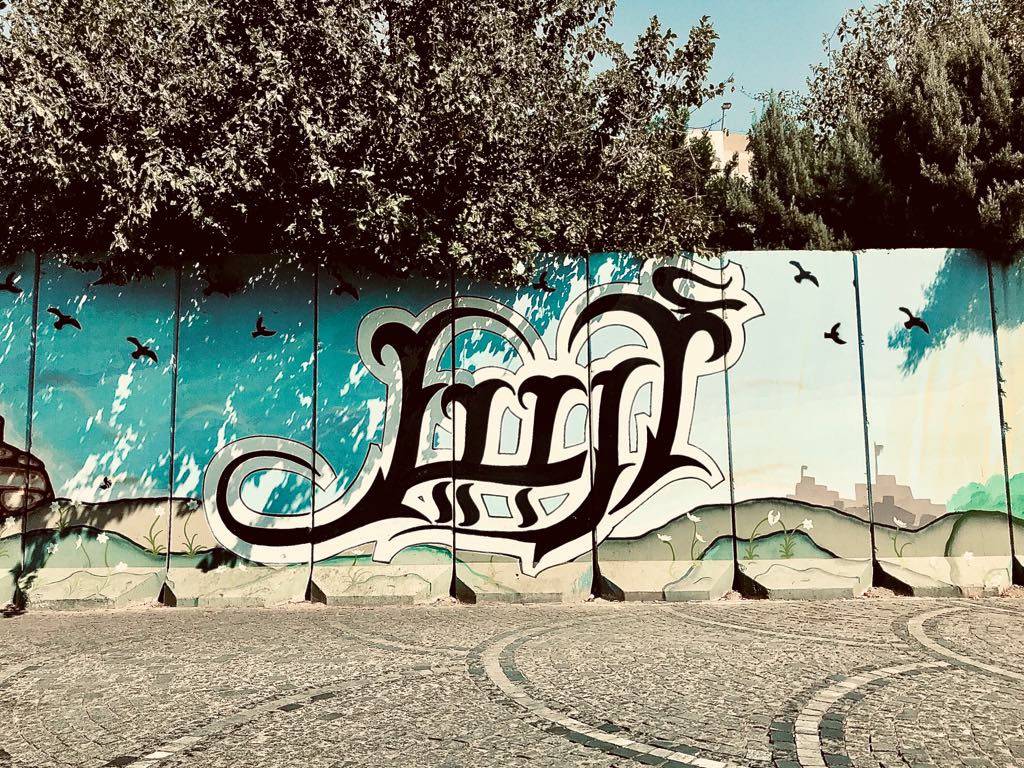
Hawler is built like a wheel: the 10000-year-old Citadel is squarely in the center of the city, with the first ring packed full of bazaars, the second and third rings containing shopping malls and apartment towers bigger than most American buildings outside of Manhattan, and the final ring currently hosting a revitalizing industrial boom due to heavy investments made in the city’s highways and oil refineries. The only neighborhood we know of is Ainkawa, an appendage on the northwestern limit that has been home to Christians for a few hundred years (less than a fortnight in Kurdish time) and housing the US Consulate. On the east side of the city is the road we must take to get to Sulymania, because if we follow the road that goes south we’re 100 km from Kirkuk, and if we follow the road that goes west we’re 80 km from Mosul.
Despite its geographical proximity to those scary places, Hawler is one of the safest cities either of us have ever been in. This sense of resilience permeates through everyone we meet and people walk around with a chip on their shoulder, as if the finer inconveniences of life in a major Iraqi city (crime, pollution, traffic, powerlessness, corruption, bad smells, etc) are nothing compared to the horrors everyone has been exposed to in these past few years.
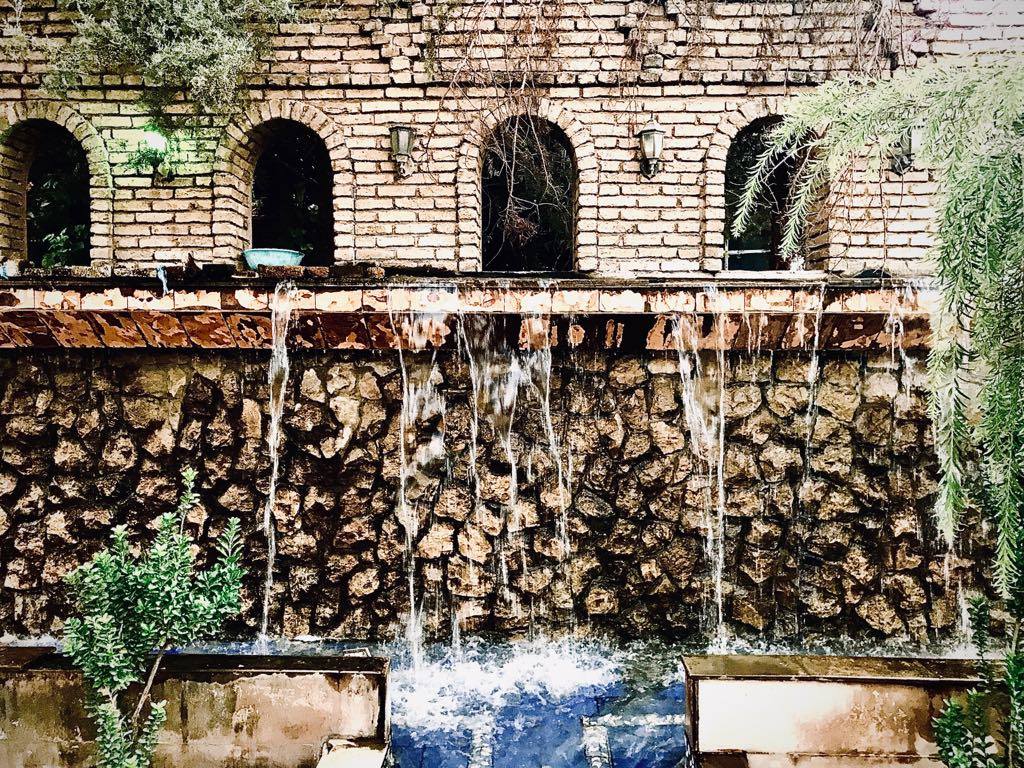
It’s our first night in the city and we’re couchsurfing with Rebecca and her partner Raimond, two German teachers who moved to Hawler in the past month. Raimond is dealing with the same stomach issue that struck us a few weeks ago, but Rebecca has been incredibly welcoming and the four of us all click the way that couchsurfers usually do.
Tomorrow is for exploration. Monday is for business.
” Almanya” – Germany
Sunday 22 September: Day 73
We wake up early. Rebecca was already at school but Raimond treated us to fresh coffee and bread, and we prepared for the day by sipping black sweetness on their apartment balcony, looking at the sunrise that diffuses through the haze now growing in the morning. The city generates 70% of Kurdistan’s economic output and you can see it in the sky, choked by endless taxis and oil refineries imprudently constructed upwind from the residents. Sunrises still look beautiful, even when they’re syrupy.
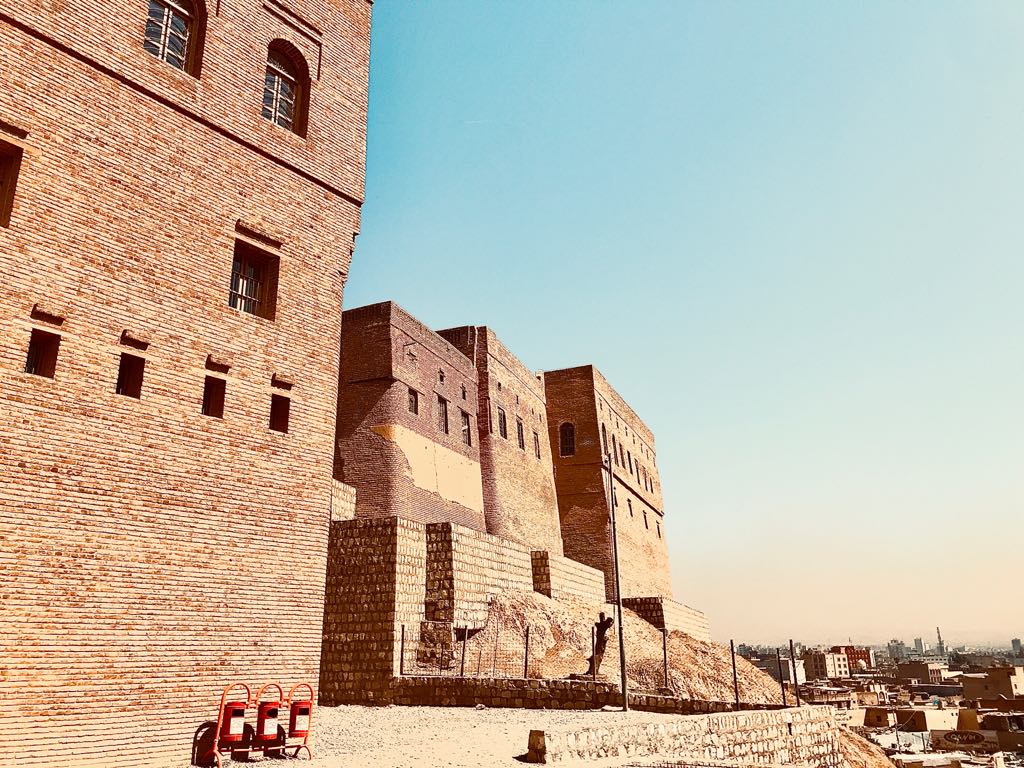
Our first stop was the Citadel. The structure itself is impressive, a perfect circle of high walls on top of a man-made hill that dominates the skyline of the Old City. The heat was brutal getting to the top, and once we were up there, we could imagine how kings and their armies had held this hill for millennia before Christ, each battle taking a section of the wall with it only to be rebuilt by future generations. Today the Citadel is a massive UNESCO heritage site and an archaeologist’s wet dream, with renovations expected to be completed by 2025 and most of the ancient mud-brick homes sitting vacant and dusty. A young Kurdish woman ran up to Mitsu as we were leaving and asked to take a selfie with her. We were in a good mood.
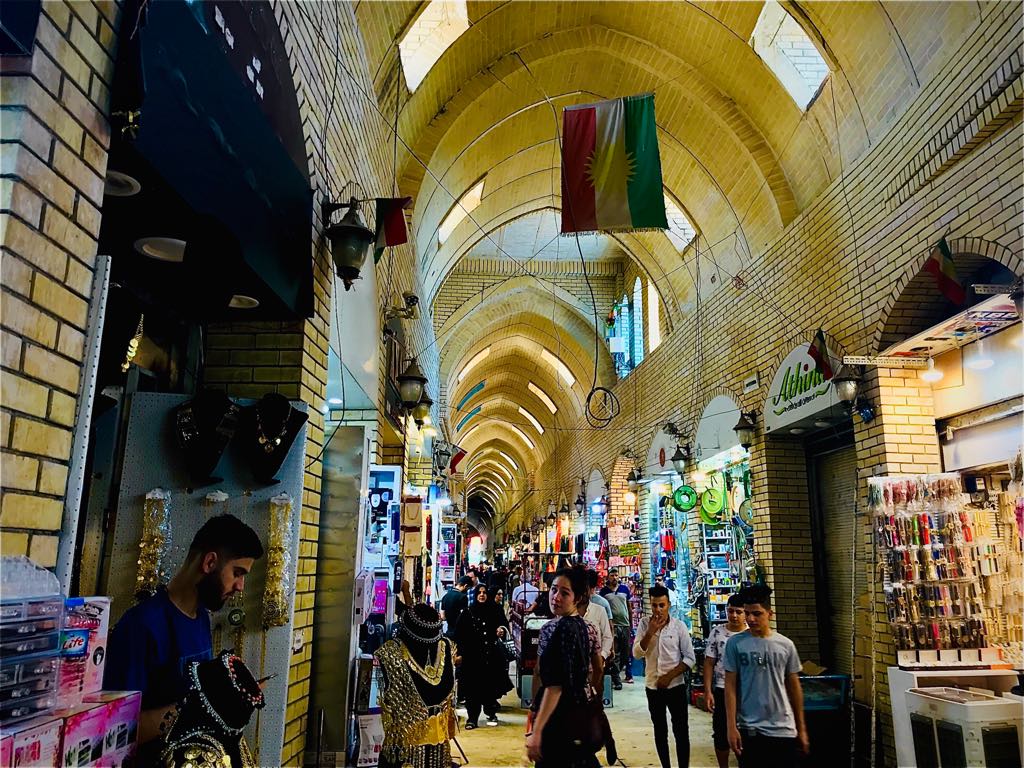
At the foot of the Citadel is a dense ring of bazaars, the kind that can lure in romantic travelers with ease and take all of their money. Unlike the very functional, almost naturally temporary commercial environment of the bazaar in Kalar, this one radiates and steadfastness that engulfed us. A whole city block of small shops was dedicated to scarves and Mitsu simply lost her shit popping from store to store, soaking it all in. The physical structure was built out of the same grand stone blocks as the Grand Bazaar of Istanbul but replaced the Western brands with spaces stuffed to the brim. Like the city itself, like all of Kurdistan, we wandered into the alleys of the market and became lost at every turn.
“qalat” – castle
Monday 23 September: Day 74
We spent the morning at Rebecca’s school. The German school is tucked behind concrete blast walls and soldiers for hire, looking more like a barbed-wire military outpost than a high school from the street. Once we passed through security, the contrast left us shaken; children’s drawings colored each cement slab, young boys and girls ran through tree-lined gardens, abstract murals lined the monochromatic hallways. Everyone was eager to meet us – the students stared with wide-eyed curiosity and the other German teachers impressed us with their pedagogy and, stereotypically, with their excellent organization. We watched Rebecca review a lesson and then spoke to the principal, Daniel, who shared much-needed advice on our organization’s approach to government bureaucracy and his own challenges keeping the school open when ISIS was less than 20 km from Hawler. We left the school with the impression that things just aren’t as bad as we saw in the news from the States, a lesson that’s becoming more of a slogan the longer we spend in Kurdistan.
And then at the US Consulate, we were reminded that the reality of decision making here matters little to decision makers abroad. The consulate was a fortress, with watchtowers overlooking concrete pathways that were designed for clear lines of fire. We were told to stop talking in the waiting room and focus on the slideshow of American states playing on the single television, and that if we wanted water, one of the heavily armed Kurdish soldiers silently glaring at us would grab it from the fridge. The consulate official was kind but reiterated that Kurdistan is too dangerous for us to be here, that Kalar is as dangerous as Damascus or Fallujah or Kinsasha or Pyongyang. We told him that we were Returned Peace Corps Volunteers and he lightened up a little bit.
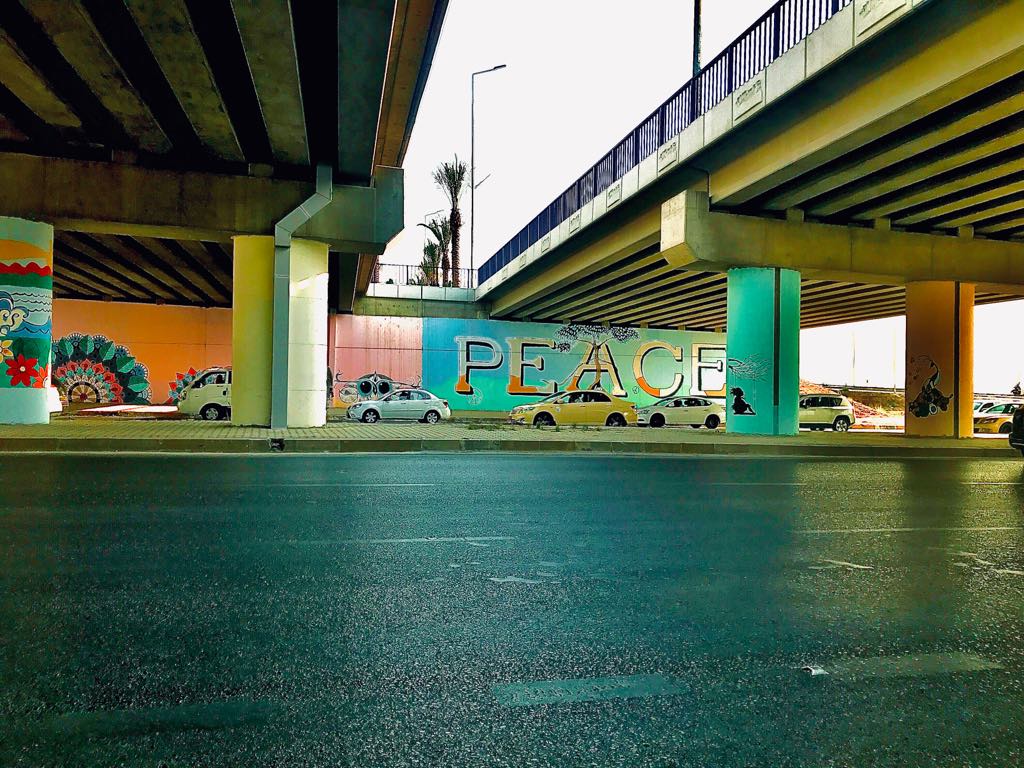
It all seemed so silly. Both the German school and the US Consulate were built to withstand a riot, which is what happens when decisions are made without a conversation with the locals. After our ridiculously long appointment, Mitsu went off to meet Akam, and I sat in a dark alley of the bazaar, surrounded by supposedly-malicious unemployed Iraqi men, sinisterly drinking tea and moving bags of cement. I talked to a friend of mine from Rwanda who had to climb to the top of the nearest mountain to have enough reception, a citizen of another country whose brand is scarier than what it sells. If strangers are easily scared, they should stay away.
” begana” – stranger
Tuesday 24 September: Day 75
Travelling all day. Mitsu and I feel that slight restriction of cranial blood flow that usually follows a normal weekend for most young Americans but now makes the heightened noises and too-bright lights of the sun rolling on the hills around our bus feel like memorabilia. We’re going to miss Rebecca and Raimond, the first Westerners we’ve met here, and we’re going to miss the bustle of a city and relatively more liberal attitudes of the unfamiliar faces we’ve seen, but we mostly just miss Kalar. Driving back in to town, a young man practices his English on me and informs me that no one here wants to hurt me, that Islam is a religion of peace, that everyone in Kalar is so excited to see foreigners, just as most new introductions remind us. There’s something about the eagerness with which Kalari people have shown us their culture that the more-Westernized big cities lack.
It feels good to be home.
“mal” – home
Wednesday 25 September: Day 76
Tonight the family living in the apartment across the hall from us was going inside at the same time we were and their little 2-year-old girl ran in to our apartment, squealing and laughing, and while her family looked at us with abject embarrassment she and I twirled around a few times before she pranced back over our doorway and all of us just smiled in a cross-cultural moment of bliss.
“mndal” – child
Thursday 26 September: Day 77
Today is the final exam for one of our last classes. One of the students who didn’t study enough came to me halfway through the exam and informed me that she needed to leave immediately but that she would be back on Saturday to re-take the exam. I said that she could leave, but that she couldn’t re-take the exam, since that wasn’t fair for all of the students. Somehow this response confused her. We grabbed Aram, our resident translator, and she explained that she could stay for another 15 minutes but then she really really had to go and she needed to come back tomorrow or else she would fail. Aram and I both are struggling to hold back laughter now and diplomatically explain that she’s wasting her remaining 15 minutes by telling us she can’t finish the exam.
Lost in translation?
” taqikrdnawa” – exam
 certification
Leave a comment