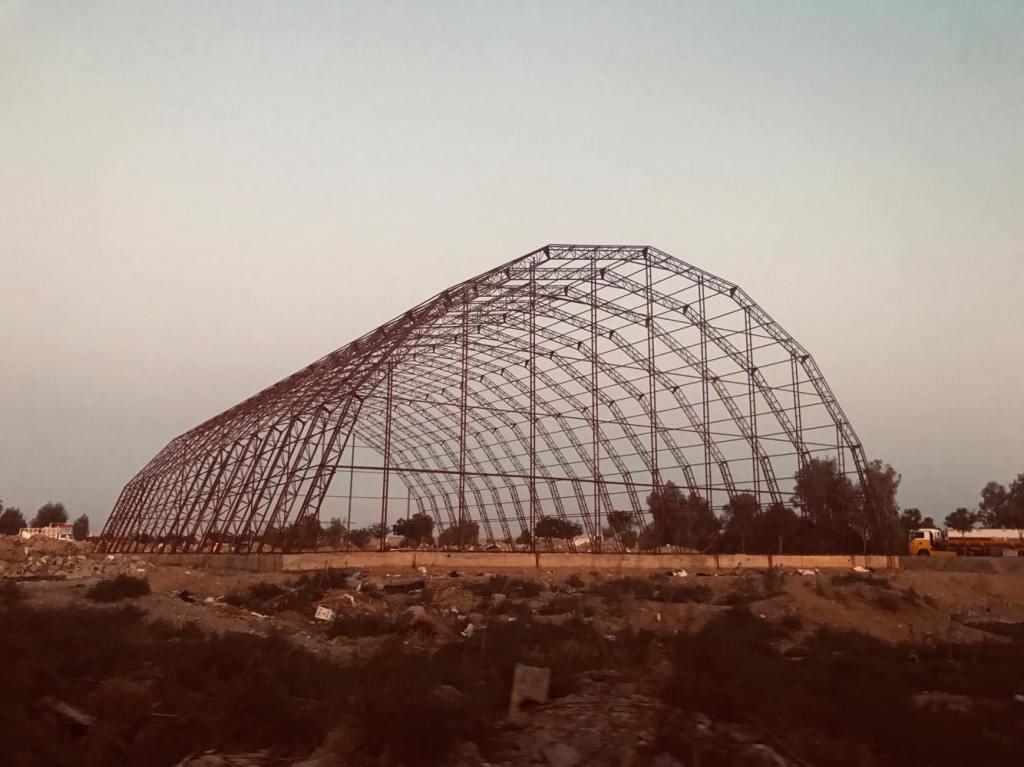
Friday 8 November: Day 120
Teaching someone to play pool is like teaching someone to swim. There’s this trepidation, almost paternal, that turns to pride when a ball is finally sunk. You show them how to make a neat right angle with their back arm and how their front hand acts as a groove for the cue, and coach them through the embarrassment and anxiety. The result is fantastic, a joy that has to be contained so as not to spoil the student’s success.
Mitsu and I took Yahya, Dilan and Essa to Titanic tonight. They had never been before and were impressed by the owner’s frantic search for our seat. The waiter never left us alone and our guests laughed with the celebrity-like status. We talked, as it should be assumed by now, about God. One of our guests is a Ba’hai and the different spiritualities clung to our words like hookah smoke to bright lights. Dilan can’t speak much English, but she relayed to Mitsu that she felt empowered not being the only woman in the decidedly male space. The vibe was unequivocally good.
We played pool, Mitsu putting the male spectators to shame, the boys proudly hiding their own embarasment with their newfound skills. Gutiar, a former student of mine and a good friend, stopped by and together we slugged it out, taking turns making bad shots that we said were “defensive”. After we finished, Yahya showed his wife how to play. They were completely engrossed, their affection apparent, romantic, and it’s both invasive and an honor to be able to watch a young couple in a conservative culture show their feelings for each other. The rest of us just talked about books.
یاری بلیارد – pool/billiards
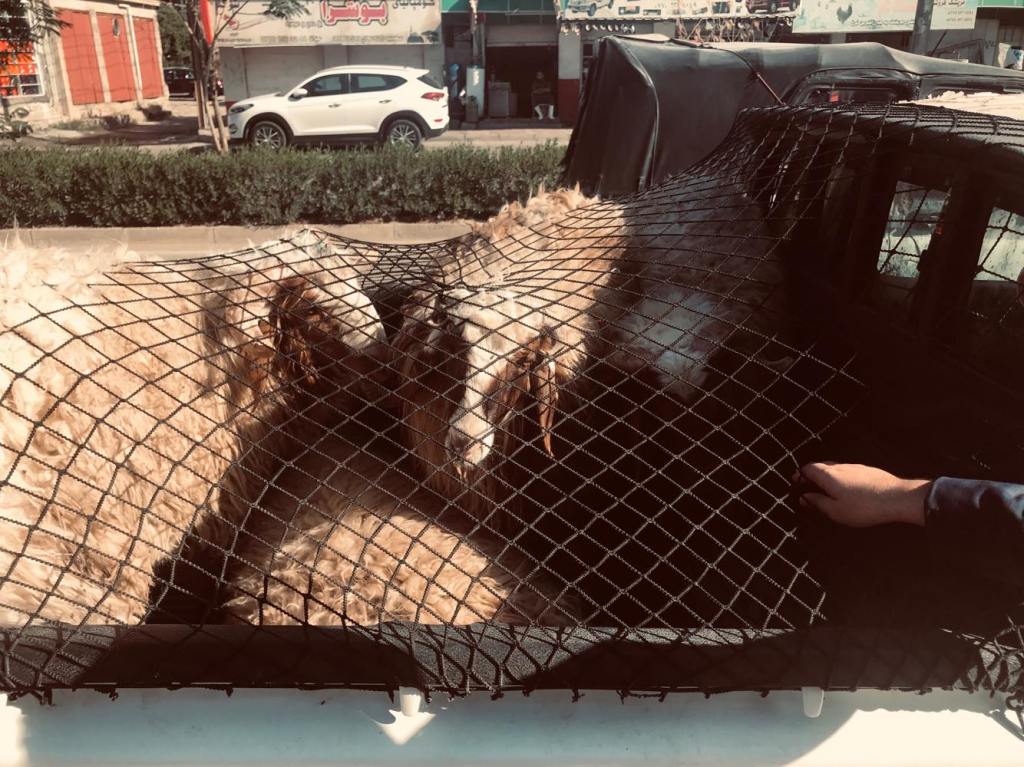
Saturday 9 November: 121
Chaman visited for dinner, bearing tahini and date syrup. When mixed together and served with thin bread, they make a savory paste that has the consistency of warm peanut butter and drips amber into the creases of the warm bread like mineral veins on a sheer cliff. Try it.
Chaman is back at her old job, which she finds to be incredibly boring. We’ve become the kind of friends who send each other interesting youtube videos and laugh at stupid people over messenger, which feels comfortably familiar. Mitsu steps into the big sister role effortlessly, and Chaman laps it up.
Making friends from drastically different cultural backgrounds is a mixed bag. The friendship starts from a kind of guilty voyeurship, a mutual hunger to taste something exotic. Invest enough energy and test the boundaries of taboo, and that friendship matures into a kind of duprass – Vonnegut’s idea of interconnected web-ness where two souls speak more frankly than words possibly can. You start to learn that this precious partner’s insights are dazzlingly different, that they’re more than simple research into an alternative worldview. It’s a little embarrassing to say all of this and realize the mutual objectification that takes place, bu the friendship has a quality that’s hard to put in to words.
More than anything, I want Chaman to sit in on an English seminar in college, to bask in the critical space and gawp at the diversity of perspectives. It’s shameful to think that Chaman is one of the millions of people half of the American population voted to exclude, as if they wouldn’t be profoundly graced by her presence. So many of “them” – of Iraqis, of Muslims, of Africans from “shithole” countries that put American wilderness to shame, deserve to become a part of the American fabric. If nothing else gets across in this writing, the arrogance of exclusion must surface.
هاوڕێ – friend
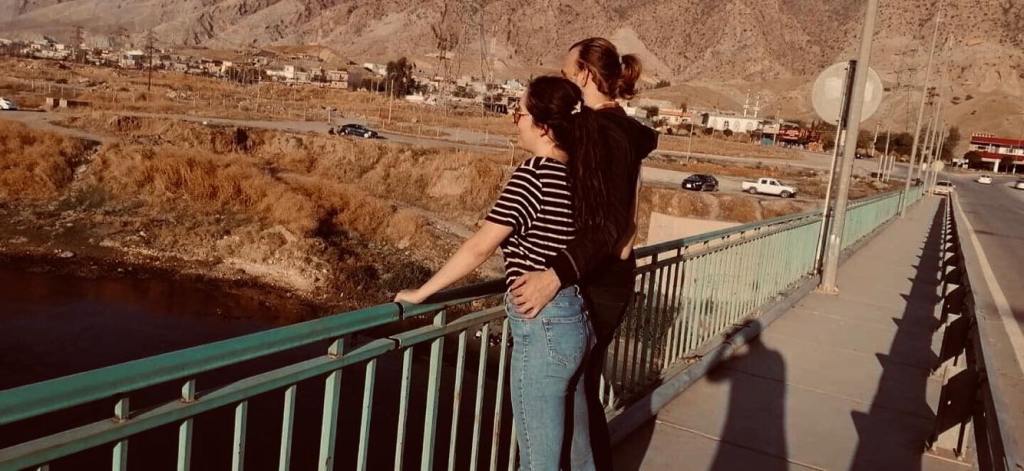
Sunday 10 November: Day 122
6:30 am – the first two alarms prepared us for this moment. Coffee must be made immediately. Exchange breathy I Love Yous and stumble to life.
7:00 am – yoga. I will touch my toes. I will touch my toes. I will touch my toes.
8:30 am – the BBC, CNN and Al Jazira all agree that the world is going to shit. Stronger than coffee. Shake it off. Oatmeal with tahini and date syrup and raisins with fried eggs on top for breakfast.
9:00 am – Sroor’s Grace when we show how little studying we’ve done is a constant, along with major breakthroughs and the promise of really cool sounding words. What used to look like scribbles are starting to make sense.
10:30 am – Register new students, input old films, lesson plan, meet partners, look at property, visit schools, complain about the lazy janitor, do his job, vegetate
12:00 pm – I don’t need this second chicken sandwich, but it will be eaten.
1:00 pm – “constable” , “guillotine”, and “impious” seem to be radically too difficult for my Pre-Intermediate class. Let’s get “a” down first, guys. A+ for effort. Coffee.
3:00 pm – Going through a list of 260 phrasal verbs with only three Upper Intermediate students shouldn’t be this fun. Teaching is a passion. Coffee.
5:00 pm – Maybe I can squeeze in a quick nap… psych! There’s six new students here for interviews. I know you want to be in Level 3, but if you can’t express that desire in English, you aren’t ready yet. More coffee.
7:00 pm – 45 minutes of heavy calestinics followed by 45 minutes of kickboxing in a room full of macho Kurdish men is heightened, not dampered, by the mix of Eminem and EDM blasting on the stereo.
9:00 pm – RuPaul’s Drag Race must be the purest expression of American exceptionalism ever produced. Vanjie…
11:00 pm – We’ll do the dishes tomorrow.
ڕۆژ – day
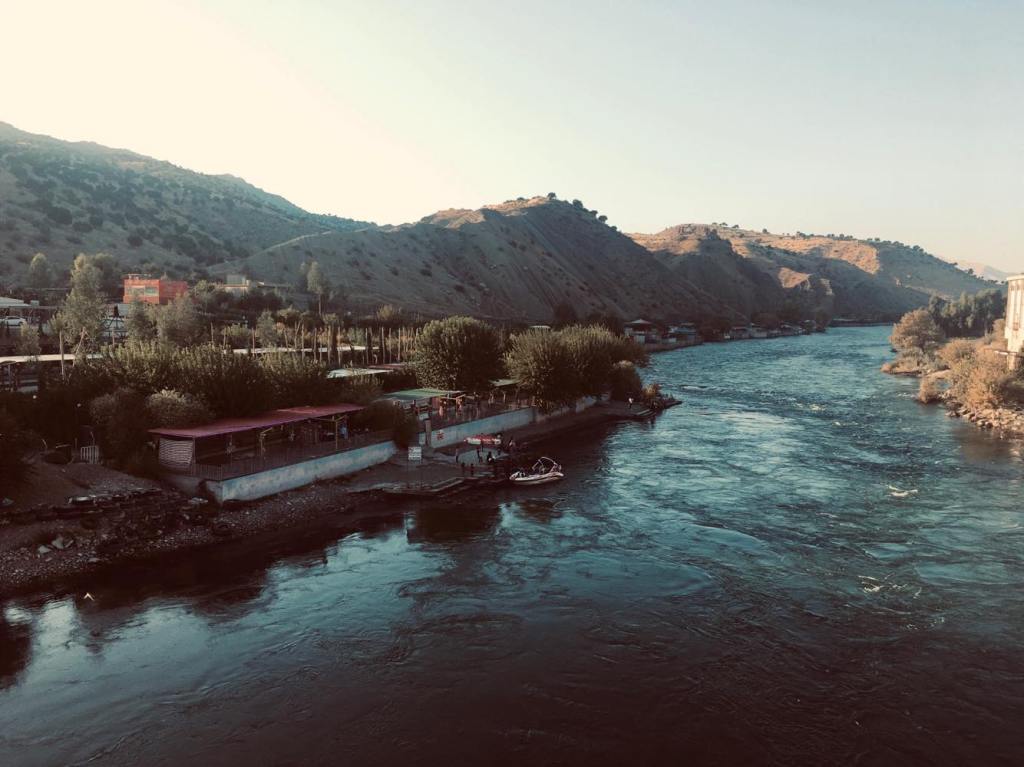
Monday 11 November: Day 123
I’m reading Bill Bryson’s A Walk in the Woods, waiting for Mitsu to finish up her last set at the gym, when a young guy tells his friend to “shut up and wait” in perfect California English. He introduces himself as Ali. His dream is to meet an American, he says, so now he can die happy. He never went to college, but he owns a small shop and spends his days watching American movies. I can tell, because he has the best English of any Kurd I’ve spoken to.
Mitsu slogs downstairs and the praise continues. He walks us to the intersection at the corner of the bazaar and follows us on Instagram 2000+ followers, this kid isn’t playing around. As we part ways, Ali shouts, “This is the best day of my life!” and no one even turns to look.
دڵخۆش – happy
Tuesday 12 November: Day 124
“Is there slavery in Kurdistan?”
Al Jazira reported on a maid-for-hire agency out of Dubai that seized young women’s passports and dumped them into subhuman conditions with no chance of escape. It was an honest question.
“I don’t know. There’s a large house down the road owned by a very powerful man. it’s too big for one woman to clean, so he hired a Filipino woman to take care of it. But I don’t think she’s a slave.”
I explain umukozis – Rwandan house servants, often endeared female cousins, always escaping indingency, straddling the fence between providing financial stability and forcing the unfortunate into indentured servitude. What’s the difference?
“No, she had to give up her passport – it’s usually the only difference identifying document they own. And yes, they pay the referral agency a large chunk of their wages to pay for the cost of the service.”
Later, on he way to the gym, a black woman is spraying off the driveway of a gated mansion. We lock eyes, two immigrants separated by a universe of privelege. What does that look mean? Am I seeing a slave? Am I assuming something that my biases demand me to see? How could I know for sure?
“But they’re free to go whenever they want.”
Are they?
کۆیلە – slave
Wednesday 13 November: Day 125
Have you ever felt like you could see the future? Like you saw an image that would one day become that pleasant tickle of deja-vu?
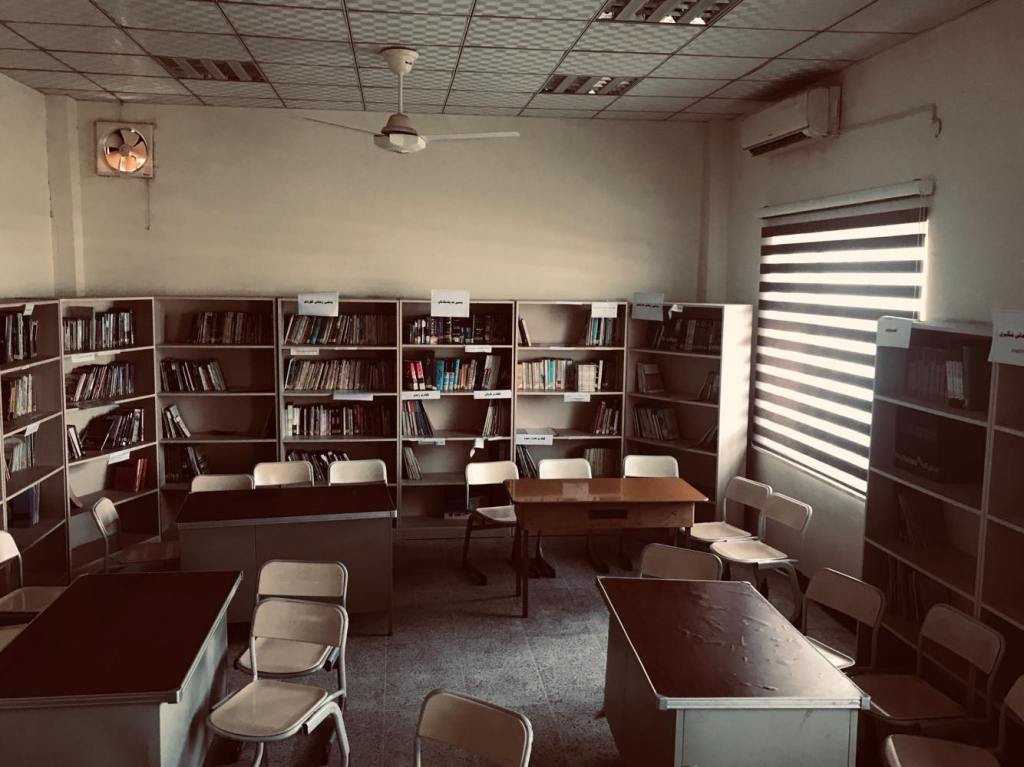
Aram and I went out looking for property. We need 1000 square meters of space, accessible at the ground floor for kindergarteners, with enough room for a library and an auditorium and a small green space to play. The first two plots we saw tonight were inadequate. The third was prescient.
The building used to be a lively hotel on the outskirt of town. A few rooms are still rented out for the occasional traveller; the large, ope ground floor is gathering dust. There’s windows on every wall and a spiraling staircase that runs up the perimeter of a beautiful rounded glass wall, its second floor clearing stuffed with leftover chairs and kitchen equipment.
I don’t know what happened when we entered the space, but Aram and I were speechless. I could see the dreams dancing in his eyes, too:
Kindergarteners in a glass room on the ground floor, boys and girls coloring on butcher paper for all to see, couches with eager parents facing the toddlers. We serve them some tea from the cafe near the front desk and give them a tour – here is our presentation space, a round platform with a great white screen for well-designed slides illustrating talking points from today’s guest speaker. Upstairs, primary students sit with their backs to a glass wall, uniformed and smiling, the touring parents only momentarily distracting them from an energetic teacher. “We’ve converted the old hotel rooms on the second and third floors into classrooms for our secondary students – this one is a computer lab, this one is an art studio” and you can see the microscopes oscillating ever-so-slightly. The rooftop garden hasn’t blossomed yet, but you can come see our playground; the bare wall has a multi-story mural that’s become a landmark of Kalar, towering over the slides and teeter-tots and swings.
There’s an expression in Kurdish that captures this feeling: ksatya nia, or “no speaking.” Kurds say this when everything is perfect – when there is peace after war, when spring comes to life, when the last child is married, when no further words can glorify a moment. Aram and I sat in the car for a few moments and let the dream we walked through become a fire in our bellies.
بێ قسە – no speaking
Thursday 14 November: Day 126
The following night, we found ourselves standing in front of a tall vacant commercial building on the outskirt of Kalar. We drove around the small town, its back streets and tight alleyways becoming more familiar each time we were boxed in by a thoughtlessly parked car and had to back up over thick-stoned lots in the dark. The sheer lack of central planning is alarming – the thought of a list of vacant properties is laughable and you can see how absent-mindedly city blocks were developed. We had searched several off-street areas with no luck when we saw this brightly-lit building, clean and new, just kind of sitting in the middle of nowhere.
Aram calls the number on the sign. I take note of the neighborhood; across the street is the residential office where Mitsu and I registered when we first arrived in Kalar, next to a massive new athletics center (only for men). To the left down the road is the rest of the city, but to the right the road just kind of disappears – three bulldozers are parked where the cement dissolves into dirt, their jaws ready to come to life and eat the ground. A rickshaw drives between them, carefully drops on to the dirt and goes off in to the dark.
There is an immediate problem with this property: a lack of area. The Ministry of Education demands 1000 sqm for a primary and secondary school, and the footprint for this well-painted beauty is about 250 sqm. There’s an empty lot on one side being used for parking that the owner would rent to us, but the shabby lot on the opposite side is currently used to sell bags of cement on the black market. The shady cement salesman seems skeptical to sell us his stock.
So we’re staring at this clean, spaceship-white potential school like you might stare at that one dress you love in the window of a boutique store you can’t afford to walk in to. The wind is cold and strong, somehow definitely Central Asian in its brutal relentlessness, howling with laughter at our aspiration.
چیمەنتۆ – cement
 certification
Leave a comment