Friday 13 December: Day 155
Mitsu, being the badass world traveller that she is, needs to go to Erbil to pick up a new passport. We arranged a taxi to pick us pat 3:00 in the morning, take the 7-hour trip to the Kurdish capitol slowly enough to get some sleep, and then hang around the bazaar for a few hours before our 1:00 pm appointment.
Only, we arrived in Erbil at 7:00 am, or three hours faster than the trip should have taken, This trip was over the “slow way” that avoids Kirkuk, over horrible roads with no lights, in the rain. We didn’t get much sleep; instead we clutched each other as the cars going 140 kph on a two-way unmarked road raced past us, our driver completing the trip before a single shop was open in Hawler.
In a way, the ride was beautiful. The driver didn’t know where he was going – he had never been this way before – and we drove down unlit roads in the Iraqi countryside that years prior were real estate for ISIS-affiliated brigandeers. Our driver would stop and ask for directions, completely confident that these strangers would point him in the right way, and then speed of on the rain-slicked rail-less mountainside road, practically daring God to kill us. Mitsu slept through the worst of it, the true star-less darkness of our flight, but panicked once the sun started coming up.
The mountains and villages woke up with a cold gray, steely color that made the assorted concrete structures look less like Grandma’s house and more like internment camps. And sure enough, tiny Kurdish grandmas and grandpas started waddling out of their dwellings with the sun, their mystical, lost-meaning tattoos giving their jaw lines a youthful edge. As much as we freaked out with the unnecessary recklessness of his driving, life shook awake uncaring out our danger, content to live another day in Iraqi Kurdistan. When we finally got out of the car, so were we.
رێگا – road
Saturday 14 December: Day 156
“Muslims believe that Adam and his wife (what was her name again?) left the Paradise after listening to Shaitan and eating an apple. They lost everything for a single apple!” We both laughed.
“Christians think that Eden – Paradise – was somewhere in Iraq, near Basra. We call it the Tree of Knowledge of Good and Evil, and their sin was gaining reason – thus, becoming too impure to live in Eden. The sin was becoming fully human. A lot of secular people in the W-“
“Wait,” he interrupted, “Christians believe Paradise is in Iraq?! So if I say that I am Iraq, they will think I come from Paradise? That’s great! But why are we wearing clothes then?” We lost it.
After some moments, he picked it back up. “There’s a town in Iraq, Najaf, that is sacred to the Shi’a. If a man marries a woman from Najaf, their children will be mullahs. Well, the sons will be, but never mind that. The plan, if I can’t find a wife soon, is to go to Iran and tell all the women that I’m a Najaf man. There will be so many new mullahs over there…”
“Sounds like Paradise to me!”
بەهەشت – paradise
Sunday 15 December: Day 157
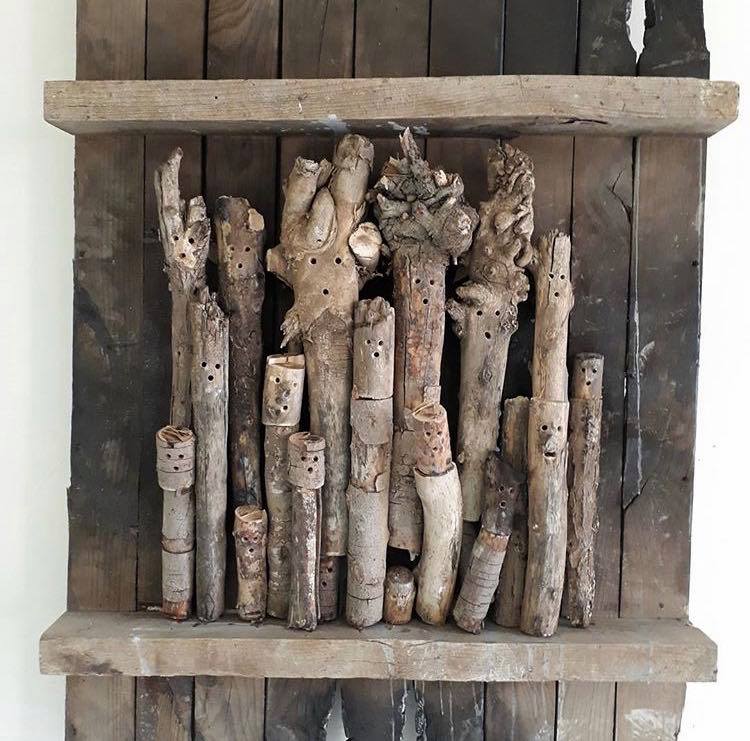
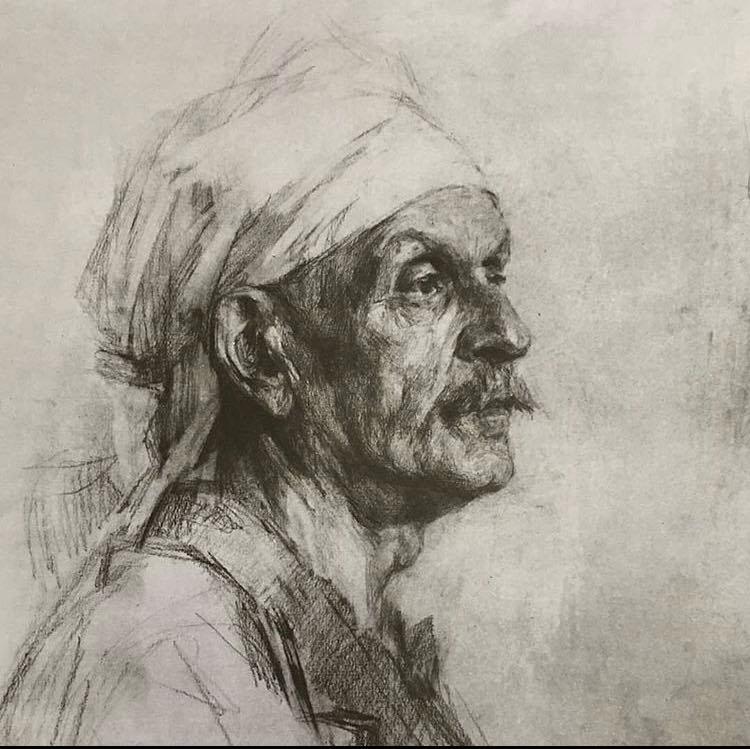
“My parents never told me not to go to art school, but they were not happy when I decided to go. People here don’t appreciate art the way Westerners do. They all think it’s haram.”
He lit a cigarette.
Kurdish men are not raised learning how to talk about their emotions. Much like in the West, masculinity in Kurdistan is defined by resilience and stoic acceptance. But when life is anything other than really good or really bad – when the grayscale of life becomes apparent – feelings help. It’s ok for men to cry when we’re sad. It’s ok to like art, to be kind to strangers, to say no to a fight, to wear pink. All that stuff.
“I loved art school. I was good at something, finally, definitely good. I started with paintings and then found sculpture.” He clicked through the pictures on the screen, and he’s right. A man is lying on his back in a coffin, and a mobile dangling symbols of major world religions hangs over his closed eyes. “I wanted to show my family that what I was doing was good, and beautiful, and that maybe the Koran is wrong about art.”
He ashes.
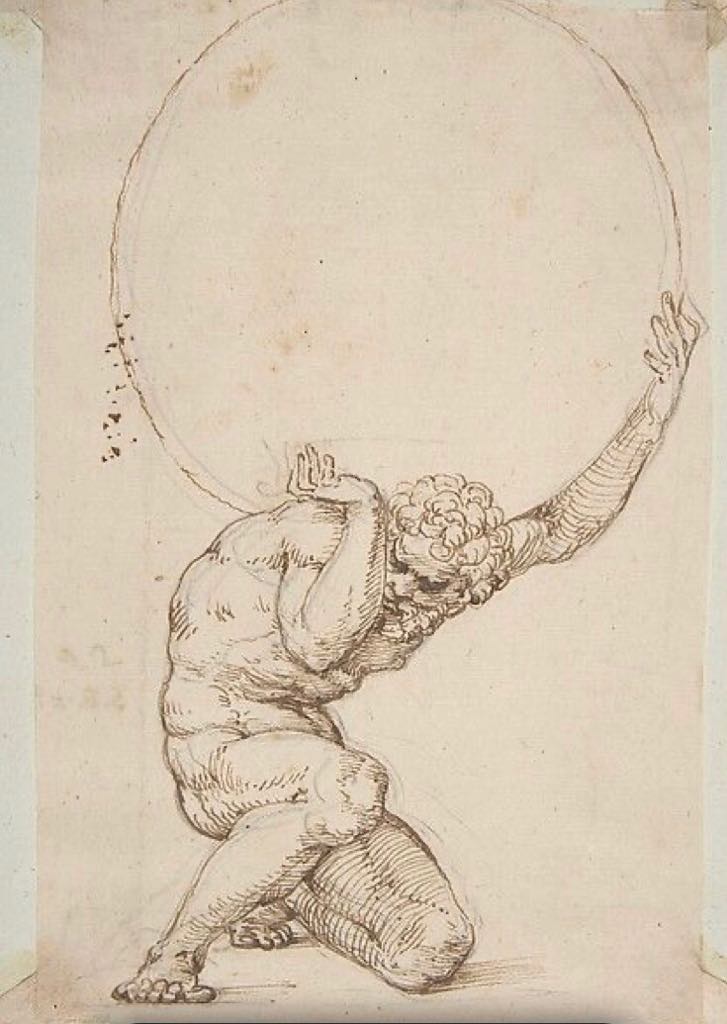
“i started bringing home the sculptures I made at school. At first my parents were silent. I was optimistic. But later, after I went to sleep, my mother would take cloth and cover up the faces. She said that she was afraid that having the statues in her house would send her to Hell.” Click. An amazingly life-like creation of a young woman, the folds of her hijab recreated perfectly. Click. A rough, more abstract profile of Sisyphus bearing his burden on his back. Click. An older woman, smiling lovingly. Maybe the most realistic bust I’ve seen outside of a museum.
The ash falls.
“One day, I brought home a statue of my mother. I spent weeks getting it just right, stopping and coming back to it as I learned how to make the clay come to life. I gave it to her on her birthday.” He sniffed.
“She took it out of my hands, smashed it on the ground, and went to her room sobbing. Destroyed it. Something in me died that day.”
The artist and his friend held the awkward silence that comes when men want to talk about their feelings but are too afraid to do so. You know what I’m talking about – that weird-smelling dry burn of concentrated apathy, as if regret or loss can be wished away with enough focus and attention.
“Our god is not beautiful. There is no room for beauty in his universe. Only pain.”
Asuda yan tura. Tranquility or anger. One must imagine that Sisyphus is happy.
بەهێزیت – “you are strong” (bahezet)
Monday 16 December: Day 158
“What is the worst vice that a leader can have?”
We learned “virtue” and “vice” today. Strength. Weakness. Integrity. Dishonesty. Passion. Apathy.
Nian is 17 years old. She is shy, and she is brilliant. When I ask for new words, she always has the best. Flabbergasted. Boink. Flop. Evacuated. And today, vice.
“A leader is mirror for the nation,” she says. I have her elaborate in an essay outline, practice for the class’s project during our two-week vacation. “A bad leader is a symptom of a larger illness. The people are sick, so they allow a sick man to lead. But a good leader is a symptom, too.”
When Nian says something clever, she can’t control herself – fiendishly, boldly, she always cracks this toothy grin that totally dominates her face and stretches to each corner of her hijab. Today, it takes all of her self-control to pack it away and continue.
I hope she never stops.
زەردەخەنە – smile
Tuesday 17 December: Day 159
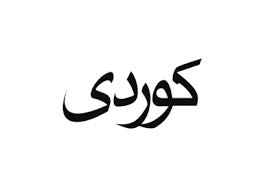
Kurdish is hard to learn. There is no official nor academic Kurdish – like everything else here, any decision that affects everyone is conflated by age-old power rivalries that hinder consensus to the point of frustration. There’s at least three dialects of Kurdish in Iraq (Kurmanji, Sorani and Halabji), each with grammatical quirks that make cross-region communication difficult.
That’s not to say the fault is entirely systemic. Mitsu and I are bad students. In Rwanda, learning the language was easy because no one in my village spoke English. Enough people here speak some English to make it easy to get by, and Kurds are unforgiving when they speak. Mitsu and I talk to each other so much that we rarely get to practice Kurdish.
The other day, our Kurdish teacher Rzgar showed as another interesting quirk of Kurdish: “min mamostam” means “I teacher,” not “I am a teacher.” The difference is profound. “To be” functions like an = in English, and = implies that both sides are made up of constituent parts. For example, 2+2=4, but 1+1+1+1=4, and 1+3=100-96. “To be” makes explaining new words in English very easy, because most every word can be reduced to a few basic verbs, suffixes, and Latin/Greek/German roots. Learn all of those and new words in English are easy enough to pick up on.
Without “to be,” definitions change radically. To say “I teacher” is to say “I am defined by my profession of teaching,” as well as “teaching would be incomplete if I were not a teacher.” Both “I” and “teacher” are irreducible; both “I” and “teacher” are necessary components of one another. This has seismic implications. To say “I am an American” implies that other people are also American (since the “I” can be exchanged for another), but also that I could be something other than an American. But to say “I Kurd” means that I could not exist if I were not a Kurd, and that Kurds – as an identity – would not be the same without me.
What are the possible downstream effects of this fact? Identity is so much more rigidly imposed – “I man,” “I poor,” “I Muslim” – but at the same time is radically more powerful. In Kurdish, the things we are couldn’t exist without us, but we are determined – destined? Doomed? – to always be what we are at this very moment.
I love Kurdish.
کوردی – Kurdish
Wednesday 18 December: Day 160
If I were magical, I would wave my wand and teleport my mom to the market that appears at sunset. We would sidestep speeding taxis and become one with the crowd as we stop at each stall just to see what they have. At sunset, the grocery carts appear; we’re at the tail end of pomegranate season, so we would marvel at the million ruby pods within these rather unattractive alien shells cut open like a flower, and I would try to tell her the Kurdish names of all the onions, melons, cabbages and apples that we see. I would pull her by the elbow out of the way of the large two-wheeled potato cart being lugged by the teenager hurrying past us, and by the time she turned around, I would watch her face as she realizes that all of the grocery carts have been replaced by carts selling full meals: this one has a steampunk roaster that slowly shoots out freshly charred sunflower seeds, and that one has a single large vat of viscous yellow potato stew that creates twos road fog of savory musk perfuming us, it’s all so much, I know. We would sit down on one of the hundreds of little red stools set up in front of brightly lit tea sellers, each with their own brass cistern that pours liquid as hot as a trumpet is loud, and your eyes would shoot open as the bittersweet liquid hits your caffeine receptors and forces you to stay awake and experience all of the ecstasy again and again until finally the call to prayer signals a day complete and we retire for the evening.
Maybe one day.
Thursday 19 December: Day 161
Tomorrow Mitsu and I go to Jordan. We’re taking a two-week vacation, our first since coming to Kurdistan and the first purely pleasure trip we’ve had together. We couldn’t be more excited. I’m going to try and keep up with this and write every day. I promise.
The plane leaves at 6 am. We have an evening to conquer.
ئوردن – Jordan
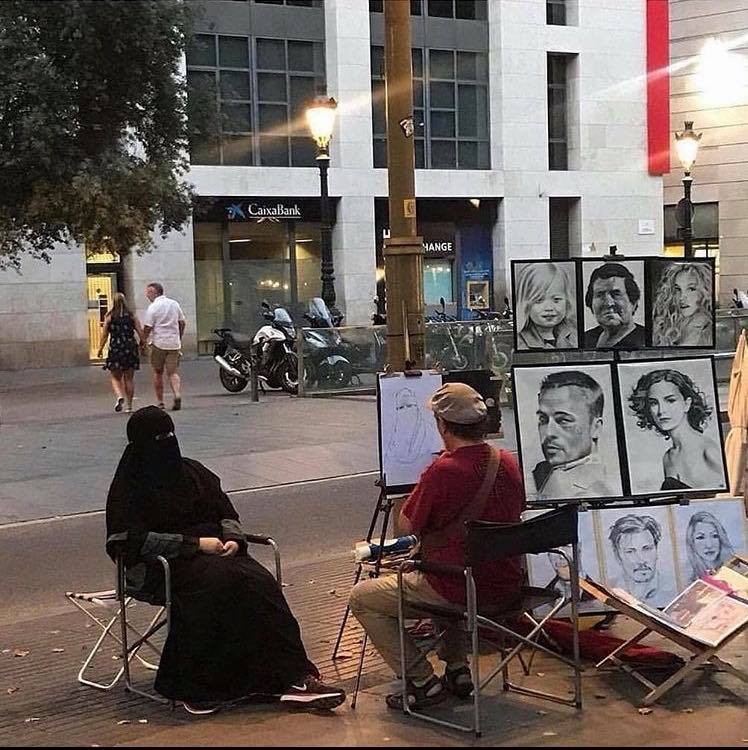
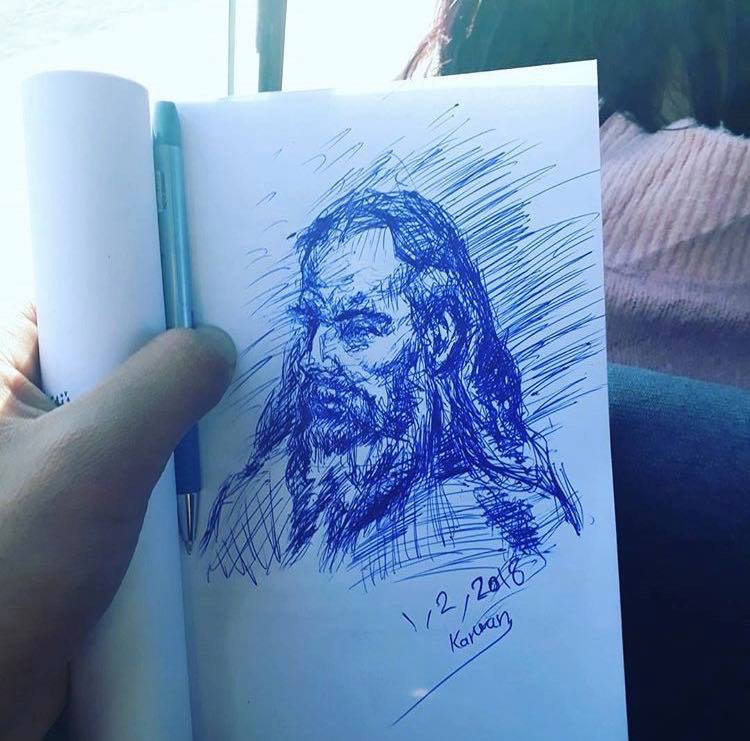
dedicated to Karwan, the best artist in Kalar.
 certification
Leave a comment