Friday 27 December: Day 169
The morning was wet and gray. The bus to Wadi Rum – the “Valley of the Moon” – left at 6 am. We rode with two older men and a dozen backpackers, the speechless harmony of the restless in transit bring us all together. The bigger man near us – “Ammi”, or “uncle” – shared his breakfast of warm bread and hummus with us, and we took selfies and shared music with him. We hugged when we said goodbye.
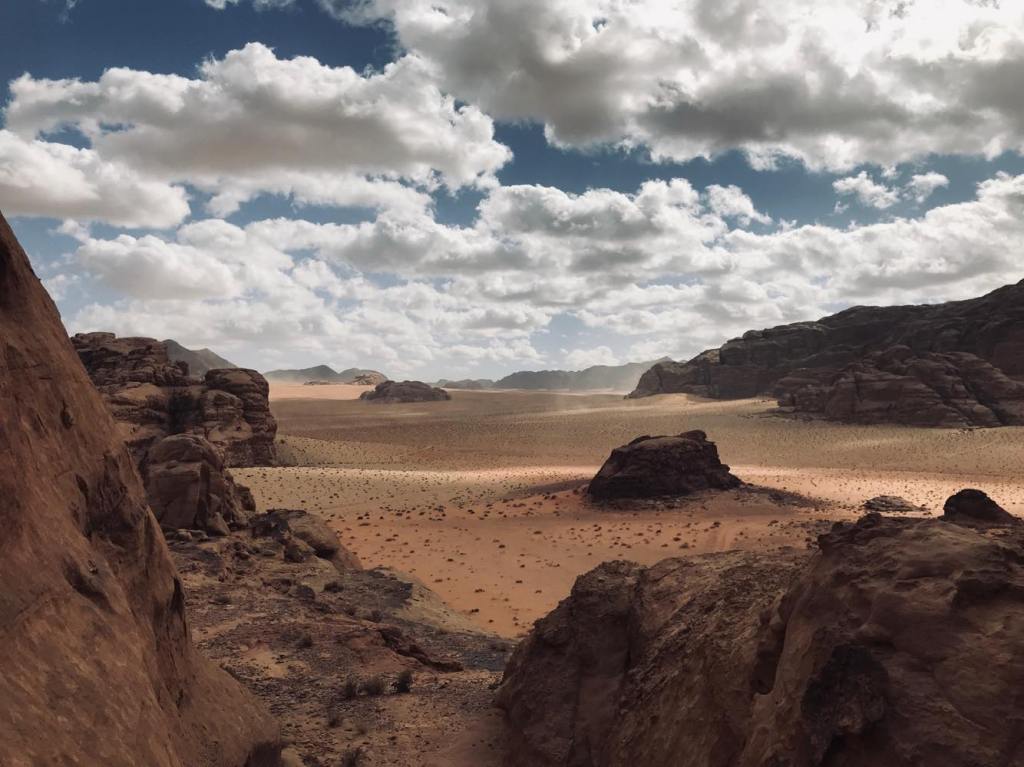
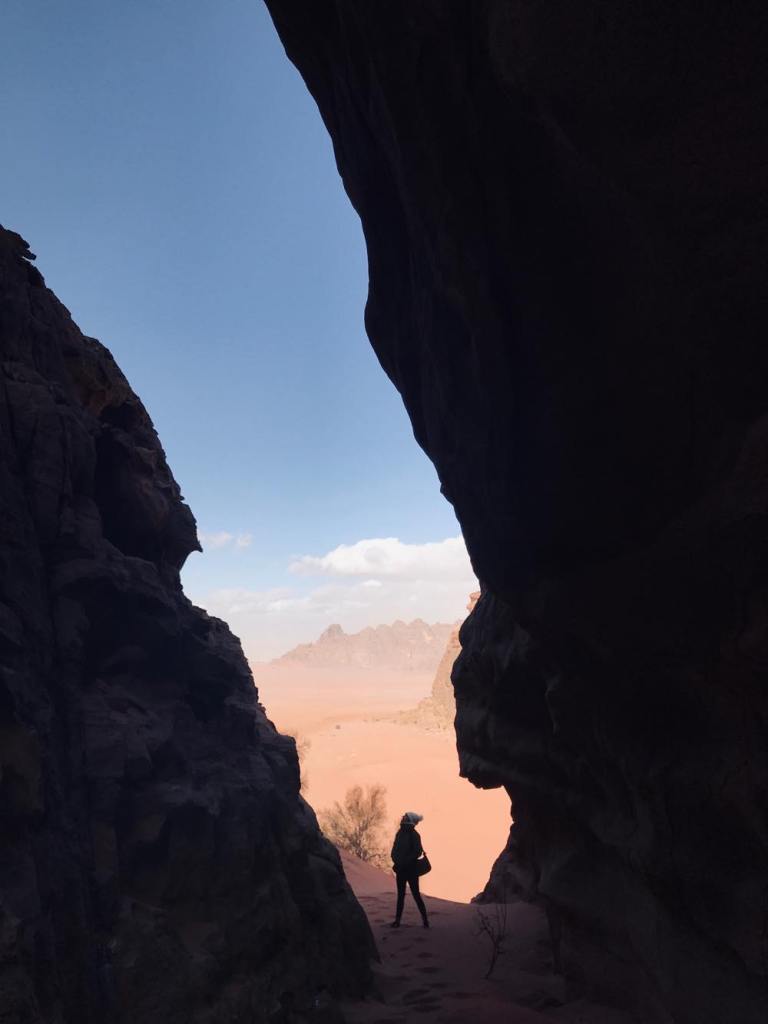
Wadi Rum is a large, protected desert in the south of Jordan. When Lawrence of Arabia was helping to organize the Arab insurrection against the Ottomans, he hid here. Driving in to the sands, I can see why: the ground is fine and rosy, the mountains prohibit all but the most fleeting of endless views, and the wind creates a gradient of horizons as it picks up the earth. We can see the paths people have taken – feet, cars, camels and horses – and they last, like tracks in the snow, until the wind softens their edges and then scatters them altogether.
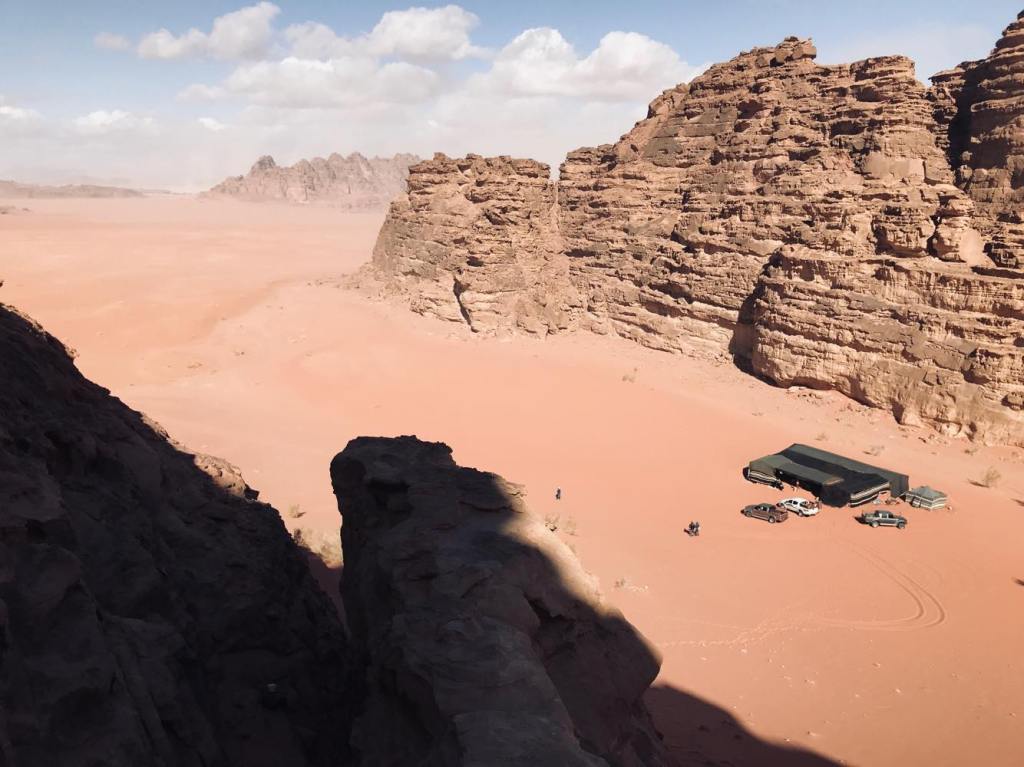
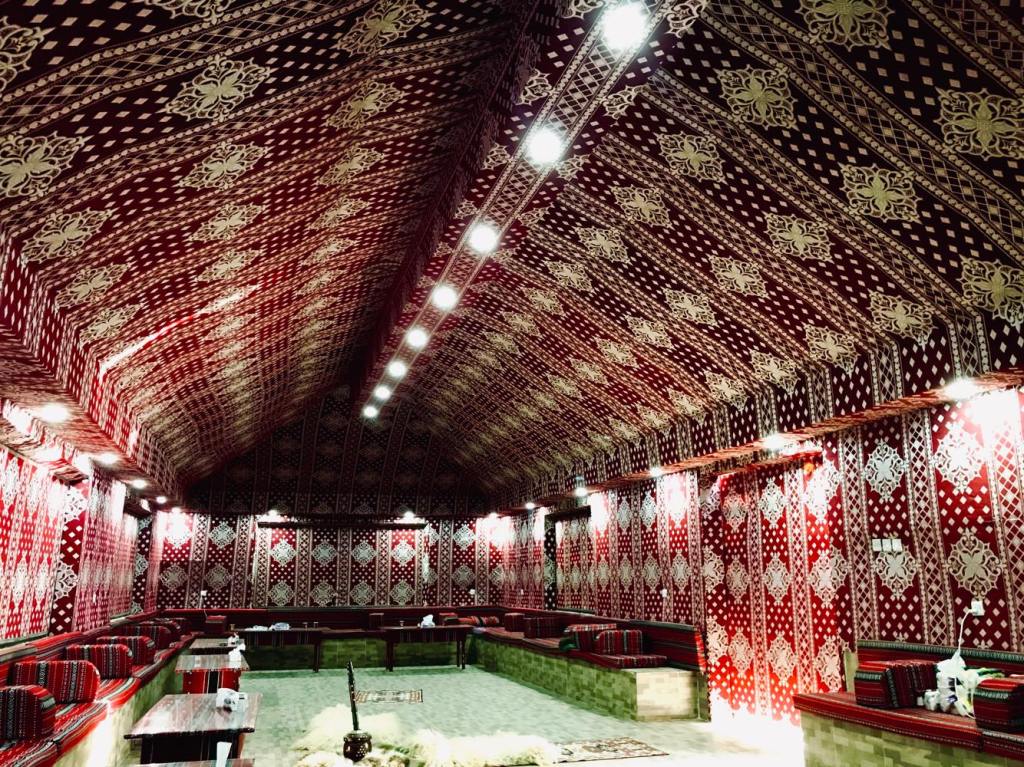
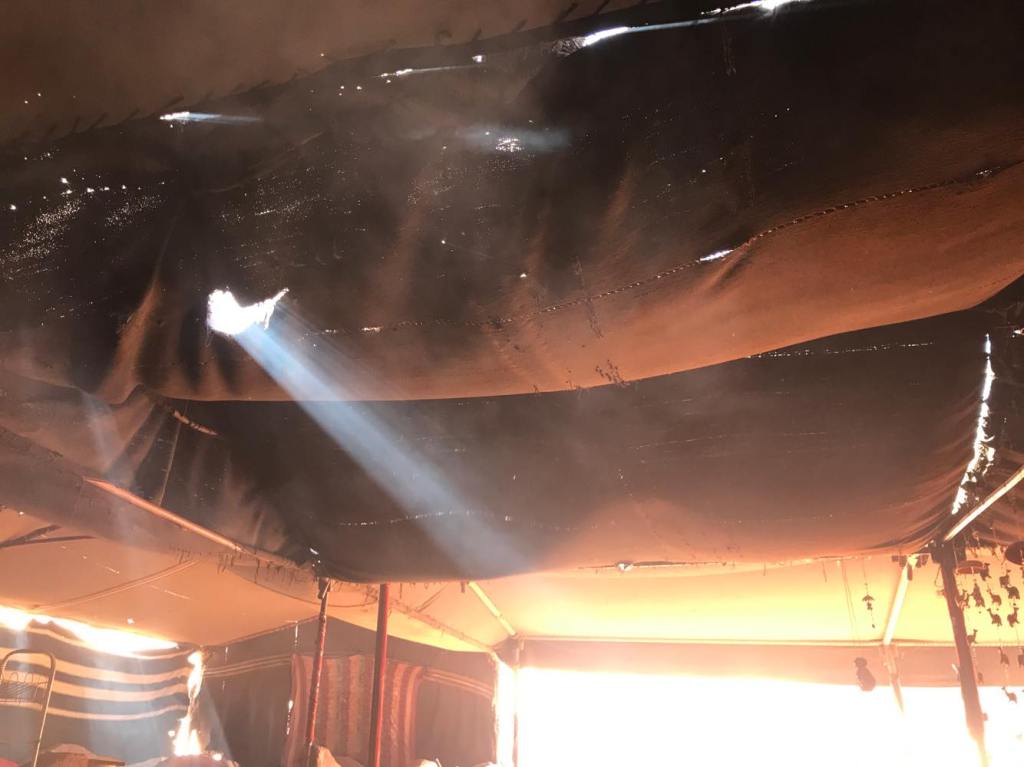
Our camp is relatively primitive – tents in the desert, protected from the wind by a short sandstone hill, surrounding a campfire. Two large halls are for dining. Tea is always hot. A solar panel powers the minimal electricity needs of the settlement, and the water is shipped in by truck on a weekly basis. Candles adorn small recesses in the sandstone nearby and give off a soft glow as the evening comes. Otherwise, the sand is endless, with mountains of black swimming between dunes of gold.
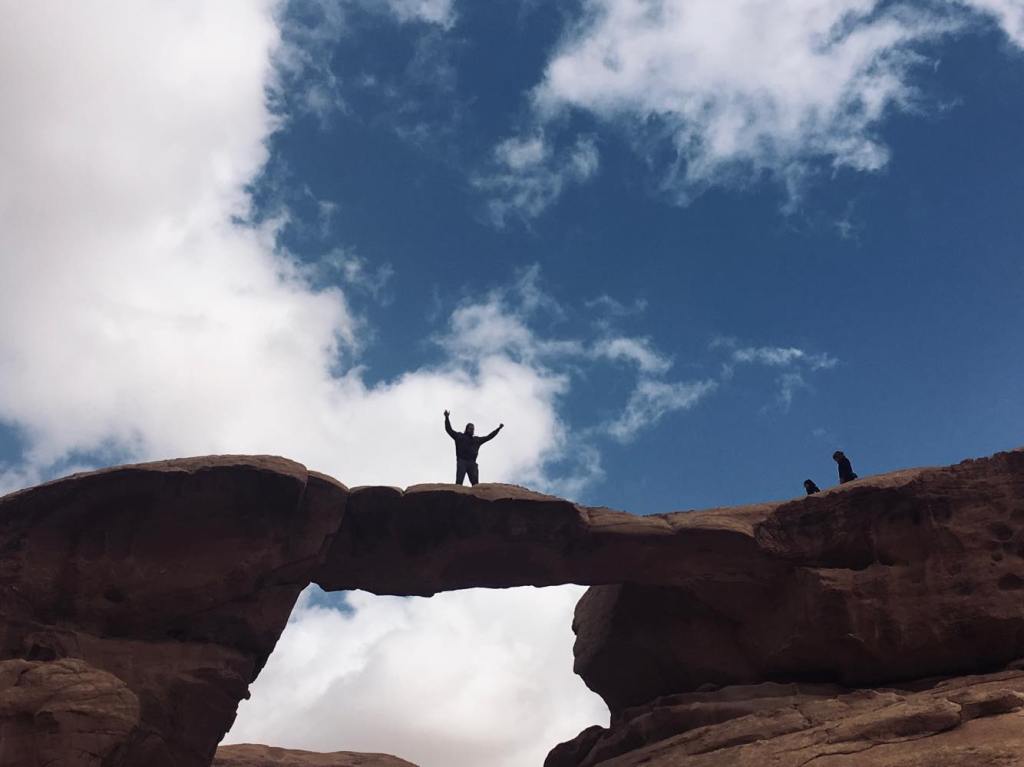
We take a four hour truck tour with Basreen, a 17-year-old Bedouin boy. We visit a large sand dune, the old home of Lawrence, a land bridge connecting two mountains, and a particularly empty stretch of land used to film “The Martian” and scenes in the newest Star Wars film. Dozens of camps are tucked in to the hills. Travelers take photographs, and maybe souvenirs from the Bedouin shops surrounding points of interest, but otherwise leaves stacks of stones – cairns – that last longer than their footprints ever could. Everywhere we go, expanses are endless. Dreamlike. Divine.
At night the clouds block the starlight. An older Italian couple falls in love with our story and we sit around the fire until late, smoking shisha and laughing at absurdities. Abdullah, our charismatic host, makes a game out of guessing my age and we laugh until it hurts. When we finally retire, the moon peeks out at last. All is white.
صحراء – sahara – desert (Arabic)
Saturday 28 December: Day 170
Today was, as Mitsu says, “peak chill”. Our only scheduled activity was riding camels in the afternoon. That means our day consisted of lounging around the camp, cracking jokes with the Bedouins.
Life is very simple here. Resources are scarce, so everything serves many functions. Food is cooked under the sand in large pots which efficiently use fuel – there are no trees in the desert. Leftover food is always used in a stew or later given to the poor. Today, potable water is commonly stored in large tanks which are restocked by periodic visits to urban centers but until recently the Bedouins went without much water – no showers, no toilets, no tooth brushes. Clothing is similarly simple and functional. Thin pants are worn under a robe, which is commonly folded up to give the wearer more dexterity and rolled down to protect from the wind. A scarf is worn on the head, wrapped such that the neck is protected from the sun and so that the entire head can be quickly covered if sand picks up. A large, brown camel leather overcoat is common at night, and during the day is folded and used as a blanket or saddle for camels or horses.
Nothing is overlooked here. Roles are very gendered; we didn’t see a single Bedouin woman in all of Wadi Rum. But unlike other places we’ve seen, the men here were hardly ever relaxing: at least the men aren’t let off as easy in the relationship.
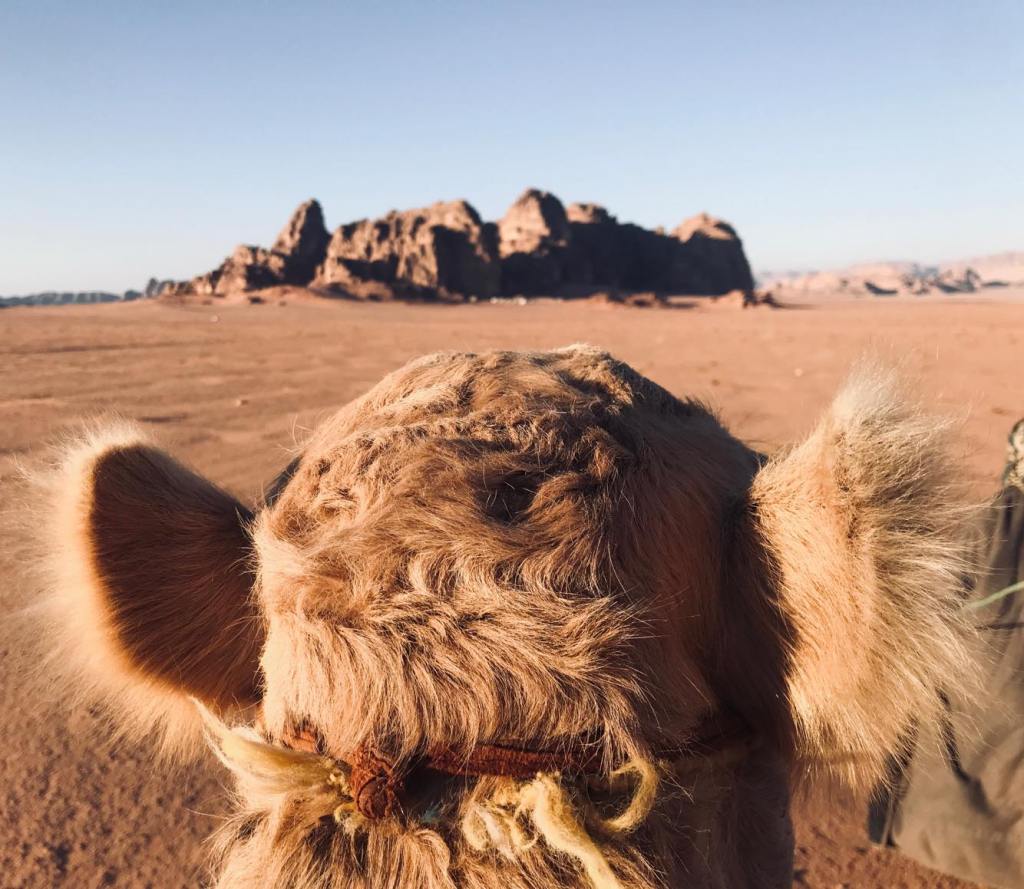
As the afternoon approached, we prepared ourselves to ride. Camels are massive, beautiful and ridiculously relaxed animals – think “The Big Lebowski” in animal form. Sitting, their bodies are like hairy lumps, their winding necks supporting their silly long faces and drooping jowels. Once we mount them, they first pick up their hind legs, sharply and quickly rising up (this is where most people fall off) before getting totally upright. All six camels in our group were over 2 meters foot-to-hump, and at over 100kg my camel had no problem lifting me up.
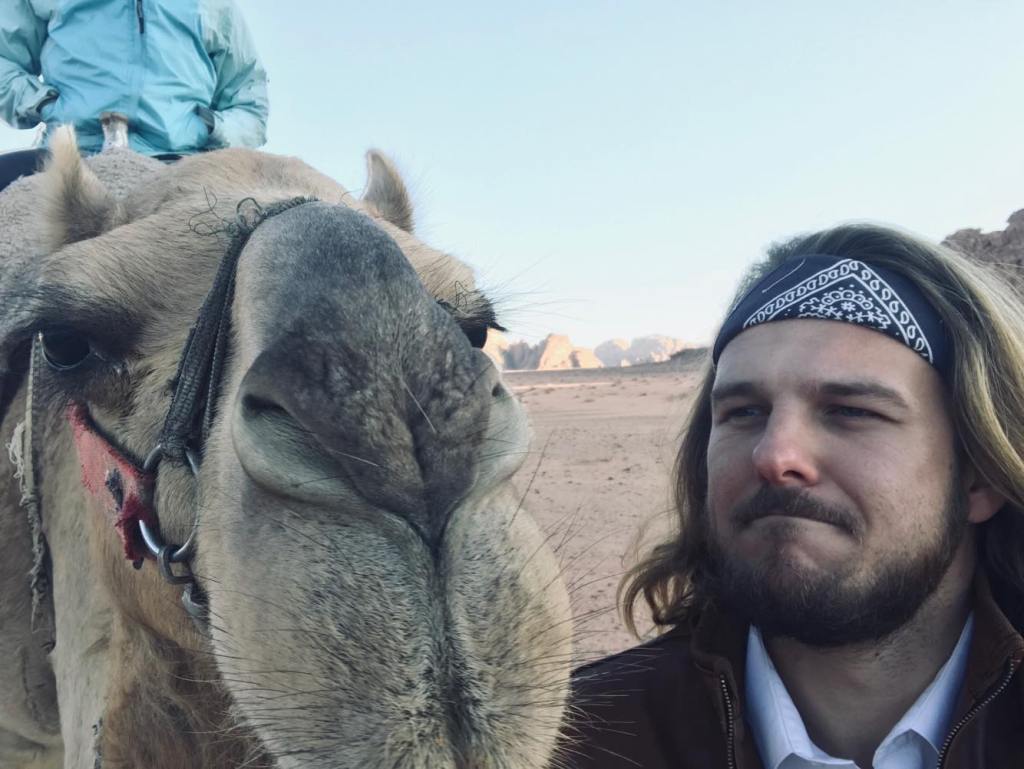
Like Bedouins, camels are resourceful animals. Their feet are wide and flat, like snowshoes, and their movements are slow and relaxed to conserve energy. Their long eyelashes keep away flies and their necks let them eat food without needing to waste energy sitting down and standing back up again. They can survive in the extreme heat of summer days as easily as in the extreme cold of winter nights. They drink (and eat) each other’s waste, because nothing can be left behind in the desert. And to a degree I haven’t seen in any other animal, camels can just chill, as if they’re perpetually appreciating a good view or an interesting idea. I love camels.
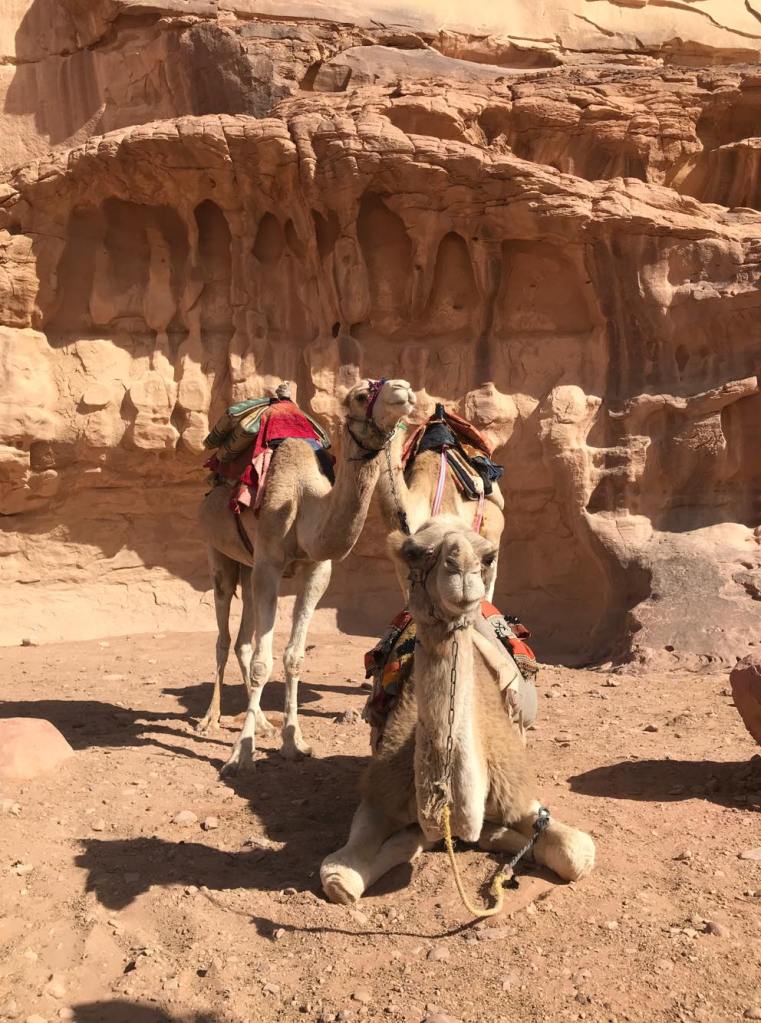
Riding them is comfortable and simple enough. They just kind of float, and the never fall. Our guide takes us to a popular short mountain to watch the sunset, which materializes shadows out of nowhere, grows them to impossible lengths, and then blends them into the darkness of the earth with alarmingly beautiful speed. Our camels watched the sunset, too, and seemed annoyed when it was time to move.
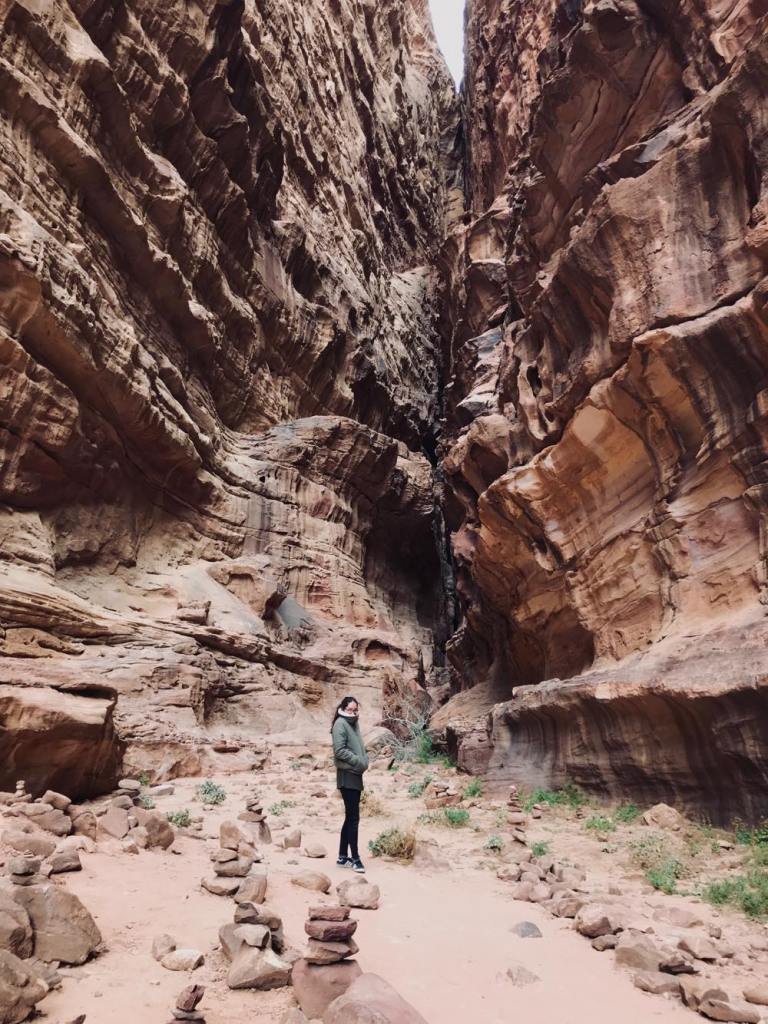
With the sunset, the temperature dropped dramatically. The fire was encouraged and several pots of tea cooked at once. Our Bedouin friends, surprised that we would stay longer than one night (apparently most people can’t handle the isolation – hah!), laughed with us as they recited the same old stories and answered the same ignorant questions tourists always ask of them. After some time, Mitsu and I excused ourselves to lie next to the young Bedouin kid splayed out under the stars, and we shared our words for constellations. You can see every star in the desert.
“They say Allah has 99 names. The camel smiles because he knows the 100th name.” – Bedouin proverb
Sunday 29 December: Day 171
Travel day. Goal: Hitch hike 350 km from Wadi Rum to Swemeh, on the Dead Sea.
A lovely Italian couple takes us from Wadi Rum to Dana, a small working-class city. We talk about working abroad to facilitate a lifestyle full of traveling. They’re impressed by our story. We get out next to a shwarma shop and every school-aged kid in town stops by to say hello.
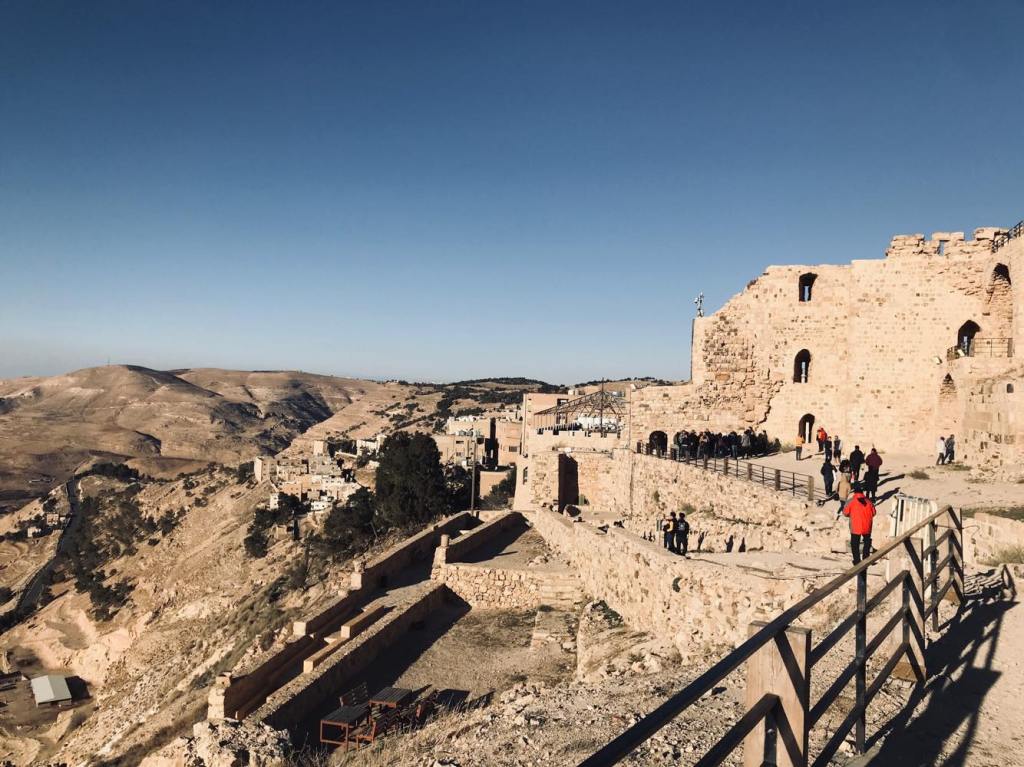
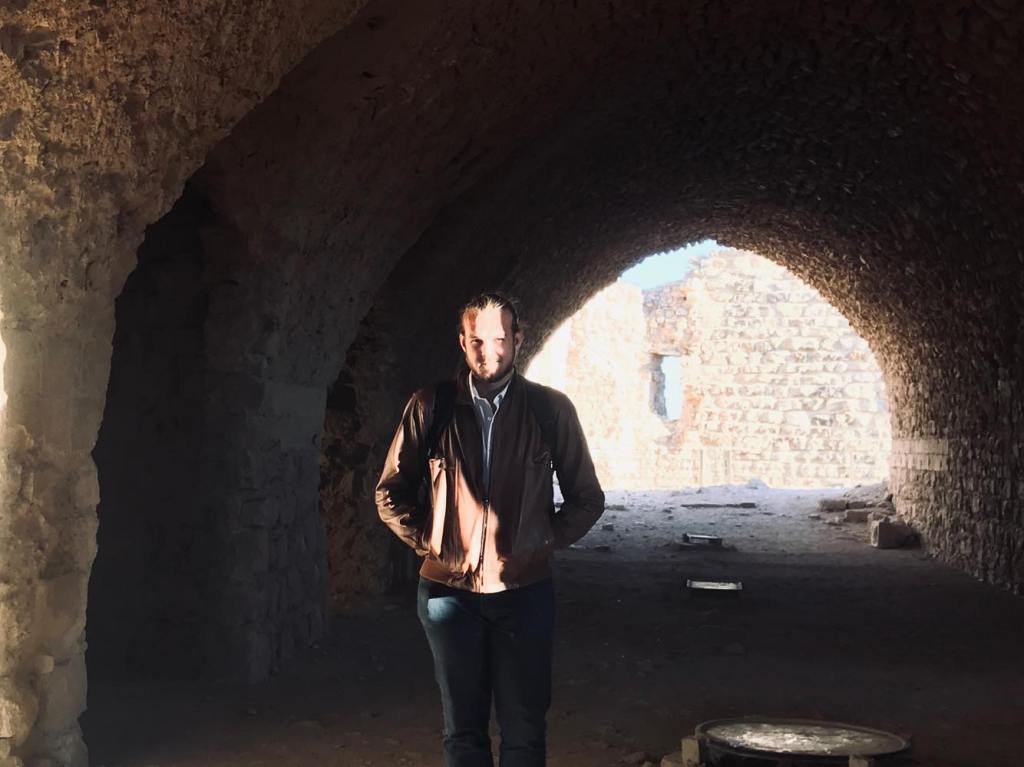
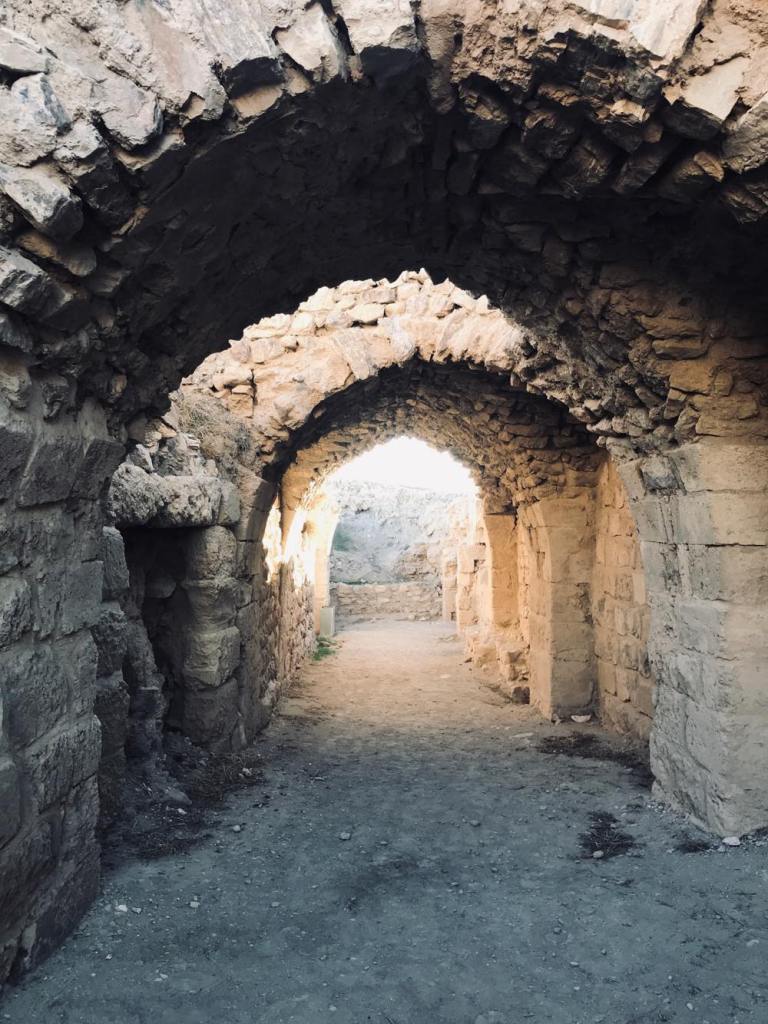
Three young Jordanian civil engineers take us from Dana to Karak. We share music and opinions about football teams. We’re laughing the entire way. They drop us off at Karak Castle, the oldest and most well-reserved Crusader stronghold in the Holy Land. We spend a few hours dodging tour groups from Indonesia and finding hidden stairwells to kiss in, a fitting destiny in a place used for so much bloodshed.
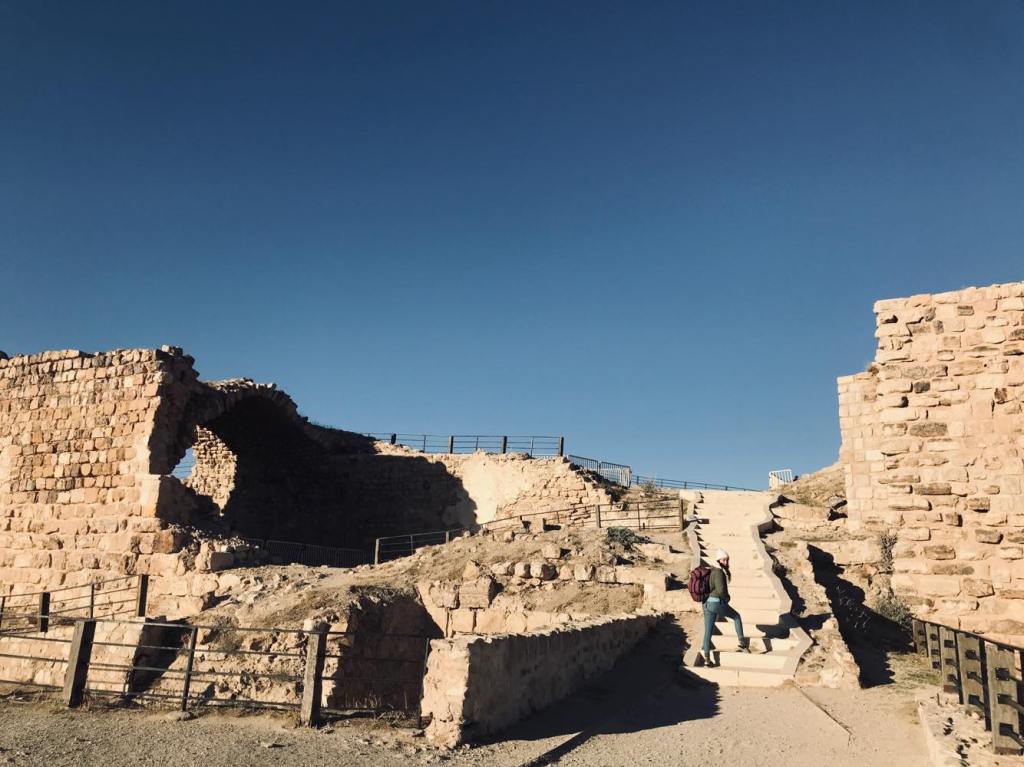
Our last friend, a car lover from Palestine, takes us over the winding mountainside highway running along the Eastern Dead Sea. The sunset clarifies why early religious adherents considered this land to be sacred. We find our hotel in the salt marshes along the Jordan River and marvel at the impossibility of our day.
Time to rest.
البحر الميت – bahr almait – Dead Sea (Arabic)
Monday 30 December: Day 172
The first half of the day is full of laughter.
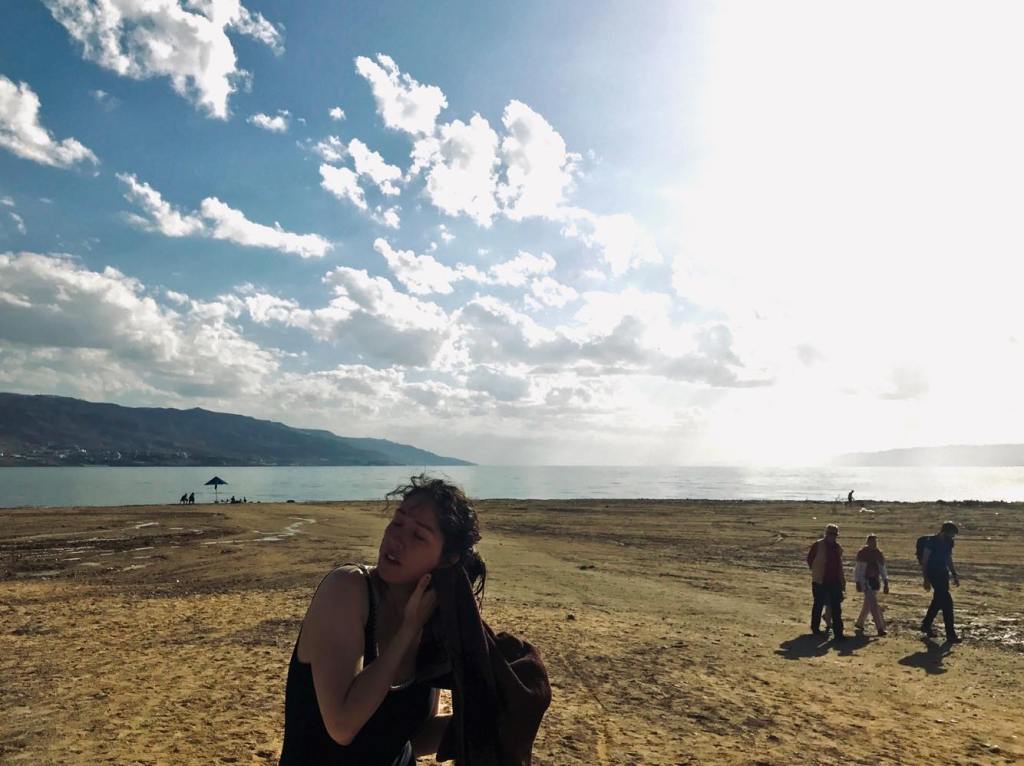
We wake up when our bodies tell us to and make our way down to the Dead Sea. The time-tested ritual is simple: step into the ancient stone basin, cover ourselves in this thick, viscous goo the texture of chilled brownie batter and the color of human waste, and waddle down to the shore, our bodies rapidly hardening under the mud shell. It’s a hilarious, humbling process. Mitsu is a little hesitant to get muddy so I sling a bit on her, and before long a mud war starts. The water is impossibly salty and warm, like we’re wading into battery acid; once we’re in deep enough to no longer touch the bottom, it becomes impossible to sink – we bounce and roll around in the water like physics experiments, floating on our backs despite having both legs suspended in the air.
The second half of the day is not as fun.
We learn that the Hashid Shaabi launched a rocket strike against the K-1 US military base near Kirkuk, and in response, the US launched 5 airstrikes against militia sites, three of which were in Iraq. Separately, Iran-backed protesters in Baghdad stormed the US embassy and attempted to burn it down. They weren’t successful, but the airstrikes have unleashed a wealth of bad outcomes, all of which seem to point towards war with Iran.
The future seems so uncertain. The news out of Iraq is scary. War with Iran would unlikely lead to full-scale conflict in Kurdistan, but the threat of economic instability and related violence is very real. Any hope of setting up a school at this point seems bleak. We’re not sure what to do.
دعاء – dua – prayer (Arabic)
Tuesday 31 December: Day 173
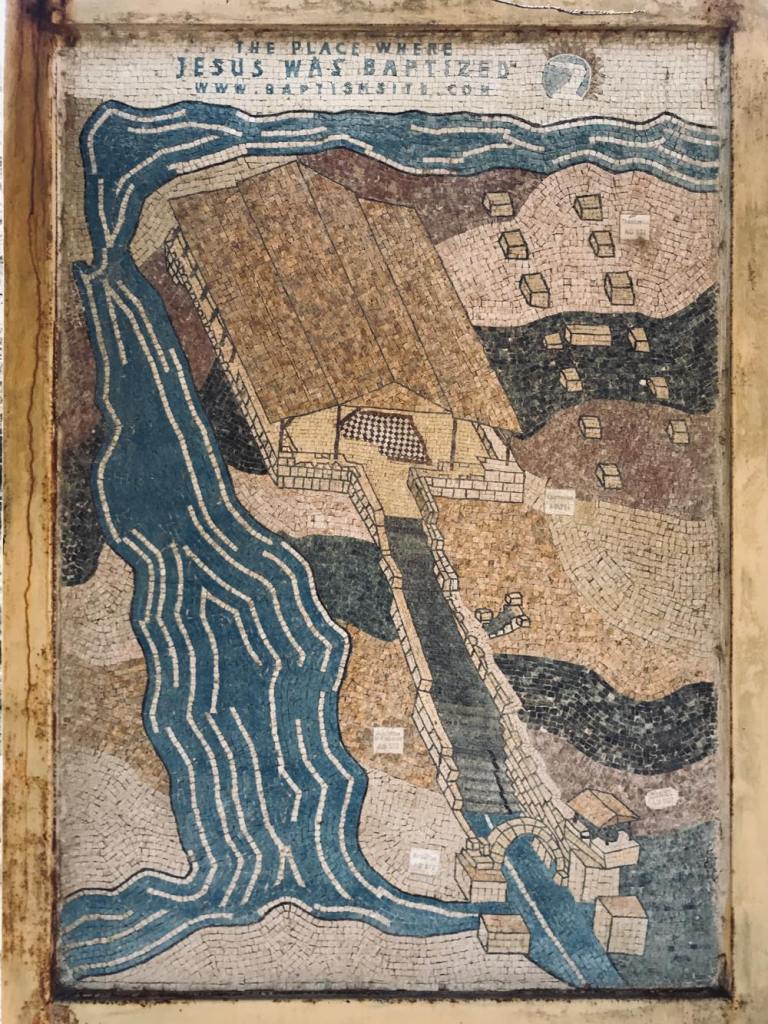
Today our plan is to get to Amman. The situation in Iraq has us worried, and we’re nervous about what the future has in store. For now, we packed up our belongings at the hotel and hitch hiked to the baptismal site of Jesus Christ.
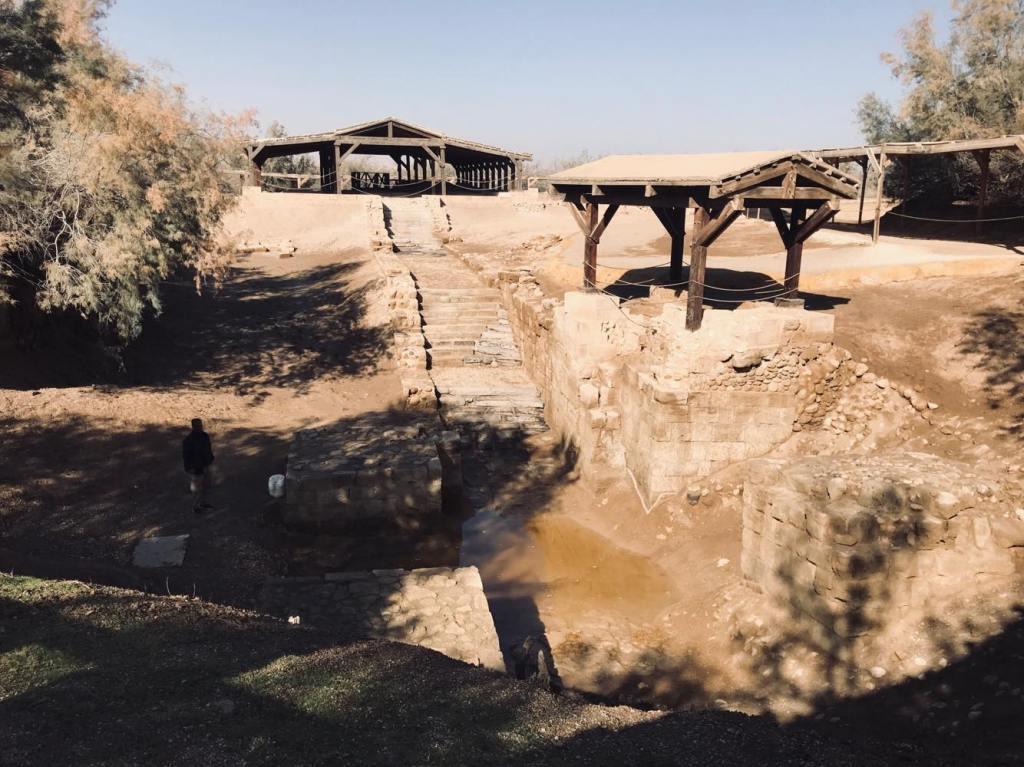
The Jordan River has long since moved. Earthquakes, dams and desertification has reduced this holiest of holy places to a dusty puddle, around which dozens of tourists stare and snap pictures of reverentially. The remnants of Byzantine monastery waste away nearby, the characteristic mosaics now colorless after centuries of neglect but over a dozen modern churches populate the area.
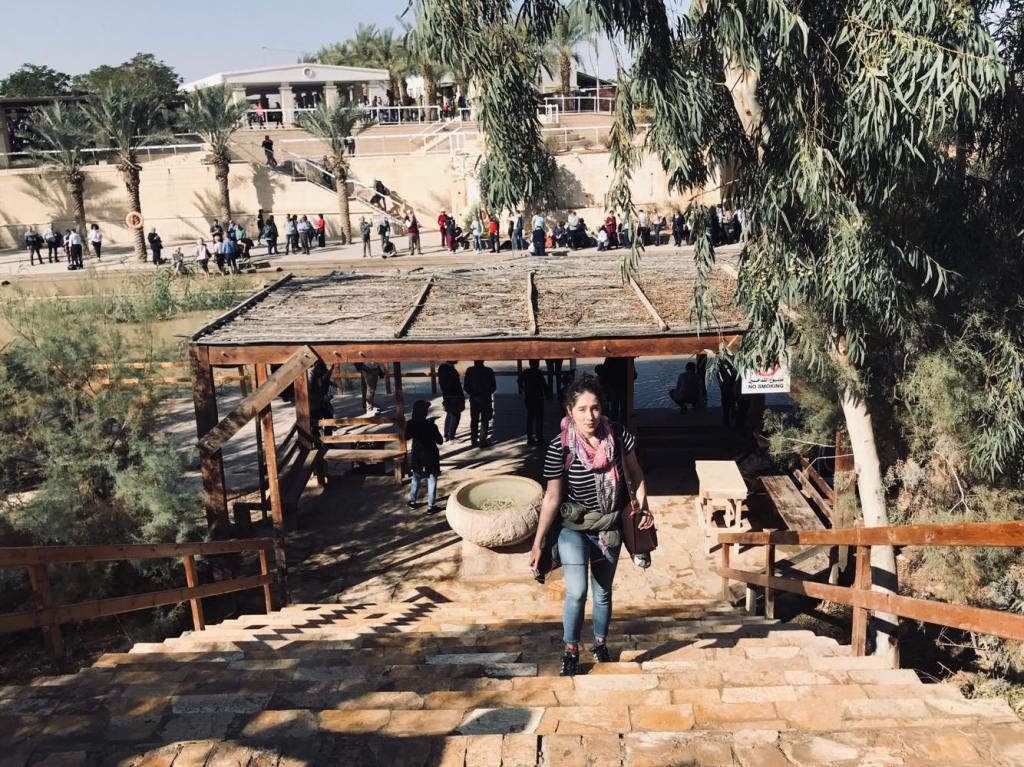
I buy a few rosaries and we make our way down to the banks of the current Jordan River. The border of Jordan and Israel is marked by a pool float in the river; the Jordanian area is a simple wooden dock, barely more advanced than it may have been two thousand years ago, while the Israeli side is this grand, gaudy marble terrace, swarmed by hundreds of the faithful seeking a baptism. Men in swim trunks lead weeping pilgrims into the dirty, silty river, pour water on their scalps, say a blessing and repeat.
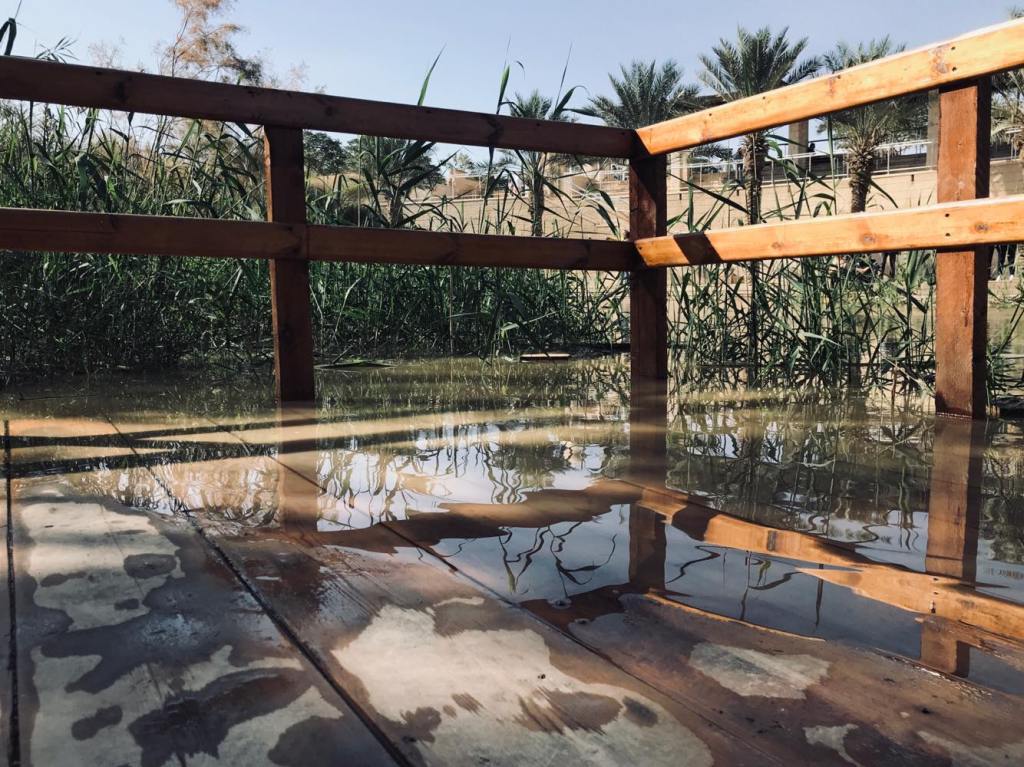
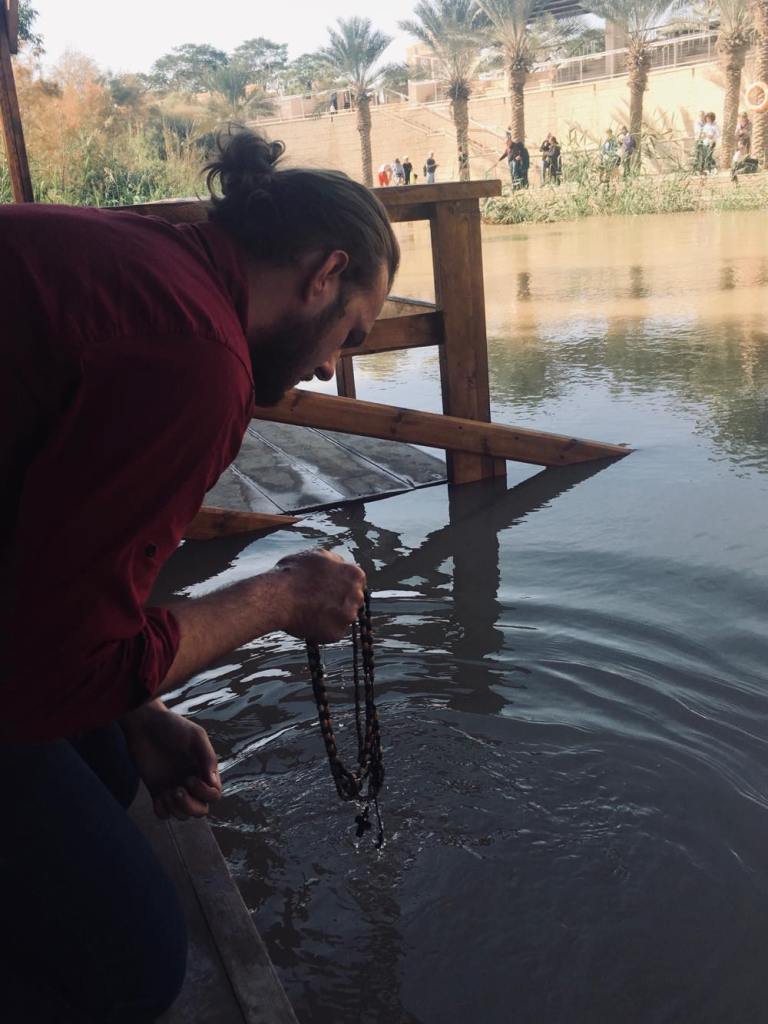
I baptize – bless? – the rosaries, a gift for my brother and his wife. The first tears are for the sacredness of it all, for the unbroken respect paid to this wise carpenter over the millennia. The next tears are for the humans; the silly pool float boundary, the commercialization of the divine, the absurdity of violence over theologies all claiming to epitomize peace. Mitsu and I sing a song and return to our assigned tour bus – exit through the gift shop.
…
That night we find a bar in Amman and we dance. The owner pops open a champagne bottle at midnight and everyone is warm with happiness. The sheer humanity of it all, once again, wins the day.
انسان – insan – human (Arabic)
Wednesday 1 January: Day 174
The punishment of last night lasts until the afternoon. Saint Mitsu fetches us lunch – it was a good thought, at least. I’m not in college anymore.
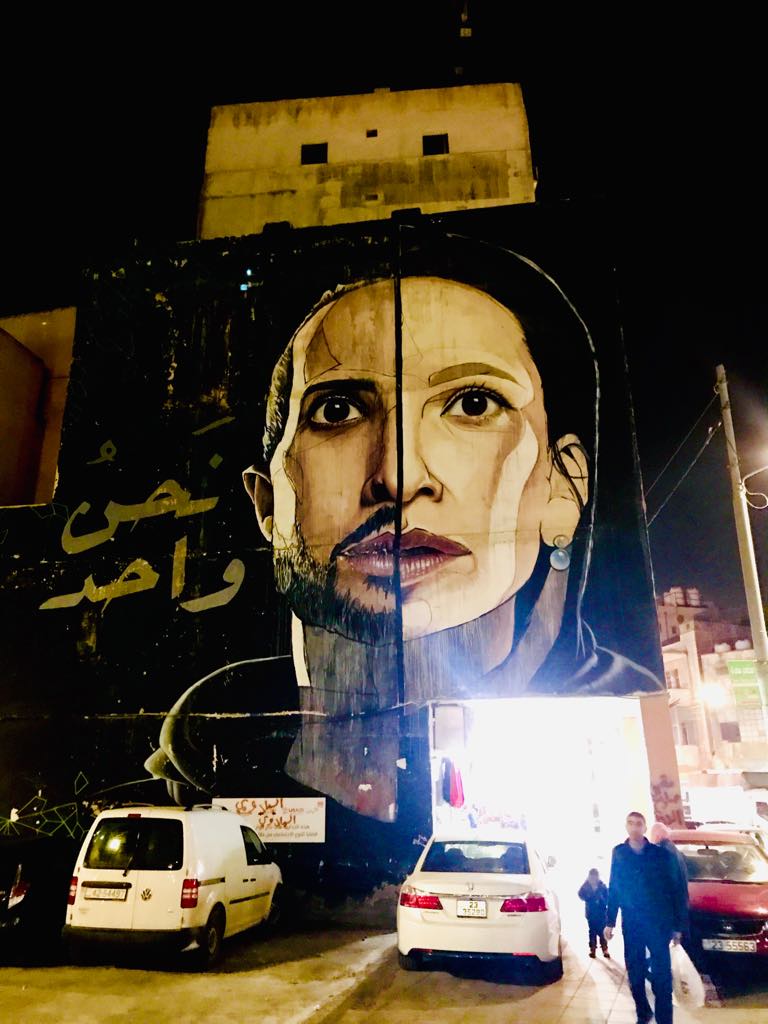
At night we visit Rainbow street, this arts district in the heart of Amman. What a city – the descendants of Palestinian, Iraqi and now Syrian refugees outnumber “native” Jordanians, and the diversity has given birth to a metropolis of tolerance. Banks and bars sit next to ancient mosques and colorful street murals adorn every street and staircase. Women smoke shisha and families eat at tables next to tourists drinking beer, despite the haram-ness of it all. What’s more is that Jordanians are genuinely happy, despite the chaos and ideological purity of their neighbors; every Jordanian we talk to smiles and laughs, quick to praise their country and King. And why not? There is space here for mullahs and the murals, for business and charity, for community and culture, none of them lacking for space.
I cannot recommend Jordan highly enough to anyone who desires to see what the Middle East could be.
حرية – huriya – freedom (Arabic)
Thursday 2 January: Day 175
We leave at midnight. Our last day in Jordan isn’t wasted. The city is littered with historic ruins, nestled between endeavors of the modern era. We intend to find them all.
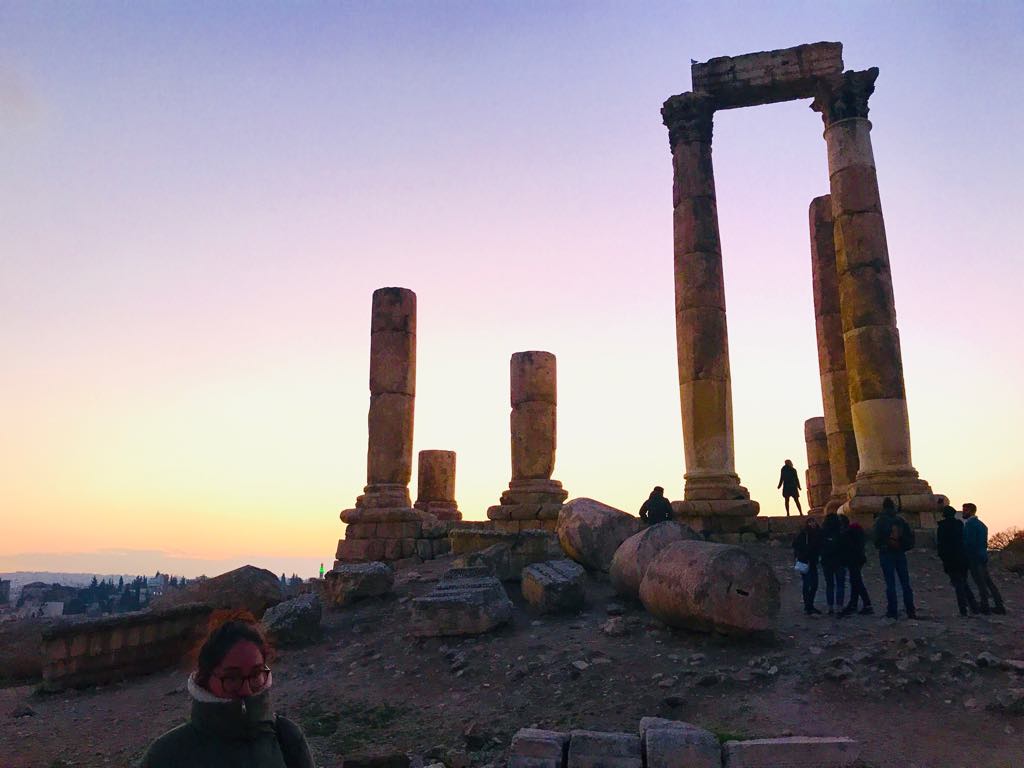
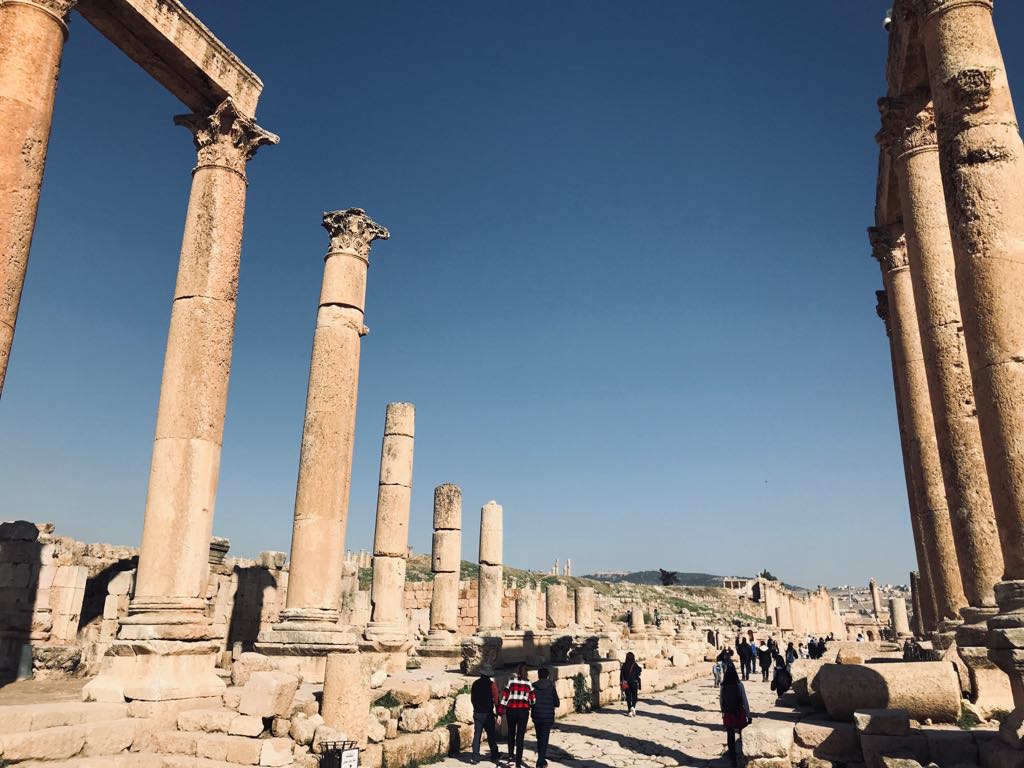
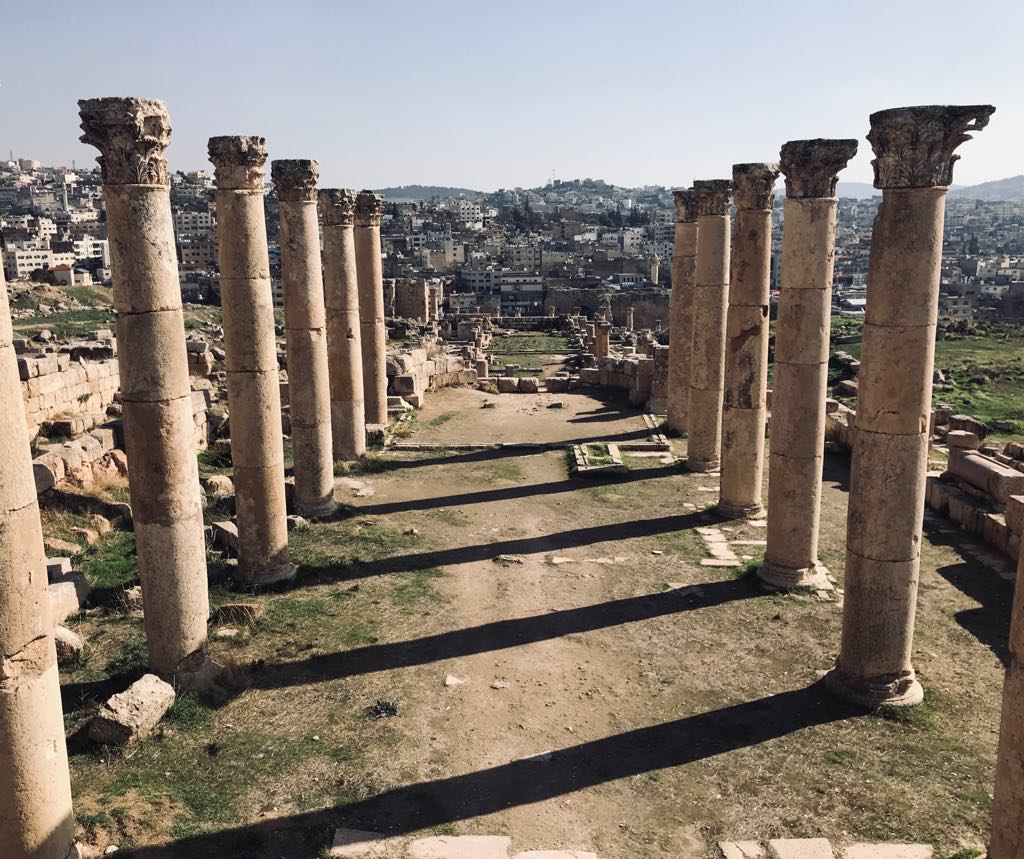
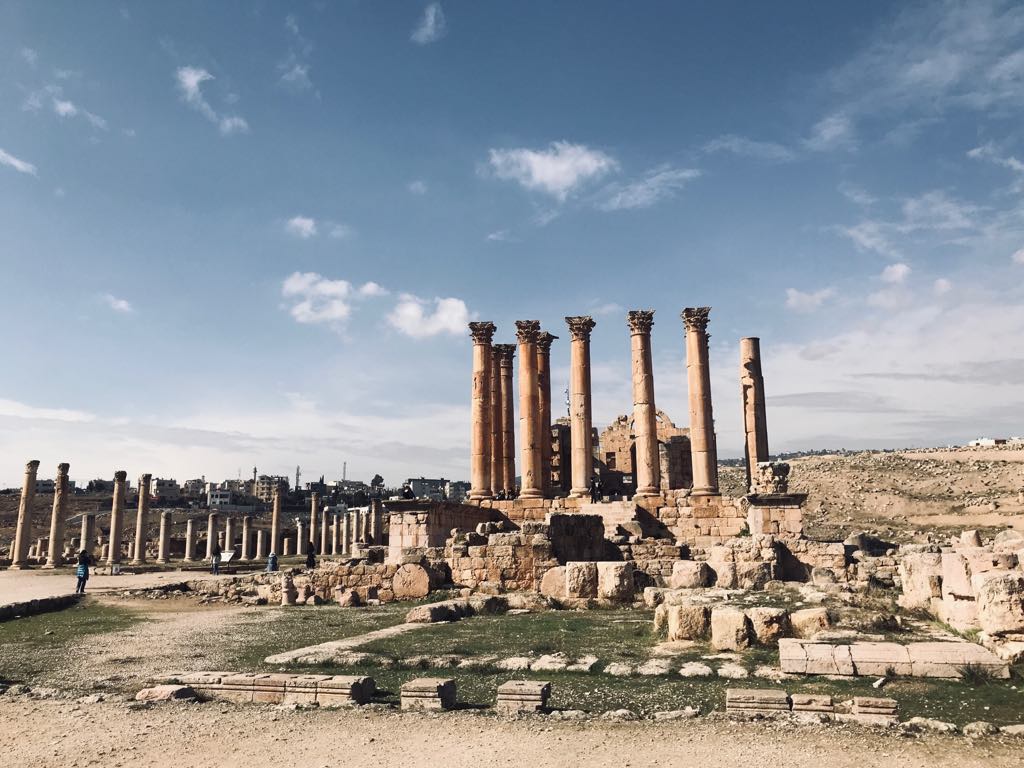
All that remains of the Temple of Hercules at the peak of the great hill centering the city are two giant pillars and a broken granite thumb the size of my arm. A cave said to house Bronze Era graves hides nearby; a place belonging to 8th-century Ummayad conquerors bends with the curve of the hill. Hundreds of birds fly in unison, an amorphous, musical mass that loses definition in the sunset – as they always have, and as they always will.
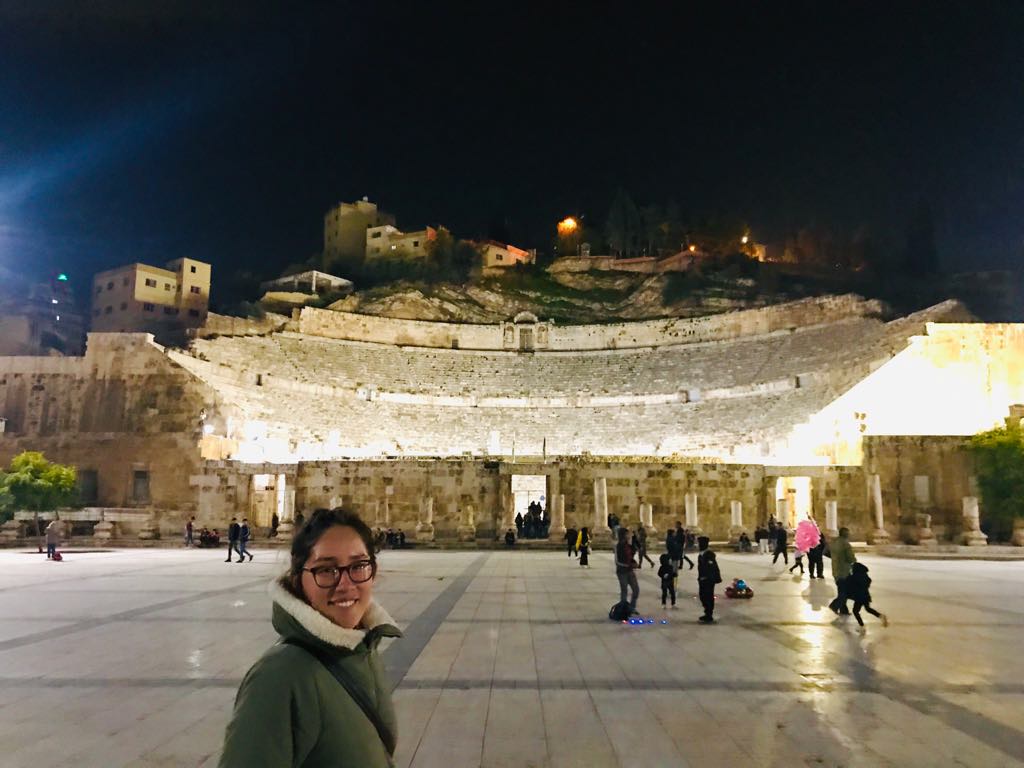
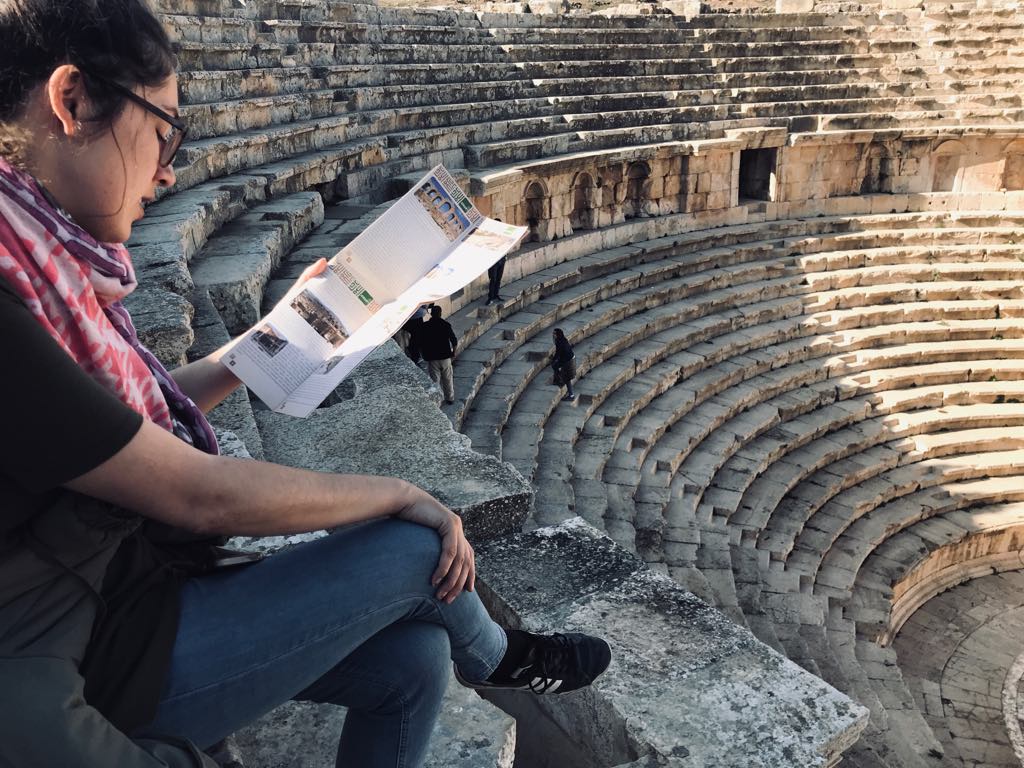
The amphitheater, cut into another hill, is alight but closed upon our arrival. The acropolis used to sit in front of it; now, a paved courtyard is a playing ground for groups of boys squaring off in a football match that incorporates clueless tourists rather than ignores them, as cliques of young hijab girls giggle in the shadows.
Past the acropolis, a Roman nympheum – an ancient sewer and cistern system that brought water for miles to the ancient city of Philadelphia (as the Greeks and Romans called it) – lies buried under a dazzling bazaar. Packed together are rows of produce seemingly organized by color: the dark greens of spinach and peppers made lighter by the cabbages and green onions, giving way to yellows of bananas and pineapples and the piles of off-white garlic and ginger; now the oranges of citrus and squashes next to crates of spiced seeds to be roasted and spat out on the street, and finally the royal dark rows of berries and spices followed by the pale pink of butchered cows hanging by their feet. Every step threatens to spurn the ankles of another human and shoulders are contiguous but forward motion is all but inevitable in this crowd as buyers stop to shout at friends and merchants over the din of the crowd, all of this as timeless now as it was for the Egyptians, Nabateans, Greeks, Romans, Ummayads, Persians, Bedouins, Crusaders, and British who all walked these very steps.
سوق – souk – market (Arabic)


 certification
Leave a comment