Friday 3 January: Day 176
From bad to worse.
General Qasem Soleimani of the Iranian Al-Quds Force was killed in a drone strike outside Baghdad last night, along with Abu Mahdi Al-Muhandis, a leader of the Shi’a hashed Shaabi militia groups I’ve written about before. Al-Muhandis’ death has galvanized Shia resistance to the US presence in Iraq. Soleimani’s death has brought Iran to the brink of war.
Soleimani was a decisive figure. He was a hero to Shi’a Muslims in Iraq, Syria, Lebanon and Yemen, where he facilitated coordination between armed militias and Iran. The Al-Quds Force is like the Iranian equivalent of the CIA and FBI rolled into one; they fought against the US after the 2003 invasion, fought against ISIS at home and abroad, supported Bashar Al-Assad’s murderous regime in Syria and facilitated terrorism in Israel and Palestine for almost 30 years.
Domestically, Soleimani had more power than Hassan Rouhani, the President of Iran. Soleimani took orders from Ayatollah Khamenei, the Supreme Leader and prophet-king of Iran. Soleimani was instrumental in brutally suppressing dissent against the Iranian regime (most recently in protests at the end of 2019), but was also regarded by many Iranians as emblematic of Iranian independence, ferocity and determination. He was kind of like the Robert E. Lee of Iran.
And now he’s dead, assassinated by a drone like a common street thug. The act itself is inflammatory to Iraqis, who despise Iranian influence but revile what they see as a flagrant violation of their sovereignty. As I write this, Sunni-Shi’a sectarian tensions kept to a low boil for months have exploded. Religious divisionism is rearing its ugly head. The Iraqi Parliament will soon vote to expel US forces from Iraq (despite dubious legal standing to do so) while Shi’a leaders like Muqtada Al-Sadr are calling for violent resistance against American soldiers.
Iran is now backed against a wall. There will be a mourning period of three days followed by, well, whatever the hell happens next. To stay legitimate with their affiliated militias, Iran will likely call for resistance against US, Saudi Arabian and Israeli aims across the region. Our NATO allies are threatening to leave us out to dry, while the Chinese and Russian governments are committing an unprecedented amount of support to Iran in the wake of Soleimani’s death.
The stage is set. Mitsu and I are evacuating to Istanbul.
شهيد – shahid -martyr (Arabic)
Saturday 4 January: Day 177
We landed in Suly at 3 am. We crashed at our buddy Mehdi’s place, sleeping that kind of sleep you force yourself in to when you’re exhausted but can’t fully find peace. We ate lunch at Sara Restaurant, waiting to meet up with Akam and decide what to do.
Our conversation was short. We all agreed it would be best for Mitsu and I to spend a week in Istanbul to see what happens next. Mitsu and I were scared, anxiously checking the news every minute and communicating with our families to assure them that we were safe; meanwhile, Kurdish families came in to the restaurant, children were laughing, everyone was going about their day as though nothing was wrong.
We rushed back to Kalar with the plan to pack up enough belongings in case we couldn’t come back anytime soon. Chaman visited and lamented about the state of affairs with us. Our friends called to see how our vacation was. I don’t know what we expected – a nuclear bomb? A ground invasion? – but nothing came. As we left Kalar, the city was as busy as normal, our worst fears failing to materialize.
The plane left at 4 am, gone as quickly as we arrived.
tahliye – evacuation (Turkish)
Sunday 5 January: Day 178
Our plan was to stay with a couch surfing host the first few nights before finding a cheap hostel we might stay at indefinitely. Getting out of the airport was enough of a pain – Istanbul’s new international airport resembles a space station and is built with the same impractical size and emptiness that characterizes autocratic displays of power around the world. Not a single Turk we met could speak English and we found ourself lugging two duffel bags, now packed to a seemingly foolish degree, as we tried to explain what the hell we were doing here to the immigration officials.
A shuttle took us to Karakoy, the district where our host was supposed to meet us. When we arrived at 10 am we learned that he wouldn’t be home until late in the evening and that the security guards he said would hold our belongings were completely clueless as to what to do with us. A kind cafe owner opened her doors early to let us charge our phones and wired us up with free coffee. We hadn’t really slept for three nights. Frayed.
We found a taxi and made it to Sultanahmet, the tourist hub of the city. A hostel owner agreed to a discounted rate for the week and helped us to our room. As soon as the door closed, we collapsed on the bed, fully clothed. It was noon.
…
Istanbul is a familiar city. In the summer of 2015, I hitch hiked from Istanbul to Amsterdam. That trip was my first out of the United States and even one of my first times out of Florida. I had no idea what to expect; I brought only a backpack and two changes of clothes, the cash I saved up from a year of work and a burning desire to shake my understanding of the world to its core. Istanbul brought all of that and more. I slept on a rooftop in the summer time, the Bosphorus Strait behind me and the minarets of the Aya Sofya framing my first looks at the world. I was scammed by a carpet shop owner on my first night, but I also laughed more and walked more miles exploring this city than I ever had before. Life was grand.
Being back is strange. Like Istanbul itself, perpetually unsure of its geographical or historical identity, Mitsu and I were estranged from the familiar. Kind Kurdish men ran the cafe next to our hostel and we laugh with them about the evils of Turkish foreign policy and the stupidity of our own, remembering with grim regret our Kurdish community back home. We don’t want to be here a moment longer than we must, and yet our world seems posed to unravel at the seams. Only this time, I wish it wouldn’t.
Istanbul is an Arabic version of Constantinople, which itself means “in the city” in Greek. Istanbul roughly means “The City.”
Monday 6 January: Day 179
Today our goal is to meet with the US Consulate General in Istanbul and figure out exactly what the US government says we should do about Kalar. Easier said than done.
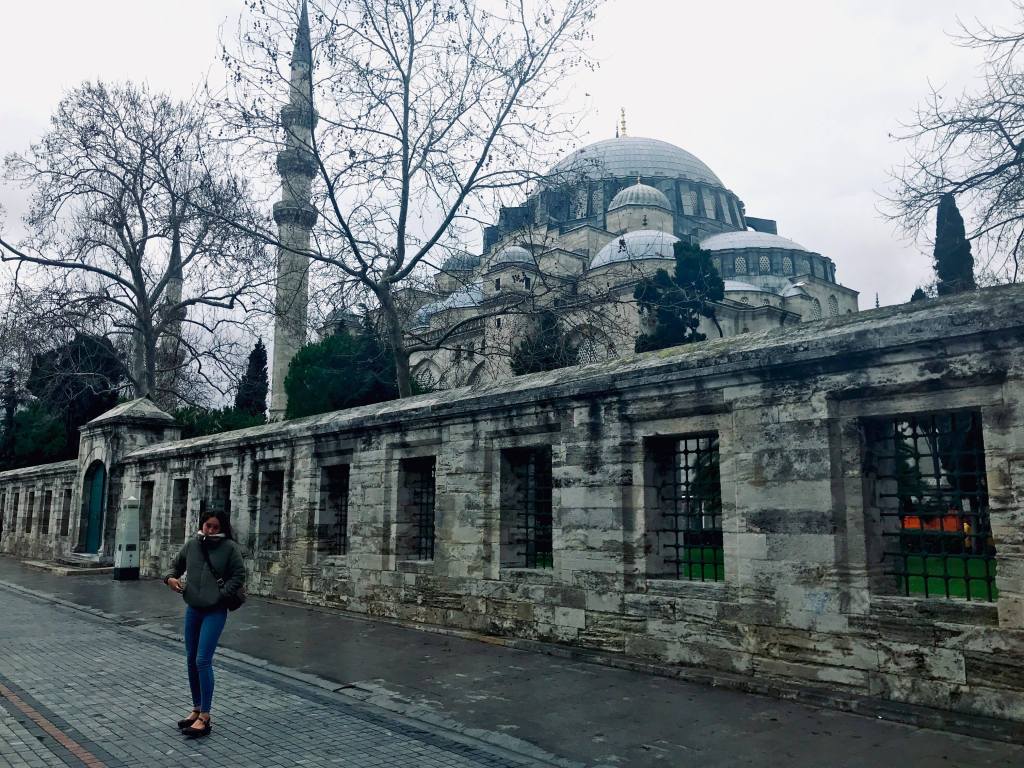
The weather is miserable. A cold front has swept in from the Black Sea and is battering the city with an incessant, windy downpour. The skyscrapers and endless sprawl that make this city a 21st century metropolis of over 20 million people are hidden by the gray plume enveloping everything, leaving only imperial mosque-palaces standing mighty. There are rivers in the streets flowing over centuries of cobbled pavement and yet somehow our taxi driver, like the hundreds around him, still fails to see the benefit of staying in one lane.
The consulate is warm. We speak to the Consular General and his deputy of foreign relations for an hour, unloading a week of stress on these two well-groomed and presumably well-informed government officials. Afterwards, they tell us that we are more informed than the State Department and that they have no advice to give us.
We spend the rest of the day in the Kurdish cafe. We reason that Iran will wait to retaliate until after the public mourning period of Soleimani concludes, which will be today. No breaking headlines, no nukes, no ground invasion – and above all, no news about insecurity in Kurdistan – passes before us.
So that settles it. We’re going back as soon as possible.
ev – home (Turkish)
Tuesday 7 January: Day 180
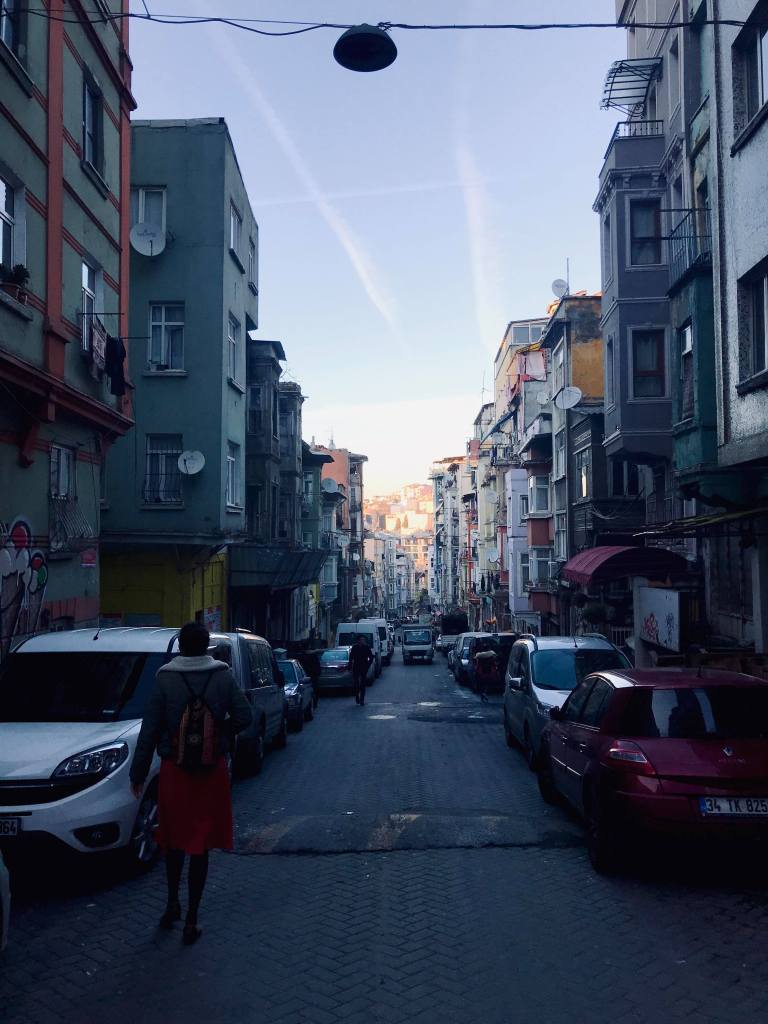
We’re not trying to enjoy our time in Istanbul. The cold air bites us constantly, a noticeable change from the harsh dryness of Jordan and Kurdistan. A constant mist is interrupted by little bursts of sideways precipitation, often including hail. We’ve been pretty much soaked the entirety of our stay so far. The weakened lira, still hamstrung by sanctions placed against Turkey early in to the Trump presidency, means that tourism has boomed and Istanbul is now full of young workers from all over the world. It’s strange to be here because we’ll be walking down a street and see older men grimacing and shaking their heads about the state of their ancient city with surprising regularity. It’s almost like the city is in the process of a radical change.

Or maybe we’re just projecting. The news is the only thing on our minds. We should be working, since this entire precautionary evacuation is proving to be a total miss. My gut says we’re doing the right thing by giving the situation more time to settle down but I’m starting to feel guilty for staying away too long.
Today we hiked out to a Byzantine church and watched the city slip in to darkness from the windows of a high cafe. We walked back in the rain.
soru – question (Turkish)
Wednesday 8 January: Day 181
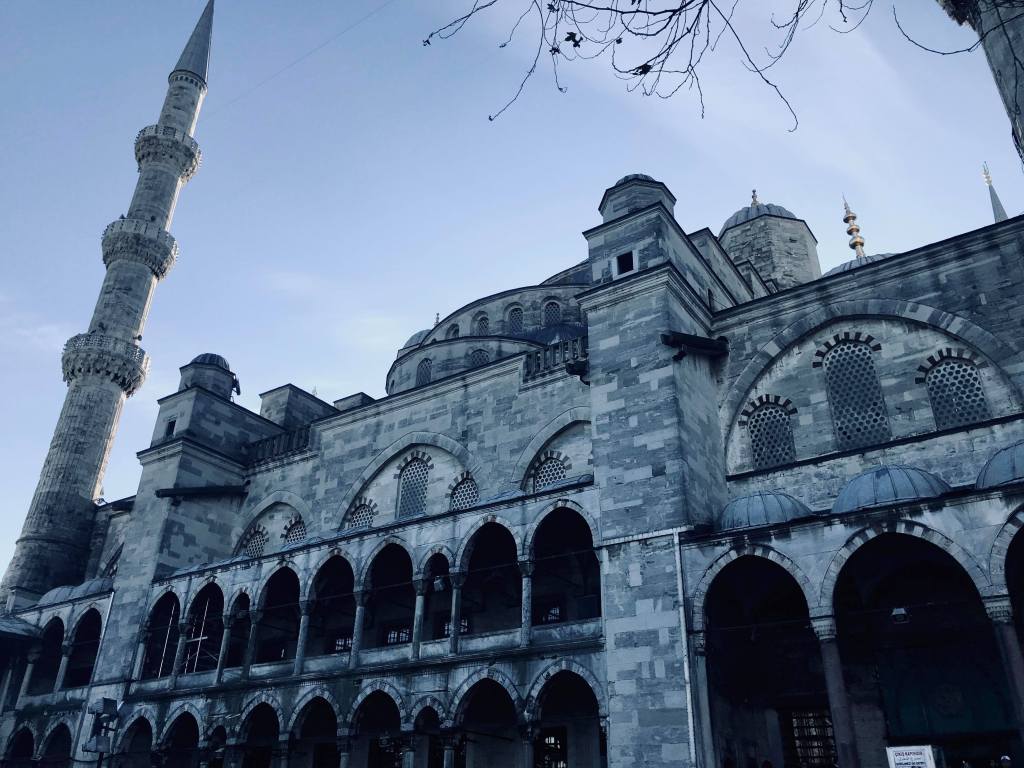
The Aya Sofya stands in the center of Istanbul’s Sultanahment district, surrounded by imperial Ottoman palace structures and modern trams running over cobblestone streets. The Aya Sofya was originally a pagan Greek temple, then a massive Roman structure, then an Orthodox citadel following Justinian’s epiphany and conversion, then the largest mosque in the world after the Turkish conquering of Constantinople in 1457, then a secular museum by the order of modern Turkey’s founding father, Kemal Ataturk. Each epoch of the Aya Sofya lasted longer than America’s collective history. It’s one of the only buildings in the world where visitors can see the progress of civilizations so clearly.
But why build it?

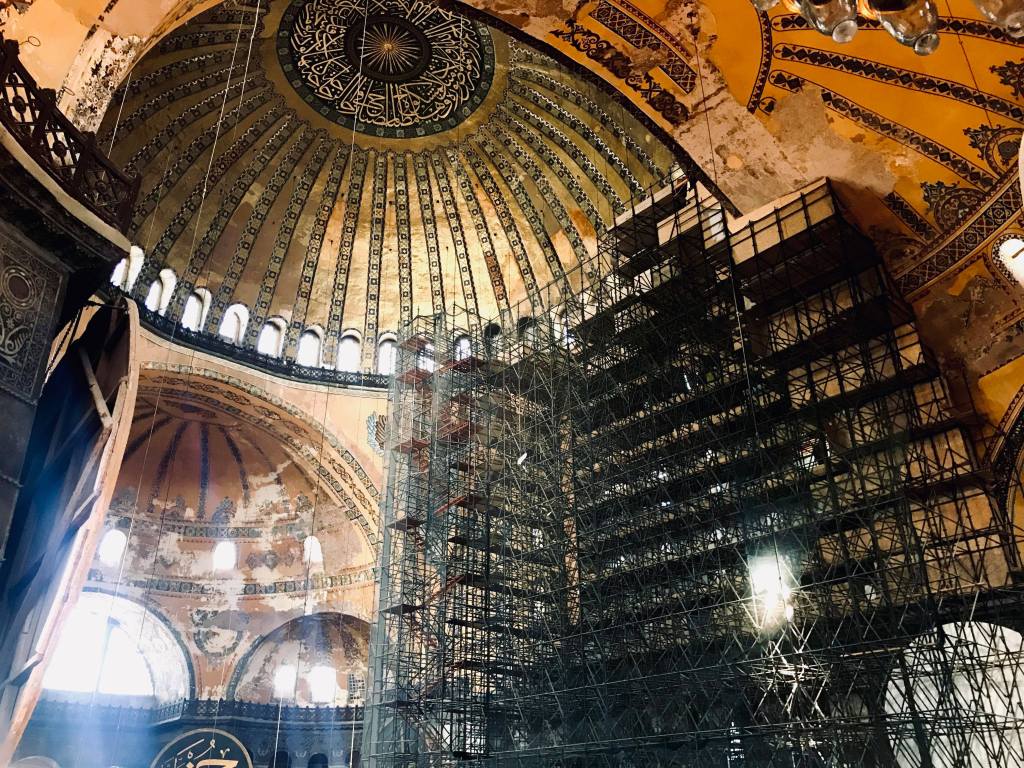
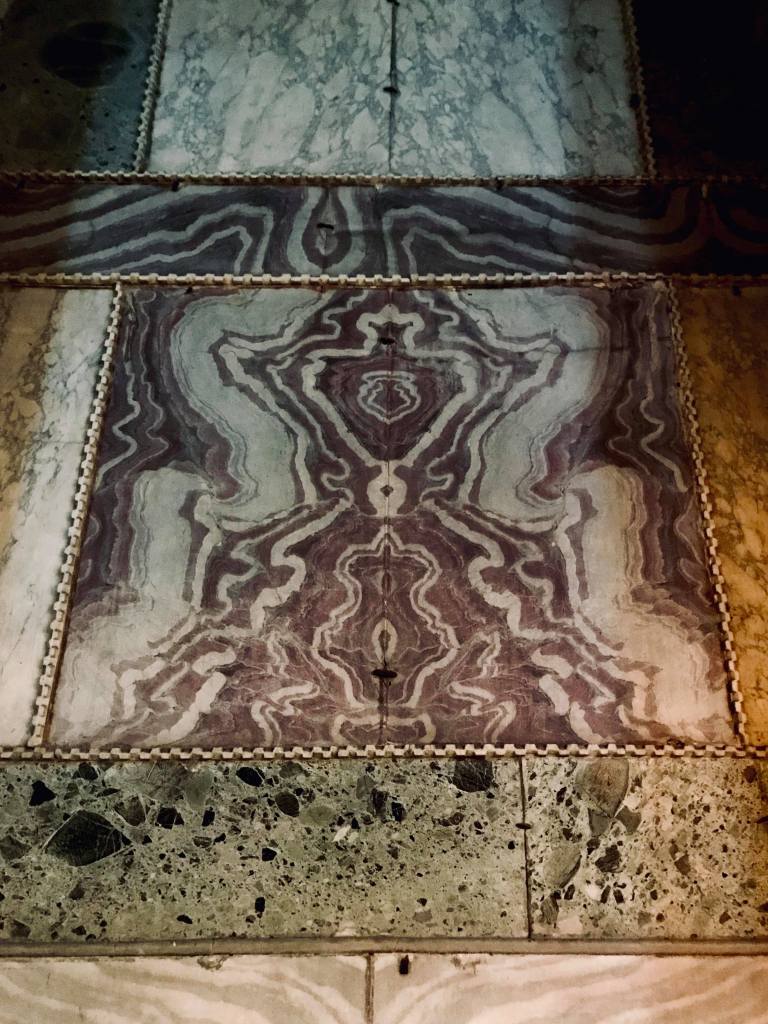
Mitsu and I joined the throngs of tourists who came to appreciate this artificial holy mountain, even in the rain. The interior is primarily large blocks of ornate marble, each resembling a Rorschach test of color. The Christians paved over the original marble with mosaics of lapis lazuli and gold that reflect light in such a way as to induce divine ecstasy. The Muslims painted over everything again with gold leaf and four-story calligraphies depicting the names of God. Today, we can see each iteration side-by-side, remnants of eternal proclamations by emperors and kings long since forgotten.
How many roads could’ve been built with the same application of resources it took to build this holy site five or six times over? How many schools? How many new homes, with doors and windows and furnaces for the winter? Does the construction of such wonders lead to greatness, or does greatness spawn these wonders? Is the Aya Sofya a memory of what was or a statement about hat could be? How many peasants – Greek, Byzantine, Arab, Turk, refugees of today’s wars – are forgotten for a ruler to build such a house of God?
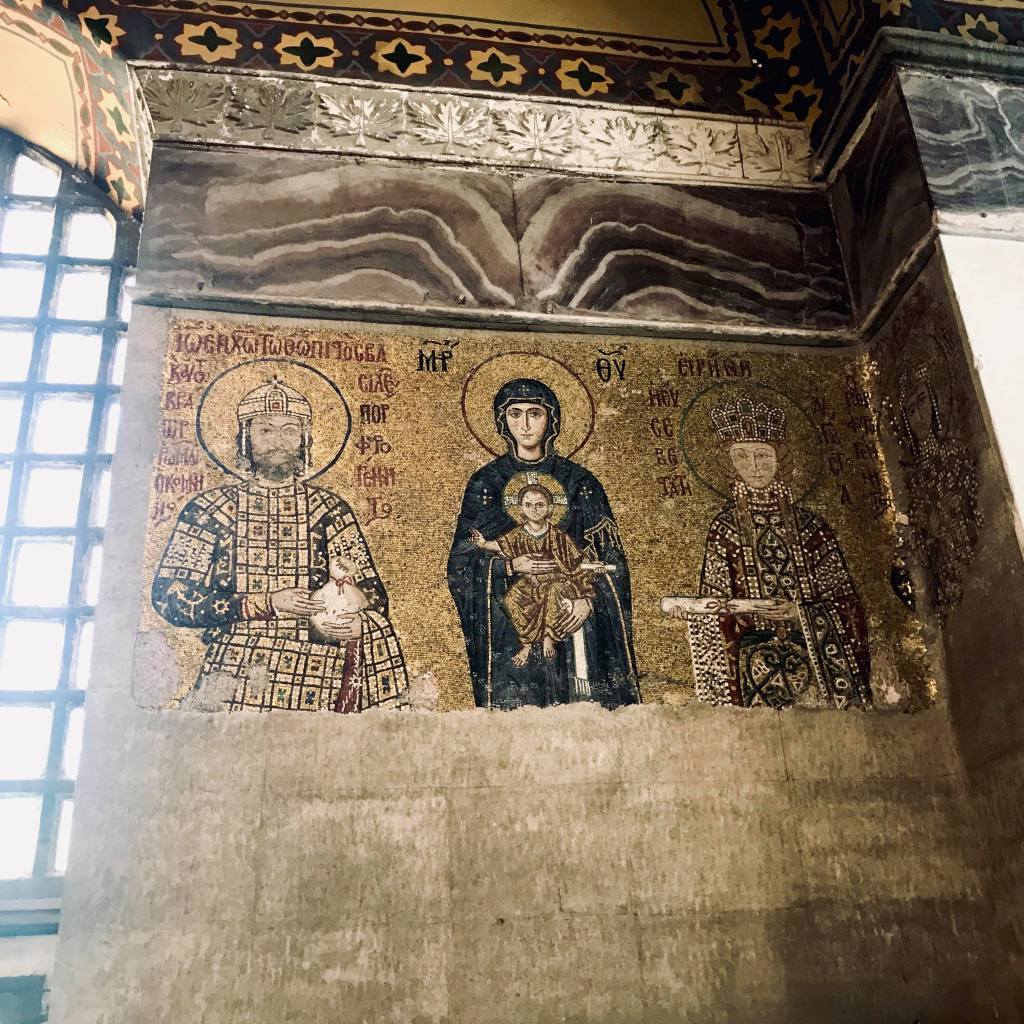
It is impossible, breathing in air that seems to be half oxidized gold, to ignore the splendor of this place. But it is also impossible to ignore the emptiness created by this building, the expressions of hollow wealth created by the vast vaulted columns and hallways 10 meters tall. The names of former rulers are memorialized by plaques throughout the compound, and yet they are still outnumbered by the thousands of peasants who remodeled the palace-temple at the whim of their rulers.
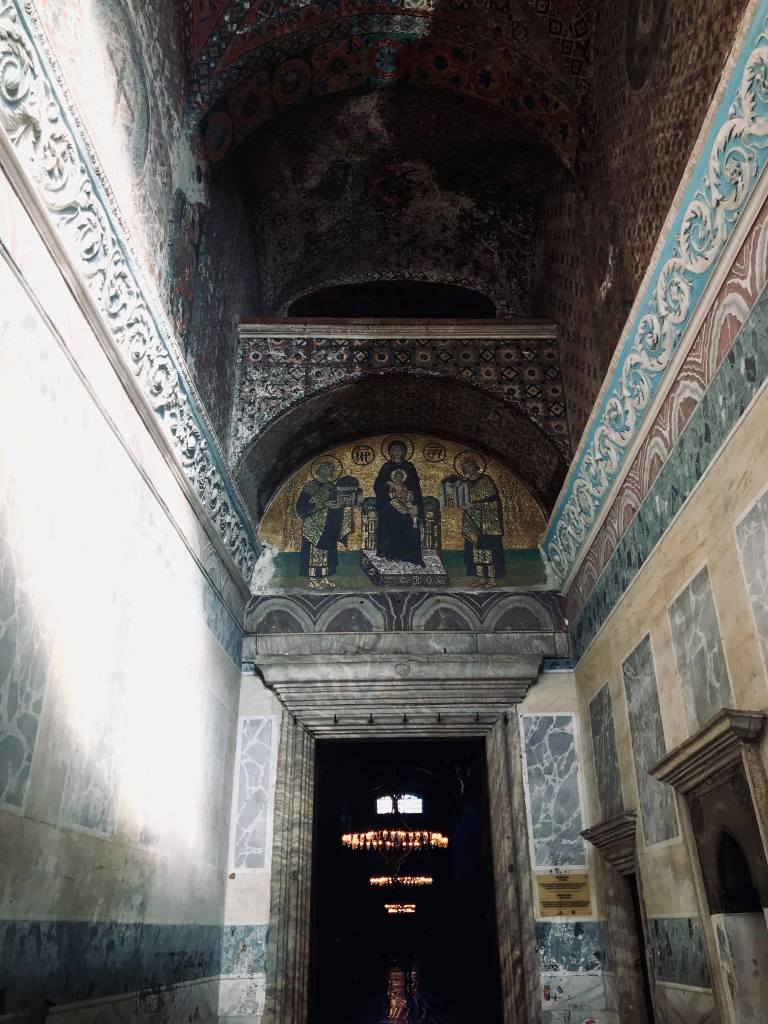
Will it always be this way?
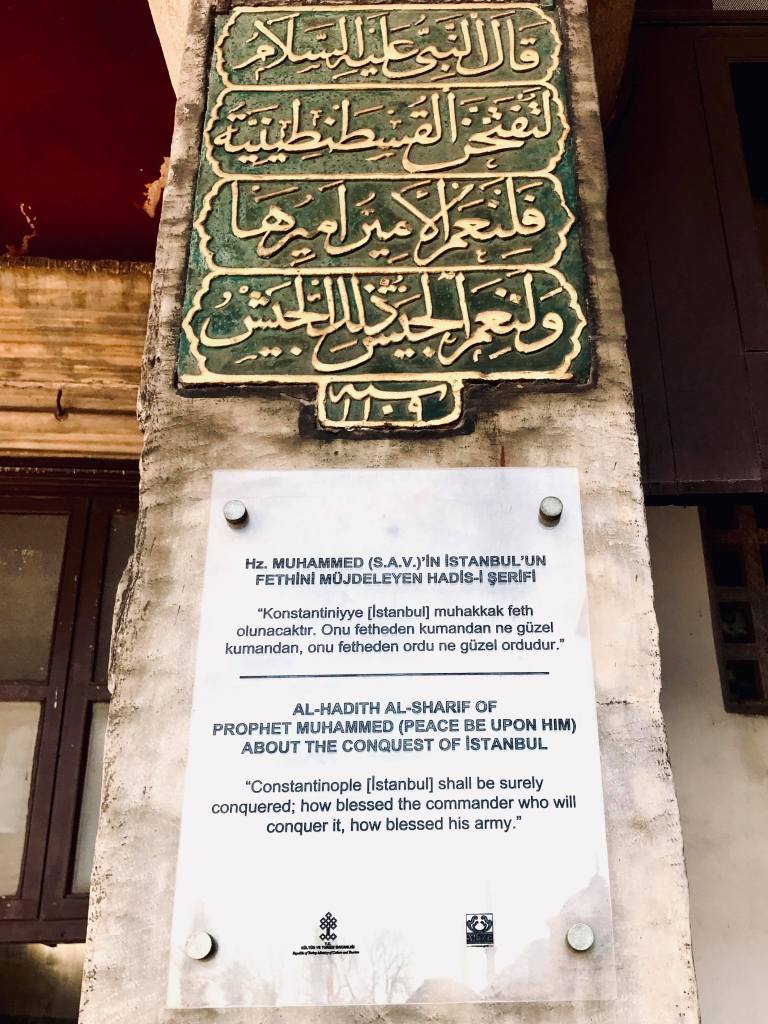
Aya Sofya (Arabic) – Hagia Sophia (Greek) – “Great Wisdom”
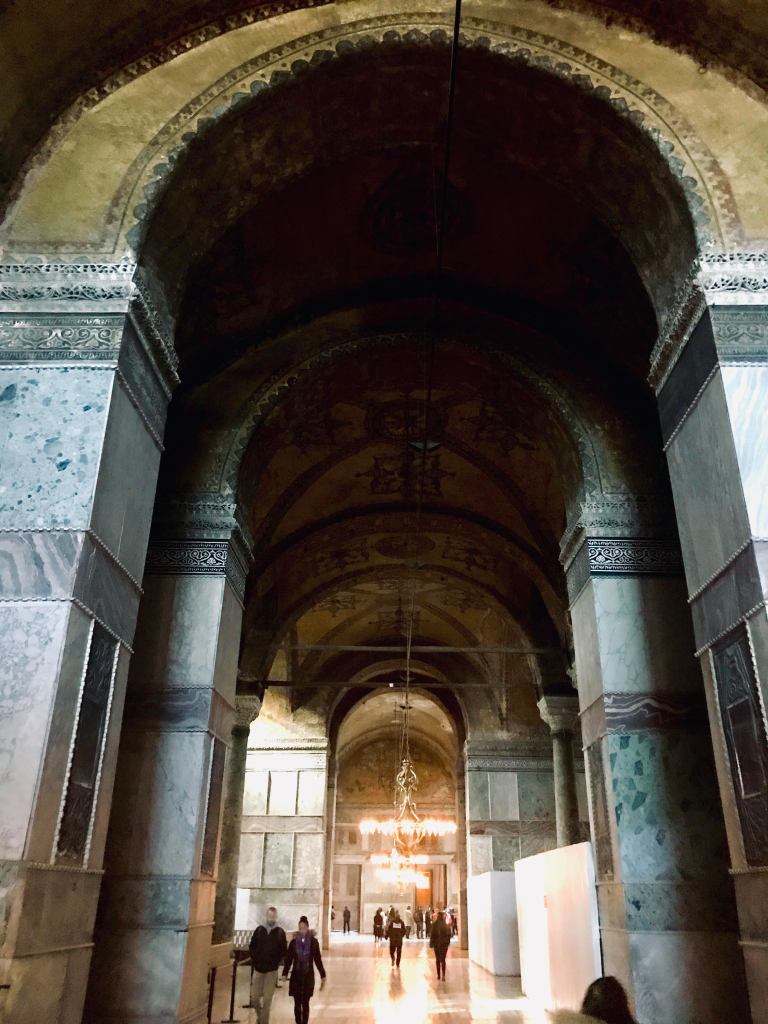
Thursday 9 January: Day 182
We’re walking through Taksim, the high street. A hundred languages, the din of humanity, overwhelms our senses. Neon advertisements for fast fashion outlets turn the rain in to liquid light. A tram parts the crowd – three young men jump on the back to the cheers of passengers. Police busses, with steel cage over the windows, blast orders for obedience over the sound of curated playlists seeping out of shop windows. Food vendors yell out prices in any language they’ve learned. Our eyes are wide.
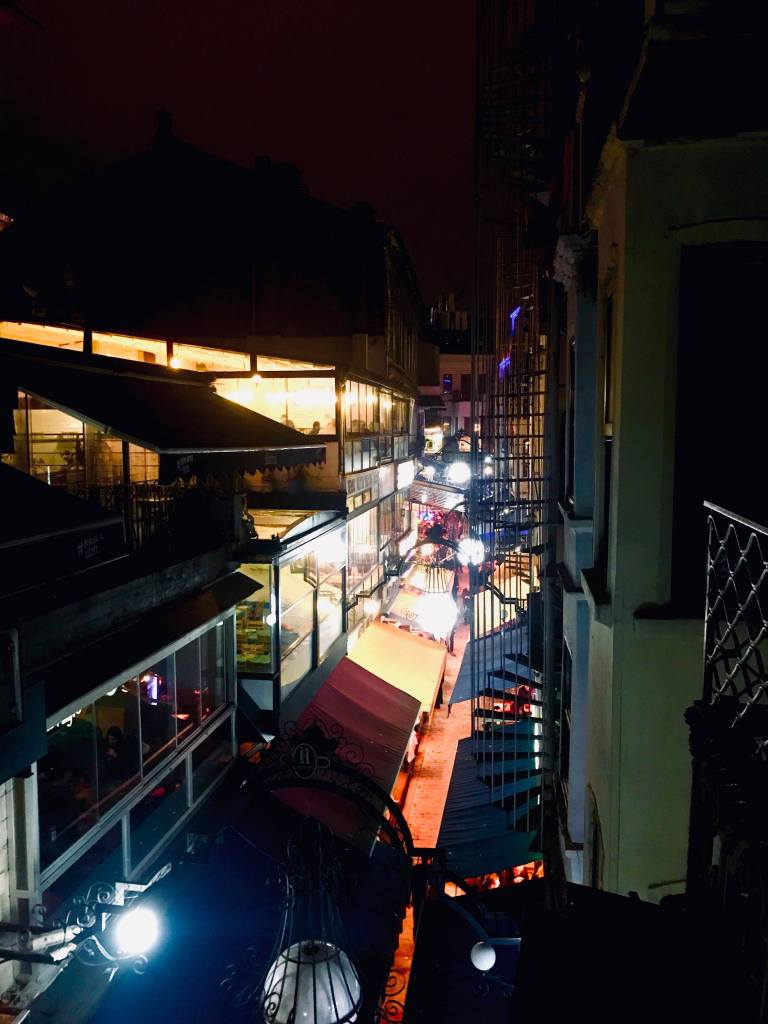
We turn a corner: the alleyway has layers: fish sellers show off iced fillets and glassy eyes, hookah smoke snakes through conversations, cigarette butts are flicked like picked scabs. The second layer is canopied restaurants, the rain cascading like living curtains laughter punctuating the space between courses of fine dining. Clubs bump house music above them, as bare-headed women glance with passing interest at hijab wives and daughters from several stories up, the occasional drink falling with a loud crash that goes barely noticed in the shuffling mob constituting the living floor of the scene before us.
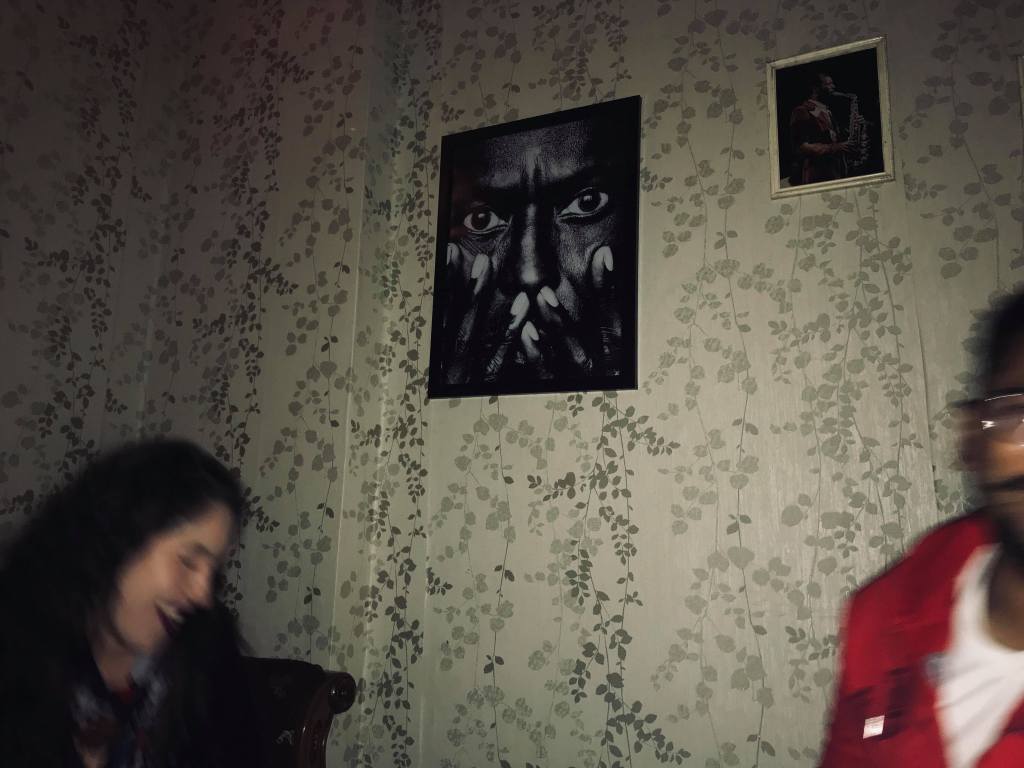
At the top layer now, we see the thousands of other misplaced voyeurs smoking, their attention divided between the currents of life below, the burnt out roots of Taksim’s old French-inspired avenue complexes at eye level and the rain that materializes just inside the sphere of light created by all of this activity surrounding us. At this level, everyone gazes longingly, makes a decision and then returns to the dancing inside. Shutters close, balconies creak, lovers of the evening kiss and turn away. Each door, each window, is a portal to another universe, unseen black holes just beyond window sills absorbing light and sound in an explosive, violent implosion. If somebody jumped, the force of gravity would pull them back from the ground and keep them suspended above the streets.
gece – night (Turkish)
 certification
Leave a comment