Friday 10 January: Day 183
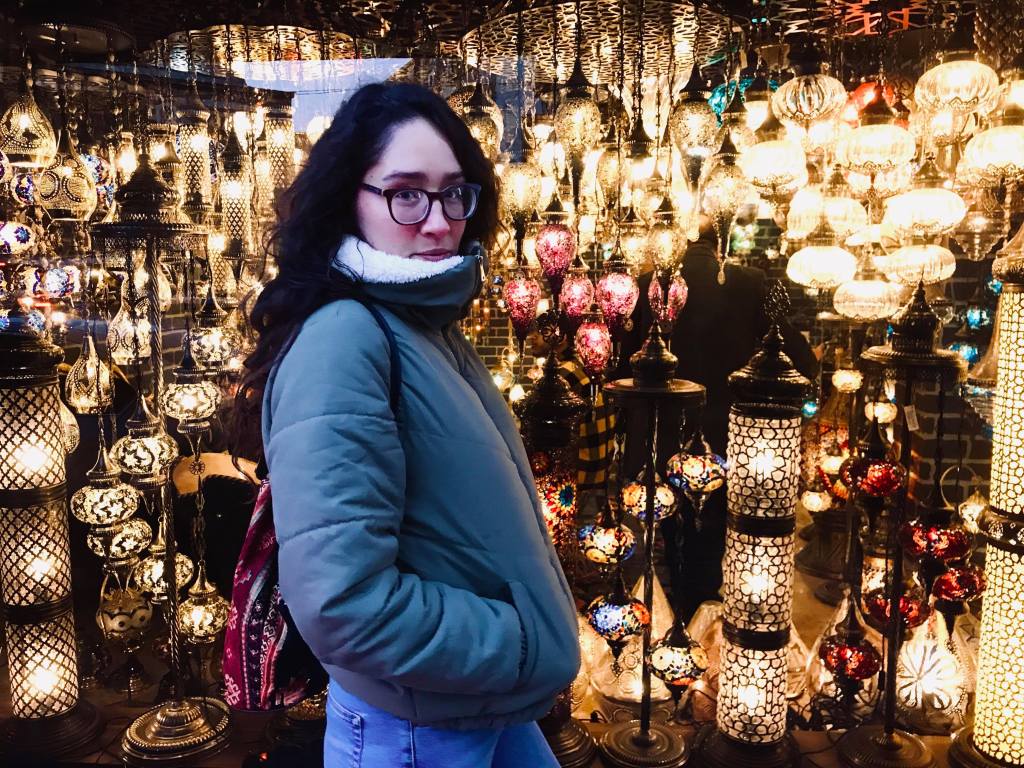
We wake up late and go to the cafe we’ve gone to every day we’ve been in Istanbul. The owner is Bulent, a fast-talking Kurdish war veteran. He’s a solid man: short and muscular, with eyes always looking for the next deal and a smile that can pull a woman from any country in to his restaurant. He took a liking to us when we shared our story, and in order to save us some money on our lodging, is letting us crash at his apartment until we go back to Kalar.
Like every other business owner in Sultanahment, Bulent is a Kurd. Officially, Kurdish people didn’t exist in Turkey until the mid 1990’s when the Turkish government finally recognized the minority group. Unofficially, Kurds make up a third of the population, scattered from their homes in eastern Turkey (northern Kurdistan) by a century of forced resettlement and cultural assimilation policies. Like most Kurdish men, Bulent joined the Turkish military to prove his loyalty to the state which ensured his family’s safety and prosperity; in this way, Bulent bought his prosperity. He’s a Kurd without the right to be, a man without a true home to call his own, a solder who fought for a government which wanted his culture dead.
And he is happy. His restaurant is successful, his family is wealthy now, and his bed is rarely empty. We stay up all night talking about the Kurdish story in Turkey and promise to visit his home in Adana one day. His family would love to meet us.
asker – soldier (Turkish)
Saturday 11 January: Day 184
I think you can tell a lot about a culture by the way they treat their strays.
The stray dogs of Istanbul are free to go wherever they like. Their ears are tagged and they are usually found sleeping on a corner in the sun, or in the middle of a road, where traffic is motivated to drive around them until the pups decide to stretch out in a different lane. There are community-built dog houses all over the city and people leave food and water out for them in front of their homes and restaurants. Most of the dogs will come up to us and just sit, waiting for pets. They follow us down streets wagging their giant unkempt tails only to stop at some invisible boundary and then returning to their idyllic, loafing lifestyle.
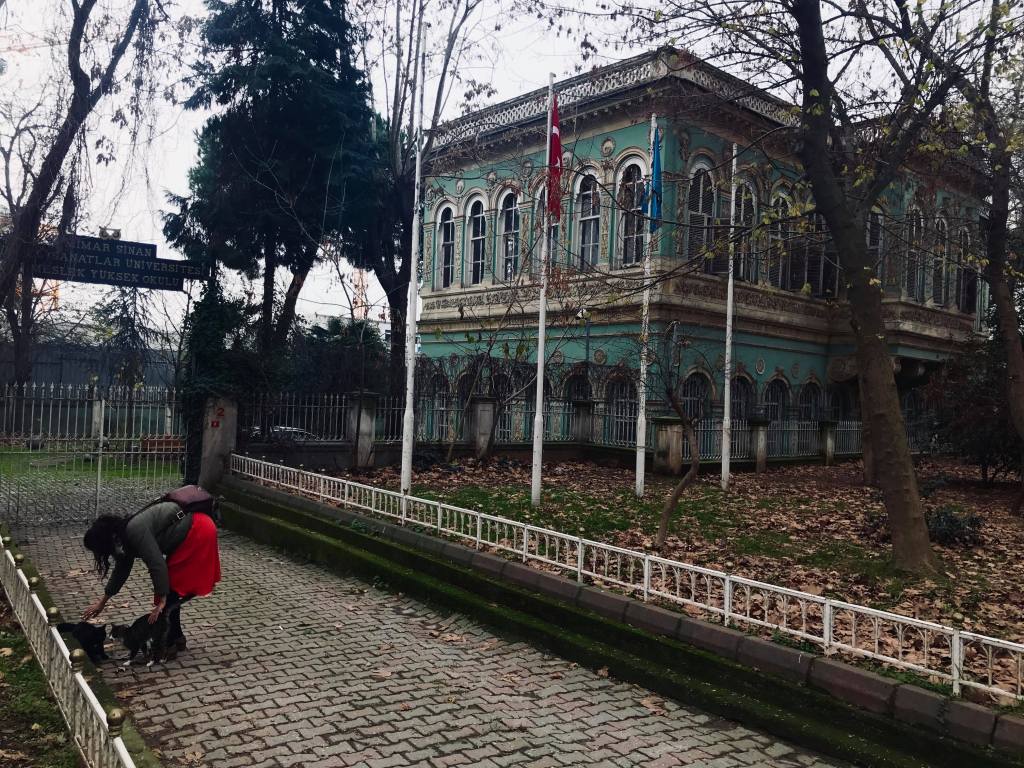
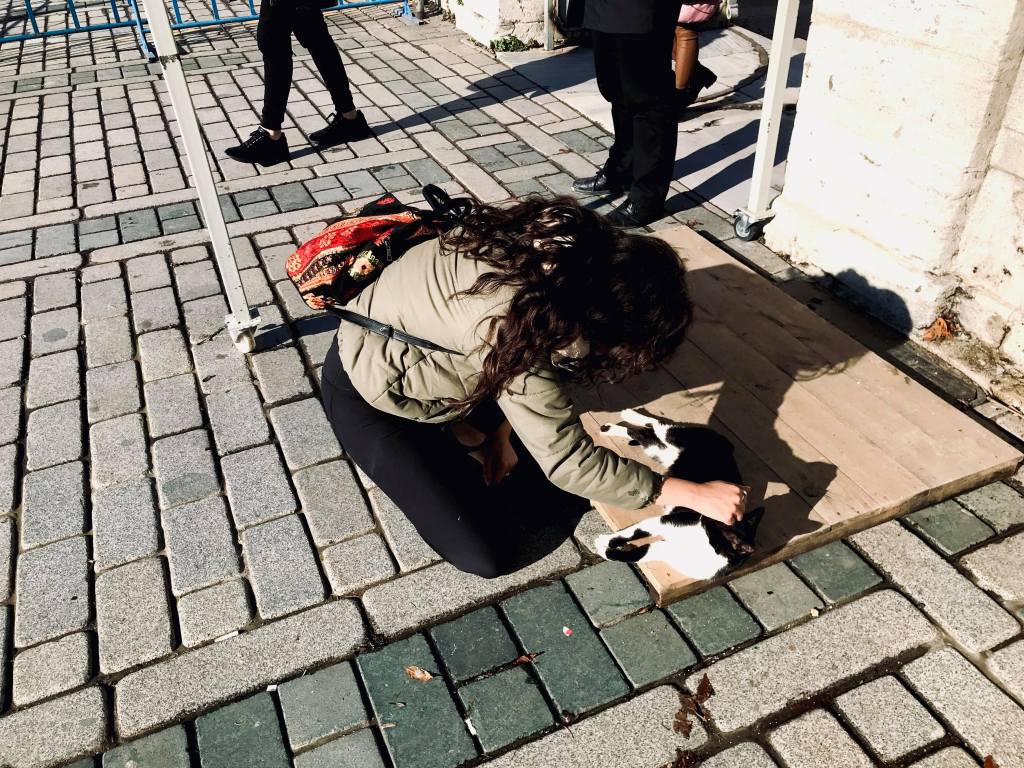
Dogs are treated like kings, but cats are treated like gods. Istanbul is a cat city, and the Turks are most certainly cat people. Mitsu is in heaven; we’ll go a block or two and then she’ll see another one, fiddling around in the rubbish or conspiring with other cats (as cats do), and she’ll immediately stop. Her voice raises a few octaves and inevitably this little fur ball prances up to her. A minute later, four or five other cats have materialized out of thin air, their curiosity demanding an investigation. They’re so confident and chill, and Mitsu can spend 30 minutes just petting them as they prance up to her.
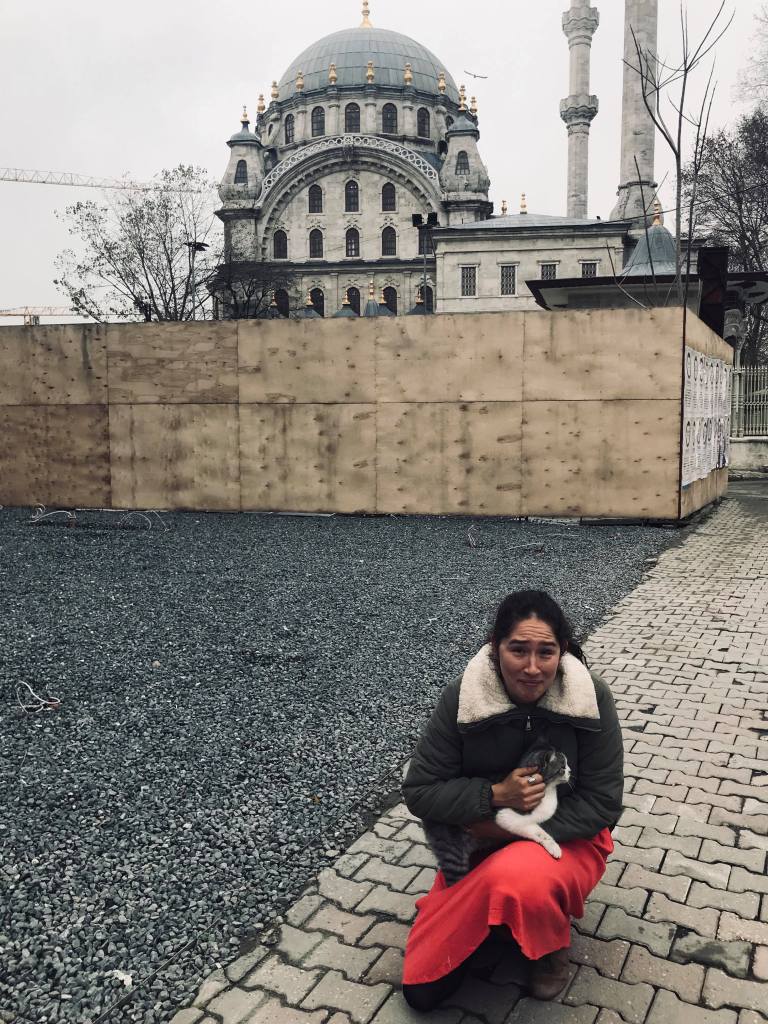
We keep seeing shopkeepers fixing up little cat homes and old ladies giving ear scratches while they take cigarette breaks in the doorways of their bakeries. The cats are never shriveled or dirty or thin.
Cat heaven.
arkadaş – friend (Turkish)
Sunday 12 January: Day 185
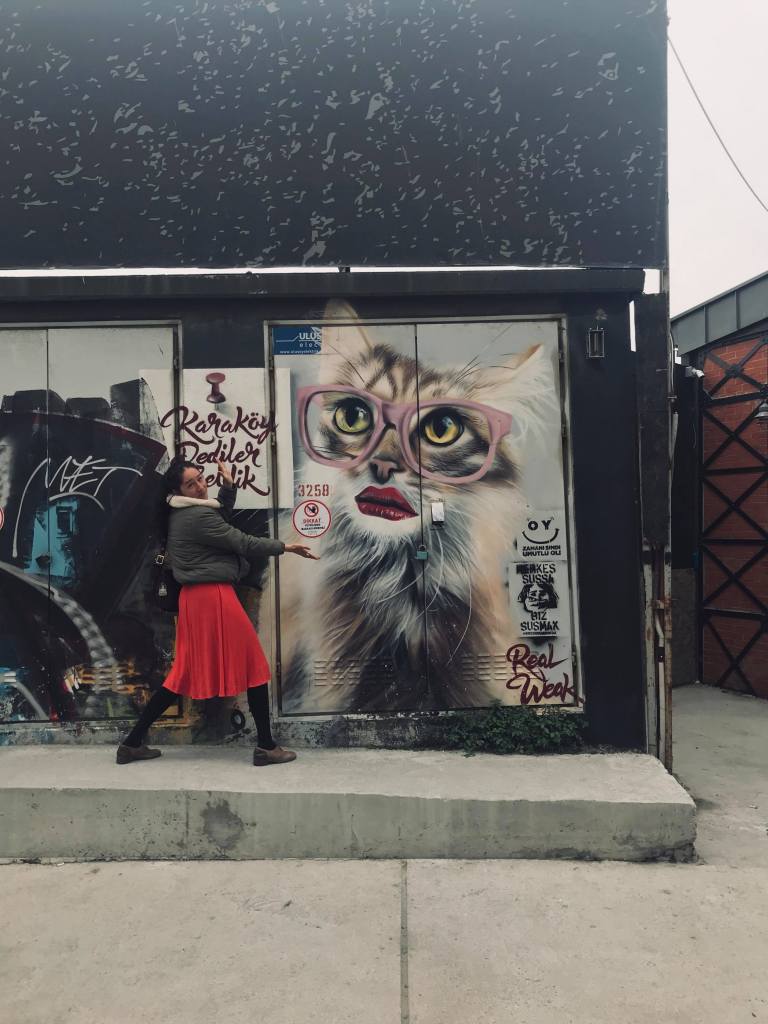
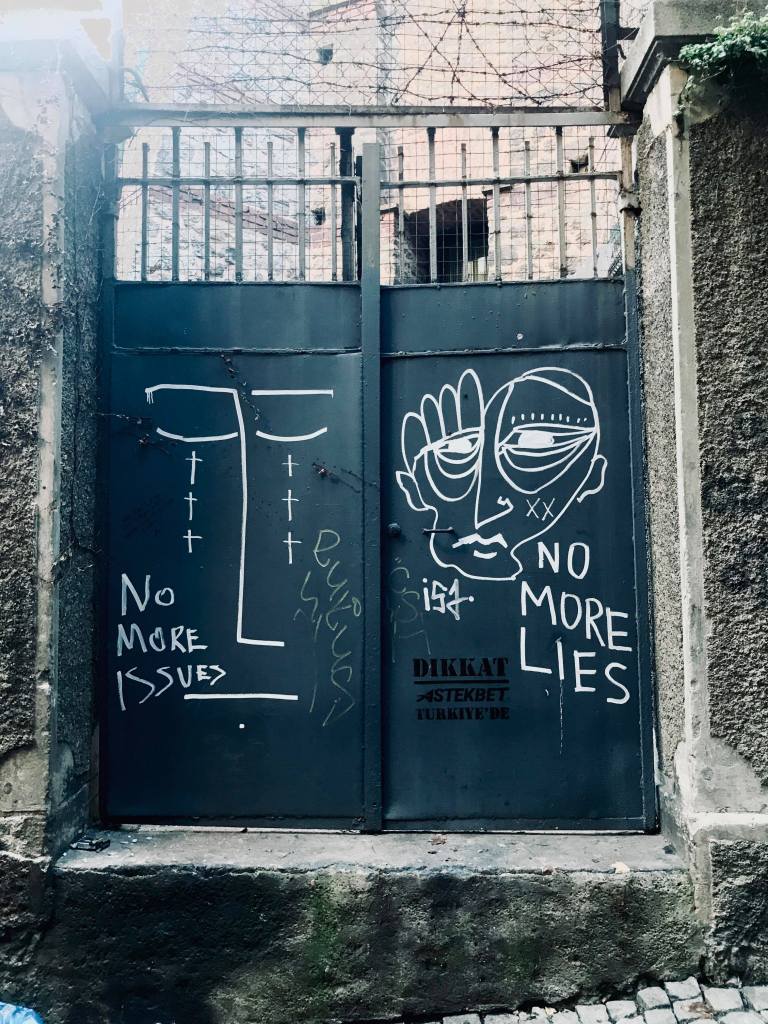
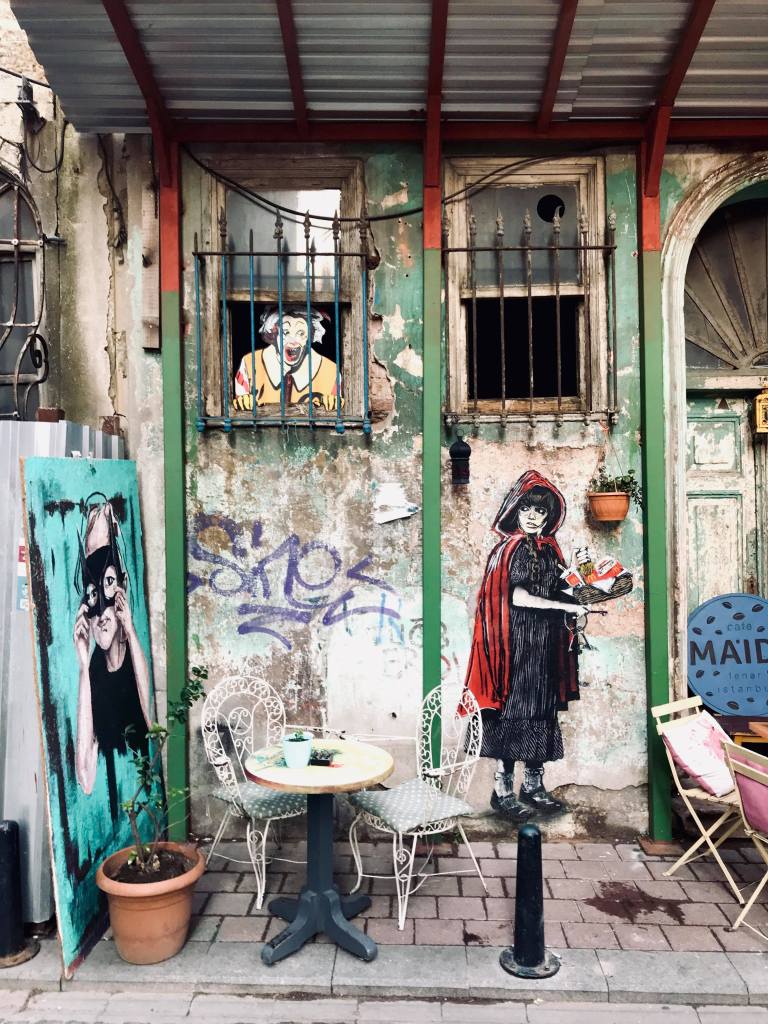
Difficult day. It’s hard being away from Kalar and all off the work we want to be doing. Mitsu found a walking tour online and we just picked a direction and walked aimless-adjacent through these empty, unkempt neighborhoods. One was clearly a market on some days and had hundreds of wooden tables stacked on their sides, like barriers during a street riot. Another was littered with graffiti, at first edgy and colorful, eventually refreshing in to swatiskas and genetalia. We don’t talk to each other much, and can both feel that uncomfortable creeping realization that an unpleasant series of experiences was becoming relevant to our definition of this beautiful city.
Today was also the day that our evacuation was going to unpleasantly color our experience in Kalar; that we will be organizing our time in Kurdistan as before-evacuation and after-evacuation, and that we were currently occupying that weird in-between space, as void of purpose or direction as our walking tour to nowhere.
Unsettling.
kent – city (Turkish)
Monday 13 January: Day 186
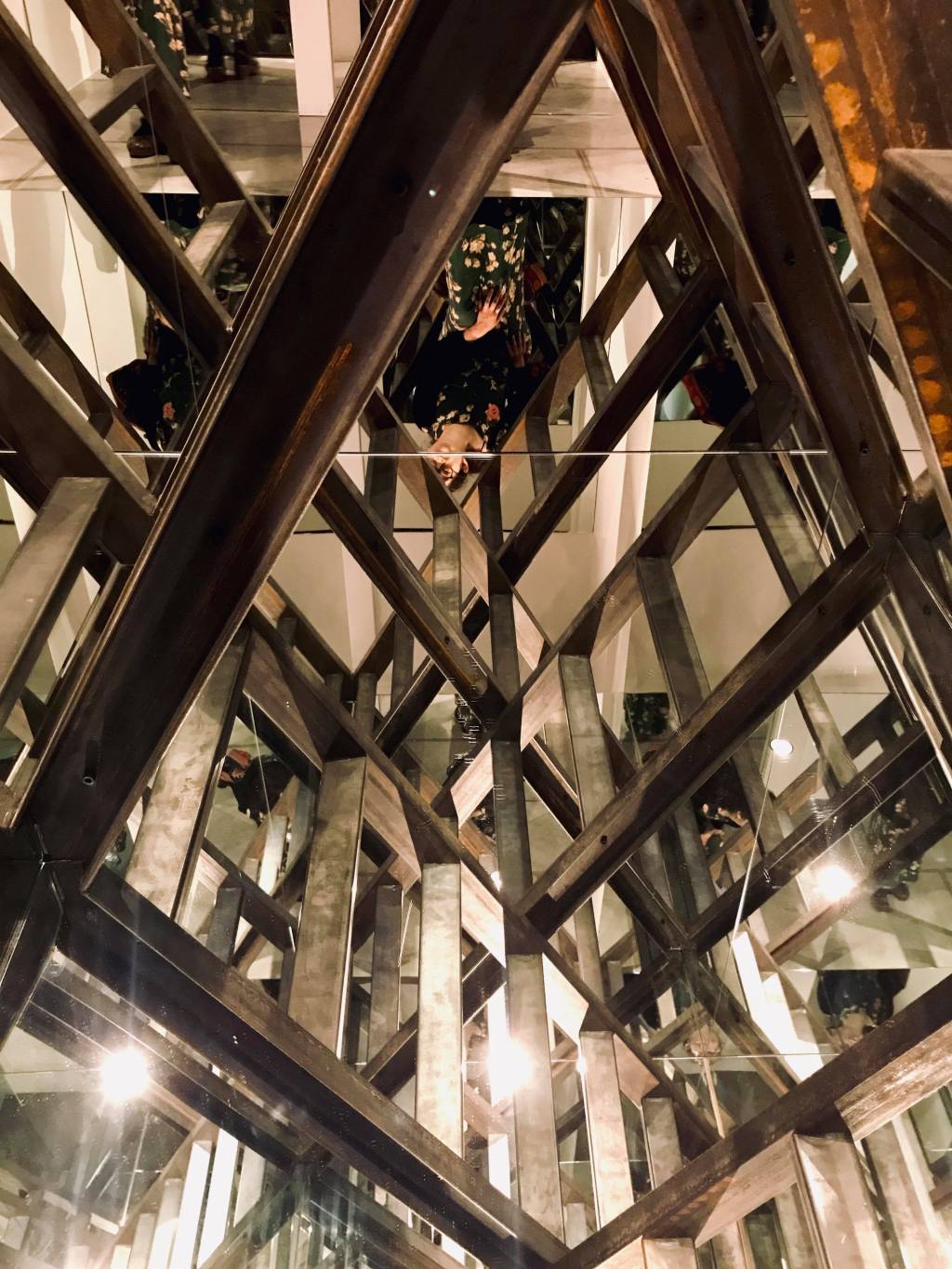
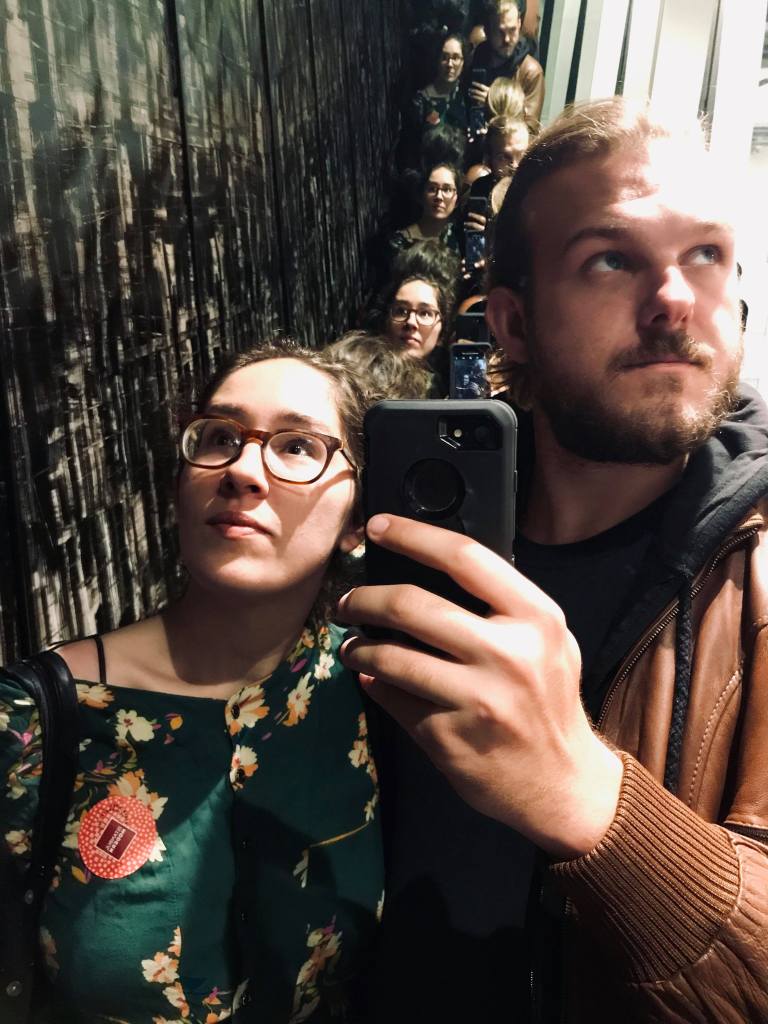
One of my fondest memories from my first time in Istanbul was visiting the Modern Art Museum. Sheik and minimalist, the building sat on the edge of the Bosphorus and the golden light mixed with the salty, warm sea breeze suspended these wild creations in a state of etherealness. The visit colored my stay in the city with oil-based reds and whites.
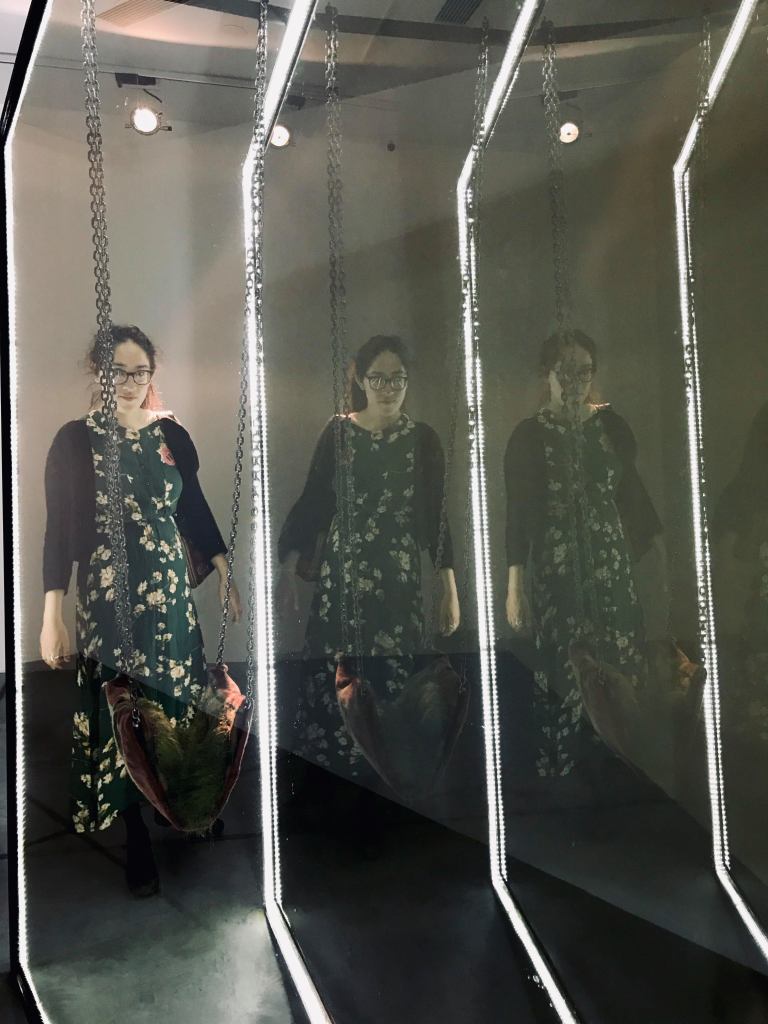
That museum is under construction, and the temporary museum is in an old hotel that felt hastily jammed together to guarantee a revenue stream. None of the politically provocative pieces lamenting Turkey’s takeover by populist fundamentalists still hung; in their place were endless, band abstracts supposedly depicting the “infinite atomization of the individual in urban environments” but really just made my headache from the day before worse. A large deconstructed geometric globe, its colorful lights and fractal shadows demanding an entire room in my prior visit, was tucked in to an ugly corner like a forgotten Christmas ornament.
A fat Turk asked if we were American and then said he loved Robert E. Lee and wished the Confederacy had won the war. We need to leave this place.
sanat – art (Turkish)
Tuesday 14 January: Day 187
I smoke my last cigarette at the entrance of Erdogan’s maximalist, narcissistic space-port-cum-landing-strip and walk the hour to the right gate. The plane takes off and the yellow lights of Turkey are soon replaced by the the recently reconstructed white lights of Mosul and the concentric eye of Erbil before we hit bad turbulence over Suly and have fever dreams that we’re about to get shot down. No one on the plane is sleeping.
Mehdi picks us up from the airport and we go to his brother’s apartment. The mountains surrounding Suly are covered in snow, the diffused light of the cloudy late night casting the cliffs as silent executioners. A horrible, evil wind howls over their hoods and devastates the city, cutting our skin like hot knives and keeping the door to the apartment building squeezed closed. The wind finds its way in to every crack, whistling and screaming and moaning like a dying pig, terrible as it was. The electricity was off, so we piled under six thick blankets fully clothed –
– and sleep instantly deeply, peaceful that we were home, that we were together, that whatever evil we heard outside was not a terror or an impending doom but rather that song of another long, cold night in Kurdistan.
با – wind
Wednesday 15 January: Day 188
Everywhere I go I can smell oil, lurid, filmy oil, so common as it is here. I forgot how strong the smell was. When I was in high school I left a plastic ball too close to a lamp in my bedroom and after an hour my dad and I tasted this weird flavor in the backs of our throats and realized the plastic was burning and seeping in to every corner of the house, poisoning everything it touched – that is what this tastes like, a mysterious yet ominous sourness in the back of your throat, out of place yet omnipresent.
Smells like home.
ڕۆن – oil
Thursday 16 January: Day 189
Back at school.
In the morning, we take stock of the damage. Our calendar for the next three months is broken and must be rebuilt. We need to calculate when our in-progress classes end and contact our students to resume. We need to advertise our return from Istanbul, the opening of new classes and the end of our current cycle. We should schedule a dozen new school visits, talk to our partners in the Ministry of Education about teacher training classes and formulate a special month-long IELTS test prep course. We need to continue digitalizing our student records, scanning the lesson plans we’ve been writing and getting our cloud-based infrastructure online. We need to make a promo video, flyers, and a clever Facebook post.
We do none of that today. Instead, Rzgar tells us that the Voice of America wants to do a story about us and the English Access Institute. So Mitsu and I pretend to teach a class, stage a few interactions around Kalar and talk about why we’re here in Kurdistan at all.
It’s great to be back.
دەنگوباس – news
 certification
Leave a comment