Friday 21 February: Day 225
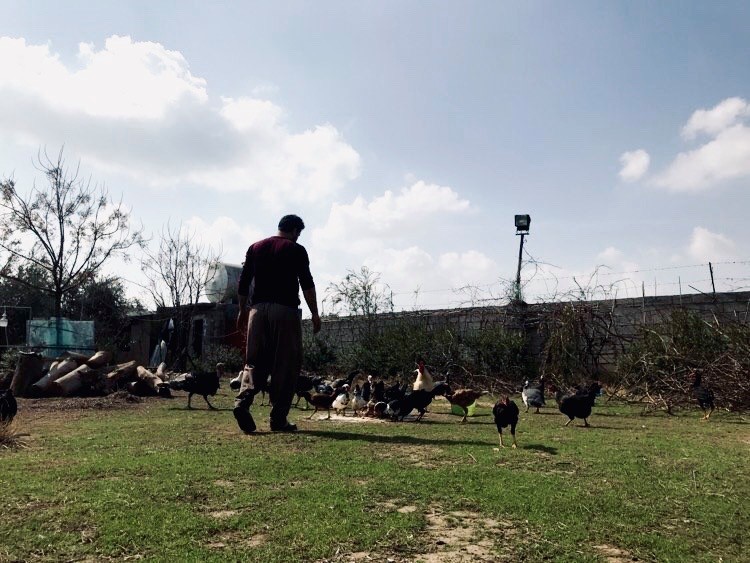
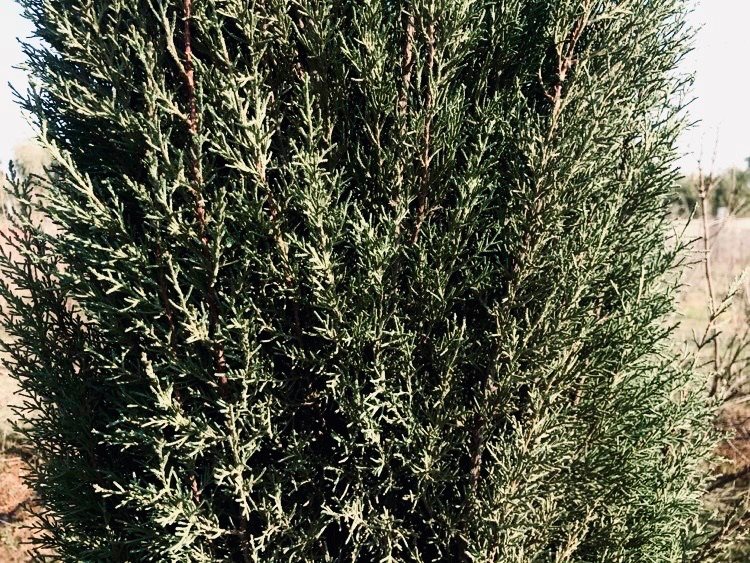
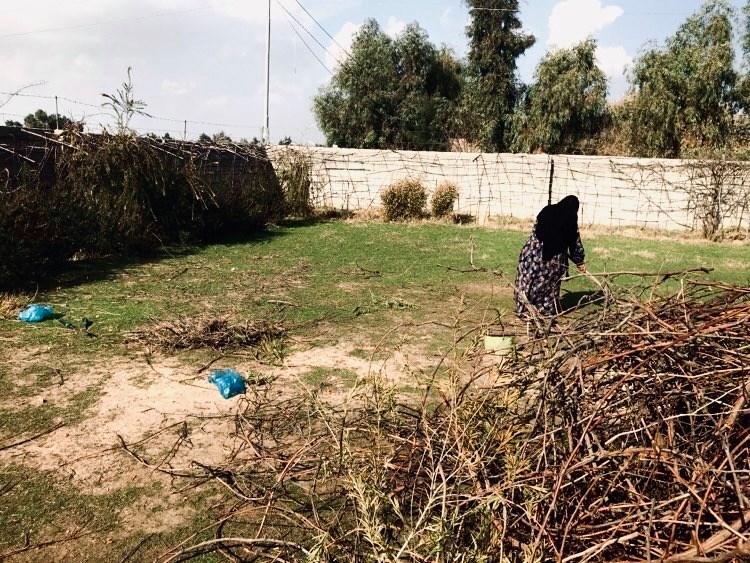
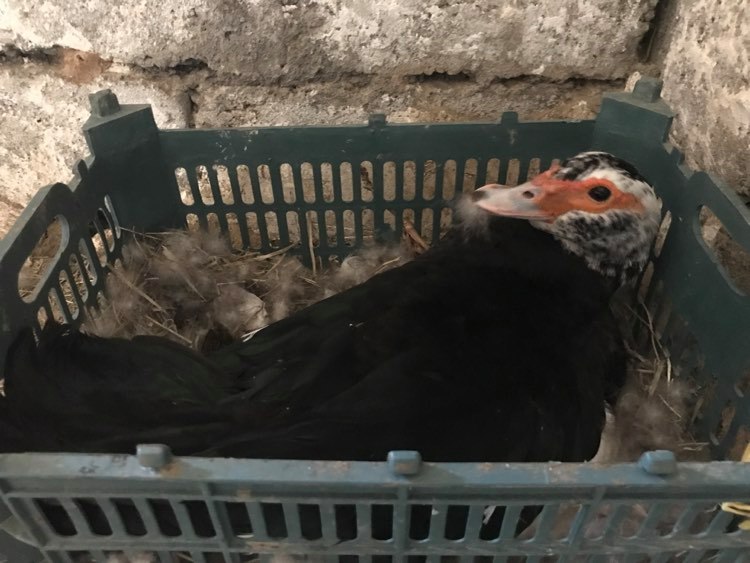
Spent the day at Akam’s family’s farm. It’s a spacious, pristine place with herds of goats, families of ducks, chickens, turkeys and “Chinese chickens” (guinea fowl), rows of fruiting trees, a large pool for geese and fish, and a wonderful border of grape vines.
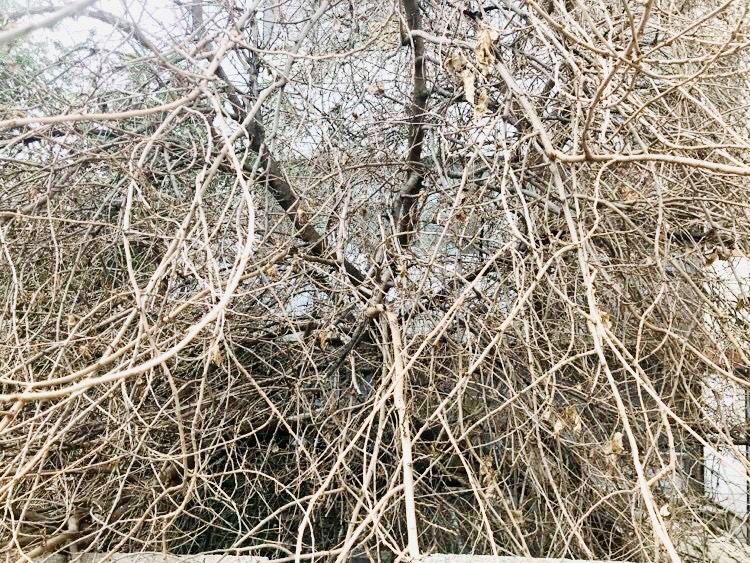
Our job today is to prune the vines. Mitsu starts on one end, Aram and I on the other. He shows us how to check the vines to see if they are dead or diseased, to cut healthy vines down to the fourth knot of their length to allow for easier growth, to trace the sick vines to their root and sever them wholesale. The skin of the root vines are papery, their bark flaky almost like pastry, and are knotted around a bamboo lattice which crumbles too easily from the force of our pulls.
We work for several hours, the morning becoming sweaty and humid, as if the trees are breathing their first lungs of the day. Aram and I talk about evolution; he surprises me by saying that he (a biology teacher) doesn’t believe in Darwin’s theories but instead directs me to a Turkish cult leader, Arkan Oktar, who claims to disprove evolution. Eventually we’re laughing.
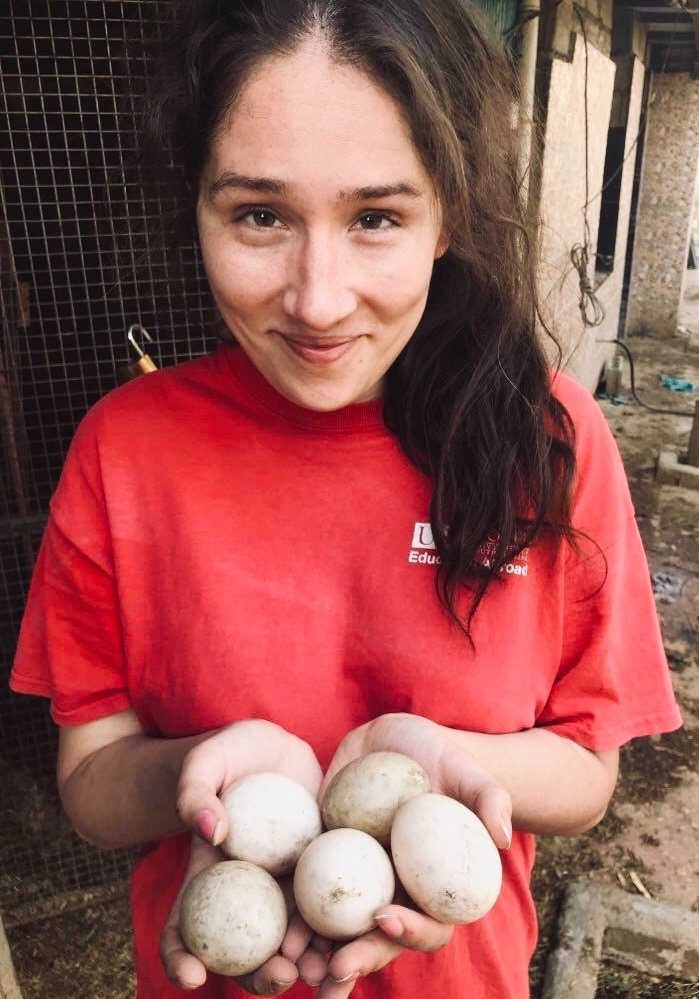
Aram’s mother is meanwhile preparing lunch – succulent slow-cooked mushrooms over white rice, fresh salad, the ubiquitous dolma and, special for us, a slow-braised duck from the farm cooked in this impossibly savory broth. The texture of the meat is tough and the consistency has become unappetizing, but we rip off pieces of her fresh bread, flat yet fluffy, wrap mushrooms and dunk the creation in the sauce until we can’t stand. The caffeine of the strong tea jolts us awake.
After lunch we pack fig tree cuttings into plastic beds to be planted later. It’s hot now, and we can feel the hint of summer. Soon it will be too hot to do this, and our lunches must stay in the shade. But not today.
كێڵگە – kelgn – farm
Saturday 22 February: Day 226
Terrible migrane. Our co-teacher Ahmed has brought his friend Loquam to a smoky cafe, where we stare at computer screens for two hours. I’ve been struggling to install this open-source student database application for the better part of two months, and I’m at my wit’s end. Loquat is impressed by how far I’ve gotten on Youtube videos and coffee but corrects a couple mistakes in Visual Studio before wrapping it all up nicely. Ideally, we’ll use this database to track all of our student body at the EAI, becoming familiar with the setup process, and then scaling up our usage of the system to monitor our current Kalar branch, a future Suly branch, and an eventual K-12 school – across 2 different operating systems in three cities. This is the glamorous stuff involved with setting up a school that people don’t hear about very often.
كۆمپيوتەر – kompyutr – computer
Sunday 23 February: Day 227
The morning call to prayer. I can hear it through the walls and I pause my writing to open the window and take it all in. Nearly a hundred mosques are singing, their recitation of God’s words flowing on the warming air sweeping over the Zagros Mountains. This is beauty, made acoustic, the vibrations as divine as a child choir and as indecipherable as the lattice of quantum strings, both contextualizing the mystery of a still unfamiliar faith and contrasting sharply with the culture that worships it. All I know is that every time I hear it, I understand less than I did before.
صلاة الفجر – salat al-fajr (Arabic) – morning prayer
Monday 24 February: Day 228
Like every other school, university and private institute in Kurdistan, we buy our textbooks in bulk from Iran. The textbooks are black market versions of successful Western editions, but since Iran is a hypocritical theocratic dictatorship more obsessed with policing morality than guaranteeing basic human rights, the textbooks are censored a la the Ministry of Truth in Orwell’s 1984. These edits come in all shapes and sizes, from the hilariously minute (poorly photoshopping a longer sleeve on to a woman wearing a t-shirt) to the strange, like substituting a picture of Lady Gaga for a picture of Sting.
Sometimes these changes impact the lesson. There’s a chapter in the Level 3 textbook that focuses on the future tense and uses content about the environment as a vehicle for the new material. One of the lessons is about gorilla conservation in Uganda. In my copy (an original), there are two or three sentences that ask if primates may one day have more rights, recognizing both the scientific truths of macroevolution and the genetic similarities between us and gorillas. In my student’s copies, these sentences are deleted, leaving an awkward gap at the ends of paragraphs.
Why erase the truth?
درۆ دەكات – drodakat – lie
Tuesday 25 February: Day 229
What’s really frustrating about Iran’s censorship of evolution is how revisionist the action is. It may sound crazy to Westerners (or to Kurds who aren’t taught this history in schools anymore), but the Islamic world is the reason that science as we know it exists today. As Europe descended in to the dark ages, madrassas translated Greek and Roman academic writings in to Arabic for posterity’s sake. These translations formed the basis for almost a thousand years of Islam-led scientific advancement, both theoretical (algebra, geometry and heliocentric) and practical – advances in medicine, ship craft and optics were born here, at a time when European Christians were reverting to mysticism.
Creationism – the modern, post-truth version that seeks to disprove tenets of plate tectonics and evolution in order to shore up support for religious doctrine – has never existed in Islam. The regressive Christian attempts to disprove tectonics have never taken hold in a region rife with geological activity (and petro-chemical opportunity), but recently, reactionary pundits have come to dominate mainstream Islam. Salafiism (fundamentalist Islam which ignores nearly 1500 years of monastic writings and Sharia jurisprudence to practice “original” Islam) encourages believers to support Creationists, who of course have ample literature on the subject, should you wish to be holy and support their enterprises.
Like any fundamentalist movement, Salafiism is passionately defended by adherents and viewed with a mix of confusion and revulsion by outsiders. You can really see this with the Creationist wing of the movement. This is where Adnan Oktar comes in. Popular in Turkey in the 1990s, Oktar is pointed to as a modern titan of Creationism in the Islamic world. Between several prison sentences for (I’m not making this up) cocaine possession, sexual assault and Holocaust denial, Oktar gained an almost Ayn Rand-esque following among Turkish elites, including Recip Erdogan, the current President of Turkey. Like any good fundamentalist cult leader, Oktar lives in a villa outside Istanbul where he lives off the royalties from his propaganda and is taken care of by dozens of blonde “liberated” sex slaves whom he publicly calls his “kittens.” I’m not making this up.
سلف – Salafi (Arabic)- “ancestors”, referring to the first three generations of Muslims including the Prophet Mohammed; refers to a movement within Islam that advocates for a fundamentalist revival of the religion
Wednesday 26 February: Day 230
Still thinking about all of this. When I was in Rwanda, there were many aspects of the culture that were hard to make peace with. Rwandans were often late to meetings and a lot of the people I worked with lacked the motivation I thought they needed to organize for a large project. Like Kurdish men, Rwandan men had big egos and the difference to male authority held back female students. Hygiene wasn’t so important. Priests and pastors used their stations to make money. Of all the difficulties, however, the habit of teachers sleeping with female students was the hardest challenge to come to terms with. At my school, a government audit eventually led to several perverts being fired or relocated. The news of the investigation shook us to the root.
But even accounting for the differences between Rwandan and Kurdish practices, I find myself much less tolerant of malpractice here than in Rwanda. I realize now that this is due in part to “higher expectations” here, that I was more lenient with poor rural Africans than rich, educated urban Kurds. My own biases are to blame, in part. But the apathy of rural poverty in Rwanda was also a wildly different beast than the active cynicism and nihilism of corruption here. Kurds have the internet. They can learn about global warming, evolution and the shape of the Earth. Their highly stratified family and tribal hierarchies prove that wider civil organization against corruption in the government is possible. Their own lived experiences as victims of racism and genocide should have inoculated them against ideas like Naziism or anti-Arab racism, which are widespread.
And ultimately, I can’t change those ideas. I can’t force Kurds to be kinder or more independently-minded or less cyncial, no more than I could force Rwandans to be on time or hit their kids less. No guest should force any host to do anything, least of all me. My frustration with these larger problems stems from a lack of patience and resilience on my part. And acknowledging the problem is the first step towards fixing it.
ئارامگرتن – baramgrtn – patience
Thursday 27 February: Day 231
Coronavirus.
The new disease is spreading very fast. There are cases all over the world, most alarmingly to us in southern Iraq and Iran. The cases in Iraq will add pressure to an already deep political crisis, where the Prime Minister Alawi is working to form a Shia-dominated and Iranian-backed government, despite widespread dissent among Sunnis and Kurds. Alawi’s intransigence and sectarianism is leading to larger protests, which will help spread the virus, which will place more pressure on the government – spiral, spiral, spiral.
Meanwhile, Iran is having national elections, which the government is depending on to vindicate Soleimani’s assassination and shore up support for conservative factions who correctly face deep public resentment for their handling of the economy and poor leadership. The government is practically forcing people to vote under threat of withholding food rations – and people can only vote for those conservative politicians, meaning that people voice dissent by boycotting the vote, which they did in record numbers. Still, despite the threat of this new virus, the government went ahead mandated a high turnout, which no doubt is part of the reason why coronavirus cases are being reported in every province.
نەخۆشى – najoshy – disease
 certification
Leave a comment