Sunday 22 November 2020
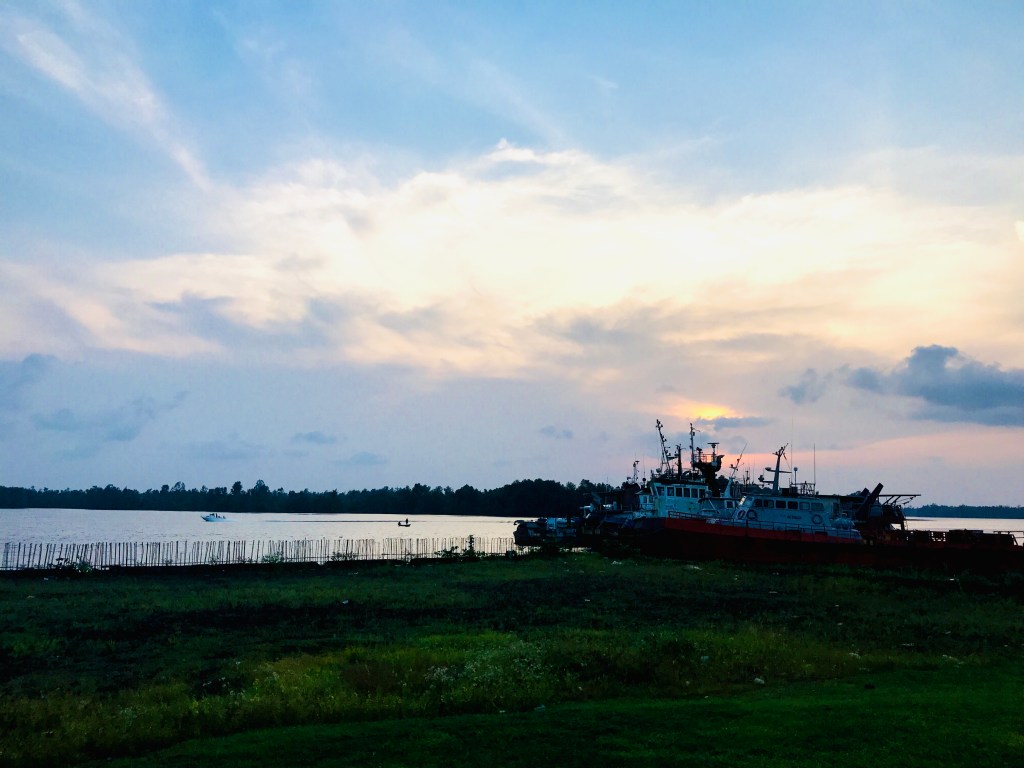
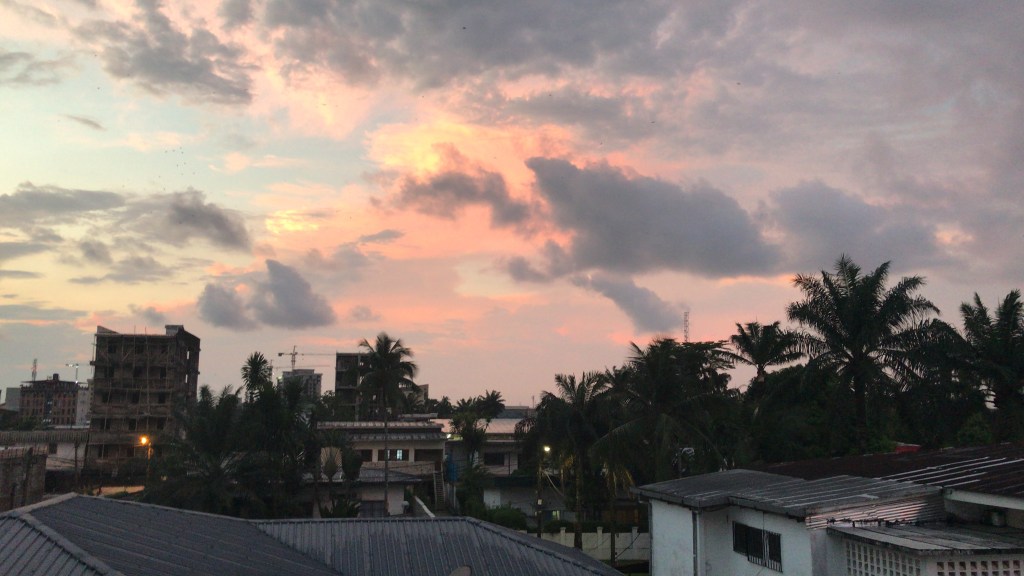
“Bats.” My phone hummed on the table with the notification of the same short message from several of our fellow teachers we had met that sticky afternoon. We stepped out to the balcony of our apartment to watch them in flight. Dozens and then hundreds of football-sized flying mammals flew across the sunset, which had moved from blue to rose to fuchsia with that alarming equatorial speed, their wings fluttering like a well-strummed cord against the melody of unison. The silhouettes jabbed just over the horizon, scattering with the alarming randomness of the blind, each one ushering in the transition to night with the same rasterization of a watercolor painting. This antithesis to the daytime chariot ride of Helios lasted as long as the sun sank over the crest of Douala’s jagged skyline. Within moments, the bats were nothing more than momentary obstructions for stars to overcome.
Welcome to Cameroon.
***
Behind the shabby yellow umbrella where we buy data for our internet connection, a shrouded woman is kneeling over in pain. Her daughters fanned out; each one with skin as dark as fur bark, enrobed in brightly colored hijabs that framed their tiny eyes so preciously, their hands gripping the rim of plastic bowls. They approached us and asked for money. The salesman dismissed them, but they persisted, and we walked down the street with a small entourage, their small feet clapping against the uneven cement, their chirping laughter overwriting the solemn despair such a profession demands for success. At the gate of our compound another teacher angrily waved them away, and they left, but not before waving. The hijabs flowed like riverweed in the current as they ran back to their mother, laughing.
***
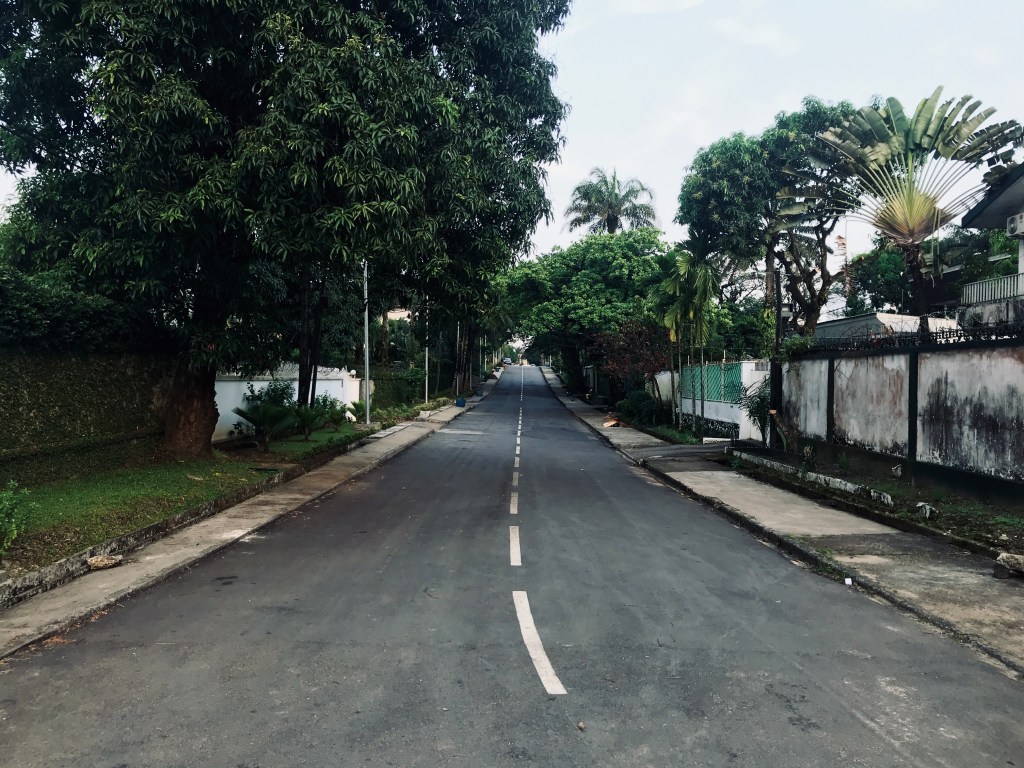
After midnight our neighborhood is empty, like all neighborhoods on a Sunday evening, and the darkness of the street is as soupy and physical as an uncleaned mirror in a bar bathroom. How different from Bellingham, where the rows of craftsmen homes stand noble and distinct behind well-lit streets of high-windowed shops; in Douala, no two structures are alike, each one overgrown and asymmetrical and touched by the stain of constant moisture and human contact. How different from Atlanta’s dominant downtown, where skyscrapers are split by well-planted rows of twisting oak trees and orderly well-washed cars waiting at red lights for their turn to move. How far from home.
***
The Chicken Place, as it is known, is relatively close to our apartment. Apparently, Cameroonians just munch on roasted street chicken every day, but this one Place is the best in our neighborhood, so we went looking for it, but the rain came. Hard. Sheets and sheets of water fell on everything seemingly instantaneously, drenching anyone caught outside, flooding the open-air sewage ditches into the street, carving out little creeks and flat lakes that motorcycles and cars wedged arrows of wake through, sending little school children laughing and crying at the real-life version of Floor is Lava as they skip over well-known paths of marginal height to avoid dirtying their pair of good shoes. A small team of footballers huddled under a corrugated tin overhang from which smoke bellowed out, each one hungrily staring at a pit of eternally stoked embers and skewered meat. That’s how we found the Chicken Place.
***
He’s just walking there, aimlessly, the old man dressed in black rags carrying his entire life in a plastic garbage bag over his shoulder. No shoes, few teeth, every sinew of muscle apparent on the surface of his skin, the slow march of a damned beggar in the midst of walled compounds with private security guards and streetlights that serve as support for tropical vines. Where does he sleep?
***
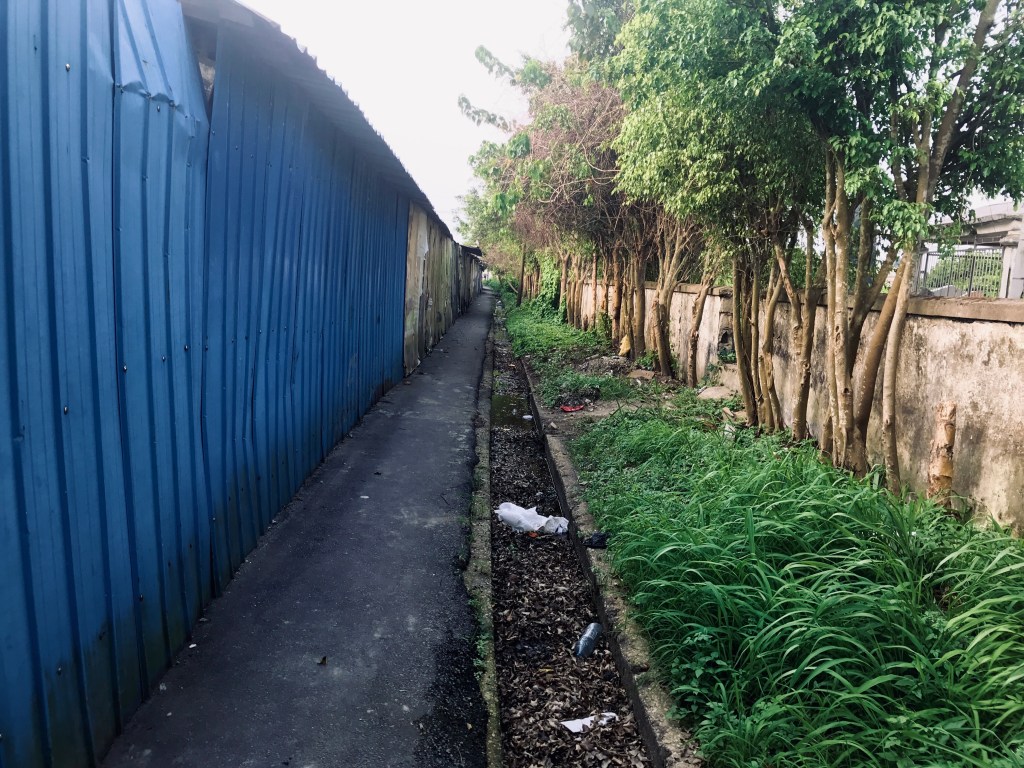
Tired of walking on the side of the highway. Taking a left instead; a slum, the kind so disorderly and improbable that Western imaginations cannot possibly articulate without first-hand observation, the kind where the street is really a trough for garbage and muck and the kids pass a rag ball like they’re Messi or someone, crying out in collective anger when the youngest boy isn’t quick enough to keep the rag ball out of the river of brown, the kind where mothers sit on rotten beams that function as the village stoop in wild garments of yellows and purples, tall and straight, the kind that could only exist between this slit in the side of the highway and the tourist-trap flower market up the hill. Pink petals dot the brown and flow out to the thoroughfare without a care in the world.
***
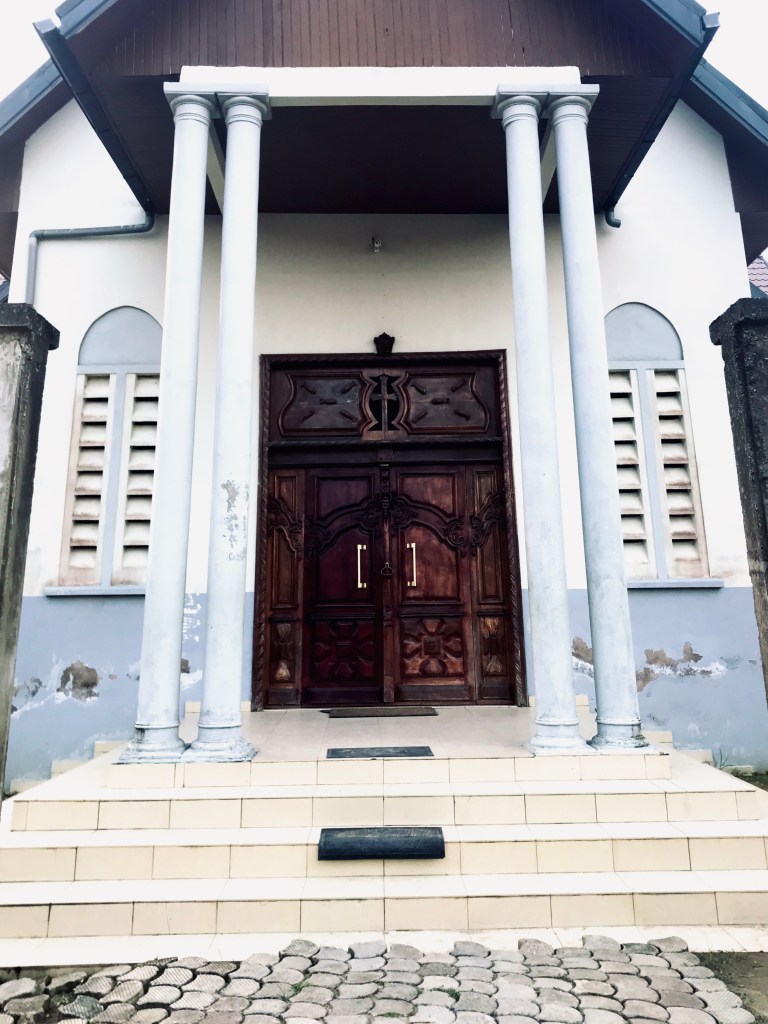
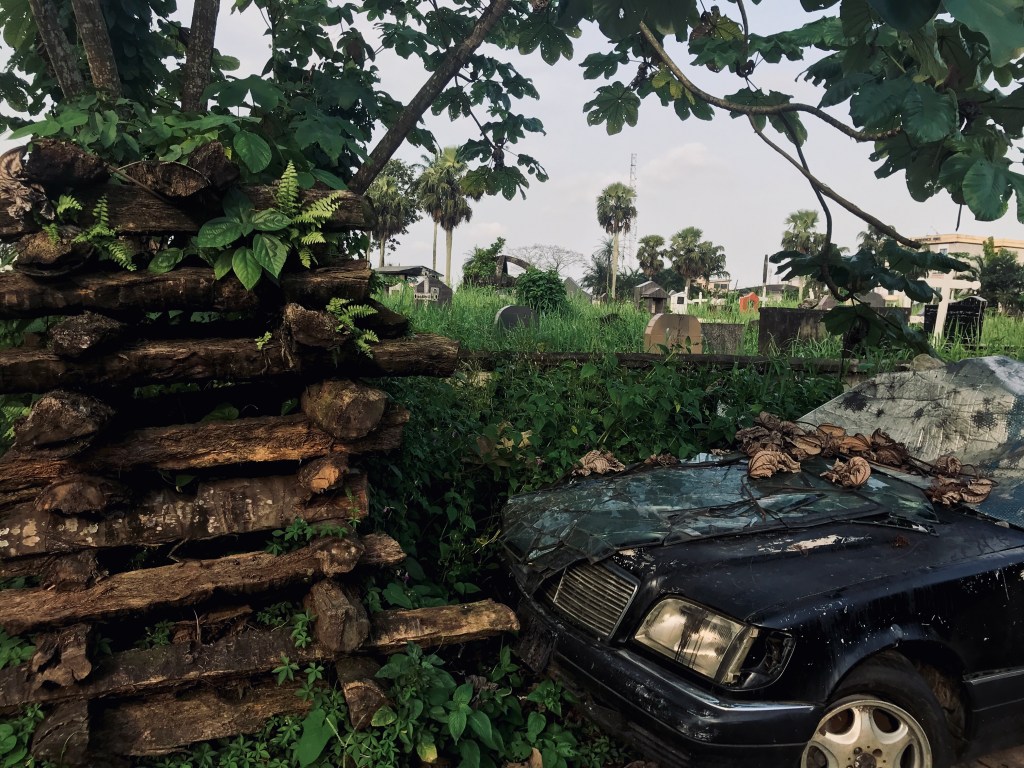
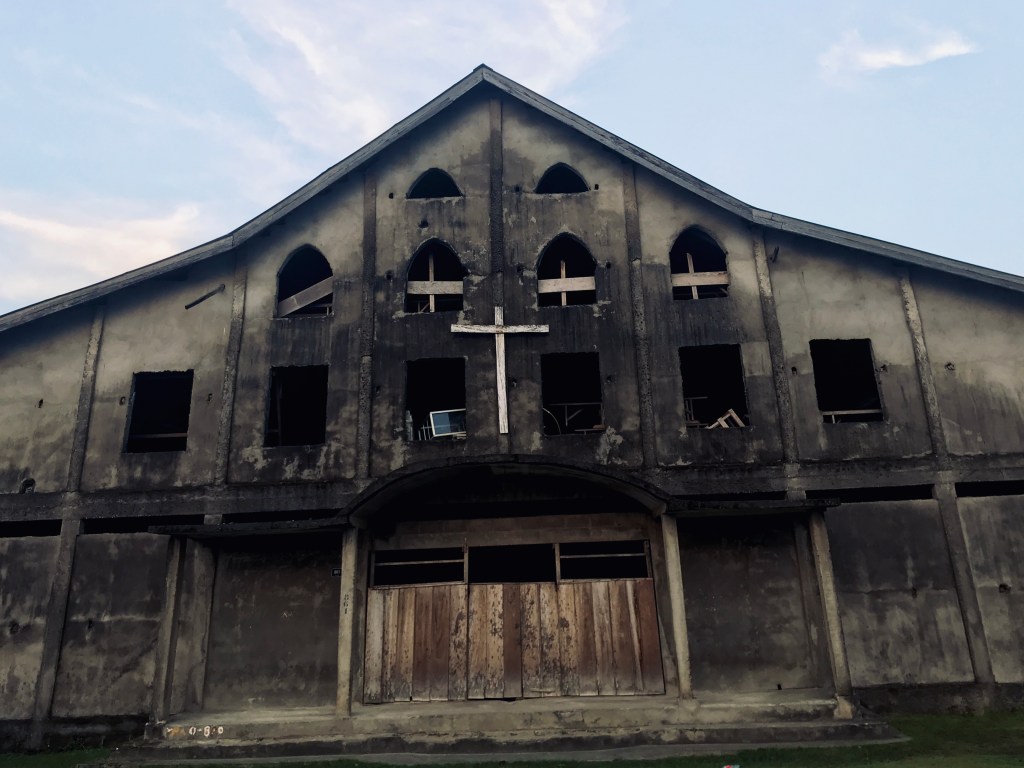
Youpwe. A small water-side neighborhood near the expat-only Equestrian Club and the Littoral Legion of the Cameroonian Gendarmerie, and a tale of two churches. The first church has this wooden door that seems cut by Father Joseph himself, the ridges and seams of skill boasted on the front door of a tall, clean steeple guarded by a lanky, almost abstract depiction of a thin white man folded up on crossbeams for all at the nearby roundabout to see. The second church is in the quite empty, slightly scary end of the district, an evangelical denomination that is the fractal of the fractal of whatever missionary first laid stone here, most of which are now rotting with black rain-punched mold, none of which support windows, all of which show dents and scars and the unmistakable blackening of fire. The cross is out of proportion and the building slants in an odd Suess-like way, but it is still in use, evident by the trodden path and the unchained front door. Empty lots of overgrown jungle flank on either side, themselves colonized by a few fortunate souls who have built shacks against the sturdy cement walls of their iglise. In between these two churches lives a football field that is emptied at sunset and dozens of pop-up bars serving whatever the hell the bartender has today and loud music coming from all directions and motorcycle taxis stopping traffic to cat call and mothers braiding their daughter’s wiry hair at dusk and seagulls scanning the nearby riverbanks for dinner and young men welding shut the exterior fuel tanks of semitrucks without eye protection and somehow, impossibly yet somehow necessarily, children taking shots at the rag ball in their makeshift narrow alley playfield. Come see the real world with me.

 certification
Leave a comment