Sunday 29 November 2020
The market.
Take a right out of the apartment building, towards the part of town white expats like us aren’t supposed to go near, and walk down the streets. You will hear it first; the soft din of energy that only the tuning of a symphony orchestra before a performance can analogize, the muse of all things human chanting louder and louder with each closing step. The engines – backfiring cabs, chainsaws revving, motorcycles sputtering and barking, grain mills humming – are the deepest current of sound, followed by human voices, their sources still out of eyesight but observable within a three-block radius. You can hear several games of rag football played in the streets by the larger-than-life commentary of onlookers and the wailing but poorly reproduced hymns, raps and odes blaring out of cheap speakers. You’re still a block away when you start to hear the human sounds: footsteps, so many that they become as imperceptibly distinct as clanking hail in a storm, and laughter, loud and without self-criticism, and bids for street auctions and announcements of quick-made deals. The sounds are always the first thing noticed in the market.
At the “roundabout”, where six roads all sloppily fall on top of each other without any streetlights in sight, take a sharp left. You will walk past the hardware stores where they wrap nails in recycled brown paper and peg the package closed with an extra piece of iron (think of it as gratuity) and electronics shops with sheets of split cables dangling in the rain and sun waiting to be tied in to cords of direct current before the next fire starts and the occasional bar for the serious alcoholics who have no desire to be seen drinking in the heart of the market, but as you pass the food stands, you will remember what your nose is for. Soupy, meaty corn kernels cooking in beans for hours produce these gassy pockets of seasoned steam that turn every head walking by; there are young Muslim men cooking meat on sticks (always trust halal meat sellers in developing world markets) that crisp with the jumping spices of six different peppers, each crackling like firewood; there are white-tiled meat shops with piles of skin and tongue and brain and hoof that always have the same smell fridges have when they’re opened for the first time in months to find a gallon of rotting milk. And deeper in to the market, as you start to walk by turning your hips, the smells of people, their sweet sweat, their perfumes and dead teeth, their nail polish freshly applied, their gasses, their hair freshly shampooed, their cigarette smoke, all of which is experienced at once and analyzed piecemeal as the sensations become momentarily clear before they are eternally forgotten.
Your hips move because each step becomes deliberate, like a dance. The line we follow snakes through umbrellas at shoulder level and small children who have somehow learned to run at full speed through troughs of humanity moving in opposite directions. If you step in something you won’t have time to clean it off your shoe, so you learn to follow the steps of the person in front of you as the person behind follows in your own footprints. Shoulders swing hyperbolically yet subconsciously as those with bags on their shoulders and backs check to make sure small hands aren’t taking risks on your belongings. To be separated from the group is easy enough to fix, as white foreigners, but the physicality of motion makes every inch of your body a landing pad for flies, hips, knees, elbows, shoulders, hair, and head-balanced parcels, meaning that every motion must become conscious, until all at once they aren’t and you find your footing in the madness.
You will walk through the quarters of the market and see the full range of human experience. The large metal-roofed building holds the butcher’s quarters, the smell so strong in the cooked assembly hall that you briefly wish for a quick, unexpected death. Young men swing machetes with brutal accuracy on hunks of flesh, cracking thick bone and pulling skin from muscle at the seams, and you will be shaken. Small Turkish-style glass booths display garishly obvious knock-offs on decades-old white mannequins, their bright plastic skin the only Caucasian color within the nearby ten thousand people (except for the occasional man with albinism – you will look twice, just like everyone else, but don’t stare). A small mountain of charcoal grows and shrinks with the speed and intricate measurement of the Nasdaq but each trade adds to the floating fog of black dust which turns people of any race into matte-black caricatures of their former selves, and in the next quarter, a prehistoric grain mill is fed kerosene and the sweat of six or seven boys who climb in and around this wicked, sputtering death trap, each one of them plastered with white fine powder the consistency of talcum, their smiles in whiteface as we walk past. You will see the occasional child running on the roofs of these stalls and turn abruptly and disappear, and you will see her again in ten minutes on the other side of the market, and you will believe in magic, if only for a moment.
And you will go back again.
***
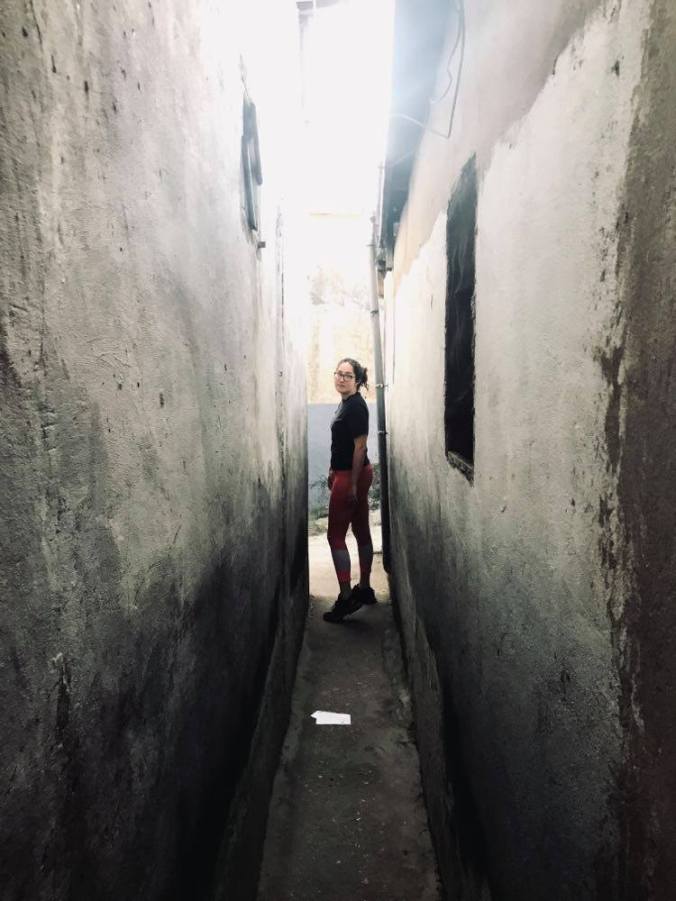
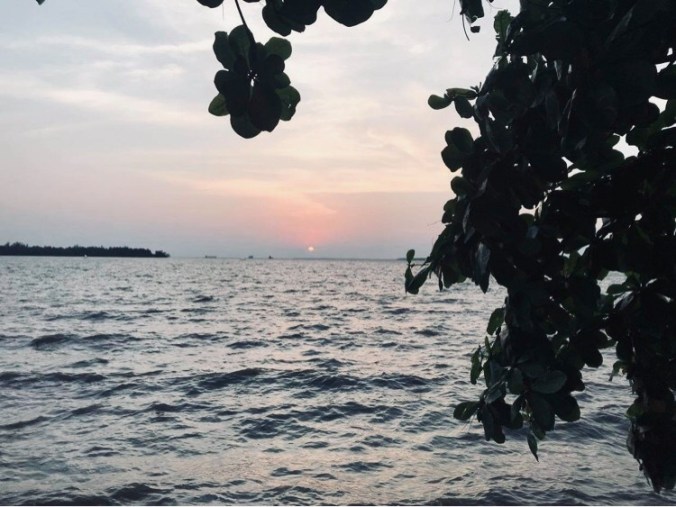
Thanksgiving 2020 was drank by the pool in our apartment complex alongside the wondrously well-travelled mentors and life-changers we are lucky to call our colleagues. None of this seems real – the proximity to other breathing homo sapiens after months locked in an Iraqi apartment, the warmth of the beer we drink, the coolness of the water, the classic rock on the speaker. I need to write about these friends and their stories.
***
I’m trying to quit smoking, again. I wrote this piece to read before I smoke a cigarette. Maybe publishing it will help make the process more real. I’ve changed the names of some of the people and edited the content here to make it acceptable for when my students find this blog. Enjoy?
…
Read this first.
I remember the first cigarette I ever enjoyed. I had tried several, stolen from my parents at one point or another, before June offered me one in 2013 on the slide at the playground near my first home, in Jacksonville, Florida. It was a Marlboro Light, before they changed the name to Silver, and I remember lying to her and saying that I smoked regularly because it meant everything to have a girl with that many freckles brush against my hand as she passed me her lighter. At the moment, I took the softening in her eyes to be an invitation into some elite club that upperclassmen at our idyllic beachfront high school would welcome me into; I didn’t weigh the quiver, the silent plead for resistance, the opportunity to turn away and be another person who could invalidate the start of a habit that everyone knew to be bad. I just saw the freckles.
And when I started smoking – not when I first tried a drag in 2010 or when I finished my first cigarette out of self-harming curiosity in 2012, but when I started enjoying smoking – everyone knew it was bad. Before June, the only person I had really smoked with was August, and that was different, because we tried everything we could and hated the taste more than the sugary apple-heavy vodka cocktails we had sneaked out of his parent’s dusty liquor cabinet. By the time June and I had started hanging out in that gang-tagged playground squeezed in between the arson-resistant government housing and my now-single dad’s house, everyone I knew had already nervously sweated over pictures of mutilated lungs and bloody spittle in health class. We probably knew someone who was dead or, worse, dying from the habit. June and the rest of our little gang all had guardians who smoked, usually in the house (though this was not the case with my family), and who had become familiar with the ugly choking of congested airways and the runny, irreversible sniffling that comes halfway between the last drag and the first drag of a new cigarette. We weren’t stupid.
What we were was young. The real damage that smoking has caused me isn’t physical, although I have lost years of my life since enjoying that first, golden drag. Smoking changes the way you look at yourself in society, in family, in religion, in relationships, in the mirror, every day, until you die. It creates a perspective that is more addictive than the constant high that the second drag never seems to quite live up to, more beautiful than the explosion of embers that flower forth from a flicked butt on to cobbled streets outside European bars, more lethal than the chemicals poisoning your heart. This perspective, that of the Addict, is what smoking engenders, and what smokers like myself must overcome if they wish to live long enough to see their children graduate from university.
The young do not understand the evolution of addiction intimately, because like all change, addiction takes years to mature and many more years to fully appreciate. The young do not understand that spritzing perfume to cover up the smell of ashen stains is the least inconvenient part of being an addict, or that taking the extra couple of steps to destroy the evidence of their rebellion by putting butts in an old Campbell’s tomato soup jar and then burying that jar in a corner of the yard is the least nefarious aspect of their new habit. Addiction is a chemical dependency, a mathematical reality, and it doesn’t go away because we are aware of its existence. Addiction is the itch to buy another pack, even if it means walking around alien streets in the middle of the night in a bad part of town, even if it means breaking another promise to stop. Addiction is a fight over the dishes that becomes a cynical gallery viewing of everything your lovely partner has done wrong in a day and the simultaneous, quiet hurt that comes when you two make up over puffy sighs and the release of physically restrained endorphins.
That awareness of addiction becomes material the first time a smoker is caught, and they must choose how to deal with their outing. August was shamed so badly by his father that he didn’t touch cigarettes for another four years until we moved in together in our off-campus apartment. Most people lash out or become defensive and loud and weirdly personal in their aggression, or at least rudely but forgivably dismissive. I wasn’t so docile: I had to be dramatic, and as the Styrofoam cup holding the soggy remnants of a half-smoked pack of Marb Lights disintegrated mere whispers of a second after I lit the lighter fluid-filled container on top of my father’s hot tub lid, burning a gaping whole through the (also Styrofoam) lid straight to Hell itself, and I grabbed a nearby plastic end table to flip it on its belly to stamp out the mistake and push the puddle of flaming gas onto a pile of recently centralized dead leaves, which also caught on fire, which also had to be stamped out despite being hot enough to melt down the legs of the flimsy furniture I was then watching slip through my hands like egg yolk, I started to wonder if all that drama was worth it.
And you know what? It was, in part. That is the beautiful part of smoking. Standing outside for five minutes after a busy rush at the restaurant, sleeves rolled up past the tattoos, making unspoken plans with your coworker to unionize the new kids and execute the management, before buttoning up that corporate-issued oxford shirt and pulling the lace of an apron over your back fat and returning to the fray, is beautiful. Punctuating a passionately proven point with a powerful, deep drag in between lines of monologue on the nature of religion and freedom with a disgruntled missionary on the streets of Lima and then extending a cigarette that’s hesitantly accepted, lit, and enjoyed all while he’s considering your point, is beautiful. That beauty crops up in those moments of commune and solidarity with the fellow damned. If I ever find myself in front of a firing line, it will be with a lit cigarette between my lips.
Most of my cigarettes haven’t been bummed off or gifted to a fellow lost soul, or flicked away after finishing a date, or dropped mid drag after a chorus of gunshots. They’ve been alone, shamefully alone, on balconies and behind gas stations on long trips and in between classes near the farthest bathroom I can reach in time. They’ve been bought with money I wish I had saved for gas or dates or a gym membership (and make no mistake – smoking is an expensive habit) but that gets literally set on fire, in my case, less than 24 hours later. They’ve been enjoyed, but that joy is always followed by regret, and that regret is always followed by just enough time for the itch to come back, and once the itch is back, you will dance around any psychological, scientific or moral argument you’ve constructed in preparation for these moments.
Which brings us to lethality. Smoking kills me and you and everyone else who tries it. I once read (probably while mindlessly scrolling through my phone, while smoking) that every minute spent smoking a cigarette is ten minutes off the end of your life. Most cigarettes – with the exception of Spirits, the rich kid’s mistake – take about 5 minutes to kill and thus kill us an extra 50 minutes earlier. When I do the math, at 10 (generous) cigarettes a day over 8 years, that means I’ve lost a little more than 5 ½ years off the average life expectancy of someone of my background. Don’t bet against the law of averages, no matter how many leathery chain-smoking grandparents you anecdotally know: if humanity makes it another 76 years, the typical white American male with a middle-class upbringing who smokes as much as I do will miss the last 5 ½ years of that story. Another way to look at it is that every pack of cigarettes shortens your life by about 2/3s of a day; if I smoked a pack a day, as I have been recently, for 4 months, I will have to round up (down?) my statistical average life shortening by another 6 months. If I continue for a year, I lose a year and a half. If I continue for a second decade, I lose fifteen years on top of what is already trimmed, and the law of averages strongly implies that I die at 56.
The real death, however, happens a dozen times a day, and it has nothing to do with a selfish desire to survive. If your cigarettes are made in the United States – American Spirits, Rothmans, Newports, Virginia Slims, or maybe pipe tobacco – you can rest knowing that undocumented immigrants are being forced by the economics of an unjust asylum application process to wake up at 2am, pick your tobacco, dry the leaves and pack them in to bales, which are then shipped to a sweat shop south of the border where little kids use their tiny fingers to make sure a formulaically-derived minimum of tobacco shavings miss the fragile paper shoots that must be stuffed if their families will one day be able to smuggle them in to the Land of the Free. If you smoke what I’m smoking, then the tobacco comes from Malawi or India, where parasites force stateless, uneducated orphans and sexual abuse victims to harvest so much of the crop that rapid-onset, endemic cancer has helped keep the average age of workers in the trade hovering somewhere short of 23. The tobacco industry pioneered the kind of full-frontal pattern of lie, deny and resupply that the petrochemical industry has perfected in our race to the end of the Anthropocene, and that pattern is paid for by the ridiculous profits that each pack of cigarettes yields. Every butt that ricochets off the wall of a dive bar and lands in a gutter exactly the way you wanted it to contributes to one of the largest sources of plastic (those filters aren’t biodegradable, friend) waste on the planet, mixing in our drinking water and our irrigation supplies and our food chain.
The real death happens when we become aware of the harm our habit causes and then argue it away, sidelining the suffering with all of the greasiness of a talk show racist who is fake-angry about crumbling statues. The real death is by a thousand cuts into the spine of integrity that runs through each and every one of us, who turn to black-and-white pictures of dreamy actors or the white lighter-toting victims of 27 Club syndrome and pretend that we can somehow overpower truth with beauty. The real death hurts worse than lung cancer, because the soft tissue of a lung can be removed and irradiated and spit up in chunks, but this death can somehow override the disgust that comes with painful, embarrassing and near-constant constipation and dehydration, impotence and night terrors. We struggle to fight addiction on the physical front lines while its spies creep into our subconscious and blow up the bridges that connect morality, ethics, and logic. We sell a front-row seat to the birth of a grandchild for the sticky veneer of a scary world made worse by the yearning for our own demise.
There is no happy ending – the last drag is always the worst. The breakthrough technology that will somehow reverse all of the negative effects of smoking will never be made, because this spiritual lethality is a feature, not a glitch. After a few more afternoons on our slide at the playground, June told me that anyone who tries a cigarette – really tries it, comes to love it – will always be a smoker, because even once we’ve stopped buying cigarettes, we’ll always crave them. That itch is never going away. Our task, then, is to discover – painfully, deeply, daily – how not smoking is in itself a resignation to apocalypse, an acceptance of years lost for memories gained, a hard bargain that was made in earnest once but need not be made again. We must see this fascination with beauty and death as the addiction it demonstrably is, develop new habits to counteract our old ones and take our lumps from what the strongest, most inspiring people I have ever met call the hardest drug to quit. We must learn to respect the hazy cloud of our addiction with all that is owed to a long love affair – it was good until it wasn’t, but then again, I can barely recall the taste on my lips.
“‘Why do you toss the filter?’ It’s like the only part of the cigarette that’s saving you, but we toss it at the end. It’s a weird question.”
- Chance the Rapper
 certification
Leave a comment