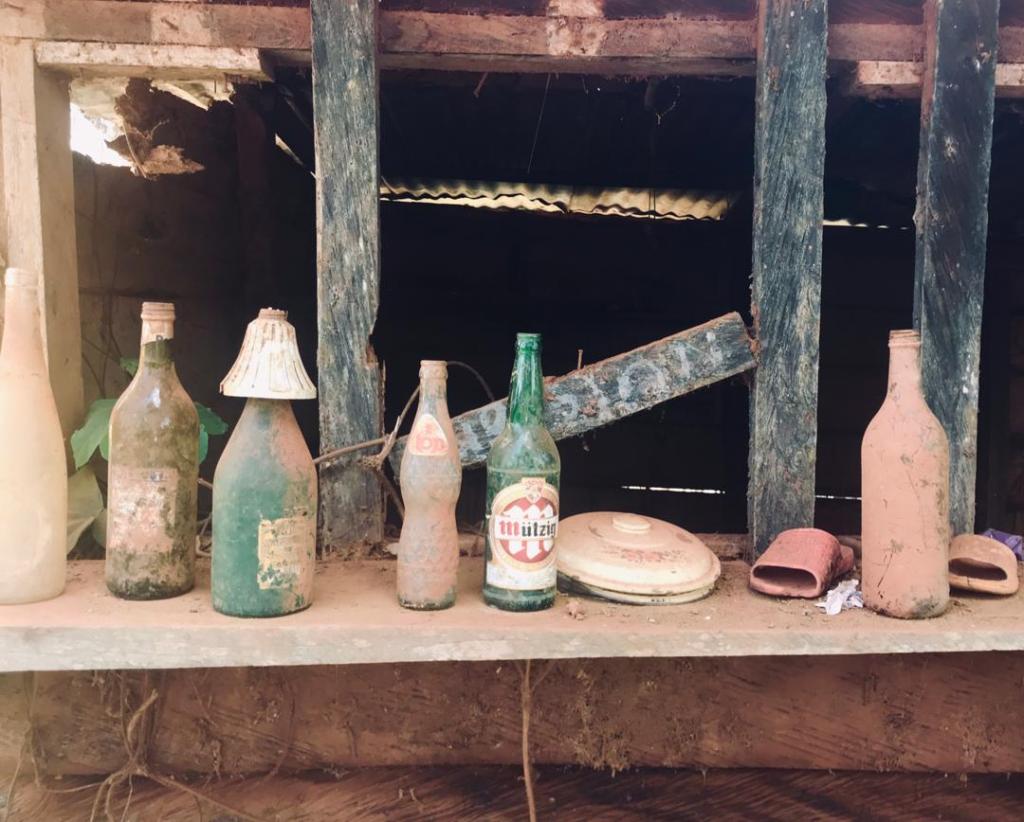
The final segment of a five-part story about a long walk.
Friday 1 January: Kribi
11:45 AM
I collapsed on a soft bed in an expensive hotel room around 1:00 AM this morning, the sounds of fireworks and beachside cheers humming through the windows. The last 48 hours have been exhausting.
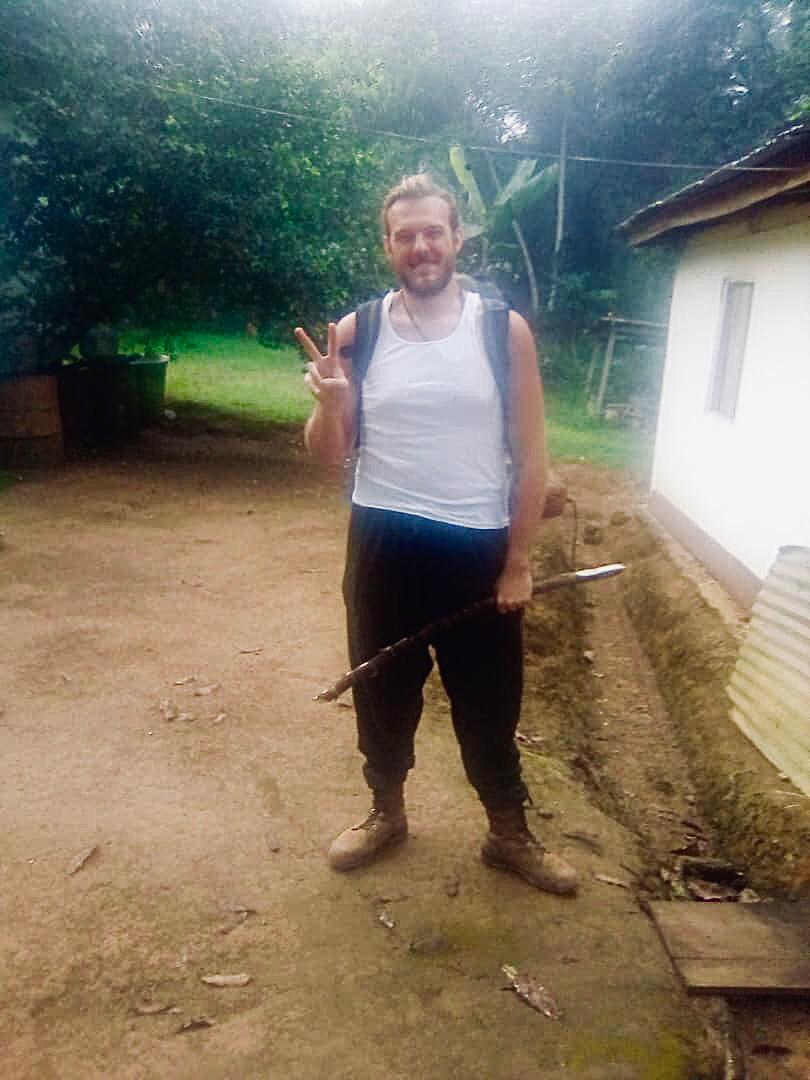
I left the worker’s lodge near Mefo early. The night before, rain had fallen heavily on the tin roof and I fought the waning light to write. Jean-Andre warmly wished me well. My goal was to reach Akom II, a town nearly 40km away and the seat of the last Gendarmerie office I would need to wrestle with before reaching Kribi.
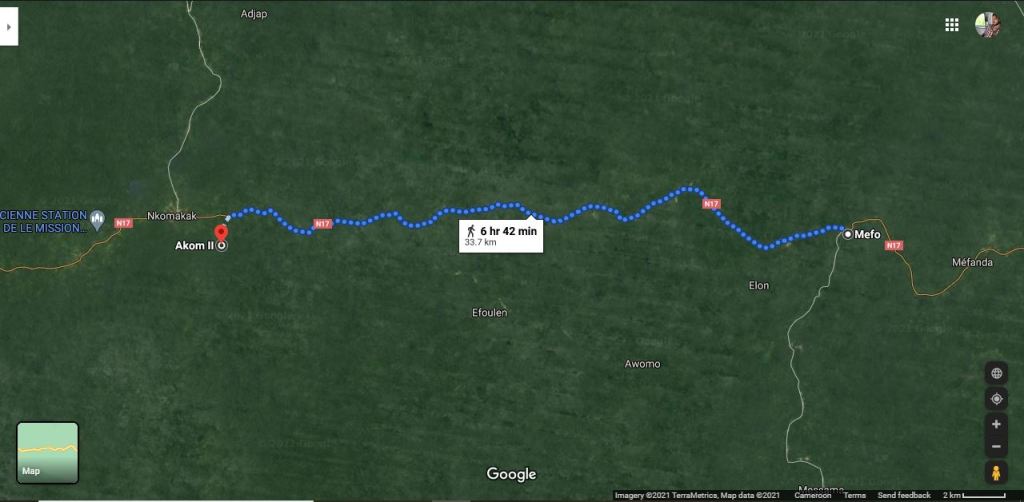
There were no clouds. The dirt road simmered in the distance, stretches of which were less frequently populated, broken up by poor farming villages that seemed to grow less and less developed with each mile. The women went to work on plantain plantations and men, if not in a drunken stupor asleep under trees, would be out cutting down the thick tree trunks of the jungle. The elderly sat on stoops batting away flies reflexively with straw membos, or whips, while the children and the lame wandered around their sun-bleached communities trying to pass the day.
The road became difficult. The softness and regularity of the dirt paths out of Ebolowa first lost their uniformity, transforming into carved-out gullies with parallel rough spines to be skillfully balanced upon by the less-frequent motorcycles passing by, and then their softness, with sharp rocks and ankle-twisting ridges jutting out of the uneven soil. I stopped looking at the world around me and spent my hike looking down, endeavoring to keep pace despite my swollen ankles.
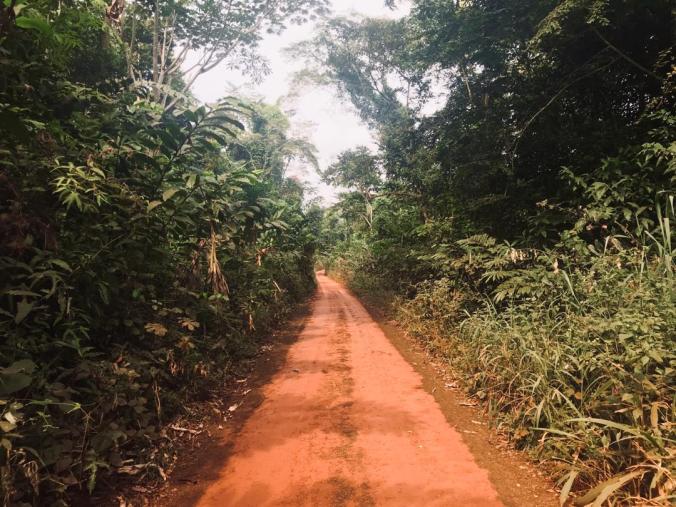
In blessed respites of tree-canopy cover, the shaded road became as soft as margarine and smooth like glass; I found myself looking up again and marveling at large, orange-and-gray lizards jumping between the lattice of broken bamboo stalks and mangled limbs shielding me from the sun. My world became purposeful: reach shade, rest feet, drink water, repeat.
The poverty became more glaringly apparent with each hour. A young boy waved hello before suddenly turning his attention to a mangy stray trotting by. The primary school student threw a rusty machete with practiced accuracy at the animal; the mark was hit, and blood spurted out of her hind legs while it tried to run away, yelling like an animal who knows she is to die. I looked away as the child hacked it to death and took the carcass back to his home. Protein.
Just as the tightness of my calves and the swelling of my ankles became unbearable, I would pass an old man missing his feet, dragging himself through the dirt, flies filling his ears. I would feel my stomach rumble and then see the bloated bellies of children, their belly buttons popping out underneath their shirts. I would wince from the pain of my sunburns and pass a woman balancing a bucket of wet clothing on her head, her face twisted by an untreated wound that has left her nose unrecognizable.
Peter Singer’s The Life You Can Save accompanied me throughout the day. I was awash with data about preventable childhood mortality and the ethical requirement of giving to the poor; I saw evidence of his arguments in every village. Nobody should be this poor.
…
I reached Akom II before nightfall. The sole Gendarmerie officer spoke clear English and was amused by my experience. He directed me to an empty warehouse where I could set up my tent on the cement floor. In the corner, the corpse of a bird was being consumed by maggots. I ate roasted fish on the street prepared by a kind grandmother under the single streetlight, fighting the flying ants that hounded my body, until the bar behind us started playing tinny, broken music at an unreasonable volume. I slept poorly. It was a rough day.
…
Water and tobacco for breakfast. My goal was to reach Fendam, a village in the Campo Reserve forest of southern Cameroon only 20km from Kribi. By accelerating my itinerary, I was shortening the time before seeing Mitsu again.
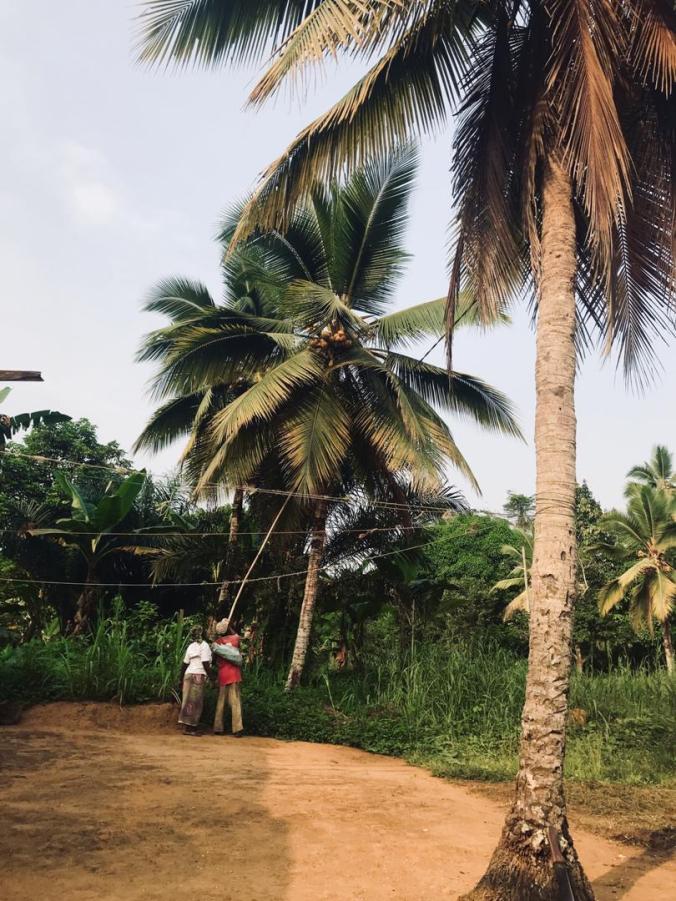
I passed Nkomakak, a small village just beyond Akom II, soon after leaving town. The road had again changed: now yellow sand covered anything and I could almost taste the salt in the wind beckoning me towards the Atlantic. On the sides of the road stood tall, spindly palm trees, creaking in the wind. A kind mother called me over and cut down a coconut for me to enjoy. She used a long pole to pry the fruit off the plant and a machete to shave away the hard shell exposing blonde hair underneath. Eyeing the exact spot she wanted to strike, her machete wavering over her head, the mother cut a hole in the fruit, not spilling a single drop of the sweet, cool milk within. She repeated this for her children and her husband, and we all drank from the fruit with greed, the juice flowing into my beard and down my chest. The family and I ate the soft white meat inside, laughing at the hungry chickens who had joined us for breakfast.
…
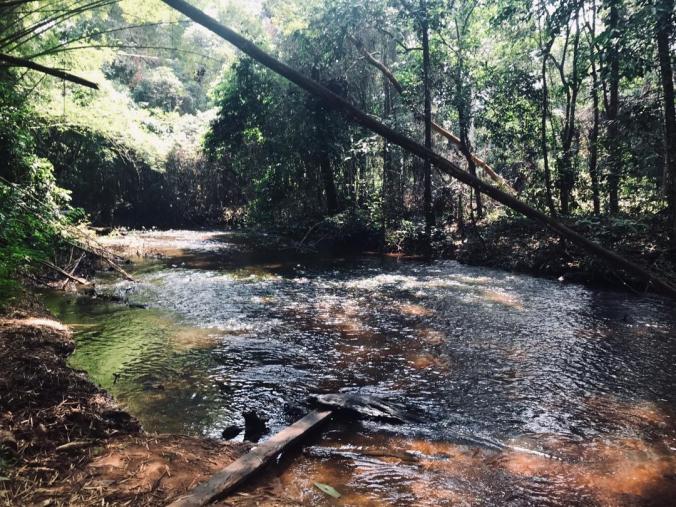
Later – my head is spinning, the heat is overwhelming, and I haven’t seen a village in an hour. My water is low. I hear a river to my side and reach it. Like the velvet rug proceeding towards the altar of a Gothic church, the river flowed into the depths of a jungle that overwhelmed the soul. Bamboo cloisters formed barreled and pointed vaults that towered over my small being, light seeped through the stained windows of translucent leaves and colorful flowers and birds darting to mate, the organ of water moving forcefully over silt and between impossible designs of life and death made flora blasted in a hymn without artist. I baptized my scorched arms and neck in the tea-brown blood of this church and sat on the leafy pews of this holy place, butterflies kissing away my sweat for communion.
…
I think I twisted my ankle. It has swollen terribly, making every step a chance to fall. I have been too ambitious – what’s new?
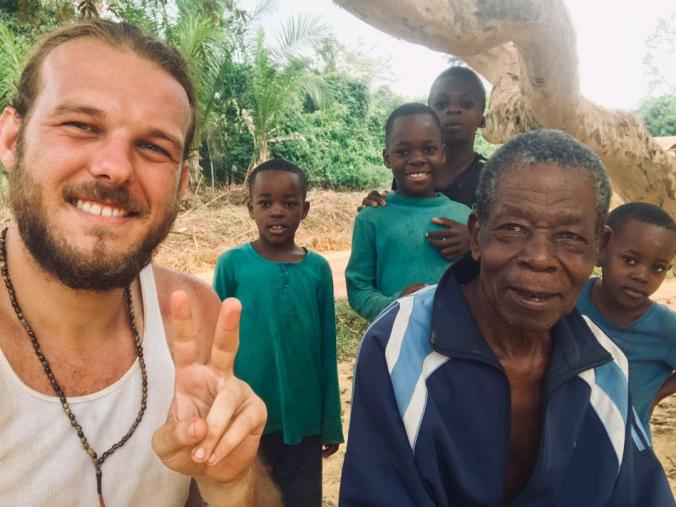
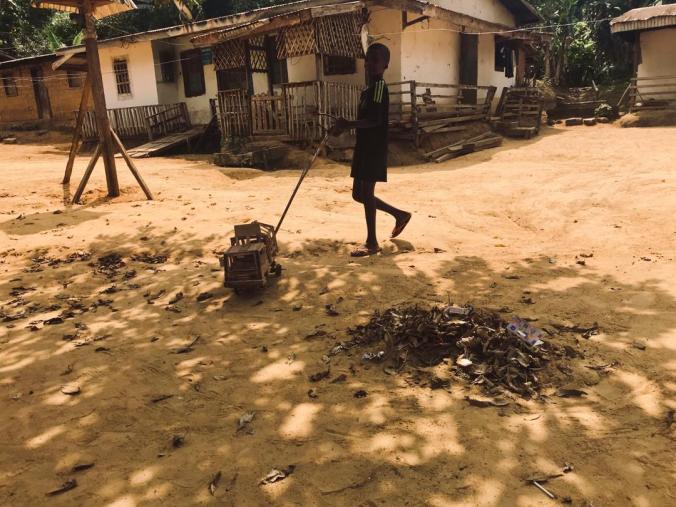
A village appears. Like others, it is mostly vacant, and I lie on a tree-hewn bench to catch my breath. When I open my eyes, the kind eyes of a grandfather are looking down. He sits next to me, and his curious grandchildren come out from behind a nearby tree to say hello. Two of the older children rush to fetch coconuts, bear-climbing up the four-story trunk before skillfully descending, and make a show of cutting open the fruit. We all drink and laugh. Another boy pushes a small toy truck made of bark and scrap wood, designed by the grandfather. I look around the village: there are decks and gates, all flush, on every home, electrical wiring smartly organized on centralized posts connecting a dozen homes and similar benches scattered about. The grandfather is a carpenter. We speak in broken French for some time as I wait for the sun to pass and continue into the forest.
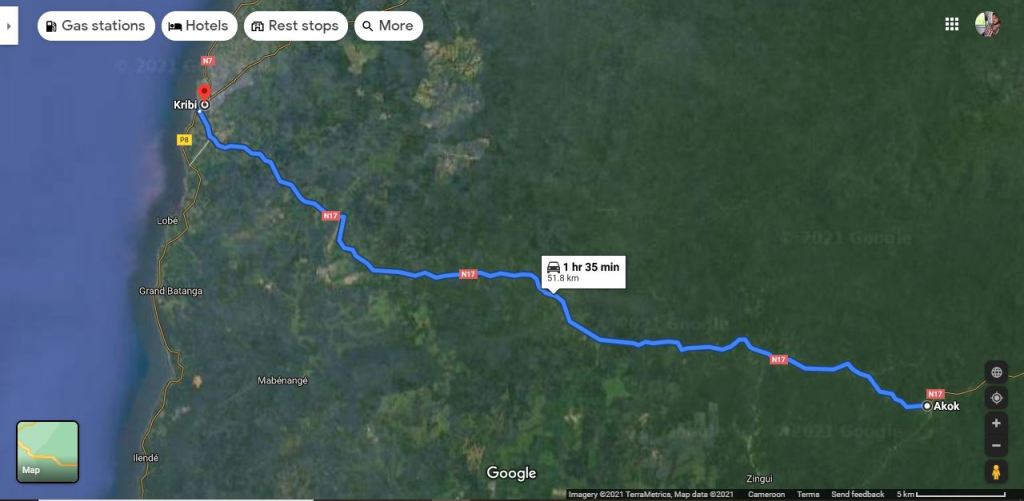
It’s around this time that I realize I’m not going to walk all the way to Kribi. The 50km stretch of road I’m on is populated only by logging camps, left vacant for the New Year. My foot is in pain and I didn’t sleep well or bathe the night before. I have two options: camp without food or water, without permission, or walk until I cross paths with one of the logging crews heading towards Kribi and catch a ride to someplace I can sleep. As I weigh my options, a Hillux carrying a bed full of supplies and rowdy men whips through the forest – my choice is made. I flag them down and hoist my way in between the four passengers.
…
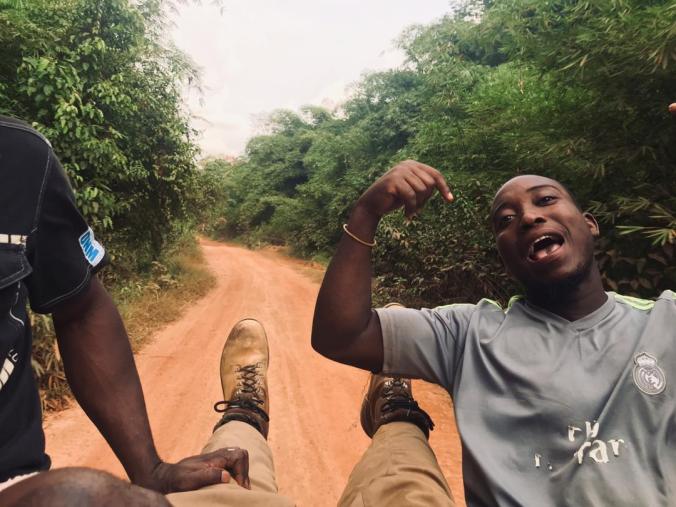
I’m exhausted, starving, disgustingly dirty and swinging through the jungle in the back of a truck. In the cab are four passengers, crammed into two seats. In the bed, the captain of the logging crew stands on the edge of the bed facing forward, his hands gripping the metal frame of the cab with silent grit. Behind him is his 30-year-old son, who is struggling to remain conscious because the third crew member in the back-left corner of the bed is feeding all of us these ketchup packet-sized shots of coffee-flavored vodka, to be ripped open by the teeth and squeezed into our laughing faces. The fifth man speaks perfect English and asks about my journey and my job, translating for the rest of the crew. All five of us are sitting on suitcases, bunches of plantains and sacks of manioc, clutching on to each other’s limbs for dear life as the speeding truck hits bumps at 60km/h and sends us all momentarily flying. We laugh and drink with abandon. We are out of the jungle.
…
My day isn’t over.
We reach a police checkpoint, one of those silly rope-gates where cops collect their bribes, and I am singled out. The cops are mostly women, and with a childishness bordering on insanity direct me out of the truck to a small wooden shack. They’re called the “Big Boss” and I need to “wait small time” for him to arrive. What follows is two hours of humiliation; the women, AK-47s in hand, take my passport and order me to flex to show off the benefit of all this exercise these past two weeks. They laugh with their fingers on the trigger and pull long swigs of beer. I ask for water to drink and they pour the drinking water on me “to bathe”, taking pictures of me to share with their friends. As their male officers sit and drink beer, the female cops collect “taxes” in broad daylight from passing vehicles, ordering people out of their cars and on their knees at gunpoint who put up a fight. Rubbing my passport on their groins and breasts, they tell me that I can go if I leave my cheri and marry one of them. I am disgusted and humiliated.
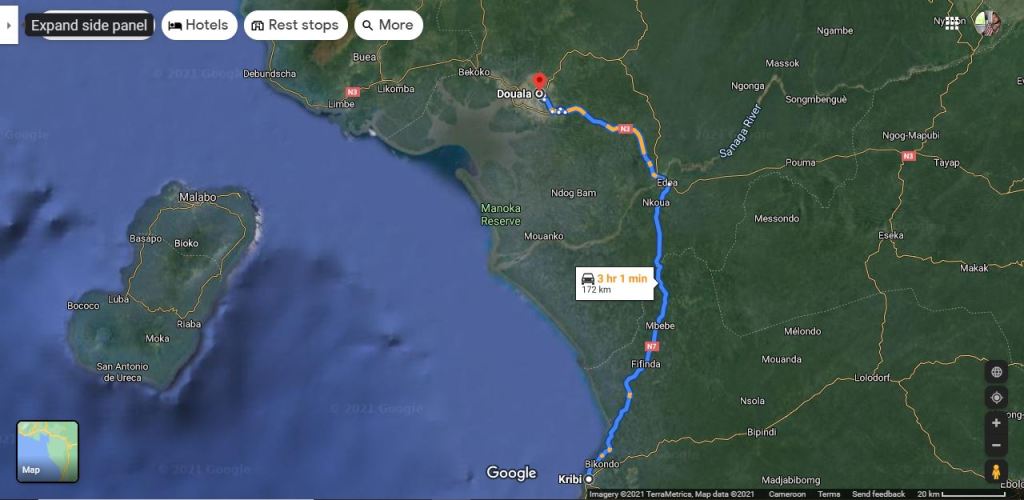
The Big Boss never arrived. Instead, a neckless mass of a lackey showed up and directed me (again at gunpoint – this was getting absurd) in to his car. No one would answer any questions about what was going on. He took me to a restaurant across the street from a police office in Kribi, where I finally saw the Atlantic, and offered me beer and food. I refused; something about being harassed at gunpoint sours my mood. The matron of the bar made eye contact with me while the neckless wonder wasn’t looking, and I imagined that I saw sympathy.
Finally, I was steered across the street to the office of the Big Boss, Vilek. He’s a large man, similarly neckless, with an appropriate amount of shiny rings and flashing jewelry befitting a public servant of his esteemed office. The interrogation lasted two hours; Vilek wanted to know everything I’d done for the past few years, unconvinced by my explanation of why I did this hike. He told me there are lions in the Campo reserve and I could have been eaten. My exhaustion and deprivation made me more deferential to his authority, and as he slowly wrote out four pages of notes on blank printer paper and decided whether or not my father’s pre-college education was worth recording, I struggled to stay awake. Nearing midnight, he asked where I was going to sleep, and I told him that my plan was to sleep in the home of the young men I rode with before his officers forced them at gunpoint to pay a bribe and leave me behind. Vilek pointed me to a dirty spot in the outdoor holding cell of the police station, on the ground, and said that I could sleep there, as rats scurried over human shit in the dark.
He wished me a happy New Year and left, almost forgetting to return my passport until I reminded him. An honest mistake, he said.
…
I waited for him to leave, pushed upon the rusted gate of the pen and just walked out. I jumped on the back of a motorcycle and wove between stumbling masses of drunk partiers, fleeing the Atlantic in my hair. I checked into a hotel, took a long shower, and fell asleep to sounds of joy in the dark.
…
16:15
Vilek spent the better part of the interrogation trying to understand my motivation for taking this hike. I had to articulate, properly, what I was doing and why.
I told him that the biggest reason was because I wanted to see what Cameroon was really like. Many of the students at the American School of Douala are unaware – by their own admission – that most of the roads in Cameroon aren’t paved, that many houses don’t have cement floors or air conditioning, that manioc makes up a regular if not singular component of many people’s diets. I’ve just started working and living in Cameroon, and I wanted to have a better idea of what life is like here, both to be a better teacher and a better neighbor.
Why walk? I could have seen the majority of the things I saw in an air-conditioned car, on the back of a motorcycle, or even on a bike. And again, my answer is that the average person in Cameroon doesn’t experience their country this way. There is much less vehicle traffic going from Ebolowa to Kribi than from Younde to Ebolowa, and yet the former stretch of road is much more heavily populated. This means that travel between communities on the road to the ocean is much more rudimentary, much slower, and much more difficult. Driving through these communities would be like driving through a nature preserve – voyeuristic, detached, cold.
Neither of these reasons take away from the fact that, as a white American male, the degree of privilege separating me and the people I’ve met these past two weeks is lessened. I only walked this path once – I don’t have to bathe in rivers, grow my own food to eat, or make extremely low wages feed a large family. I could wait for a ride to come along and remove me from my experience at any time, as I ended up doing at the end of my walk. I can’t say for sure, but the belongings I carried on my back were probably more valuable than the sum possessions of most of the people I stayed with. No walk will change that glaring injustice.
For the many people I met, this hike was a strange, hilarious, and completely unexpected part of their lives. I met children who have never seen a white person in real life, or who had never held a smart phone, or who didn’t know that white people could use a bucket to bathe or sleep on the ground. I met mothers who believed white people never ate manioc, fathers who told their sons to “sweat like the white man,” boys who saw a male shake the hands of females and speak to them with respect, girls who met a foreigner who did not act like the old colonial masters of Cameroon did and wanted le noir pour le blanc. I showed people a map for the first time, and showed them where they lived. I taught people English. And despite the labor, climate, health, education, and equity-related conditions that would have made me lose sleep at night five years ago, I was continually met with kindness, hospitality, brotherhood and grace.
 certification
Leave a comment