Friday 30 August: Day 50
Mitsu’s 50 Day Update
It’s probably a little too on the nose for an only child to say this, but I definitely have a self-centered streak. I’m not proud of it, and I think my parents did a pretty good job of beating this ugly character flaw into submission from a young age, but when I’m particularly stressed, or tired, or just plain frustrated, I often process my complaints from a “why me?!” point of view. And to say that things haven’t been stressful, tiring and frustrating for the past 50 days would be a lie. Of course not consistently, and of course not without respites, bright bursts of relief and beauty. But, without dwelling too much on the negative or turning this into one of the (many) bitching sessions Chris has had to endure recently (including me poking him awake again and again to say “and ANOTHER thing”), I think it’s safe to say that for better or for worse, we had very little idea of what we were getting into when we agreed to come here. Sometimes it feels a lot like it’s for worse.
But then, at the end of a long week, after days full of petty frustrations, two students perform a dialogue. Well, a class full of students perform dialogues. Some of them are funny – two friends fighting about how one always copies the style of the other, ending with a melodramatic “I HATE YOU,” a move clearly picked up from the Turkish soap operas that are popular here. Some of them are aspirational – students pretending to be a doctor and patient, a preparation for these two girls who will soon take off to Suli to start medical school. But one of them is different. One girl is clearly from a conservative family, with a headscarf that actually covers her head and neck, unlike many of the girls’, which are clearly just a fashion accessory and slip off their heads halfway through class, and the other comes to class a bare head and dresses like any American high schooler I’ve ever seen (admittedly, a high schooler in November, with shirts that reach her elbow and long pants despite the mercury reaching 120, but still). The girls perform a script in which a psychologist goes to an IDP (Internally Displaced Persons) camp and interviews a woman living there. She asks about the woman’s motivation for moving to the camp, what her experience was like there, and what she saw in her home city. It’s heartfelt and honest, it’s well-written and the girls’ excellent pronunciation and delivery earn them a well-deserved round of applause at the end. It hits me days later as I’m grading the presentations that one of the girls told me that Kalar isn’t her hometown, that she and her family moved from another part of Iraq to Kalar five or six years ago. It hits me that this wasn’t just some story, that the reason she was able to explain the motivation for why someone would leave their home and their lives to come live in a makeshift settlement in a strange land is because she probably remembers the moment her family made that decision. It hits me that she is one of the many, many Iraqis who, during the invasion, or during the ISIS offensive, was forced to flee her home, probably losing family and friends. And it becomes a lot harder for me to think about how hard moving here, working here, trying to thrive here, is for me. It becomes a lot more clear that the things I’ve been perceiving as thoughtless or inconsiderate or small-minded need to be put in perspective. That viewing this experience through a selfish lens, a lens I as a westerner, as an American, as an only child, am very comfortable looking through, is helping nothing. That just like all of my friends here orient themselves towards Mecca five times a day, I need to find a way to orient myself in this new culture, because the compass I brought with me is making me feel lost.
A big part of this reorientation process is about how people show their appreciation for each other here versus what I’m used to. It might be very millennial of me to say this, but I’m a pretty big believer in the idea of love languages, the idea that different people show their affection for those around them in different ways. It’s becoming clearer and clearer to me that the interpretation of the different love languages we talk about in the west – touch, time, gifts, words, and actions – don’t apply across every culture, or at least are applied in different ways. Touch is an obvious one that deviates in a religiously conservative place like Kurdistan – while you sometimes see young couples holding hands in the street, students were shocked when I said it is totally culturally acceptable for a husband and wife to kiss in public in America. To me, a clear expression of loving actions has always been thoughtful actions – thinking about how your actions will have an effect on the people around you. The calculus here is somewhat different. For example, I learned this week that if a family learns that they will have visitors that night, the women in the family are expected to drop whatever they’re doing, even if it’s their job, and rush home to prepare an elaborate, 6 course Kurdish meal. This means most women feel they shouldn’t commit themselves to being out of the house after 3 or 4 PM, because more likely than not, they will have to excuse themselves often to help their mom cook. The Kurdish way to show their love is to spend hours slaving away over a hot stove in order to prepare a huge meal, a meal that, by the way, most women will hurriedly eat away from the visitor and from air conditioning, in the hot kitchen, before they do all the washing up and serve tea to the laughing men in the cool living room. The time and energy and effort they put into this endeavor is a beautiful, delicious gift, and a gift they love to give.
Contrast this to Japan, where people almost never entertain at their house, because they know that their hosts will have to take a lot of time and effort to prepare the house for their arrival. The Japanese way of showing love is to say (but of course not actually say) “I will do nothing to inconvenience you or make your life harder. Let’s go somewhere where we can both relax and enjoy ourselves without worrying about who will do the dishes afterwards.” The American way is somewhere in between – we give our love to our host by bringing the most expensive items, like the bottles of wine, or asking the host what dish they haven’t prepared yet, and bringing it with them. Is as if we’re saying “we’ll do what you don’t want you to do because you’re going through all the trouble of hosting us.” It’s not that any of these expressions of love are better or worse than the others. It’s just that learning how to give and receive love in another language – when there is also a literal language barrier – is a hard process. But when the times are hard, it’s important for me to remember – it’s not an absence of love. It’s an expression of love that I don’t understand yet. I’m excited to learn.
Saturday 31 August: Day 51
I need to take a minute to talk about Chaman.
I met Chaman on my first day of class. She’s a civil engineer who was in the process of managing an apartment complex construction when she fell and broke part of her back. For forty days she sat in a hospital bed and tried not to think about what this meant for her career, her family and her future. She decided to learn English.
Well, that’s not entirely true. Chaman’s English is about as good as mine. She’s quiet and confident and mischievous, almost; I ask my students to share a new word every day, and Chaman’s recent additions include “heresy,” “nihilism” and “unorthodox.” She and her sister read manga and love Japanese culture, so when Taro was here she lost her cool and inundated him with questions. In pretty much every way she’s the perfect student.
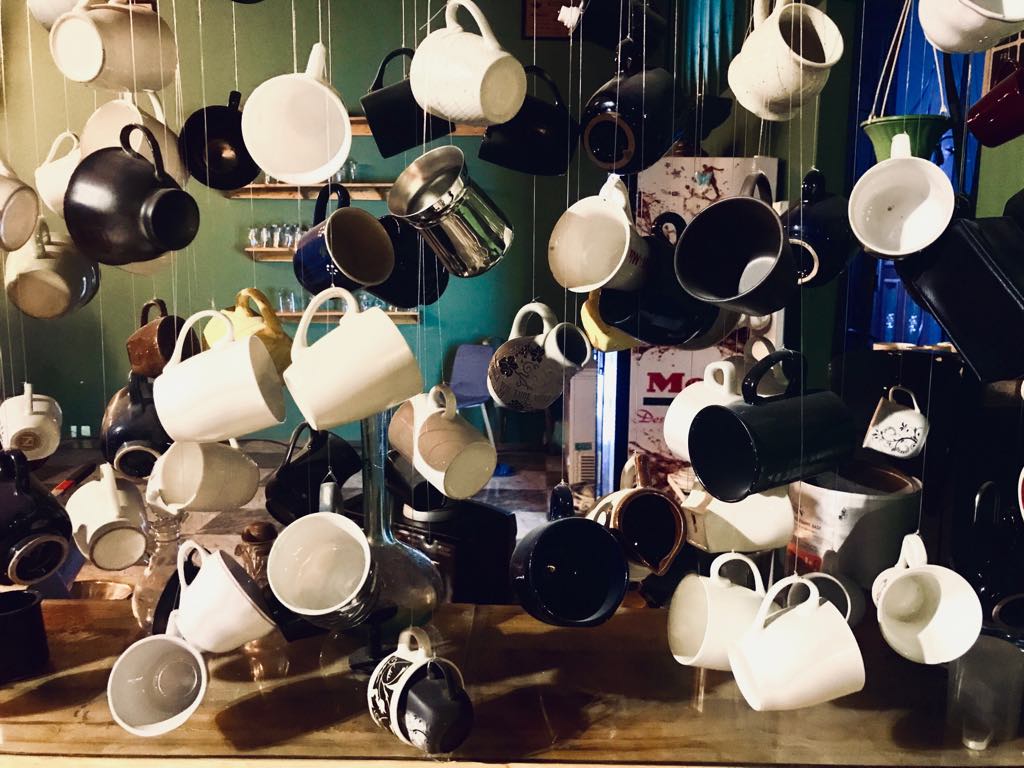
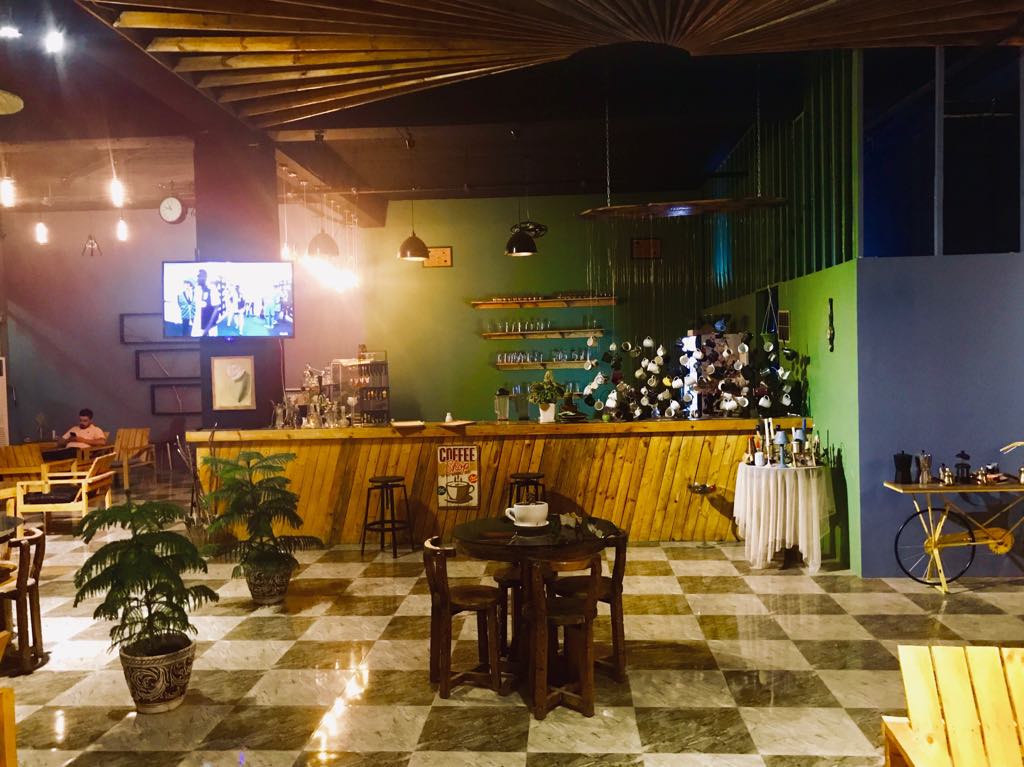
So we asked her to teach. She now teaches a single entry-level English class every night and I can hear her passionate discussions and practically see her spindly arms wailing about through the walls. It’s a huge transition for her – she’s never taught before, and despite her natural gift for leadership she’s nervous about having such an impact and a responsibility on her students. Last night Mitsu and I went with Chaman and her family to the “hip” café in town, AC Rest, to talk about the nature of the universe, and it was a celebration of everything good in life. I don’t know why you’re so nervous with your students, friend, because you’ve already taught Mitsu and I a lot.
“dada” – sister (term of endearment)
Sunday 1 September: Day 52
It’s late at night. We just finished our last classes of the day. I was in a rut because all three of my back to back to back classes ended later than expected and I sat outside in the cooling night air waiting for my partner in crime to leave the office so we could lock up.
A pair of small eyes are staring at me through the dark. They hover in place as a tail swings in to the light of the café steps, long and slender. Like a shadow the small kitten comes within arm’s reach and purrs.
Most of the cats we’ve met here are “garbage cats,” as Mitsu says; haggard, predatory, scared and smelly animals that creep through the indoor bazaar hunting rodents and avoid humans at all costs. Unlike the stray dogs we’ve met, which move from meal to meal like junkies looking for their next fix, the stray cats we’ve seen are precise in their movements, always keeping one eye on potential threats and another on whatever catches their interest at the moment. We always see at least one cat on the way home and thus initiate the ritual: Mitsu adopts a sing-song voice, approaches the lost soul with a motherly caution and speaks to the feral animal with the comfort of a school girl. Usually I make fun of her, fall in love with her a little more, and we continue on our way.
But tonight, the kitten – maybe one year old, gray and white, dangerously thin – comes over from some scritches. He’s wary, but after feeling my fingers between his ears he kind of collapses in my lap and demands my attention. I’m sold. Mitsu looks confused when she sees me staring in to my lap longingly but then sees that happily dancing tail and without any need for discussion or explanation our goals are aligned.
As I pluck long strands of grass out of the dirt to distract our friend, Mitsu hurries over to our burger guy and comes back with a steaming chunk of cooked meat. We take turns breaking off chunks of burger while trying to pick up the kitten and put him in my backpack, but he’s on to us and won’t have anything to do with it. Ok, so maybe we had some serious questions to answer about keeping and caring for our potential pet, but if you could have seen this guy you would have abandoned reason too.
Since leaving the States for the first time I’ve come to believe that different cultures can be understood in part by the way they treat their strays. The Turks worship mutts lounging in a busy intersection, the Austrians have a welfare system in place for runaways, the Ecuadorians give them free reign inside their cathedrals – surely these facts say something about the soul of a society. So far, it seems like the Kurds are completely indifferent. Answer this question and I think we’ll be a little closer to understanding this place.
“pshila” – cat
Monday 2 September: Day 53
“in 20 years from now, Kurdistan will be chaos. Everything will fail.”
As part of our new approach to classes, Mitsu and I have been interviewing all of the students in our Pre-Intermediate (Level 3) and Intermediate (Level 4) classes. I teach the Level 4 students, so I’m interviewing Mitsu’s Level 3 students before my three classes in the afternoon.
One of Mitsu’s questions is, “What do you think Kurdistan will be like in 20 years?” and most of the answers have been overwhelmingly positive, if not overly simplistic. Most students say that the general educational quality will improve, that the standard of living will increase and that the politicians will become more honest. Some of her more advanced students have suggested that a major highway will be constructed through the mountainous region between Sulaymania and Hawler, avoiding the traditional route through violence-prone Kirkuk and the Disputed Region. Other students have talked about the coming cultural liberalization, that the influx of Western tourism, media and finance is giving women more freedom and will make Kurdistan an oasis in a culturally traditional region.
Our students also acknowledge the challenges. War and corruption were the two most cited threats to the future prosperity of Kurdistan, along with waste management, pollution and the drying up of historical water sources. While some students are excited about the changes they see in the culture, other students see a traditional way of life being eroded by foreign influence that is threatening the core of Kurdish identity. And while talking about these subjects requires a more-than-basic understanding of English, I couldn’t help but think that at least a few of the students who didn’t have an opinion on their country’s future were already affected by the invasive apathy that characterizes Western society.
In general, students think that things are getting better, further confirming my suspicion that our generation, globally, is ready to put in the work to make up for the damage our parent’s generations have left us. Only one student out of sixty three, the one I quoted at the beginning of this entry, expressed grave cynicism. I take this as a sign of hope.
“hiwa”- hope
Tuesday 3 September: Day 54
Imagine being born in the dark. Not “backwards savage dark” in a place that’s never seen a power grid, but a modern city holding over 7 million people whose lights have gone off. Your government has shut off the city’s streetlights to make it harder for the Iranian air force to bomb the weapons depots sprinkled between hospitals and schools, but even during the harsh, omnipresent blaze of the afternoon all of the electricity that powers air conditioning, refrigeration and stoplights has been shut off, redirected to the War Effort.
So when you are born, as your ears touch the dry hot air of the world for the first time you hear a distant explosion in the Real Dark – the darkness that comes with regression, of light lost, of organized blindness. Your father checks the window to see where that damn ambulance is as your grandmother, aunts and older sisters take turns prostrating at the feet of your mother begging God for your arrival.
A knock on the door startles everyone – it is the driver, who says he had to sneak around a military checkpoint taking advantage of the chaos to rob anyone who still has a car, and as your uncles left your fragile mother on the stretcher, the smell of burning tires and kerosene generators puncture your reality.
The hospitals in Baghdad are overcrowded and your family is concerned that a runaway infection will end your short life before a bombing run gets the chance, so they put your mother in the back of the furniture lorry-turned-ambulance and take you to a private clinic outside of the city. Before the war, driving through Baghdad traffic was already a nightmare; now the bombed roads and brutal checkpoints make the journey a jigsaw puzzle of risky calculations and fast decisions. The Dark is still here: the driver can’t turn on the headlights and must instead rely on the light of the moon, as the ancestors did to travel across the world. The women surround your mother in the bed of the truck and the men clutch handguns under the fold of their tunics and beg Allah to let just one beautiful thing happen in the midst of so much ugly.
***
Thirty-nine years later, I met Herish. He’s one of my students and he invited us over to his family’s house to break bread. Over grilled fish and okra soup and fresh naan we learned his story. His father, an adjudicator of community problems, moved to Kalar from Baghdad following the unholy Iran-Iraq war of the 1980s and built a construction company to fix all of the roads destroyed during that struggle. Herish’s father passed away a few days before his son was to be married, and out of respect for his father the wedding was postponed for a full year. Tomorrow evening, Herish is finally getting married.
Not everything born in darkness is doomed. Herish and his family are proof.
“tariki” – dark
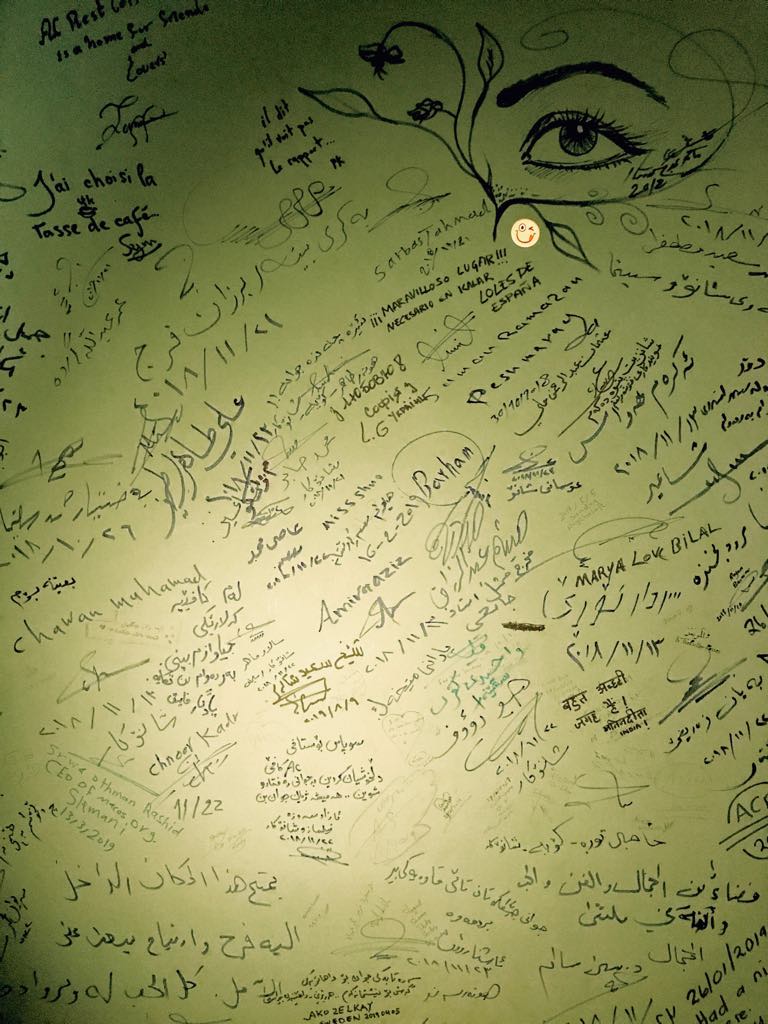
Wednesday 4 September: Day 55
Dear Mitsu,
You asked me to write about the physical appearance of the people we’ve met in Kalar. You noticed that I’ve avoided describing people like I describe our daily events, and of course you know why – they’re not objects of interest, but instead have histories and fears and souls and the risk of disrespecting Them is pretty damn scary. But you’re right, because I do see that there’s a Them and there’s an Us and the difference should be acknowledged for it is real.
Kurdish people are not white. Their skin ranges dozens of hues and casts, just like ours, but occupies a completely different range of the color spectrum than ours can. There’s the softer white color, almost Scandinavian. There’s a darker, tanned color like Central Americans. One of my students looks almost exactly like Jackie, my brother’s Cuban-American wife. There’s a caramel, creamy color like light-skinned African Americans. There’s an “olive” skin pretty unlike any other color I’ve seen in my travels: tanned, a slight twinge of green, and a sparkling, clear complexion. The lighter-skinned “white” people I’ve met have all been Arabic, no Kurdish, so while my skin color doesn’t stand out in Kalar, it’s not because I look like a Kurd but because there’s so many Arabs here that the diversity lets me blend in a little bit easier.
Everyone’s hair is black or very dark brown. I have the longest hair of any man I’ve met. Most men keep their hair short and meticulously cropped, visiting a barber at least once a week and often more frequently than that. They mix their short, straight hair with stylized fades and dye to have streaks of blonde or even auburn, and they make their hair straight and shiny with hair gel and mouse. As everywhere else, women’s hair is much more nuanced. Uncovered, it’s often straight and laced with so much product that the average uncovered female head looks more like a modeling feature than any other population I’ve seen.
Seeing an uncovered female head is rare, however. Most women my age show their maturity by covering up with a hijab (the word for “scarf”). Rather than diminishing self-expression, the hijab adds another dimension to style, as any woman here will tell you. Complimenting an outfit with the right hijab is a fashion essential and the variation between different women is simply stunning. I have students who wear a tight wrap, showing their face in a tear-drop shape, that is so carefully wrapped and pinned that it seems like a team of artists spent the morning putting the look together. Other students wear the hijab loose, made of stylish silk in a hundred different colors and patterns that compliments their manicured bangs. I’d say that most of my female students wear a ton of makeup, which makes sense if, as Mitsu says, the face is the only part of the body that people can see.
Clothing-wise, seeing t-shirts on women is incredibly rare and seems to be frowned upon. Most of the time women wear loose fitting dresses with skin-colored stockings or light, breathable socks. Exactly one of my students wears a naqib, the long black gown that makes the face look like a clamshell and covers every other inch of skin. Even the hands are covered in long black gloves. The other 99 % of my females students will wear jeans, dresses that go to the floor, dresses that rest near the knee with tights, blouses and pants or stylish light jackets. The usual compliment of a colorful scarf means that Kurdish women are generally more “style-conscious” and diverse in their outfits than, say, Tampa, FL.
Men everywhere dress the same. Kurdish men wear t-shirts, dress shirts and pools with jeans, slacks and trainers. There’s a traditional Kurdish outfit for men, the jili kurdi, which is a collar-less shirt under a loose, open jacket, a pair of extremely baggy pants made with the same material as the jacket, and a sash worn around the waist, usually in a floral design. Among old men the jili kurdi is pretty ubiquitous and every guy seems to have a version of this.
Finally, men and women wear shoes that satisfy the same function – easy to put on and take off. Inside any place with a carpet one must take off their shoes, as well as when one is praying or eating. A lot of men wear either sliders or dress shoes with heels that are perpetually broken in and folded in on themselves. Women wear flats or high heels, just like anywhere else.
The worst thing about Kurdish dress is that the rules are pretty inflexible, so that when its 130 degrees outside you can’t wear shorts or tank tops. That’s probably one of the reasons people haven’t gone out during the day while we’ve been here. But we can tell that the fashion has changed so much in a very short period of time, to the point where the generation gap is almost disorienting. In a decade, what the people of this place look like and wear will be unrecognizable.
“jili kurdi” – Kurdish wear
Thursday 5 September: Day 56
Finally, after a near-relentless week, we have finished the exit interviews of every student in our Pre-Intermediate and Intermediate classes. Every 15 minutes of e=our free time has been spent asking our students the same list of questions, evaluating their comprehension and fluency, and giving earnest and sometimes brutal feedback. With these interviews we can track progress (by comparing results to an intake interview), have an objective standard for passing and failing a course and put together “student profiles” for future classes made up of returning students.
It’s just a lot of hard work.
“Chawpekawtn” – interview


 certification
Leave a comment