Friday 11 October: Day 92
The American betrayal is dominating the headlines.
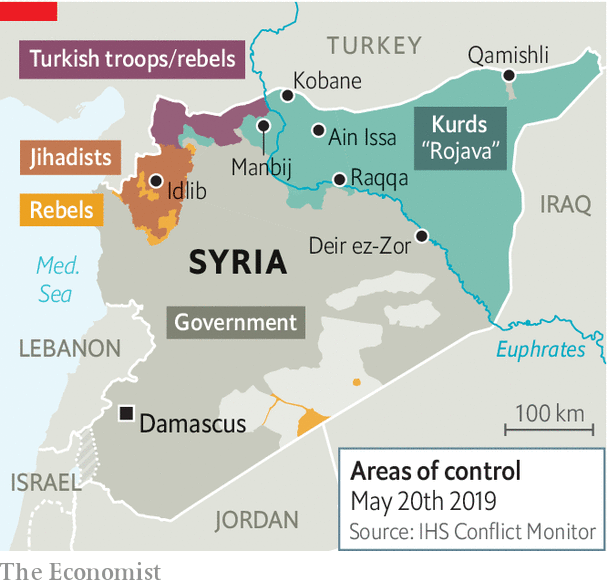
Within 24 hours of retreating from Syria, US positions are being used by the Rojava against a Turkish onslaught. The Kurds are perhaps the most effective guerilla force in the world, but are armed with old weaponry and mortars. The Turks are using American-made NATO warplanes, missiles and artillery. While the PKK may relieve some of the pressure on the Rojava when they inevitably ramp up their operations in Turkey, forming a potential fifth column against the genocidal Turks, a similar dynamic is happening as I’m writing this: Kurdish-maintained prisons holding captured ISIS fighters are being abandoned, and ISIS is now regrouping.
The situation we are witnessing unfold before us is the worst possible scenario for the Kurds, the US and NATO as a whole.
The Kurds are being reminded that statehood is an illusion. Northern Syria was a fully-functioning state (much like Somaliland in northern Somalia or Taiwan in China) with a legislative body, schools, a police force and infrastructure projects. The region, known as Rojava, was as safe haven for liberal democracy; women and men shared the responsibilities of governance, peacekeeping and family, a remarkable feat in a conservative region made more astounding by the difficulties inherited from a costly war against ISIS and the Assad regieme. It pains me to write in the past tense, but as of the time of this writing, the Rojava state has already been hewn apart – journalists are being pulled over and executed, suicide bombings have resumed, children are dying, crop fields are burning. The only truly Kurdish state, free from the corruption that plagues its neighbors and unhindered by the fundamentalism that dominates surrounding societies, is smoldering.
The United States has lost its only unequivocal ally and whatever moral credibility Trump had not already chewed up and digested. Our friends are sending us videos and pictures confirming this fact, and our social media feeds are completely inundated with admissions of frustration and desperation. As Russia gives Turkey UNSC coverage, Iran and Syria fill in the vacuum left by our retreat and ISIS laughs at the imbecility of their adversaries, it is safe to say that the United States has made the Middle East less safe and less stable than when Trump took office.
Finally, the American betrayal – and seemingly coordinated ethnic cleansing unfolding before our very eyes – has likely sunk any argument of the moral superiority of NATO, the “alliance of the willing.” Formed to unify opposition to the Soviet Union’s Warsaw Pact, NATO has been “the good guys” for nearly 80 years. This credibility has been threatened by the invasions of Korea, Vietnam and Iraq, numerous clandestine operations against democratically-elected governments and the increasing privatization of mass destruction, all while miraculously preserving a coherent set of liberal principles. Turkey’s inclusion in to NATO made only strategic sense in the 1970s, to balance the Soviet’s influence in Iraq and Syria, despite their history of genocide against the Armenians, their alliance with the Central Powers during WWI, their neutrality during WWII and their ongoing but unsuccessful genocide against the Kurds. Now, NATO is silent as Turkey, our ally, tries to finish the job.
- “hawpayman” – ally
Saturday 12 October: Day 93
What is the history between the Turks and the Kurds?
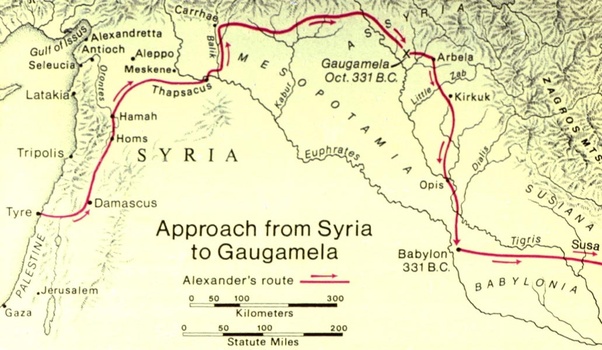
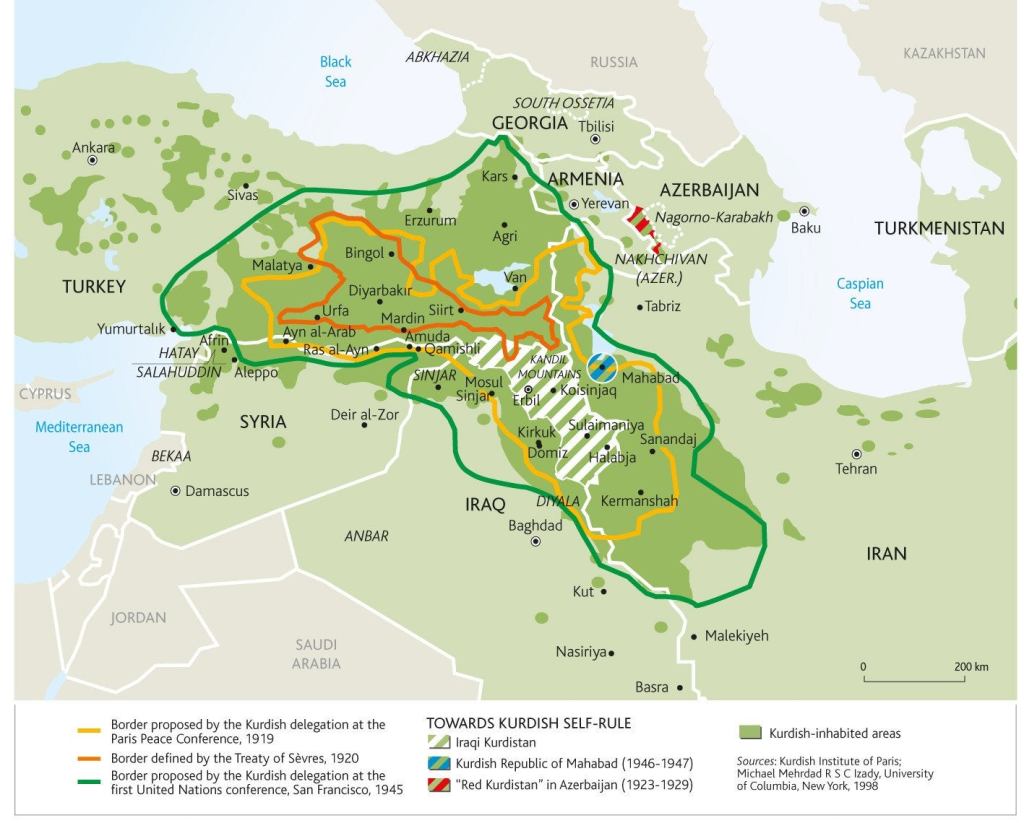
For thousands of years, Kurdish tribes have lived in the “wild west” of the Middle East: the mountainous, inhospitable and breathtakingly-beautiful land between Anatolia (modern Turkey), the Caucuses (modern Armenia, Georgia, and Azerbaijan) Persia (modern Iran) and the Tigris and Euphrates river basins (modern Iraq and Syria). Kurdish fighters fought and resisted Alexander the Great’s eastward march, and since then have joined, rebelled against and resisted countless empires, from pre-Islamic kingdoms to the earliest caliphates, to the Safavid Empire to the East and the Mongols and Russians to the North. Unlike thousands of other cultures in the region, Kurdish traditions have withstood these attempts at assimilation – or acquiesced in name only – meaning that Kurds have maintained their cultural, social and ethnic identity as other groups have risen and fallen.
Before the creation of the modern states of Iraq, Syria, and Turkey, the majority of Kurds lived in the Ottoman Empire, which shared a long border with the Persian Safavid Empire, splitting the Kurdish community in two. Ottoman and Safavid rulers manipulated tribal chiefs in to use as proxy forces, played on family ties to exacerbate their rival’s problems and empowered opportunistic, sectarian charlatans at the expense of popular movements for cross-border unification. Attempts to unify were thus often abortive, over before they even started, leaving the Kurdish people in a state of constant flux, migrating between the Empires and upsetting their parent states by ignoring orders to fight their brothers and sisters or by abandoning multi-ethnic fighting forces they had been conscripted into. In the buildup to WWI, Kurds were promised an independent state by the Ottomans and used to ethnically cleanse Central and Eastern Anatolia of the Armenians, leading to the Armenian Genocide, once again victims to powers wealthier and more unscrupulous than their neighborhood leaders.
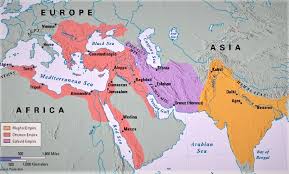
The Ottoman Empire was defeated in WWI and the status quo of the Middle East changed dramatically. British imperialists created Iraq, Jordan, and Palestine while French imperialists created Lebanon and Syria, artificial shells of countries designed for resource extraction that drew lines between ethnic and religious communities – just like European powers did in the Scramble for Africa 50 years prior. The Turks repelled Greek and Italian footholds into Anatolia and thus unified behind Kemal Mustafa, an educated Turkish leader who advocated for a secular, Western-style Turkey. Very quickly, this dream metastasized into a state “by the Turks, for the Turks,” which used the dominant position of ethnic Turks to suppress the remaining Armenians, Greeks, Assyrians and Kurds. They outlawed non-Turkish languages and forcibly resettled hundreds of thousands of communities, destroying villages overnight and murdering political dissenters. In the 1920s and 1930s, Turkey joined with Spain, Italy and a resurgent Germany in advocating for ethnic purity and a fascist politic.
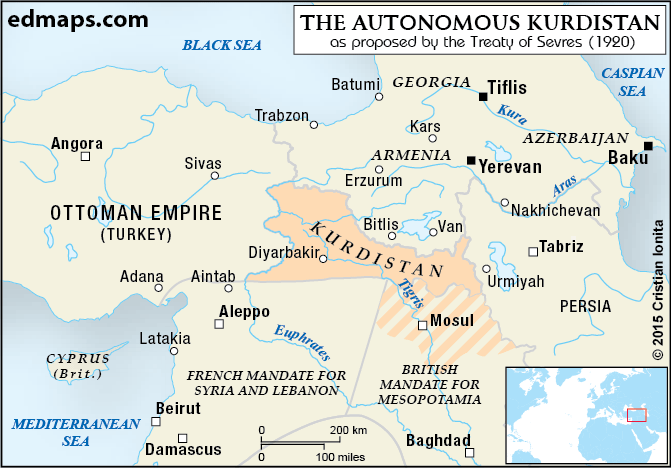
At the end of WWI, the victorious Western powers initially promised to create a free state for the Kurds, as they had successfully done for the Christian Armenians. However, with the discovery of oil in Iraq, the Western project of creating sensibly-drawn states was quickly abandoned for blatant financial gain – and besides, the Kurds were now split between Turkey, Syria, Iraq and Iran, meaning that the previously coherent call for unification as being overshadowed by tribal chiefs who saw the opportunity for personal aggrandizement. The new Syrian and Iraqi states were given puppet governments who were tasked with ensuring the flow of oil before the elevation of their own people and Turkey was able to solidify control in Anatolia, following the German model of “racial purification”. Kurds were officially named “Mountain Turks” by the government, their politicians were shot and the openly fascist government regularly raided villages to ensure a lack of economic stability.
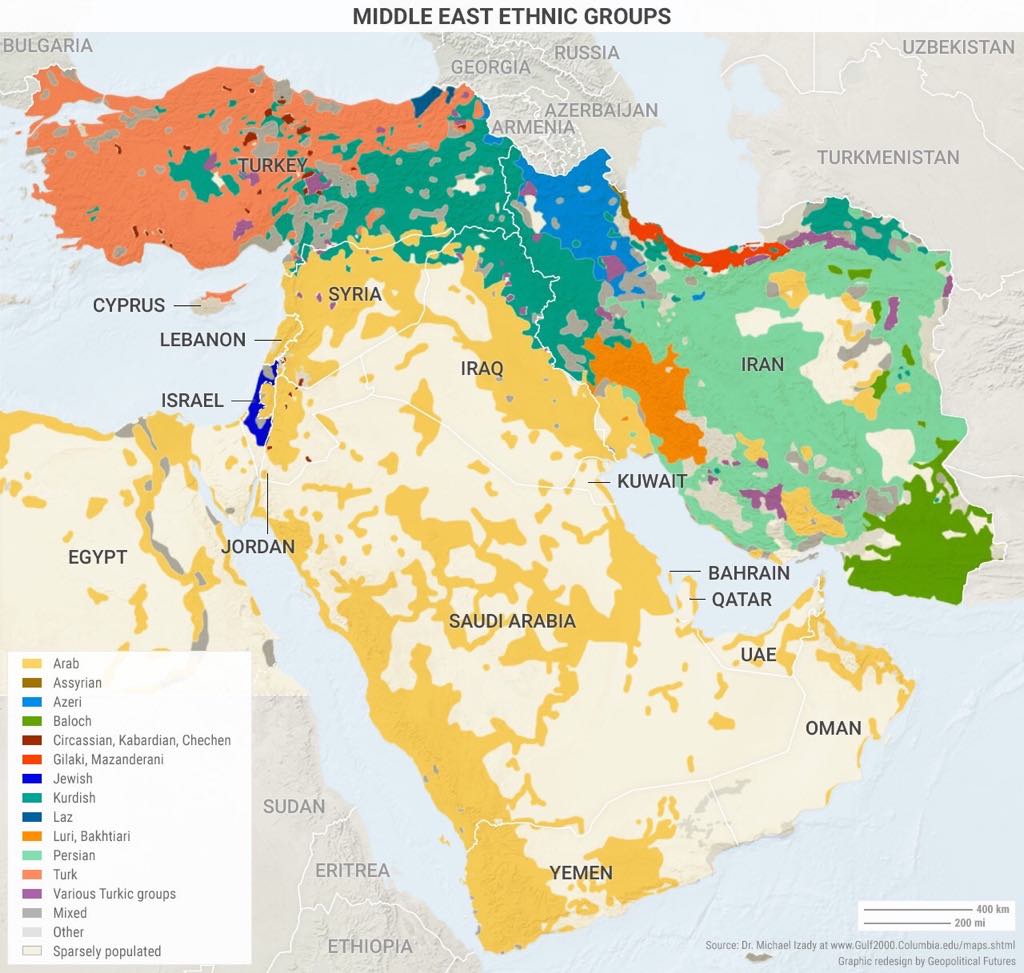
The push for a Kurdish state began in earnest following WWI. The new status quo changed a manipulated but relatively autonomous Kurdish population existing within the multi-ethnic Ottoman Empire in to a “question” to be answered as the Jewish question was answered in Nazi Germany. This relationship existed until the creation of the PKK in the 1970s and the changing power dynamics of the Cold War in the Middle East.
- “wlat” – country
Sunday 13 October: Day 94
The Kurds and the Islamic State – where did they fight, what is their relationship and how will that relationship change with Operation Peace Spring?
Remember, in 2014, the Kurds were still divided between 4 countries – Iraq, Iran, Syria and Turkey – and each community was relatively autonomous, either de jure (Iraq) or de facto (Iran, Syria and Turkey). One similarity between these four communities is that the vast majority of Kurds are Sunni Muslim, which means that they shared the majority religion of the people of Turkey and Syria while being religious minorities in Iraq and Iran. While Kurds are Sunni, their interpretation of Sharia law varies widely between the communities, from modern in Syria, pragmatic in Turkey, conservative in Iraq and mystic in Iran. The language, food and traditions – the culture – of the Kurds is what unifies this population, not their religion, and many Kurds we’ve met acknowledge that there are many non-Muslim Kurds (ranging from the Yazidi to the Yasari, the Zoroastrian, the Jewish and the Christian).
Following the 2003 US invasion of Iraq, Kurds claimed de facto autonomy in Northern Iraq. Southern Iraq was majority Shi’a, but the Saddam government was Sunni and violently repressed Shi’a Muslims. With the overthrow of Saddam, a power-sharing agreement between Kurdish Sunnis, Arab Sunnis and Arab Shias (from Northern, Central and Southern Iraq respectively) was established and Shi’a Muslims were able to control large portions of the government. Sunni Arabs, who previously had been given privileged status under Saddam, were now subject to reprisals from Shi’a Arabs and the economy of Central Iraq collapsed, subjecting Sunni Arabs to both economic and political humiliation. ISIS (or Daesh, as it is pejoratively called) emerged from the disintegration of Sunni Iraqi society and adopted a violent, nihilistic and revolutionary agenda. ISIS merged with disaffected Sunnis in the Iraqi military and former Al-Qaeda foot soldiers, stole a bunch of weapons from the poorly-organized and wildly corrupt central government and quickly took over most of Central Iraq.
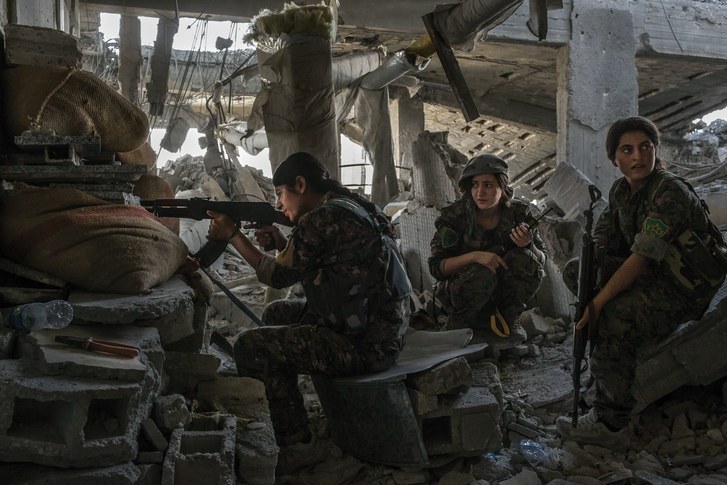
Iraqi Kurds saw the mass murder, sex slavery and chaos of Central Iraq and valiantly repelled ISIS assaults into Northern Iraq, supported by the United States. ISIS then turned west and took over most of Eastern Syria, where the Syrian Kurds live. As Syrian society disintegrated with the invasion and solidification of ISIS, the majority-Sunni Syrian population took to the streets and revolted against the Shi’a Assad regime, which was focused on repressing protests instead of combating ISIS. The Syrian Civil War erupted in apocalyptic pandemonium: the Assad government against the people, the people against ISIS, and ISIS against the Assad government. Syrian society fragmented but one portion, the Syrian Kurds, proved their ability as soldiers early on and became supported by the US, UK, France and Germany. Under mounting international condemnation and the threat of losing power, Assad’s allies – Russia and Iran – threw their weight behind the regime and started fighting against both ISIS and the Syrian population.
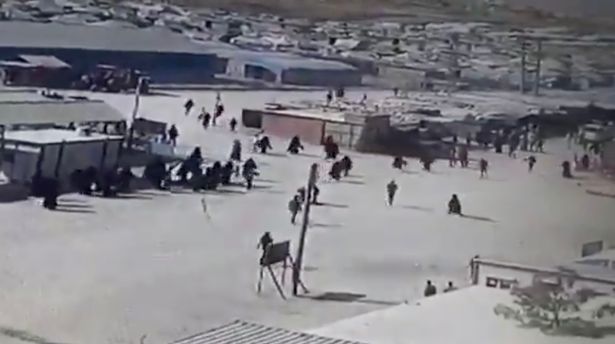
How could ISIS sustain itself, the third side of a triangle against both the Assad-Russia-Iran axis and the US-Kurdish axis? The answer is by selling oil stolen from Iraqi and Syrian oil fields – and they found a willing partner in Turkey. Throughout the Syrian Civil War ISIS captured major oil pipelines and sold oil to Turkey in exchange for NATO armaments, which was their major and only lifeline in the region. While the Assad-Russia-Iran axis was engaged against a popular uprising in the western, more densely populated Western Syria, ISIS attempted to snuff out resistance in Eastern Syria. The Syrian Kurds, sponsored by the US, fought and defeated ISIS resoundingly. Importantly, they militarized the Syrian-Turkish border to prevent further oil trade from ISIS to Turkey, which severed ISIS economically and prevented their rearmament. The Kurds beat ISIS into submission, and with that victory began an even more daunting task: building a state strong enough to separate ISIS from their Turkish sponsors but free enough to articulate the values they were fighting for and to preserve US support. They had to put children back in schools, rebuild hospitals and roads, root out remaining ISIS cells, all while cut off to the West by the Assad-Russia-Iran axis, the North by Turkey, and the South and East by a desolate cemetery spanning two countries. The Syrian Kurds rose to this challenge and indeed thrived, while the Turkish government watched in horror as the Kurds proudly asserted their right to self-determination.
The war against ISIS unified the Kurds. 11,000 Kurdish soldiers – more than all US casualties in the Iraq and Afghanistan war combined – and countless civilians died in the fight against ISIS. With this loss, the Kurds thought that their alliance with the US and our NATO partners as a force in the global war on terror would be repaid by the long-ignored promise of an independent Kurdish state. All of those hopes evaporated last week.
- “jang” – war
Monday 14 October: Day 95
Who are the SDF? The PKK? The YPG? What is their relationship to Turkey?
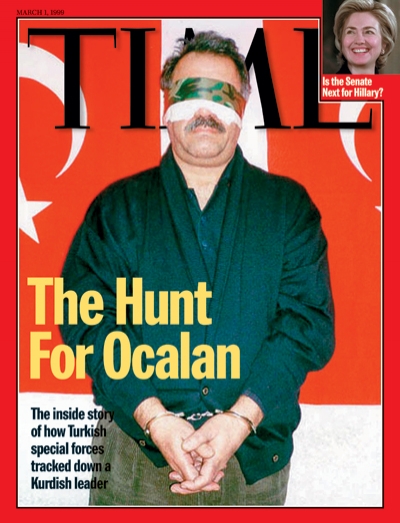
The PKK – or the Kurdish Worker’s Party – was formed in 1978 by Abdullah Ocalan (o-ja-lan) in Eastern Turkey. Split between 4 countries, Kurds were violently repressed by the Turkish government; today, a majority of Kurds live in Turkey, about 30 million, while 10 million live in Iran, 5 million live in Iraq, and 2 million live in Syria. As the largest and most economically significant bloc Turkish Kurds were the best positioned to resist ethnic cleansing. Ocalan knew this.
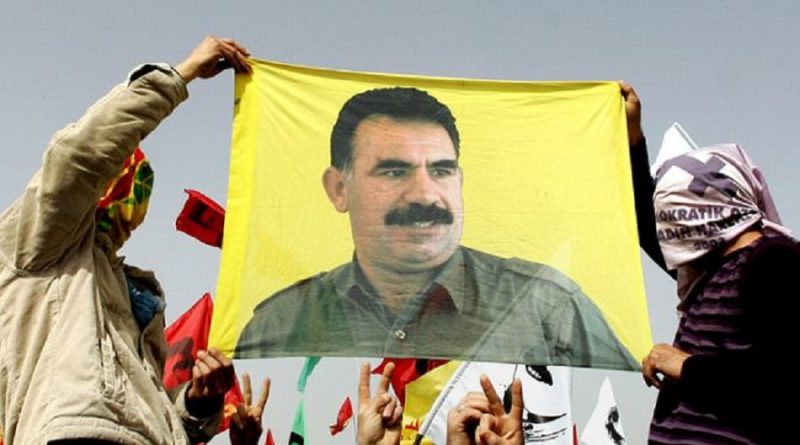
Originally, the PKK was a far-left organization which advocated for the overthrow of capitalism, which they saw as the motivating factor behind ethnic cleansing. The PKK advocated for women’s equality and even gay rights, and found support from the USSR against the Turkish government, a NATO ally. In the 1980s, open warfare led to the deaths of 40,000 Kurds, mostly civilians. Ocalan was captured and remains in prison where he stopped advocating for violence and started focusing on the historical and theoretical background to the Kurdish struggle. Numerous sister organizations have emerged since his imprisonment, rising and falling while all advocating his main idea of an independent Kurdistan.
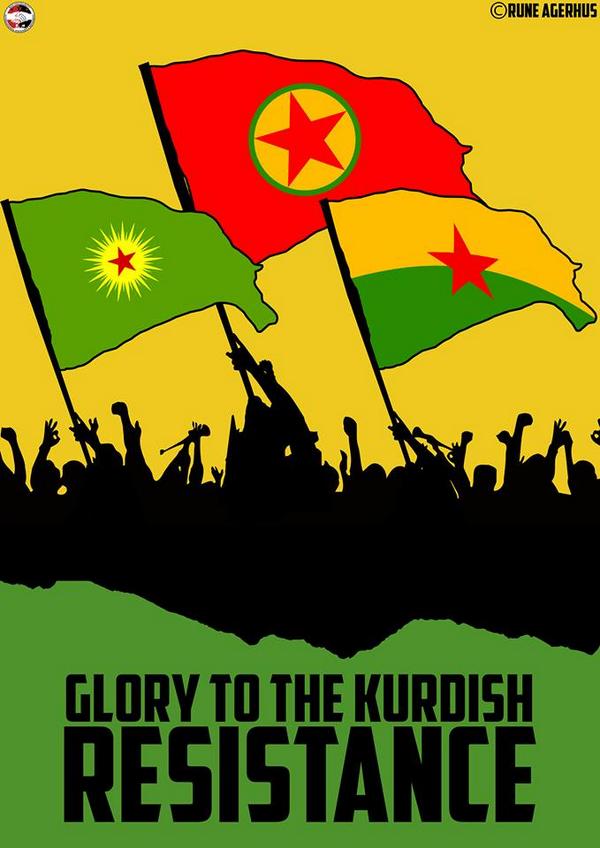
Since the 1980s, the PKK has changed. They believe in democratic confederalism: the idea that democratically-run communities should have the right to associate with each other and partially federalize. They want a Kurdistan made up of four sub-national territories: Eastern Turkey, North-Eastern Syria, Northern Iraq and North-Western Iran. They are labeled a terrorist organization by the US, EU and Turkish governments and are barred from public political activity in Turkey, although their support for ending fascism and advancing human rights have become widely supported by the majority of working-class Kurds from all four territories. It is important to note that while all four communities cannot publically support the PKK movement, Kurds from all over the region have left their homes to fight against the Turkish state for many decades.
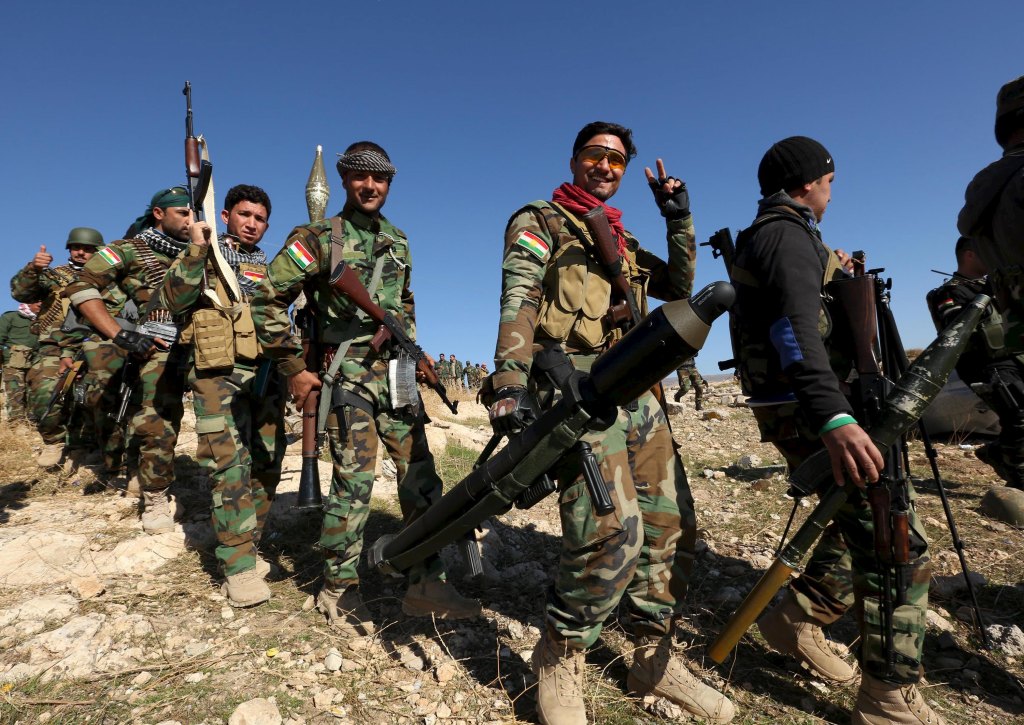
In Syria, the SDF – the Syrian Democratic Forces – are the most successful axis to fight against both the Assad government and the ISIS threat. The SDF is primarily concentrated in North-Eastern Syria (also called “Rojava” or “West Kurdistan”) and is mostly made up of the YPG, a Turkish acronym meaning “People’s Protection Units.” The YPGs are armed groups that have become the police departments, military units and prison wardens of Kurdish Syria since the onset of the Syrian Civil War. The SDF is one of the many factions that organized out of cooperation between different groups all fighting against the Assad government and against ISIS, and are comprised mostly of Kurds but also Arabs, Yazidis, Turks, and many foreign volunteers. Kurdish-run YPGs are daughter organizations of the PKK in Turkey and make up the backbone of the SDF. While the PKK is focused on Kurdistan, the SDF believes that democratic confederalism is a solution to the horrors of autocratic dictatorships in the whole of the Middle East and particularly in Syria.
And here’s the thing – they’re right. Strongmen like Turkey’s Erdogan, Syria’s Assad and Iraq’s Saddam Hussein may keep the peace for a time but create a culture of patronage and corruption to buy out opponents and resort to violence to ensure a compliant population. Allowing communities to choose their own leaders and turning sectarian divides into the basis of membership to a state could decrease corruption, reduce violence and create a desperately-needed sense of civic responsibility, which the SDF proved were achievable goals. For the past two years the SDF has protected North-Eastern Syria, built institutions and organized communities to make do with what little resources were shared in a very inhospitable environment, just like the kibbutz movement laid the foundations for Israel’s later economic success.
Turkey’s claim that the SDF and the YPGs that form it are fronts for the PKK is only partially true. Both the PKK and the SDF are a “proof of concept” for the ideas they espouse; that working-class Kurds will look past artificial national differences and support a group fighting for their rights; that these rights are fundamental to the existence of a functioning state; that democratic confederalism is not only a viable alternative to autocracy but also a more effective one. Erdogan’s Operation Peace Spring will kill tens, if not hundreds of thousands of innocent Kurdish people, but it will not remove the influence that their success has had on the region. He believes that if he punishes enough Kurds for their defiance to his rule, then he will extinguish the democratic fire that the Rojava have been tending for two years. Hopefully, he will be proven wrong.
- “dimocrasy” – democracy
Tuesday 15 October: Day 96
Cui prodest – who stands to gain? Cui bono – who stands to benefit?
There are so many actors involved in the Syrian conflict that it’s hard to keep track of why it’s all happening in the first place. If anything is clear, the US retreat from Syria has irreparably damaged the global standing of our values and government. The US is currently trying to shift public attention to Iran, evidenced by its deployment of 2000 troops to Saudi Arabia, and if we’re being cynical, perhaps Operation Peace Spring will be used as cover, distracting the world’s attention while the US prepares for war with Iran.
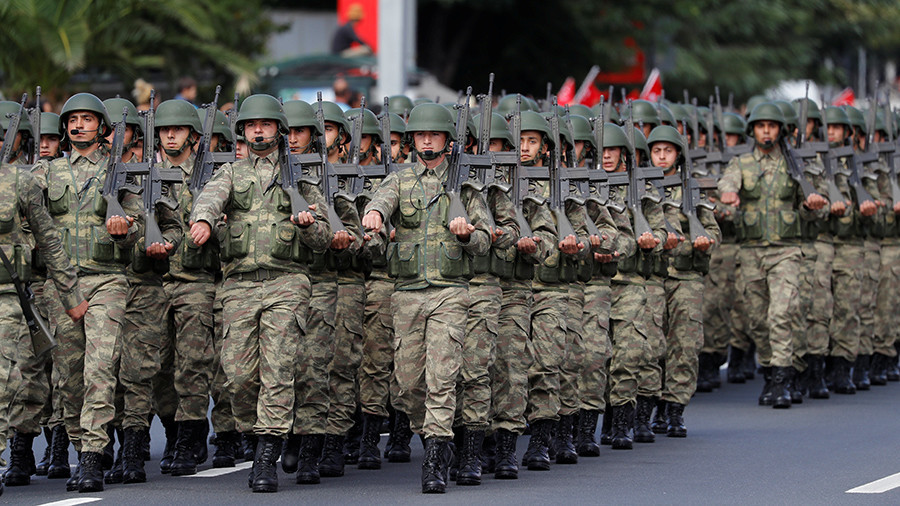
Given the autocratic nature of Turkey’s government, and the inability to resolve domestic problems through a democratic process that could see Erdogan and his party removed from office, Turkey sees Operation Peace Spring as the only way to firmly suppress anti-government, pro-Kurdish dissent domestically. By massacring the Kurds in Syria, Turkey will answer the question of possible liberalization and democratization in the region with a resounding “no.” Furthermore, Turkey’s system of government – like Putin’s, like Hitler’s – requires demonstrations of military success to stir up national support. If Turkey establishes a foothold in Syria, this paves the way for future invasions against the Kurds in Northern Iraq and even Iran. Turkey wants to become the dominant power in the Middle East, supplanting the US-Saudi Arabia axis and the Iranian network of Shi’a governments and militias.
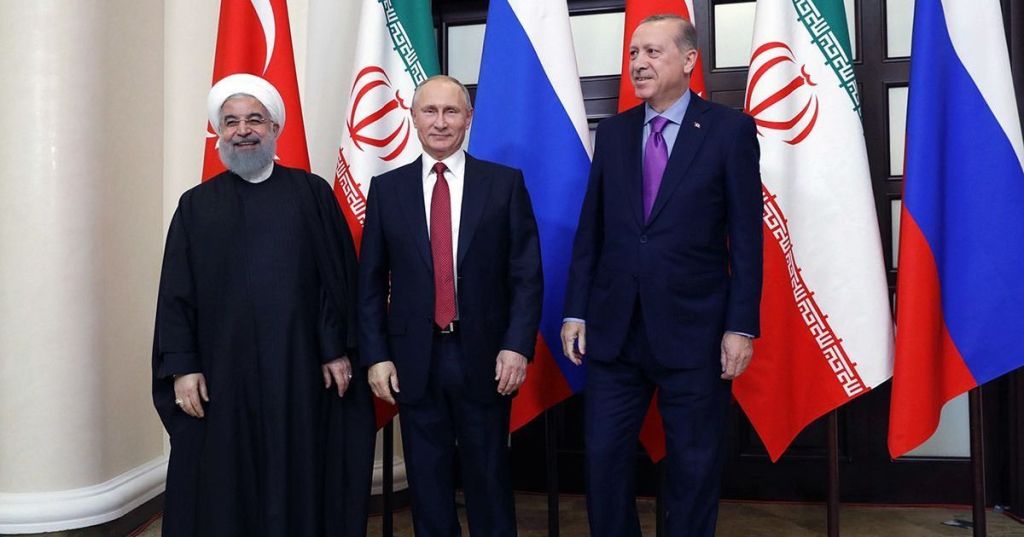
At the same time, Russia is seeing it’s wet dreams come true. By providing political cover for Assad, Russia was able to protect its Mediterranean port in Tarsus as well as protect its long-standing ally against the US-backed regimes in Saudi Arabia and Israel. Russia benefits from this invasion because it will like render NATO obsolete, as Turkey receives harsh criticism from Germany, France and the UK – and with Turkey’s departure from NATO, Russia will be free to re-establish a foothold in the region once again. Remember, Turkey was the launching point for US military operations all throughout the region, and as that alliance sunders the opportunity for Russia to regain control will become apparent.
Perhaps it is ISIS who stands to gain the most from this genocide. With the SDF scattered by missle strikes and artillery and the retreat of Western support for their Kurdish prison wardens, ISIS has already staged several successful jail breaks and is disappearing into the Syrian and, soon, Iraqi countryside. ISIS sympathy among long-repressed and economically-impovershed Sunni populations is still strong and this resuscitation will likely rally supporters to their apocalyptic cause. If the Syrian Civil War picks up steam again – which is, of course, incredibly likely to happen – ISIS will thrive in this environment like the rats in a junkyard they are and act as a fifth column against both the SDF and the Assad regime. If Turkey is able to completely break North-Eastern Syria, wiping the SDF off the map, ISIS will once more have room to sell oil through Turkey and see its caliphate return in nightmarish reality.
Finally, in a side note that should surprise no one, destabilizing the Middle East will raise oil prices and line the pockets of wealthy petroleum executives. Some things never change.
“qazanj” – advantage
Wednesday 16 October: Day 97
What are Kurdish people saying about recent developments in Syria?
In general, most people are horrified by the American retreat in Syria. The tragedy is proving to be our first real sense of what it means to be “Kurdish”, to be a part of a place full of people angry and confused by something happening to people they’ve never met but still feel a connection to – much like Americans felt after 9/11, even if they had never been to New York City. Everyone is talking to us about what’s going on and our typical interaction has changed dramatically in a week; before, people were so excited to hear that we were from America, and now, it’s normal for the first response to our American-ness to be something like, “Trump is a very bad man.” We feel for them, because we can’t really do anything about it other than share their story and tell our American neighbors that Kurdish people are real, that they exist, and that an attack against the Syrian Kurds is an attack against the values that hold this part of the world together.
“Genocide” is on everyone’s tongues. International news media coverage seems to focus on the geopolitical ramifications of this decision, losing sight of the people this decision will actually affect the most. Kurds know that Turkey has sought to wipe them out since before the fall of the Ottoman Empire. Throughout the decades, authoritarian regimes have tried and failed to do the same. Now, it seems as though they may be able to succeed. To be a part of a group that is worried for the survival of their culture is a strange feeling, and writing about it feels like a cold observation that an outsider could never really grasp completely. A news ticker may report on the danger of genocide to the Rojava Kurds, but that doesn’t really encapsulate the swelling in a man’s heart when he runs away from home to fight in a hopeless war, or the sadness at the thought of a daughter not being able to celebrate her mother’s favorite holiday. “Genocide” shouldn’t be spoken about casually, but should carry with it the full implications of losing a language, culture and history as a result of calculated violence.
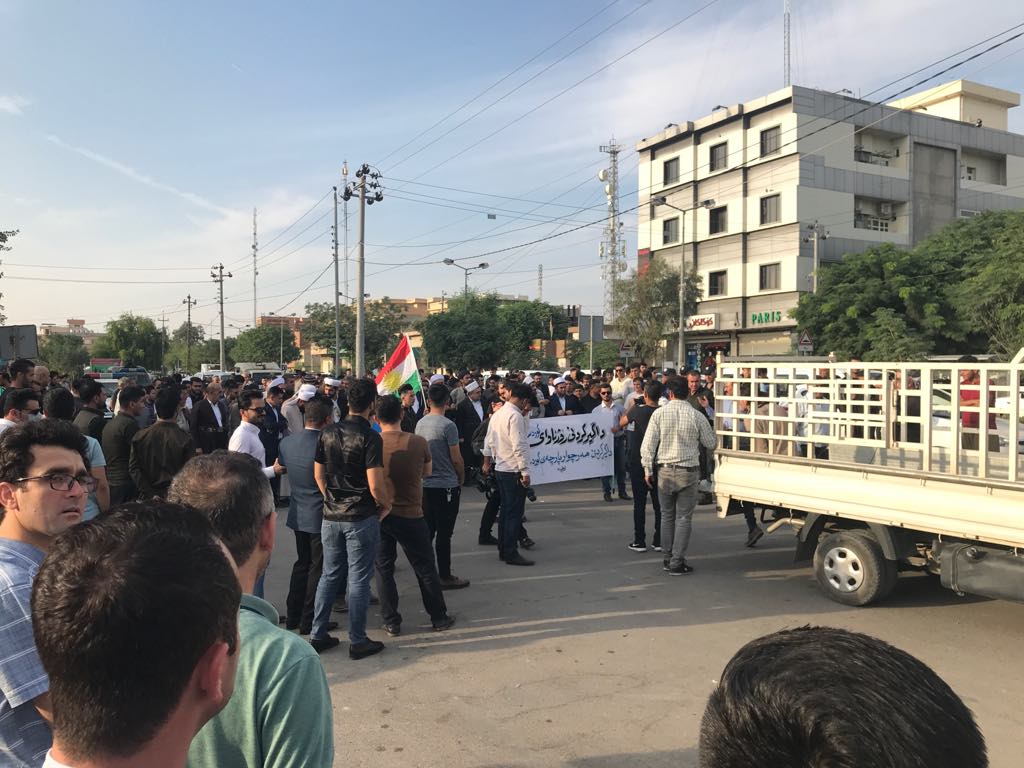
Since the news broke, there has been two large demonstrations in Kalar, wrapping themselves around the bazaar in a slow procession attended by significant political figures and long-bearded mullahs. The cousins of fighters who have lost loved ones in Syria stand at the front, holding banners calling for unity amongst all Kurds and for violence against the Turks. Erdogan has been chanted against and Turkish flags set on fire. Trump’s name slips in to a chant or two, but our Kurdish friends walking alongside the demonstration tell us that they say he is a puppet, not a monster. I suppose that’s some consolation.
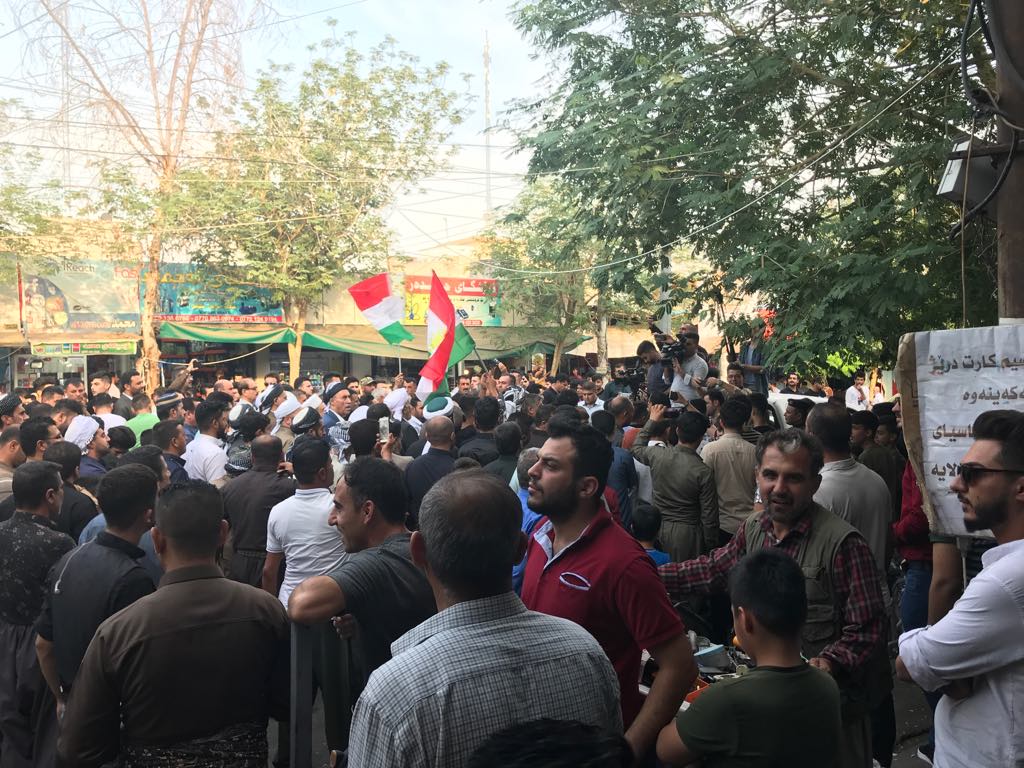
The other major effect of Operation Peace Spring has been the hardening of our neighbors; people are talking about Syria in the tea shops and in the streets with a loud impunity to the taboo nature of airing one’s beliefs so publically. People are expecting a fight, so they’re preparing to give one back. Betraying an ally has cost the American people the will of a culture that has become hardened like this too many times, and may potentially become the bulk of resistance against an American-backed Turkish occupation. As much as the Kurds love America, an American peace agreement will not satisfy these people’s anxiety. Turkey needs to stay the hell away from what isn’t theirs to take – at least leave the Kurds that much, after so much heartbreak.
- “drawse” – neighbor
Thursday 17 October: Day 98
How can Americans make a difference in the situation in Syria?
The absolute most important thing that we can do is share the story of the Kurds. I mentioned that our social media is alight with news about Rojava, and I wasn’t joking; of the 200+ friends we’ve added on Facebook since moving to Kalar, literally every single one of them has been posting about Operation Peace Spring, daily. They’re sharing pictures of mangled bodies and of entrenched Kurdish fighters exploding from American-made Turkish artillery, and they post the pictures of dead Kurdish fighters framed in the green, yellow and red of their flag – martyrs. As a friend explained to me, they do this because it guarantees that people can’t ignore what’s going on.
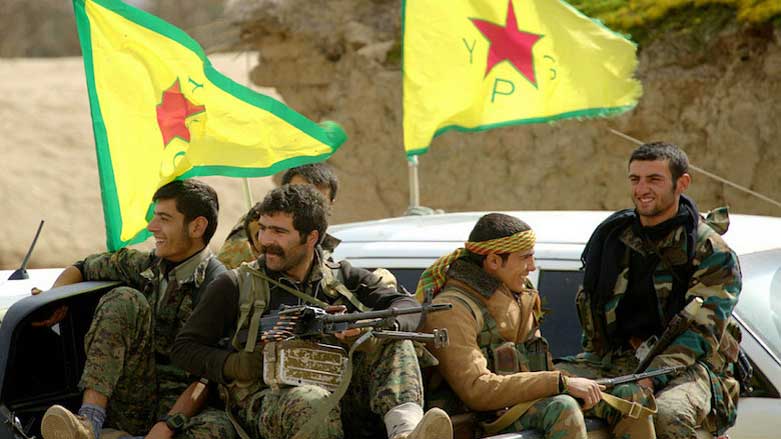
I think that’s about all that we can do. I’m at a loss here. We need to keep Operation Peace Spring in the news. We can’t let it get swept under the rug by what the British Royals are snacking on this afternoon or by another asinine tweet from our President. The only power the Kurds have left is to stay relevant, just like the Hong Kong protesters have managed to do, just like the Baghdad protesters attempted to do, just like Greta Thunburg is doing for the climate cause. The people who are to blame for this disaster will attempt to deflect questions and redirect attention away from what’s going on in Syria, and we can’t let them. We need to care, and we care by sharing their story.
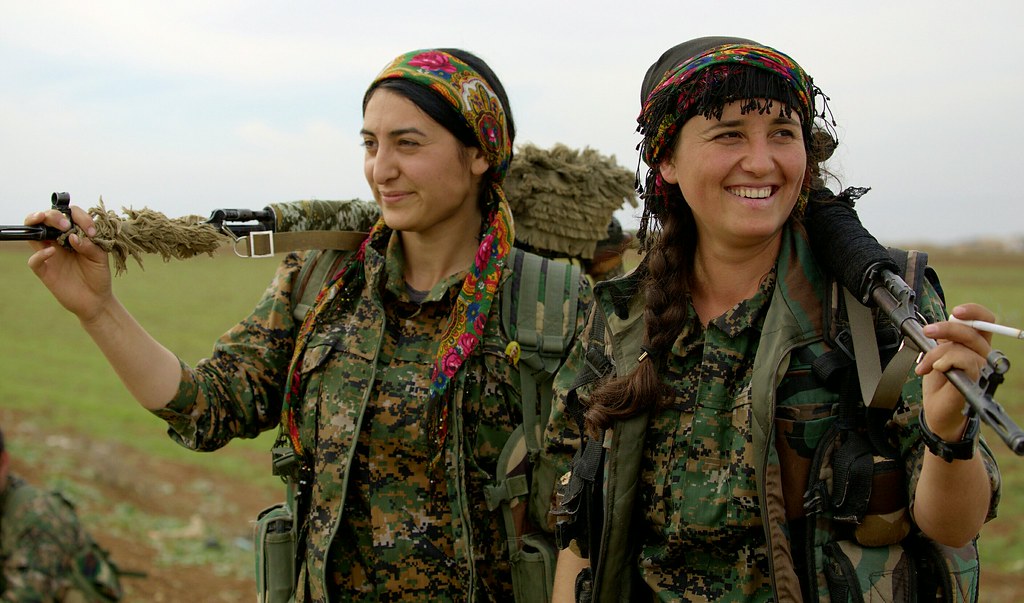
We have to realize that thousands are dying and hundreds of thousands are losing their homes because of a preventable decision made by a man that we elected, and that if the deaths of the Kurds from the cowardice of our President’s betrayal isn’t enough of an attack on American values, then maybe American values aren’t what he represents. Forget all of the impeachment proceedings, the policy changes, the lives changed by immigration policy or the unrecoverable damage done to the environment: if nothing else, recognize that innocent people are dying and will continue to die because of this mistake. A strong economy doesn’t excuse that fact.
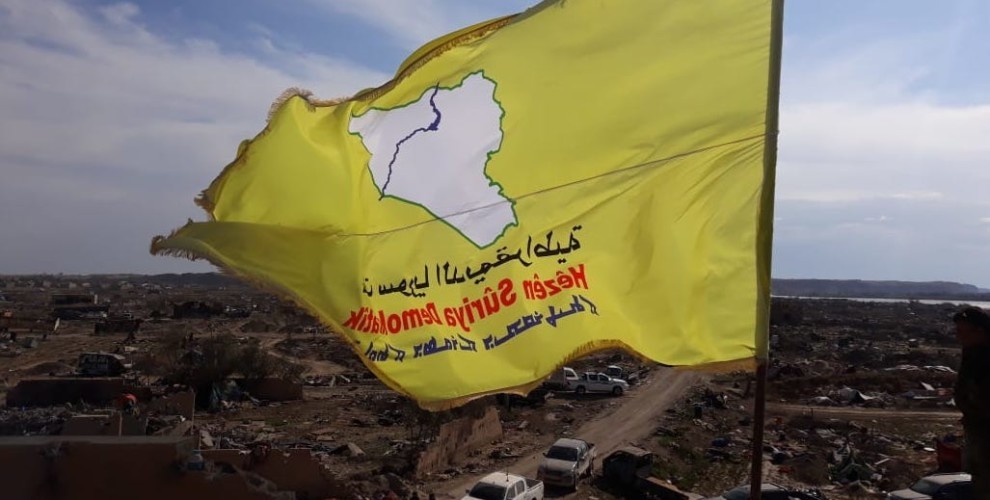
I would say that appealing to our elected representatives could make a difference, but I’m a bit too cynical for that. Our elected representatives could remove the PKK from the US terrorist list, sanction Turkey and remove Turkey from NATO. They haven’t. Focus on what works.
We’ll keep you updated with what’s going on. Stand with Rojava. Stand with the Kurds.
- “shahid” – martyr


 certification
Leave a reply to chrisjohnson0207 Cancel reply